
EU CE Compliance & Safety Verification for Steel Coil Packing Lines: A Buyer's Guide (2026)
Research report for PC Package · Published October 2026 · Prepared by an independent technical team. Companion piece to the Steel Coil Packing Line: Manufacturer Comparison & Buying Guide (2026) and the Turnkey vs Component Sourcing: Procurement Risk Guide (2026).
Executive Summary
Any steel coil packing line installed in the EU must carry a CE mark backed by a complete technical file. This report addresses the question that comes after choosing between turnkey and component sourcing, and before signing: how do you verify that a supplier's CE and EU machinery-safety compliance is real, complete, and valid for your specific line?
Bottom line: CE compliance is verified through documents you can request, not through marketing claims. Every compliant supplier must be able to hand over a coherent technical file — risk assessment, electrical schematics, safety validation, a Declaration of Conformity (DoC) naming the exact applicable standards — before you pay a deposit. Two compliance paths exist (Self-Declaration and Notified Body involvement), and both are valid under EU law; the difference is the certification route, not the safety outcome. The decisive purchase criterion is whether the complete documentation exists and matches your ordered configuration — which you can check in a few hours with the method in this guide.
The 2027 transition matters now: the Machinery Directive 2006/42/EC is in force until 19 January 2027, when Regulation (EU) 2023/1230 takes over. Lines ordered in 2026 will be installed and put into service across that boundary. This creates a documentation task today, not in 2027: verify which legal basis your supplier will declare and whether the technical file already meets the incoming regulation's stricter documentation requirements.[1]
The report provides:
- What a CE mark on a packing line actually means, and the two legal paths (Self-Declaration vs Notified Body)[1][2]
- The six documents every buyer should request before purchase
- A 5-point verification method for a Declaration of Conformity[1]
- When involvement of a Notified Body (e.g. TÜV, SGS) is actually mandatory (Annex IV components)[2]
- The 2027 Machinery Regulation transition — what changes for a line ordered now[1]
- A printable RFQ compliance checklist to attach to your enquiry
This is an independent analysis of EU compliance mechanisms and published standards; it does not replace legal advice or the review of an actual technical file.[3]
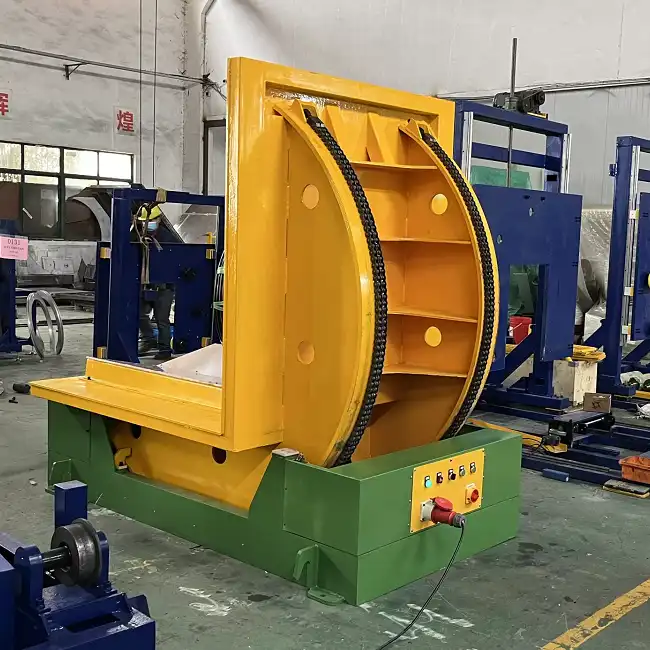
1. Why Compliance Verification Is a Purchasing Step, Not a Formality
For a steel coil packing line, the CE mark and the technical file behind it are legally binding documents that define your right to import, install, operate and resell the equipment in the EU. They are not decoration:
- The CE mark is required for placing machinery on the EU market under Regulation (EU) 2023/1230 (until 19 January 2027, under Directive 2006/42/EC).[1]
- A Declaration of Conformity (DoC) must name the machine, the applicable harmonised standards, and the manufacturer's obligations.[1]
- A complete technical file must exist and be kept available to market-surveillance authorities (in most cases for at least 10 years after the last unit is placed on the market).[1]
Why this is a pre-signing task: gaps in compliance documentation are cheaply fixable before you commit, and very expensive afterwards. A line that arrives without a valid DoC, or with a DoC naming a different coil range than the one you ordered, can be held at customs, refused at site acceptance, or require recall-grade re-documentation. The fixable-at-quotation-stage problems are: missing or stale standards, missing control-schematic package, DoC naming the wrong model/range, and a technical file that does not match the delivered configuration.[1][4]
Real-world signal: engineering buyers in the EU packaging market routinely ask for, and receive, the same documentation set listed here — control circuit diagrams, interlock configuration, EN ISO 13849 safety validation, low-voltage declaration and a target-language manual — as part of FAT/SAT acceptance (the acceptance framework covered in the companion procurement guide).[5][6] If a supplier is reluctant to share these in advance, treat that as a compliance red flag, not a confidentiality negotiation.
Modular deliveries and assemblies of machinery: a turnkey coil packing line is usually shipped as an integrated assembly rather than one monobloc machine. If any sub-systems are sourced separately (common when a buyer mixes brands to keep plant-side spare-part commonality), the individual units typically ship as partly completed machinery with a Declaration of Incorporation (DoI) rather than a full DoC.[1][4] The supplier who assembles these units into a functioning interconnected line — or the buyer, if the buyer self-integrates — becomes the legal "manufacturer" or assembler responsible for the line-level DoC covering the combined safety loop. When you compare turnkey vs component sourcing (see the companion procurement-risk guide), the CE liability transfer is one of the concrete responsibilities that moves with the integration decision: with a turnkey contract it sits with the single integrator; with component sourcing it falls on the buyer's project team.[6]
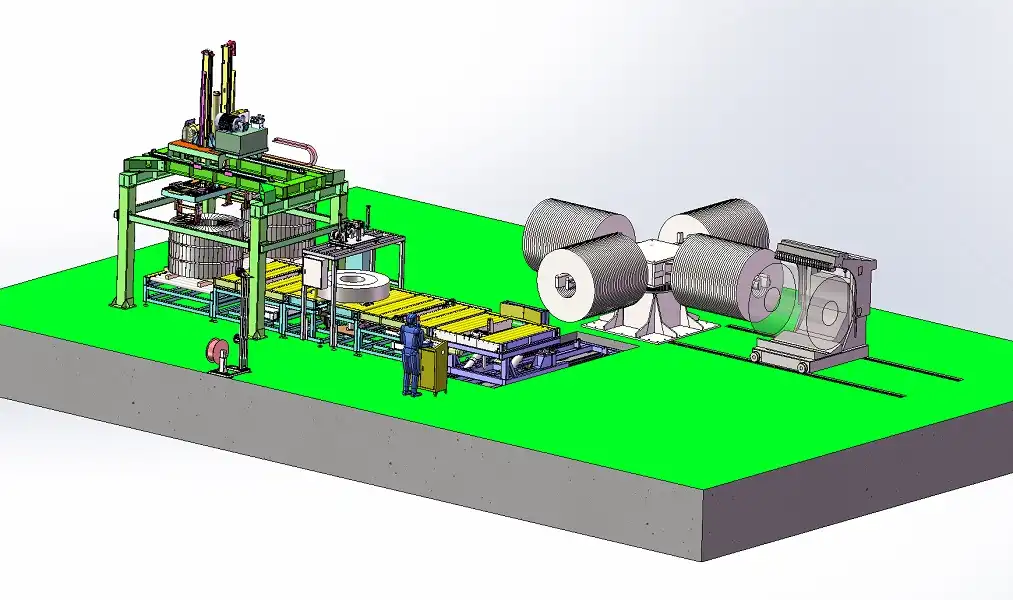
2. Two CE Paths: Self-Declaration vs Notified Body
There are two legally valid routes to CE marking for a coil packing line. Both lead to the same CE mark. They differ in who does the conformity assessment.
| Path | Who assesses | When it applies | Typical examples in packing lines |
|---|---|---|---|
| Self-Declaration (Annex VIII, internal production control) | The manufacturer itself, under its own responsibility | Standard route for most complete machines not involving high-risk Annex IV components (under 2006/42/EC) / Annex I Part B items (under 2023/1230) for which full harmonised-standard coverage exists | Full turnkey packaging line CE-marked under its own DoC[1][2] |
| Notified Body involvement | An independent, EU-notified body (e.g. TÜV, SGS) | Required for high-risk safety components — Annex IV under Directive 2006/42/EC, continuing as Annex I Part A under Regulation (EU) 2023/1230 (e.g. certain light curtains, safety relays/PLCs, pressure equipment) — or when the buyer contractually requires third-party certification | Some European legacy suppliers market their lines with Notified Body assessment as a differentiation[2] |
Terminology note (transition period): the EU is mid-transition. Under Directive 2006/42/EC the high-risk component list is called Annex IV; under Regulation (EU) 2023/1230 (applicable from 20 January 2027) it moves to Annex I (Part A) with Part B allowing internal production control where all applicable harmonised standards are fully applied. This guide uses "Annex IV / Annex I" to cover both, and flags the specific reference in §6 where it matters for your delivery.[1]
What this means for a buyer: a supplier using Self-Declaration is not "less compliant". Under EU law, Self-Declaration is the default and sufficient route for complete machines that do not incorporate high-risk (Annex IV / Annex I Part A) components. A manufacturer using a Notified Body has chosen — or been driven by its component set / customer base — to add third-party verification. The safety outcome (the design reduced risk to an acceptable level) is not a function of the certification path; it is a function of the risk assessment and the safety-related control design.[1][2]
Checkpoint for buyers: do not ask "is it CE certified?" — both paths are valid. Ask instead: (1) What is the legal basis of your DoC (Directive 2006/42/EC or Regulation 2023/1230)? (2) Which harmonised standards does your DoC name (check for current editions)? (3) Does your line include high-risk Annex IV / Annex I safety components, and if so, are the component-level certificates available?[1][2]
3. The 2027 Machinery Regulation Transition: What Changes for Buyers
Regulation (EU) 2023/1230 is already published and applies from 20 January 2027, replacing Directive 2006/42/EC (which stays in force until 19 January 2027).[1] For a line ordered in 2026, this matters in four concrete ways:
| Aspect | Under 2006/42/EC (until 19-01-2027) | Under (EU) 2023/1230 (from 20-01-2027) | What you should ask now |
|---|---|---|---|
| Legal basis of DoC | Directive 2006/42/EC | Regulation (EU) 2023/1230 | "Which legal basis will my DoC use, given installation timing?" |
| Documentation retention | Technical file kept typically 10 years after last unit | Documentation obligations restated and strengthened (digital format encouraged) | "May we receive an electronic copy of the technical file index?" |
| Safety-component definition (Annex IV / Annex I) | List of high-risk components requiring notified-body involvement (Annex IV) | Definitions evolve; list re-organised as Annex I Part A (third-party conformity) / Part B (internal control where harmonised standards fully applied) | "Does my line include high-risk Annex IV / Annex I components, and are their certificates available?" |
| Manuals & digital instructions | Paper manual typical | Digital / electronic instructions addressed explicitly | "Is an English (or target-language) digital manual provided?" |
Practical guidance: because your line is designed, built and shipped in 2026 but commissioned and accepted possibly in 2027, ask the supplier to commit in writing to the legal basis of the DoC for your specific delivery and to confirm that the technical file satisfies the incoming regulation's documentation requirements. Most export-oriented integrators already declare to the incoming regulation; confirm it in the contract.[1]
A post-installation trap to plan for (Article 18 "substantial modification"): under Regulation (EU) 2023/1230, substantial modifications made after the machine has been put into service — changing a packing-head, upgrading a strapping unit, raising line speed — can reclassify the person making the change as the "manufacturer" with full CE obligations for the modified machine.[1] Buyers who retrofit their own lines later should (a) record the modification in writing with the integrator, or (b) plan to contract the change back to a responsible CE signatory. This is a maintenance-phase compliance point, but agreeing the framework now avoids a documentation gap at upgrade time.
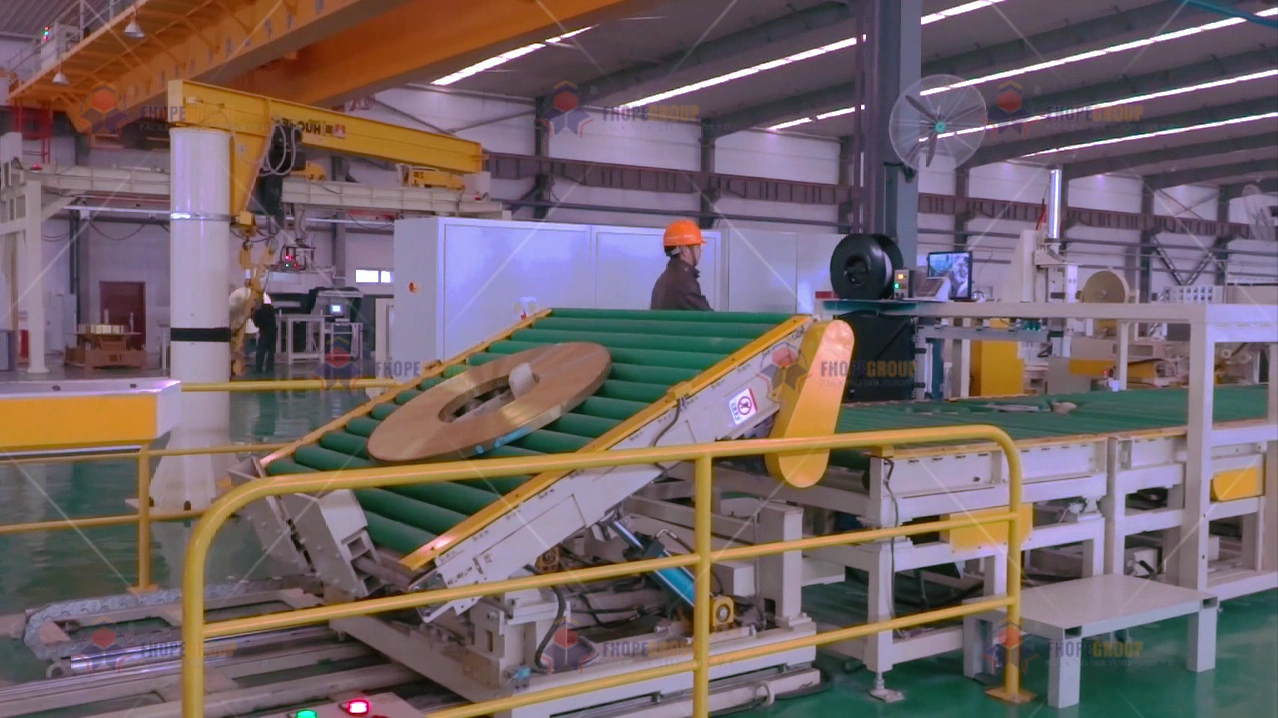
4. The Technical File: Six Documents Every Buyer Should Request
A compliant supplier can produce the complete technical file. For a coil packing line, the six documents that carry the real weight are:
| # | Document | What it proves | Where it maps |
|---|---|---|---|
| 1 | Risk assessment report (per EN ISO 12100) | Hazards identified and risk reduced to acceptable level — the foundation of the whole technical file | EN ISO 12100: risk assessment & risk reduction[2] |
| 2 | Control circuit diagrams / electrical schematics (per EN 60204-1) | Electrical safety design: protection, interlocks, earthing, wiring identification | EN 60204-1:2018+A1:2025 — electrical equipment of machines[2] |
| 3 | Safety-related control validation (per EN ISO 13849-1) | Safety PLC / emergency stop / light curtain / interlock logic validated to a PL (e.g. PL d / Category 3) | EN ISO 13849-1:2023 — control systems safety[2] |
| 4 | List of harmonised standards applied | The standards the DoC actually names (must be current, OJEU-published) | DoC supporting documentation[1] |
| 5 | Declaration of Conformity (DoC) | Formal statement of conformity to the named legal basis and standards | Verification method in §5[1] |
| 6 | Target-language instruction manual | Operator and maintenance safety information in the language(s) required by the market | Manual language is a certified real customer request[5] |
Why these six: they map one-to-one onto what a market-surveillance authority checks, and onto what a knowledgeable buyer's acceptance engineer inspects during FAT/SAT. If all six exist and are internally consistent (same model, same coil range, same standards versions), the compliance is real. If any is missing or names different equipment, that is the exact discrepancy that causes customs holds and acceptance failures.[1][2][5]
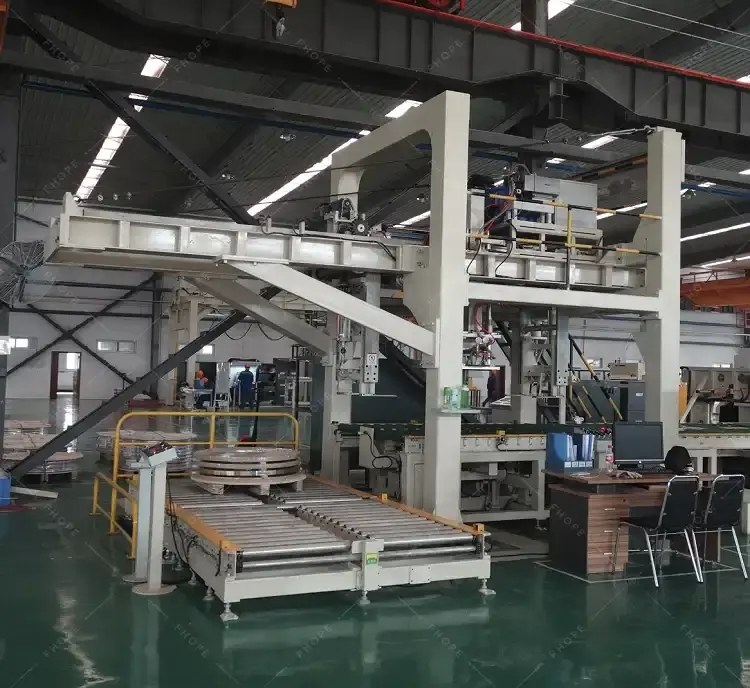
5. How to Verify a Declaration of Conformity in Five Points
The DoC is the short document that summarizes the entire compliance claim. Verify it systematically:
- Machine identification — the DoC names the exact model / type / serial range you are buying. A DoC for "steel coil packing line" generally while you ordered a specific turnkey configuration of specific coil dimensions is not a match for your delivery.
- Legal basis — a dated Directive 2006/42/EC reference or Regulation (EU) 2023/1230, appropriate to when the machine will be placed on the market (§3).
- Standards listed — confirm the named standards match the current, harmonised (OJEU-published) editions applicable to your configuration: EN ISO 12100:2010 (risk assessment), EN ISO 13849-1:2023 (safety-related control), and EN 60204-1 (electrical equipment) — noting that EN 60204-1:2018 remains in current OJEU citation, with the A1:2025 amendment in transition; confirm the edition your DoC cites is current at your delivery date. Packaging-specific EN 415-8 may also apply.[2][8]
- Signed by the right party — the EU importer or the manufacturer's authorised representative with EU establishment; a name and role, not an anonymous rubber stamp.[1]
- High-risk component statement consistency — if the line includes Annex IV / Annex I high-risk components, the DoC or supporting documents either confirm notified-body involvement or correctly exclude it. An inconsistency here is a red flag.[1][2]
What you are looking for: internal consistency across the DoC, the technical file and the ordered configuration. One hour with these five points, against the supplier's documentation, gives you far more confidence than any marketing page.
6. High-Risk Components (Annex IV / Annex I): When Third-Party Testing Is Mandatory
Not every CE claim requires a Notified Body. The machinery legislation lists safety components where involvement of a notified body is mandatory before the component may be placed on the market — Annex IV under Directive 2006/42/EC, continuing as Annex I Part A under Regulation (EU) 2023/1230 (with Part B permitting internal production control where all applicable harmonised standards are fully applied).[1] In a coil packing line, the items that typically fall in scope:
- Light curtains / electro-sensitive protective equipment used for guarding access to wrapping, strapping or stacking stations[1][2]
- Safety logic units — safety relays and safety PLCs performing safety-related control functions (including the logic controlling E-stop propagation)[1][2]
- Certain interlocked guards with safety-rated switches[2]
- Note on E-stop pushbuttons: a standard electromechanical emergency-stop button itself is designed to EN ISO 13850 as a conventional safety component, not a standalone Annex IV / Annex I high-risk item; what is regulated is the safety logic (safety relay / safety PLC) that acts on the stop command. Verify the safety logic units' certification, not (only) the pushbutton.[2]
Two consequences for a buyer:
- If your line includes any such high-risk component, the component itself must have gone through the mandatory conformity assessment (typically with a notified body), even when the complete machine is Self-Declared. Ask for the component-level certificates (e.g. the light-curtain pair's EC Type-Examination / EU-type examination certificate, the safety PLC's certificate) together with the machine-level DoC.[2]
- If it does not (a configuration using standard components and conventional safety relays), Self-Declaration for the full machine is the normal, legal, sufficient route — and a supplier insisting on "notified body" as the only acceptable proof may be over-selling, or reflecting its own commercial packaging, rather than a legal requirement.[1][2]
Practical test: request a bill of materials of safety-related components from your RFQ; identify which are high-risk Annex IV / Annex I items; then require component certificates for exactly those and confirm the machine-level DoC names the standards covering the complete line. This gives you the precision of a certification audit at quotation time, without paying anyone to do it.
7. Electrical & Control Safety Deep-Dive (EN 60204-1, EN ISO 13849-1)
The two standards doing the real work inside the technical file:
EN 60204-1:2018 — electrical equipment of machines. Covers the electrical system that runs the line: supply disconnect, protection against electric shock (earthing, bonding, insulation), emergency operation (E-stop), interlocks, and the marking/identification of terminals and wiring. Confirm the edition your DoC cites (2018 base or the 2018+A1:2025 amendment, which is in transition) is current at your delivery date — a DoC listing a superseded or unidentified edition is a documentation gap worth resolving at quotation stage.[2][8]
EN ISO 13849-1:2023 — safety-related parts of control systems. Defines performance levels (PL a–e) for safety functions. A turnkey coil packing line's critical safety functions (E-stop propagation, light-curtain stopping, interlocked guard release) are typically designed to Category 3 / PL d for critical circuits — the level the nature of the lines reviewed in the companion comparison whitepaper documents.[7] The technical file should include, for each safety function, the architecture, the diagnostics and the PL claim — not just a one-line "PL d" statement.[2]
Control handshake across stations — recall from the procurement-risk companion that interfaces between stations (wrapper, strapper, palletizer) are where safety propagation is easiest to get wrong. The E-stop network must stop the whole line, not just one station; the technical file's control schematics should show the E-stop chain spanning all stations, with Category 3/PL d-rated logic, and where safety-rated fieldbus is used (e.g. PROFIsafe, Safety over EtherCAT) the network gateway and status-word exchanges should be documented.[6][7][8]
8. Compliance Checklist to Attach to Your RFQ
Copy these into your request for quotation / contract annex. Every item is verifiable by you, most before you sign.
| # | Checklist item | How to verify | Stage |
|---|---|---|---|
| 1 | DoC naming your exact model + coil range | Read the DoC; cross-check against your RFQ specification | Quotation |
| 2 | Legal basis stated (Dir 2006/42/EC or Reg 2023/1230) matching installation timing | Read the DoC (date + named basis) | Quotation |
| 3 | Risk assessment report per EN ISO 12100 available | Request; check it names your configuration | Quotation |
| 4 | Control circuit diagrams per EN 60204-1 | Request; confirm cited edition current (2018 / 2018+A1:2025) at delivery | Quotation |
| 5 | Safety validation per EN ISO 13849-1 (2023) with PL claims | Request; check PL level for critical functions | Quotation |
| 6 | Harmonised standards list current (OJEU-published) | Cross-check standards dates from the list | Quotation |
| 7 | High-risk component certificates: light curtains, safety relays/PLCs (Annex IV / Annex I) | Require component-level certificates | Quotation |
| 8 | Deadline: legal basis + documentation compliance re 2023/1230 confirmed in writing | Written commitment in contract | Pre-sign |
| 9 | Target-language manual (incl. English) part of delivery | Contract scope line | Pre-sign |
| 10 | Technical file available to surveillance authorities (retention period confirmed) | Written confirmation | Pre-sign |
Use with the FAT/SAT acceptance framework: attach this checklist to the acceptance plan so that document review is a formal FAT/SAT gate, not a post-installation discovery — mirroring the acceptance steps described in the companion procurement-risk guide.[6]
9. FAQ
Is a Chinese manufacturer's CE Self-Declaration trustworthy for a steel coil packing line?
Trust is established by documentation, not by country of origin. CE Self-Declaration is the default legal route for complete machines under both Directive 2006/42/EC and Regulation (EU) 2023/1230, provided the manufacturer performs a proper risk assessment, applies the harmonised standards and issues a valid DoC. Verify the six documents in §4 and the five-point DoC method in §5 — this is exactly what an EU importer or surveillance authority would do. Both-the-comparison and procurement guides cover the same manufacturers' compliance claims from their published data.[1][2][7]
Will my 2026 order be affected by the 2027 Machinery Regulation transition?
Potentially, at the documentation level. If your line is placed on the market or commissioned in 2027, the legal basis of the DoC and the documentation content follow the incoming Regulation (EU) 2023/1230. Ask the supplier now, in writing, which legal basis applies to your delivery and confirm the technical file satisfies the 2023/1230 documentation requirements (§3). This is a quotation-stage question, not a post-delivery one.[1]
Is a Notified Body certificate (TÜV/SGS) required for my line?
Only if your line includes high-risk Annex IV / Annex I safety components (light curtains, safety relays/PLCs, and the safety logic units controlling E-stop propagation) — in that case the components require the mandatory conformity assessment, and you should request component-level certificates. Electromechanical E-stop pushbuttons are not standalone high-risk items; what is regulated is the safety logic acting on the stop command. If your configuration uses standard safety components, Self-Declaration is the normal, sufficient legal route for the complete machine. The valid question is "which components are high-risk Annex IV / Annex I?" rather than "is the whole line third-party certified?".[1][2]
10. References
[1] EUR-Lex. Regulation (EU) 2023/1230 on machinery, replacing Directive 2006/42/EC (electronic version, English). https://eur-lex.europa.eu/eli/reg/2023/1230/oj/eng [Accessed: 2026-10-18]
[2] PC Package knowledge library — CE Compliance Standards Family (compiled and verified 2026-10-06/07 against EUR-Lex, ISO and CEN): harmonised standard list and application boundaries for Type A/B/C standards, including EN 415-6 (pallet-wrapping machines, direct coverage), EN 415-1 (classification), EN ISO 12100, EN 60204-1:2018+A1:2025, EN ISO 13849-1:2023, EN ISO 13857:2019. Full standard texts archived in the content factory.
[3] Industry legal-commentary position on CE marking of machinery (general; no single proprietary source).
[4] Asian-manufacturer export compliance public documentation for EU coil packing equipment; general industry practice for contract compliance language (documented as industry practice, not a specific vendor).
[5] Verified supplier acceptance documentation and a real customer compliance exchange — an Italian-engineered packaging line compliance set (control wiring diagrams, interlock configuration, EN ISO 13849 validation, LVD, Italian-language manual, Declaration of Incorporation) — confirming that this documentation set is a live, buyer-requested requirement in the EU market.
[6] PC Package. "Turnkey vs Component Sourcing for Steel Coil Packing Lines: A Procurement Risk Guide (2026)." https://pcpackage.ch/turnkey-vs-component-sourcing-steel-coil-packing-lines/ (companion published article; FAT/SAT acceptance framework and battery-limit control handshake.)
[7] PC Package. "Steel Coil Packing Line: Manufacturer Comparison & Buying Guide (2026)." https://pcpackage.ch/steel-coil-packing-line-comparison-top-4-manufacturers-2026/ (companion published article; §9 safety integration checklist and Category 3 / PL d documentation for the reviewed lines.)
[8] CEN / ISO / IEC. EN 415-8:2023 Packaging machine safety (packaging machines for wrapping); ISO 12100:2010 Risk assessment and risk reduction; EN 60204-1 electrical equipment of machines (standard set carried over from the comparison whitepaper's §11 references for continuity; full texts held in the content factory).
Last updated: 2026-10-18
About this article: This buyer's guide was prepared for PC Package as independent analysis accompanying the manufacturer-comparison and procurement-risk guides. It describes EU compliance mechanisms and published standards; it is not legal advice and every claim should be verified against the supplier's actual technical file before a procurement decision. Figures are illustrative reference images from the supplier's product library and are for context only.