
What Is the Difference Between Coil Wrapping and Coil Packing Machines?
Are you in the coil handling industry and puzzled by the terms "coil wrapping machine" and "coil packing machine"? It's easy to see why confusion arises – both machines appear to do the same thing: package coils! But are they truly interchangeable? Understanding the subtle yet important differences is crucial for optimizing your packaging process and choosing the right equipment. Let's unravel this and clarify the distinctions.
Coil wrapping machines and coil packing machines are essentially the same type of machinery used for packaging coils of various materials like steel, wire, plastic pipes, and cables. The terms are often used interchangeably in the industry, referring to equipment that applies protective wrapping materials such as stretch film, paper, or woven belts around coils to secure and protect them during storage and transportation.
This article will dive deep into what these machines do, exploring the nuances in terminology and functionality to equip you with the knowledge to make informed decisions for your coil packaging needs. Keep reading to understand the core functionalities, applications, and key considerations when selecting the ideal machine for your operation.
Coil Wrapping vs. Coil Packing: Unpacking the Core Functionality
Coil wrapping and coil packing machines, at their heart, perform the fundamental task of securing and protecting coils. But understanding their exact functions sheds light on why both terms are used and where subtle differences might lie.
Coil wrapping and coil packing machines both serve the primary function of applying protective materials around coils. These machines automate the process of wrapping coils with materials like stretch film, paper, or woven belts, ensuring consistent and secure packaging that protects against damage, dust, moisture, and corrosion during handling, storage, and transport.
Coil wrapping and packing machines streamline a multi-step process to achieve effective coil protection. Let's break down the typical steps involved:
- Coil Loading: The process begins with loading the coil onto the machine. This can be manual, semi-automatic, or fully automatic depending on the machine type and automation level. Heavier coils often require cranes or forklifts for loading.
- Material Dispensing: The chosen wrapping material (stretch film, paper, woven belt, etc.) is dispensed from a roll or feeder system. Automatic machines precisely control material tension and overlap.
- Wrapping Application: This is where the core action happens. The machine rotates the coil or a wrapping head around the coil to apply the protective material. Different wrapping patterns can be programmed to suit specific coil types and protection needs.
- Material Securing & Cutting: Once the coil is adequately wrapped, the machine secures the end of the wrapping material. This can involve heat sealing, adhesive application, or mechanical fastening. Automated cutters trim the material for a clean finish.
- Unloading: Finally, the wrapped coil is unloaded from the machine, ready for storage, further processing, or shipment. Again, automation levels vary, with some machines automatically conveying wrapped coils onward.
To better grasp the subtle distinctions and shared functionalities, consider this table:
| Feature | Coil Wrapping Machine | Coil Packing Machine |
|---|---|---|
| Core Function | Applying wrapping material around coils | Preparing coils for transport and storage, including wrapping |
| Terminology Focus | Emphasizes the wrapping process itself | Broadly encompasses the entire packaging process |
| Industry Usage | Commonly used for describing the wrapping mechanism | Often used for describing complete packaging solutions |
| Overlap | Terms are largely interchangeable in practical use | Terms are largely interchangeable in practical use |
| Machine Capabilities | Can range from basic wrapping to integrated packing lines | Can range from basic wrapping to integrated packing lines |
Delving Deeper: Why Two Terms for Seemingly the Same Machine?
The interchangeable use of "coil wrapping machine" and "coil packing machine" reflects the evolution of the terminology and the broadening scope of these machines. Initially, the focus was primarily on the wrapping process itself – applying a protective layer. As technology advanced, these machines became integrated into more complex packaging lines, encompassing more than just wrapping. This expansion led to the adoption of "coil packing machine" to represent the broader packaging functionality.
Think of it this way: "wrapping" is a key action performed by the machine, while "packing" is the overall goal or outcome. A "coil wrapping machine" highlights the mechanism, while a "coil packing machine" emphasizes its role in the complete packaging process.
However, in practical usage, especially in the coil handling industry, the terms are virtually synonymous. Manufacturers and operators often use them interchangeably to refer to the same types of equipment. The key takeaway is to focus on the machine's capabilities and suitability for your specific coil packaging needs, rather than getting hung up on the exact terminology.
Navigating the Types: Vertical vs. Horizontal Coil Packing Machines
When selecting a coil wrapping or packing machine, one of the primary decisions involves choosing between vertical and horizontal configurations. These orientations dictate how coils are handled and wrapped, significantly impacting efficiency and suitability for different coil types and production setups.
Vertical and horizontal coil packing machines represent the two main orientations in which coils are presented for wrapping. Vertical machines wrap coils standing upright, typically loaded from the top, while horizontal machines wrap coils lying flat, often integrated into automated lines with conveyors. The choice depends on coil type, weight, handling methods, and desired automation level.
Here's a closer look at each type:
Vertical Coil Wrapping Machines: Space-Saving and Economical
Vertical coil wrapping machines are characterized by their space-saving design and often more economical price point. They are particularly well-suited for:
- Heavy and Large Coils: The vertical orientation is ideal for handling heavy coils as they can be loaded from above using cranes or hoists.
- Smaller Production Volumes: Vertical machines are often simpler in design and operation, making them suitable for facilities with lower production volumes.
- Manual or Semi-Automatic Operation: Many vertical coil wrappers are designed for manual or semi-automatic loading and unloading, requiring operator intervention.
- Space-Constrained Environments: Their compact footprint makes them a good choice for facilities where floor space is limited.
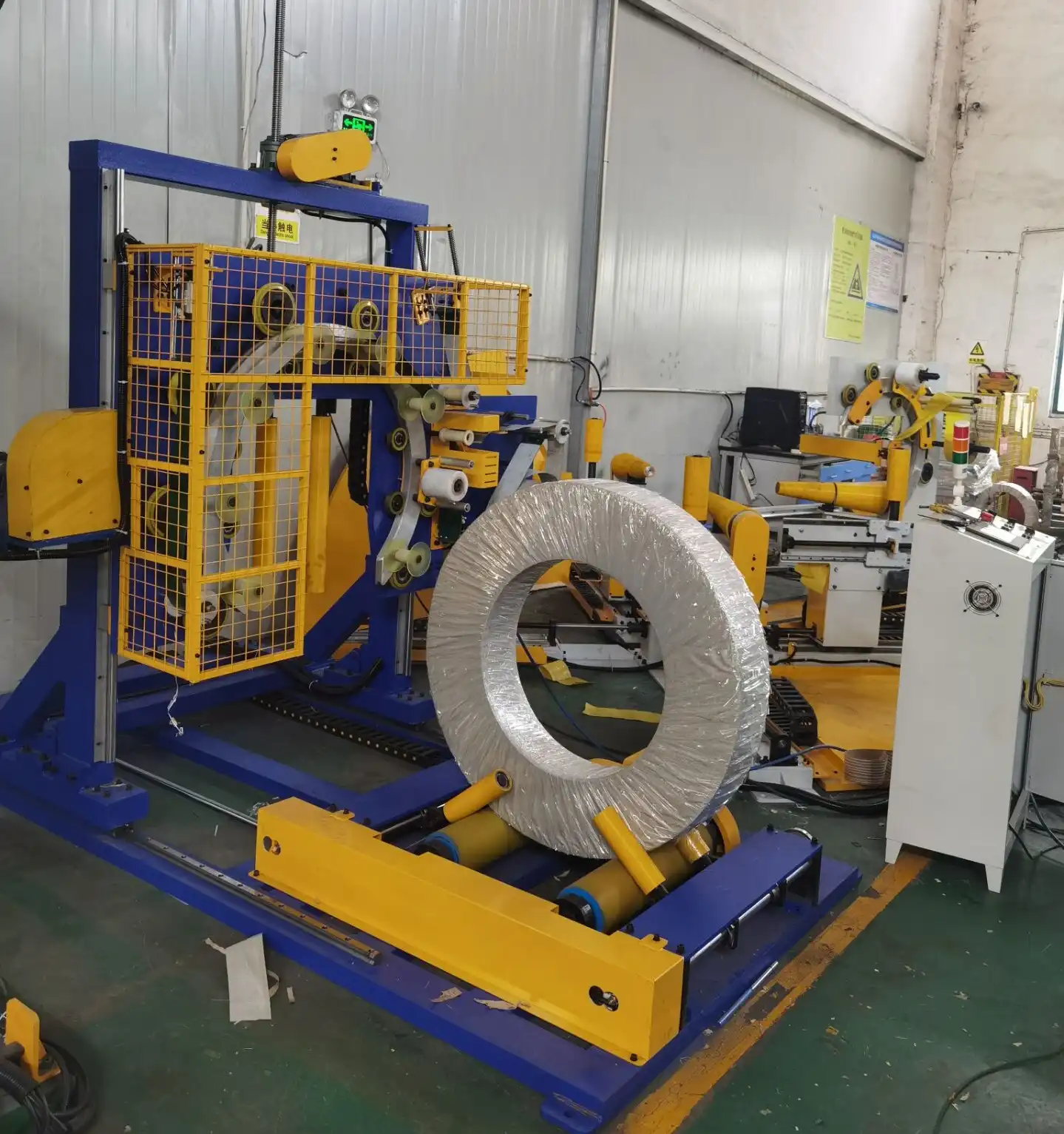
Dive Deeper: Vertical Coil Wrapping in Detail
Vertical coil wrapping machines often employ a rotating wrapping ring that moves around the stationary coil. The coil is typically placed on a platform or support rollers. Wrapping material is dispensed from the ring as it rotates, applying layers of protection.
To understand the nuances of vertical coil wrapping, let's consider different aspects:
Advantages of Vertical Coil Wrapping:
- Gravity Assist: Gravity aids in stabilizing heavy coils during wrapping.
- Top Loading Convenience: Easy loading with overhead cranes and hoists for heavy materials.
- Smaller Footprint: Occupies less floor space compared to horizontal counterparts.
- Cost-Effective Options: Generally, entry-level vertical machines are more affordable.
Disadvantages of Vertical Coil Wrapping:
- Slower for High Volumes: Manual or semi-automatic loading/unloading can limit throughput for high-volume production.
- Less Automation Integration: Integrating into fully automated lines can be more complex compared to horizontal machines.
- Material Limitations: Wrapping very light or flexible coils can be challenging in a vertical orientation.
Key Features in Vertical Coil Wrapping Machines:
- Rotating Ring Size: Determines the maximum coil diameter the machine can handle.
- Wrapping Material Dispenser: Accommodates different material types and roll sizes.
- Tension Control: Ensures consistent and secure wrapping tension.
- PLC Control: For programmable wrapping patterns and automated functions in advanced models.
Horizontal Coil Wrapping Machines: Automation and High Throughput
Horizontal coil wrapping machines excel in automated, high-throughput environments. Their key characteristics include:
- Integration into Production Lines: Designed for seamless integration with conveyors and automated coil handling systems.
- High-Speed Wrapping: Horizontal configurations often facilitate faster wrapping cycles, crucial for high-volume production.
- Handling Various Coil Types: Adaptable to a wide range of coil sizes, shapes, and materials, including light and flexible coils.
- Fully Automatic Operation: Advanced horizontal lines can automate the entire process from coil infeed to wrapped coil outfeed.
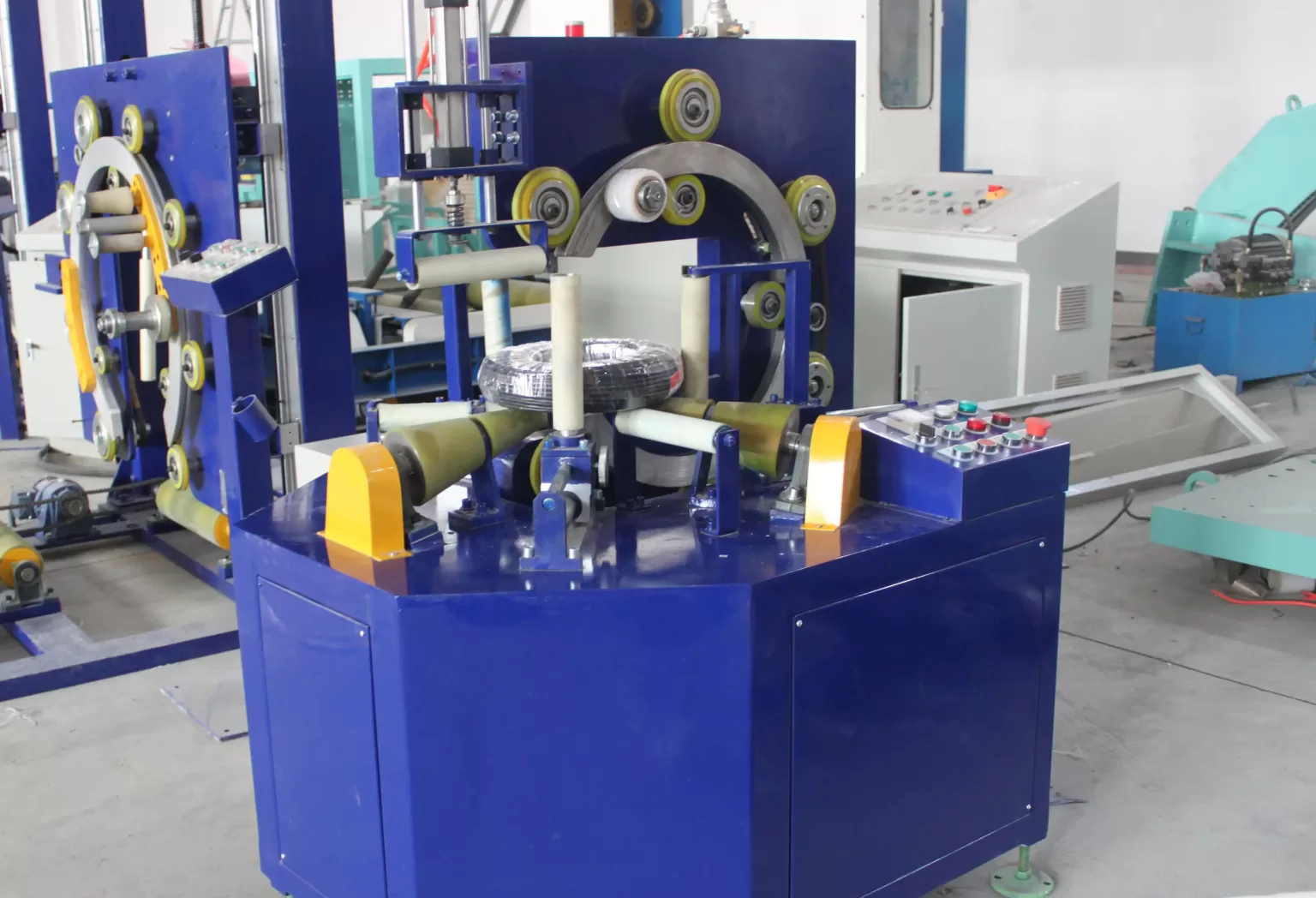
Dive Deeper: Horizontal Coil Wrapping Advantages and Considerations
Horizontal coil wrapping machines typically employ a rotating wrapping head that moves around the horizontally positioned coil. The coil is often supported on rollers or a conveyor system, allowing for continuous movement through the wrapping zone.
Let's further analyze horizontal coil wrapping:
Advantages of Horizontal Coil Wrapping:
- High-Speed Automation: Ideal for integration into automated production lines for maximum efficiency.
- Continuous Flow: Coils can move continuously through the wrapping process, minimizing handling time.
- Versatility for Coil Types: Handles a wider range of coil sizes, weights, and flexibility.
- Reduced Manual Labor: Full automation minimizes operator involvement, lowering labor costs and increasing consistency.
Disadvantages of Horizontal Coil Wrapping:
- Larger Footprint: Horizontal lines often require more floor space due to conveyors and infeed/outfeed systems.
- Higher Initial Investment: Fully automated horizontal systems generally have a higher upfront cost.
- Complexity: More complex machinery may require specialized maintenance and technical expertise.
- Less Gravity Assist for Heavy Coils: Handling extremely heavy coils in a horizontal orientation might require robust support and handling mechanisms.
Key Features in Horizontal Coil Wrapping Machines:
- Conveyor Integration: Seamless interface with infeed and outfeed conveyor systems.
- Automatic Coil Handling: Features like pushers, stops, and indexing mechanisms for automated coil movement.
- Wrapping Head Speed and Control: High-speed wrapping heads with precise control over material application.
- Advanced PLC and HMI Systems: Sophisticated control systems for programming complex wrapping patterns, managing automation sequences, and data logging.
Choosing Between Vertical and Horizontal: A Comparative Table
To summarize the key differences and help guide your selection, consider this comparison table:
| Feature | Vertical Coil Wrapping Machine | Horizontal Coil Wrapping Machine |
|---|---|---|
| Coil Orientation | Upright (Vertical) | Lying Flat (Horizontal) |
| Loading Method | Top Loading (Crane/Hoist) | Infeed Conveyor |
| Automation Level | Manual to Semi-Automatic | Semi-Automatic to Fully Automatic |
| Production Volume | Lower to Medium | Medium to High |
| Floor Space Requirement | Smaller | Larger |
| Cost | Generally Lower | Generally Higher |
| Coil Type Suitability | Heavy, Large Coils | Wide Range, Including Light and Flexible |
| Integration with Lines | More Complex | Seamless Integration |
| Speed & Throughput | Slower | Faster |
Automation Levels: From Economic to Fully Automatic Coil Packing Lines
Coil wrapping and packing machines come in varying degrees of automation, catering to different production volumes, budgets, and labor considerations. Understanding these levels is crucial for selecting a machine that aligns with your operational needs and efficiency goals.
Coil packing machines range from economic, semi-automatic versions requiring manual operation to fully automatic lines that integrate seamlessly into production processes. The level of automation impacts speed, labor requirements, and overall efficiency. Choosing the right level depends on production volume, budget, and desired operational efficiency.
Let's explore the different automation levels:
1. Economic/Semi-Automatic Coil Wrapping Machines: Cost-Effective Entry Point
Economic or semi-automatic coil wrapping machines represent a cost-effective solution for businesses with lower production volumes or tighter budgets. They typically involve manual loading and unloading of coils, and may require operator intervention for starting the wrapping cycle and securing the wrap.
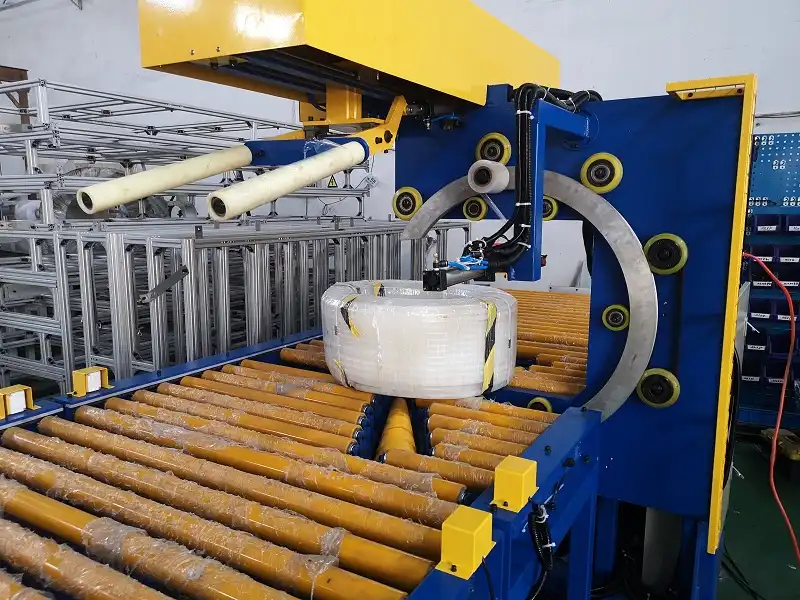
Dive Deeper: Features of Economic Coil Wrapping Machines
Economic versions often focus on core functionality while minimizing complex automation features. Key aspects include:
Characteristics of Economic Coil Wrappers:
- Manual Loading/Unloading: Operators use forklifts, cranes, or manual handling to place coils on the machine and remove wrapped coils.
- Simplified Controls: Basic control panels with buttons or dials for adjusting wrapping parameters like speed and tension.
- Semi-Automatic Cycle Start: Operators typically initiate the wrapping cycle with a button press.
- Manual Material Cutting: In some economic models, operators manually cut the wrapping material after the cycle.
- Lower Initial Cost: Significantly less expensive than fully automatic systems, making them accessible to smaller businesses.
- Robust and Reliable: Often built with durable components for long-term reliability, even in demanding environments.
Typical Applications for Economic Coil Wrappers:
- Small to Medium-Sized Businesses: Ideal for companies with moderate production volumes.
- Entry-Level Automation: A good starting point for businesses transitioning from manual wrapping to automated solutions.
- Diverse Coil Types: Can handle various coil materials and sizes within the machine's capacity.
- Warehouses and Distribution Centers: For preparing coils for storage and shipment.
2. Automatic Coil Wrapping Machines: Increased Efficiency and Throughput
Automatic coil wrapping machines step up the automation level, reducing manual labor and boosting throughput. These machines automate key steps like material feeding, cutting, and sometimes even coil handling within the wrapping station.
Dive Deeper: Capabilities of Automatic Coil Wrapping Machines
Automatic machines integrate more sophisticated features for streamlined operation:
Features of Automatic Coil Wrappers:
- Automated Material Feeding & Cutting: Machines automatically dispense and cut wrapping material, eliminating manual cutting.
- Programmable Wrapping Cycles: PLC controls allow for pre-set wrapping patterns, overlap, and tension levels, ensuring consistency.
- Sensor-Based Operation: Sensors detect coil presence and initiate wrapping cycles automatically in some models.
- Increased Wrapping Speed: Automated systems often achieve faster wrapping cycles compared to semi-automatic versions.
- Reduced Operator Intervention: Minimizes manual tasks, freeing up operators for other responsibilities.
- Improved Consistency & Quality: Automation ensures uniform wrapping quality and reduces human error.
Applications of Automatic Coil Wrappers:
- Medium to High Production Volumes: Suitable for businesses with increasing output demands.
- Reduced Labor Costs: Automation helps minimize labor requirements and associated expenses.
- Consistent Packaging Quality: Ensures uniform and reliable coil protection.
- Integration Potential: Can be integrated with infeed and outfeed conveyors for semi-automated lines.
3. Fully Automatic Coil Packing Lines: End-to-End Automation
Fully automatic coil packing lines represent the pinnacle of automation in coil packaging. These comprehensive systems integrate multiple machines to automate the entire process from coil infeed to wrapped and stacked coil outfeed, requiring minimal operator supervision.
Dive Deeper: Components of Fully Automatic Coil Packing Lines
Fully automatic lines are complex systems composed of interconnected machines working in harmony:
Key Components of Automatic Coil Packing Lines:
- Coil Infeed System: Automated conveyors or handling systems to feed coils into the line.
- Decoiler (for certain materials): Unwinds coils of strip or sheet material for processing before wrapping.
- Straightener (for certain materials): Ensures material is straight and free of defects before wrapping.
- Coil Wrapping Machine (Horizontal): High-speed horizontal wrapper at the core of the line.
- Strapping Machine: Applies steel or plastic straps for added security, especially for heavy coils.
- Palletizer: Automatically stacks wrapped and strapped coils onto pallets for efficient handling and transport.
- Conveyor Systems: Interconnecting conveyors to move coils between stations.
- Centralized PLC Control: Sophisticated PLC system to manage and synchronize all line components, often with HMI (Human-Machine Interface) for operator monitoring and control.
Advantages of Fully Automatic Coil Packing Lines:
- Maximum Throughput & Efficiency: Optimized for high-volume production and continuous operation.
- Minimal Labor Costs: Significantly reduces labor requirements, often requiring only monitoring personnel.
- Complete End-to-End Automation: Automates the entire packaging process, from coil infeed to palletized output.
- Data Integration & Tracking: Advanced control systems can integrate with factory management systems for data logging, production tracking, and quality control.
- Optimized Material Usage: Precise control systems minimize material waste.
Applications of Fully Automatic Coil Packing Lines:
- Large-Scale Coil Manufacturers: For high-volume producers of steel coils, wire coils, pipes, and cables.
- 24/7 Operations: Designed for continuous operation in demanding production environments.
- Industries with Stringent Packaging Requirements: Ensures consistent and high-quality packaging for demanding applications.
- Facilities Seeking Maximum Efficiency & Cost Savings: Provides the highest level of automation for optimized productivity and reduced operational expenses.
Selecting the Right Machine: Key Considerations
Choosing the ideal coil wrapping or packing machine involves careful consideration of several factors to ensure the selected equipment aligns with your specific needs and operational requirements.
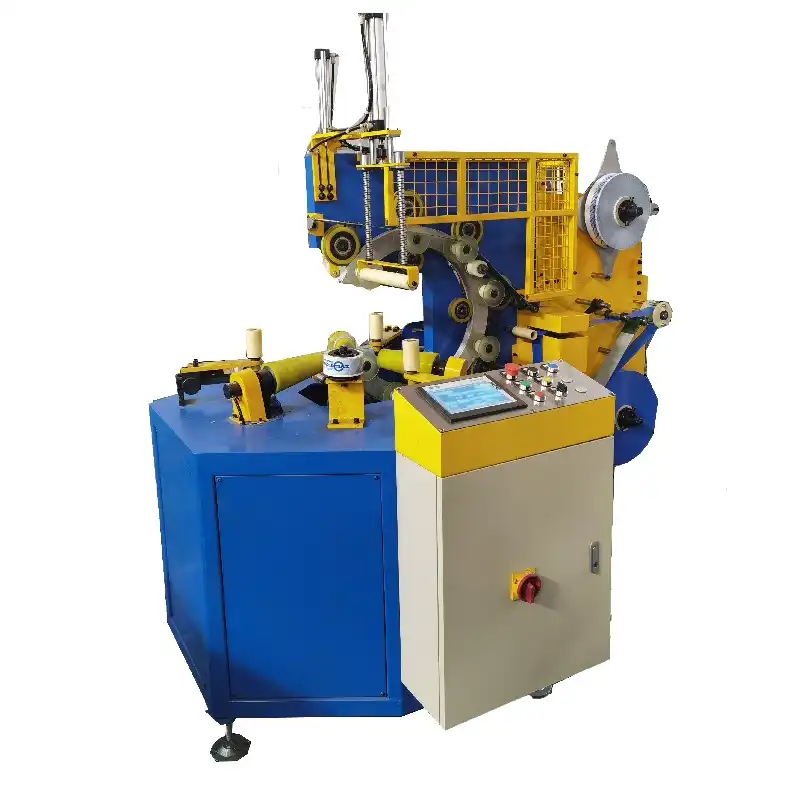
When selecting a coil wrapping or packing machine, consider factors like coil size and weight, production volume, material type, automation level, space constraints, budget, and desired features. A thorough assessment of these factors will guide you to the machine that best optimizes your coil packaging process and delivers the required protection and efficiency.
Here's a breakdown of key considerations:
1. Coil Dimensions and Weight:
- Size Range (OD, ID, Width): Ensure the machine can accommodate the range of coil sizes you handle. Check the maximum and minimum dimensions the machine is designed for.
- Weight Capacity: Verify the machine's load-bearing capacity is sufficient for the heaviest coils you package. Overloading can damage the machine and compromise safety.
2. Production Volume and Throughput:
- Coils per Day/Week/Month: Estimate your required packaging throughput to determine the necessary machine speed and automation level. High volumes may necessitate fully automatic lines.
- Cycle Time: Consider the machine's wrapping cycle time to ensure it meets your production pace.
3. Coil Material Type:
- Steel, Wire, Plastic, Cable, etc.: Different materials may require specific wrapping materials and machine features. For example, delicate materials might need adjustable tension control.
- Surface Sensitivity: If coils have sensitive surfaces, choose machines and wrapping materials that minimize scratching or damage.
4. Wrapping Material:
- Stretch Film, Paper, Woven Belt, etc.: Select wrapping materials based on desired protection levels (dustproof, waterproof, rustproof), cost, and application.
- Material Roll Size: Ensure the machine can handle the desired roll sizes for your chosen wrapping material.
5. Automation Level:
- Manual, Semi-Automatic, Automatic: Choose the automation level that aligns with your budget, labor availability, and desired efficiency. Consider future scalability as well.
6. Space Availability:
- Footprint: Assess the available floor space in your facility and choose a machine with a suitable footprint. Vertical machines are generally more compact.
- Layout Integration: If integrating into a production line, ensure the machine's layout and infeed/outfeed options fit your existing setup.
7. Budget:
- Initial Investment: Compare the upfront costs of different machine types and automation levels.
- Operating Costs: Factor in material costs, energy consumption, maintenance, and labor expenses to estimate long-term operating costs.
8. Desired Features and Options:
- PLC Control: For programmable wrapping patterns and advanced automation.
- HMI Touchscreen: For user-friendly operation and monitoring.
- Tension Control: For consistent and secure wrapping.
- Automatic Material Cutting: For increased automation and efficiency.
- Safety Features: Guards, sensors, and emergency stops for operator safety.
- Customization Options: Consider if you require customized features for specific coil types or packaging needs.
By carefully evaluating these considerations, you can confidently select a coil wrapping or packing machine that optimizes your packaging process, enhances product protection, and contributes to operational efficiency.
Conclusion
In summary, while the terms "coil wrapping machine" and "coil packing machine" are often used interchangeably, understanding their core functions and the nuances of different machine types and automation levels is essential for making informed decisions. Whether you opt for an economic vertical wrapper or a fully automatic horizontal packing line, the goal remains the same: to efficiently and effectively protect your valuable coil products. By carefully assessing your specific needs and considering the key factors outlined in this guide, you can select the ideal [wire packing automation]() solution to streamline your operations and ensure your coils reach their destination in perfect condition.