
What Are the Benefits of Pallet Inverters in Reducing Workplace Injuries?
Pallet inverters significantly reduce workplace injuries by automating pallet handling, eliminating manual lifting and awkward movements that commonly cause strains, sprains, and back injuries. By safely rotating and transferring loads, these machines enhance ergonomics, minimize physical stress on workers, and create a safer working environment in various industries.
The Critical Role of Pallet Inverters in Modern Material Handling
In today's fast-paced industrial landscape, the sheer volume of goods being moved daily is staggering. Billions, perhaps trillions, of movements are made by workers handling and processing products. This constant activity underscores the critical need for efficient and safe material handling solutions. Pallet inverters emerge as a vital tool in this context, offering a blend of functionality and benefits that directly impact a company's bottom line by enhancing both efficiency and, crucially, safety.
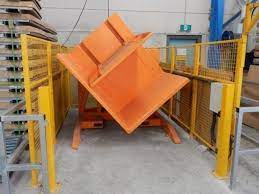
These machines are designed to handle and reorient product loads of diverse sizes and weights. They empower workers to effortlessly manage pallets loaded with boxes, cartons, drums, and various other containers, revolutionizing how materials are processed and transported within facilities.
Understanding Pallet Inverters: An Ergonomic Approach to Material Handling
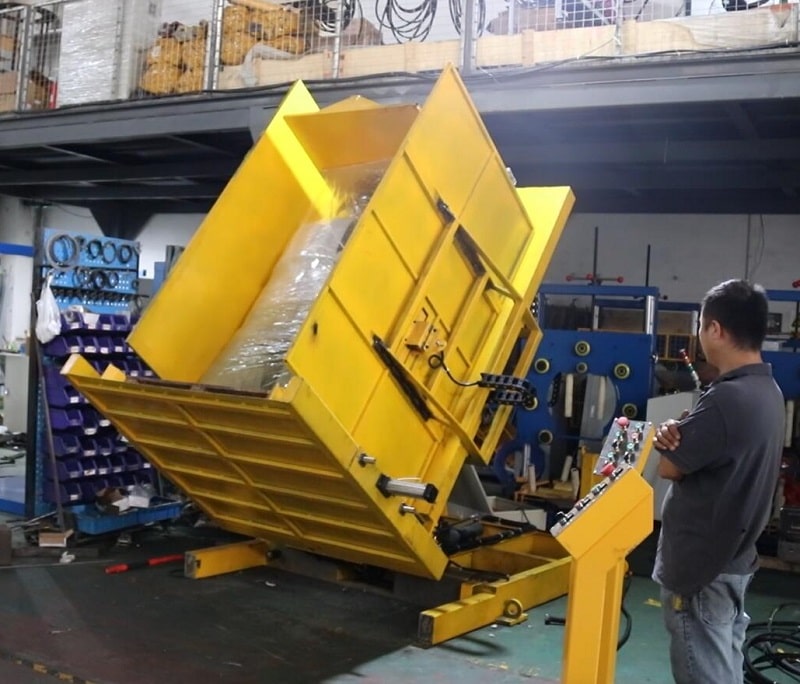
A pallet inverter can be deployed as a standalone piece of equipment or integrated within a larger, more complex material-handling system. Its core function is to rotate or tilt pallets at different junctures in the loading and transport sequence. However, beyond simple manipulation, the primary purpose of a pallet inverter is to manage materials in a manner that is ergonomically sound, directly addressing the physical demands placed on workers.
Capabilities and Versatility of Pallet Inverters
Pallet inverters showcase a remarkable range of capabilities, designed to accommodate a wide spectrum of industrial needs. Most models boast a substantial lift capacity, often around 4,400 pounds, ensuring they can handle heavy loads encountered in various industries. The clamp widths are equally versatile, ranging from a narrow 23 inches to an expansive 110 inches, accommodating different pallet and load dimensions. Operations are swift, with pallet inverters from leading manufacturers capable of completing a full rotation in approximately 17 seconds, minimizing downtime and maximizing throughput.
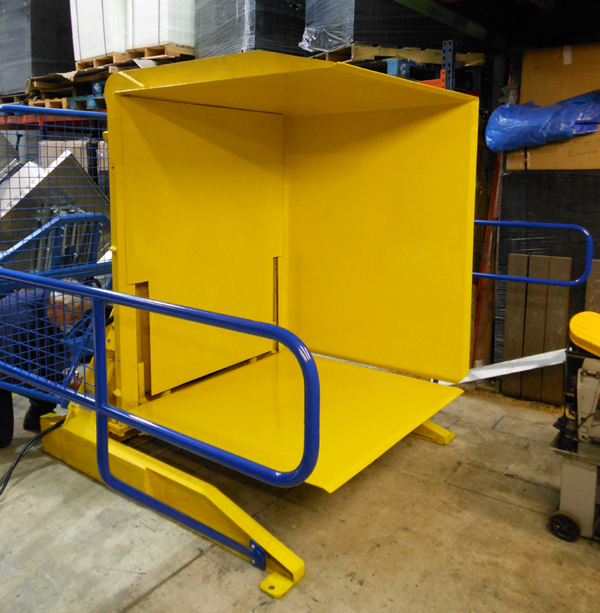
Powered by electricity, pallet inverters can rotate up to 180 degrees, facilitating lifting, turning, and precise positioning of products weighing between 3,300 to 4,400 pounds, depending on the model. A key feature is the programmable pressure exerted by the clamps, which securely hold the load without causing damage to the containers, whether they are boxes, cartons, drums, or other forms of packaging. This adaptability extends to handling loads that are not perfectly square, such as barrels, or materials not even placed on pallets.
Customization further enhances the utility of pallet inverters. Options like movable clamps at one or both ends of the load, adjustable clamping pressure, and various side-guard and floor-guard configurations allow businesses to tailor the equipment to their specific needs. Designed to be compatible with pallet jacks and forklifts at ground level, they elevate loads to ergonomically correct positions, simplifying pallet removal and load manipulation. Additional features, such as rollers in corners and pallet grabbers, can be integrated to further improve ease of use, speed, and safety in material handling processes.
Operationally, pallet inverters are typically controlled via push-buttons, making them user-friendly. Control panels, often featuring one to six buttons on a hanging cord or pedestal mount, simplify operation and contribute to safe usage by minimizing complexity.
Industries Benefiting from Pallet Inverters
The applications of pallet inverters are diverse, spanning numerous industries that rely on efficient and safe material handling:
- Automotive
- Beverage
- Construction
- Grocery
- Food Service
- Landscape and Lawn
- Manufacturing
- Publishing
- Retailers
- Warehousing
These industries commonly require the removal or insertion of in-shipment pallets or spacers. Many facilities need to switch transport pallets for lighter or smaller alternatives, or maintain product sequence. Pallet inverters address these needs, streamlining operations across a broad spectrum of sectors.
Why Pallet Inverters are Beneficial: Enhancing Safety and Efficiency
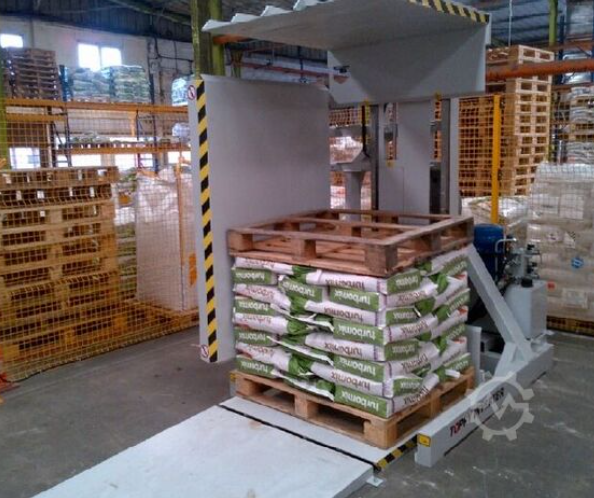
The primary advantages of pallet inverters are their ability to lift, turn, and orient loads with greater efficiency and safety compared to manual labor. Consider the task of removing spacers in frozen food handling; a pallet inverter can accelerate this process by up to 90% compared to manual methods.
Different industries prioritize various benefits offered by pallet inverters:
- Enhanced Safety: Reducing the risk of workplace injuries.
- Reduced Labor Costs: Automating tasks previously done manually.
- Increased Efficiency: Faster pallet handling rates per hour.
- Adaptability: Handling a wide range of load sizes, shapes, and heights.
- Customization: Available accessories like pallet grippers and options for specialty jobs (side support, gravity-assisted movements, etc.).
- Accident and Injury Prevention: Minimizing risks associated with manual lifting and handling.
- Consistent Results: Ensuring precise and repeatable operations.
- Load Security: Firmly holding loads with hydraulic pressure, preventing shifting and damage.
- Ease of Use: Rollers facilitating loading and unloading processes.
Pallet Inverter Safety: A Paramount Consideration
While pallet inverters are designed to enhance safety and efficiency, their misuse can quickly turn them into a safety hazard. Therefore, prioritizing safety in their operation is paramount.
Essential Pallet Inverter Safety Tips
Achieving the intended safety and efficiency benefits of pallet inverters requires adherence to comprehensive safety practices, ranging from clear floor markings to thorough personnel training.
When used correctly, pallet inverters significantly mitigate risks of injury, accidents, product damage, and inconsistencies. They directly address a major source of workplace injuries: load-transfer work. Manual load handling often leads to injuries, particularly affecting the arms, legs, back, and shoulders due to repetitive motions, excessively heavy lifting, or awkward postures. Pallet inverters are instrumental in preventing these common injuries.
Industry statistics paint a sobering picture of workplace injuries and fatalities. For example, in food manufacturing, the injury incidence rate can be as high as 71.2 per 100 workers, highlighting the urgent need for safety improvements. Injuries not only impact workers' well-being but also lead to lawsuits, liability issues, production losses, and decreased morale. While pallet inverters are not a panacea for all workplace safety concerns, they are a vital tool for creating a more positive and safer work environment.
Key safety tips for operating pallet inverters include:
- Machine Familiarity: Ensure all operators are thoroughly familiar with the equipment’s operation, including floor guards, clamps, pressure mechanisms, and all moving parts.
- Comprehensive Training: Train a broad range of staff, not just a select few. Widespread training reduces accidents caused by inexperience or lack of knowledge.
- Area Definition: Clearly mark operational zones using safety tape, reflective markings, cones, and other visual aids to delineate safe areas around the pallet inverter.
- Regular Maintenance: Implement a routine inspection, cleaning, and servicing schedule to maintain optimal performance and safety.
- Learn from Incident Reports: Review accident reports from organizations like the Department of Labor to understand potential hazards and reinforce safe practices. For instance, learning from past accidents, such as a worker injured by unexpected inverter movement, underscores the importance of following safety protocols.
Operator Training: Ensuring Competent and Safe Operation
Creating a safe workplace is a primary goal for business owners and managers, and adhering to Occupational Safety and Health Administration (OSHA) guidelines is essential. OSHA can conduct inspections at any time, and non-compliance can result in fines and penalties, such as those for unlicensed forklift operators.
OSHA categorizes powered industrial trucks into seven classes, each requiring certified operator training. While pallet inverters may not fall under the same licensing requirements as forklifts, comprehensive safety training is still crucial. Even if an operator primarily pushes buttons and manages pallets, understanding potential hazards and safe operation is vital for preventing accidents and ensuring smooth interaction with other equipment.
Businesses using powered machinery are required to develop and implement workplace-specific safety plans and training programs. Lack of training for pallet inverter operators can be viewed negatively during safety compliance checks. Inspectors may also assess factors like clear demarcation of the pallet inverter area and adequate clearance.
Beyond compliance, equipment training yields numerous benefits:
- Boosts Employee Morale: Demonstrates investment in employee well-being.
- Prioritizes Safety Culture: Reinforces safety as a core organizational value.
- Prevents Injuries: Reduces the likelihood of workplace accidents.
- Minimizes Damage: Decreases damage to products and the workplace environment.
- Enhances Productivity: A safer and more skilled workforce is more productive.
- Prolongs Equipment Lifespan: Proper operation and care preserve machinery.
General Workplace Safety and Ergonomics
General workplace safety practices and ergonomic principles are universally applicable in preventing accidents and injuries. Ergonomic standards emphasize avoiding awkward postures like head tilting or long reaches, encouraging posture changes, and maintaining hands and elbows close to the body.
Many safety considerations relevant to other equipment also apply to pallet inverters:
- Strategic Placement: Position inverters in safe and accessible locations.
- Clearances: Ensure adequate side and overhead clearances.
- Floor Condition: Address uneven floor surfaces.
- Traffic Management: Manage traffic flow around the inverter area.
- Operator Training: Provide thorough operator training.
- Floor Load Limits: Respect floor load limits.
- Hazard Identification: Remove obstructions, obstacles, and hazards from the operational area.
- Personal Protective Equipment (PPE): Use appropriate eye and/or ear protection as needed.
The Importance of Ergonomics in Injury Prevention
Ergonomics, the applied science of designing workplaces and equipment for safe and efficient human interaction, is critical in environments involving manual labor. By optimizing the workplace layout and equipment, ergonomics aims to prevent injuries from lifting, bending, and repetitive motions. Although federal ergonomic standards have seen a fluctuating history, many employers voluntarily adopt ergonomic principles to reduce injuries and associated costs.
Typical ergonomic injuries include back pain, tendonitis, bursitis, neuritis, and carpal tunnel syndrome. The Materials Handling Industry of America (MHI) recognizes various arm, elbow, shoulder, hand, and wrist disorders stemming from repetitive work. These conditions cause pain, reduce productivity, and can lead to significant financial burdens.
The Department of Labor’s statistics on ergonomic injuries highlight their widespread impact:
- Financial Cost: Ergonomic injuries cost industries $116 billion annually in medical expenses, lost time, and wages.
- Lost Workdays: Result in 105 million lost workdays per year.
- Workers’ Compensation Claims: Materials-handling injuries account for 35% of all workers’ compensation claims.
- Back Injury Claims: Back injuries constitute 29% of compensation claims.
Solutions to mitigate ergonomic injuries include:
- Ergonomic Equipment: Utilizing equipment like pallet inverters.
- Automation: Automating injury-prone tasks with conveyors, rollers, pallet retrievers, and other automated systems.
- Ergonomic Training: Training workers on proper body mechanics and safe lifting techniques.
Partnering with Experts for Enhanced Safety and Efficiency
Organizations like Cherry’s Industrial Equipment and Top Industries Inc. offer resources and expertise in pallet inverter solutions and safety. These specialists provide comprehensive information and customized solutions to meet diverse material handling needs. By partnering with such professionals, businesses can access not only equipment but also guidance on safe implementation and best practices.
Investing in pallet inverters is a proactive step towards enhancing workplace safety, reducing injuries, and improving operational efficiency. By prioritizing safety protocols, comprehensive training, and ergonomic principles, businesses can leverage the full benefits of pallet inverters, creating a safer and more productive work environment for their employees。