
Want to Streamline Your Coil Handling? Let's Talk High-Bay Storage!
Are you struggling with coil storage and retrieval in your metal processing plant? High-bay storage systems could be the game-changer you need. These automated warehouses drastically improve efficiency, reduce handling damage, and optimize space utilization in demanding industrial environments.
For over 30 years, I've been immersed in the intricacies of metal industry production lines, and I've witnessed firsthand the transformative power of efficient material handling. One area that consistently presents challenges, but also significant opportunities for improvement, is coil management. From hot rolling to cold rolling and beyond, the journey of a metal coil through a processing plant is complex. Temporary storage is a critical step, especially for coils coming directly from rolling mills. That’s where high-bay warehouses come into play, acting as centralized hubs for streamlined operations.
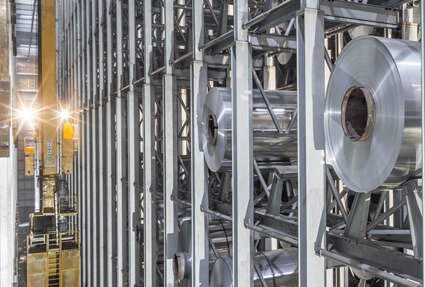
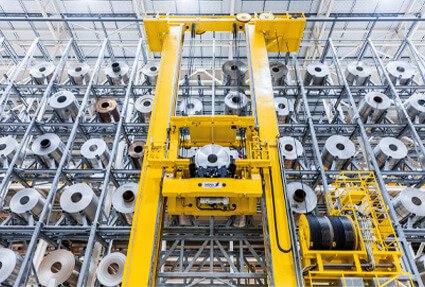
Imagine a scenario where coils, fresh off the production line, are seamlessly moved into a towering, automated warehouse. Stacker cranes glide through the aisles with precision, swiftly storing and retrieving these heavy metal giants. This isn't just a futuristic vision; it's a reality I've seen implemented with incredible success, particularly in modern steel and aluminum plants.
Let me share an example that truly highlights the impact of these systems. I recently reviewed a project involving a fhope1 high-bay store designed to handle a staggering 1,382 coils. Think about that scale for a moment – a warehouse capable of holding over a thousand massive metal coils! This particular installation, located in China, was built to accommodate coils weighing up to 32 tons each. The sheer dimensions of the store – 293 meters long, 21 meters wide, and 31 meters high – are a testament to the impressive capacity of modern high-bay technology.
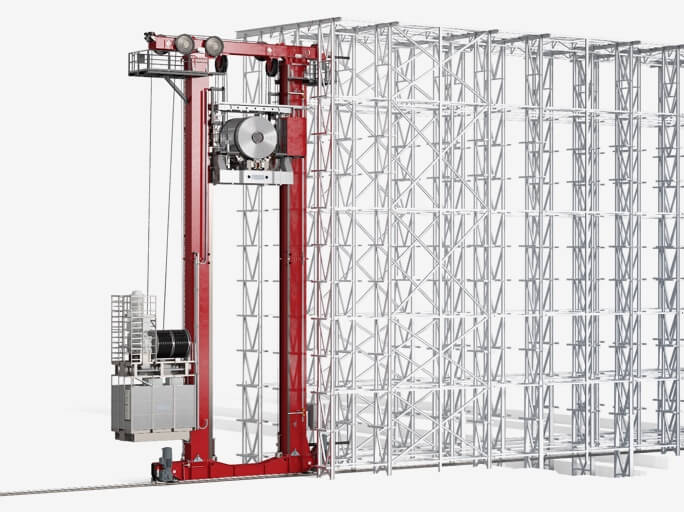
What makes these systems so effective? It's the combination of intelligent design and advanced technology. For instance, in hot rolling applications, freshly produced coils are incredibly hot. Waiting for them to cool down naturally can significantly bottleneck production. Cleverly designed high-bay warehouses address this with specialized ventilation systems that actively cool hot-rolled coils within the storage facility. This drastically minimizes dwell time and keeps the production flow moving smoothly.
Furthermore, the integration with downstream processes is crucial. Coil stackers, another key component in these systems, seamlessly transport coils to the next stages, whether it's an annealing furnace or transfer stations for further processing. And for long-distance transport within the plant, Automatic Coil Transporters (A.C.T.®) – another ingenious solution I’ve frequently encountered – take over, ensuring gentle and efficient movement to finishing lines.
Speaking of A.C.T.® systems, these deserve a closer look. In my experience, coil damage during handling is a significant concern, leading to material waste and production delays. A.C.T.® systems are engineered to minimize this risk. They prioritize careful coil handling while maintaining high throughput, a critical balance in demanding production environments.
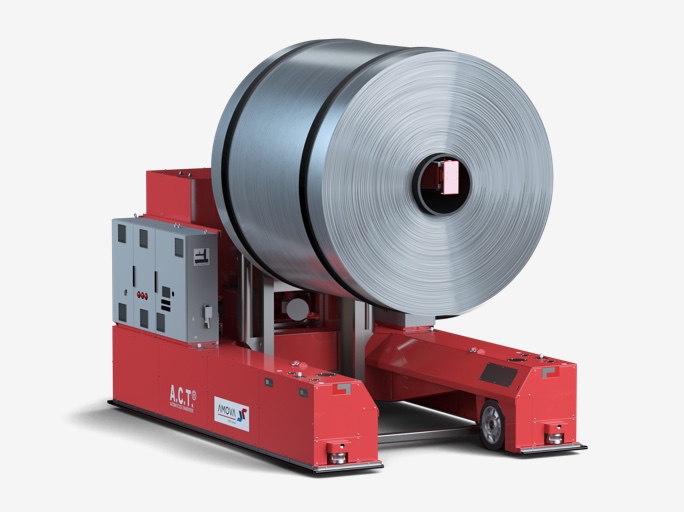
Think of A.C.T.® as specialized vehicles designed specifically for coils. They navigate your plant floor autonomously, precisely delivering coils where they need to be, when they need to be there. This level of automation reduces the need for manual intervention, minimizing the chances of human error and accidents, and significantly boosting overall safety and efficiency.
But a high-bay warehouse isn’t just about the physical hardware. The brains of the operation lie in the Warehouse Management System (WMS). A robust WMS is essential for orchestrating the entire material flow, from coil entry to exit. It’s the conductor of the orchestra, ensuring every component works in harmony.
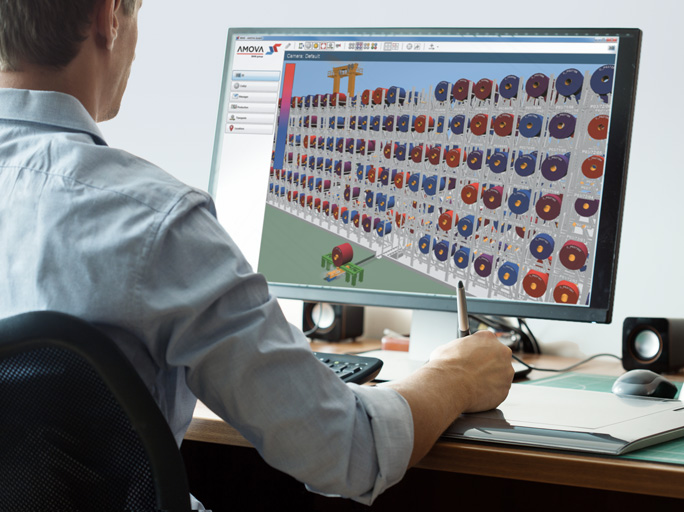
A sophisticated WMS provides real-time inventory tracking, optimizes storage locations, manages retrieval sequences, and integrates seamlessly with your overall plant control system. In my experience, a well-implemented WMS is the difference between a good high-bay system and an outstanding one. It transforms the warehouse from just a storage space into a dynamic and intelligent part of your production process.
Over the years, I've seen numerous successful implementations of these technologies across various metal processing plants. Let’s consider some further examples that showcase the versatility and impact of automated material handling systems.
Take, for instance, a modernization project focused on a coil conveying system. In one particular case, a staggering 1,200 tons of equipment was supplied to revamp an existing system. This wasn't just a minor upgrade; it was a complete overhaul, including 1,100 square meters of new covers and substructure. The entire conversion was achieved in a remarkable 14 days, minimizing downtime and getting the production line back up and running quickly.
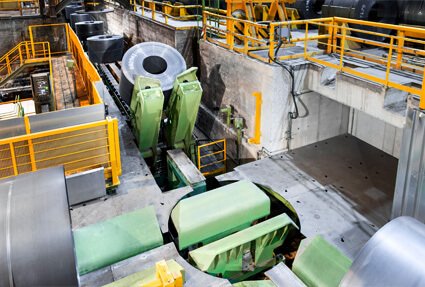
Another interesting application is pallet conveyor systems for hot-rolled coils. Imagine handling coils weighing up to 36 tons, and needing to move them efficiently. One project I reviewed involved an 853-meter long pallet conveyor system capable of handling 60 coils per hour. This high throughput is essential for keeping pace with the output of modern rolling mills.
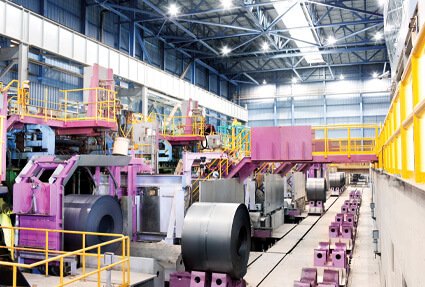
Automatic Coil Transporters (A.C.T.®) aren't limited to just high-bay warehouses. They are incredibly versatile and can be used in various parts of the plant. I've seen them deployed in systems handling coils up to 32 tons, with diameters as large as 2,800 mm, moving at speeds up to 1 meter per second. This combination of capacity and speed makes them ideal for demanding intralogistics tasks.
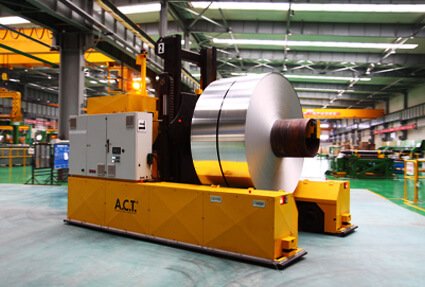
Even packaging lines can benefit significantly from automation. Consider a packaging line for litho coils, handling coils up to 10.8 tons. An automated system can achieve a throughput of 8 packs per hour, accommodating coil diameters up to 1,850 & 1,700 mm. This level of automation ensures consistent and efficient packaging, readying coils for shipment or further processing.
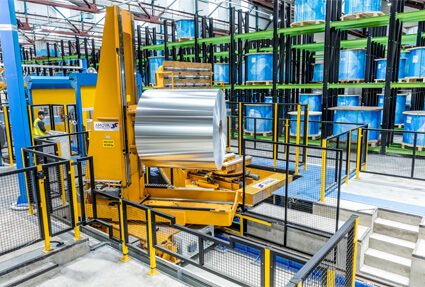
Let’s revisit the high-bay store example I mentioned earlier – the fhope1 store for 1,382 coils. To reiterate the scale, it handles 32-ton coils within a 293 x 21 x 31 meter structure. The 1,382 coil storage capacity is a testament to the space optimization achievable with these systems.
Sampling stations are another critical, often overlooked, part of the process. For high-grade steels, precise sampling is essential for quality control. Automated sampling stations can handle a wide range of strip thicknesses, from 1.5 to 28.3 mm, and deliver sample lengths of 520 mm, withstanding significant bending moments. This ensures consistent and accurate sample collection for rigorous testing.
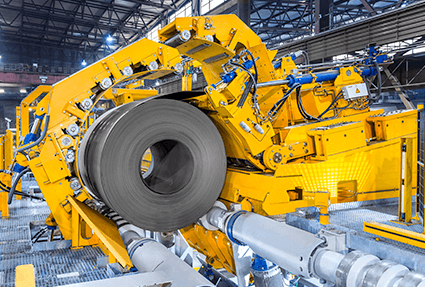
For operations dealing with lighter coils, such as litho coils, cantilever stores offer a different approach. A cantilever store, with dimensions of 48 x 9.2 x 4.2 meters, can handle coil input and output at rates of 4 coils/hour and 8 coils/hour respectively. These are ideal for applications where space might be a constraint or throughput requirements are different.
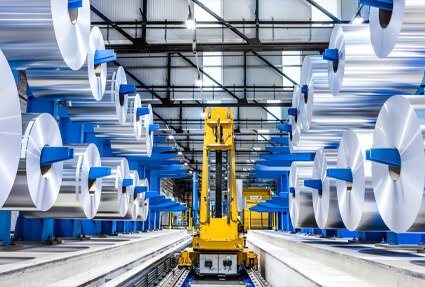
High-bay stores aren't exclusive to steel. Aluminum coil processing also benefits greatly. Consider a high-bay store designed for aluminum coils, handling coils up to 26.5 tons within a 207 x 8.2 x 23.8 meter structure, storing 504 coils. The principles are the same, but the system is tailored to the specific characteristics of aluminum coils.
Even seemingly simple processes like strapping can be optimized. Automated strapping lines for high-strength steel coils can handle strip thicknesses up to 28.3 mm, applying 3 straps per coil in under 190 seconds per coil. This speed and consistency are crucial for high-volume production.
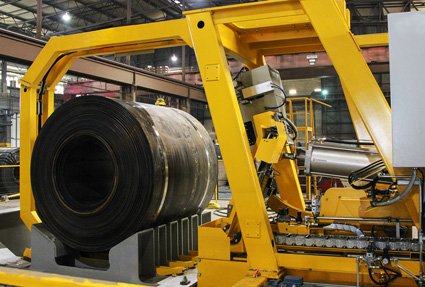
For very heavy coils, coil packaging lines are essential. Imagine packaging coils weighing up to 45 tons, with diameters up to 2.5 meters, at a capacity of 1,100,000 tons per year. Automated packaging lines handle these massive coils efficiently and safely, preparing them for transport and ensuring they reach customers in perfect condition.
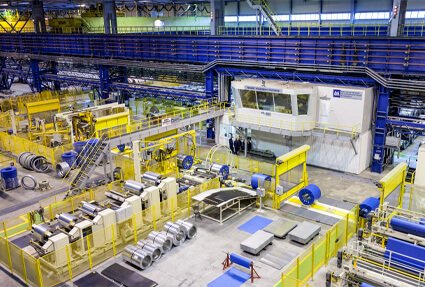
Inspection lines are another critical component. Whether it's a standalone inspection line or a conversion project to upgrade an existing one, these systems ensure quality. Inspection lines can handle a range of strip thicknesses and withstand significant bending moments, allowing for thorough examination and quality control.
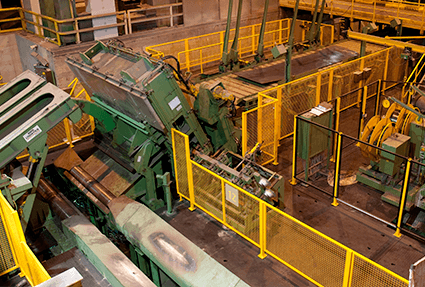
Inspection can also be integrated directly into the coil conveyor system. These integrated inspection lines handle varying strip thicknesses and bending moments, providing continuous quality monitoring within the production flow.
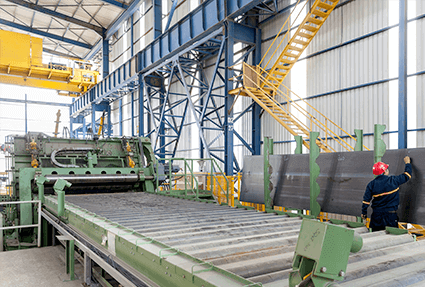
Pallet conveyor systems are also used for aluminum coils. Similar to steel coil systems, these can handle substantial coil weights, like 34 tons, across considerable lengths, such as 135 meters, achieving throughputs of 12 coils per hour. The adaptability of these systems to different materials highlights their versatility.
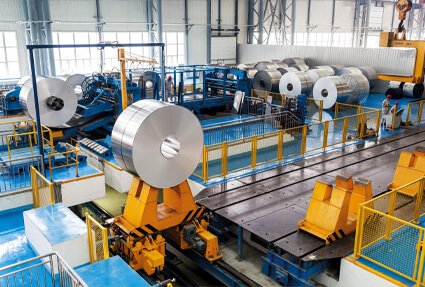
Modernization of existing coil conveying systems remains a vital area. Upgrading older systems with modern equipment can yield significant improvements in efficiency and reliability. Projects involving the supply of 1,200 tons of equipment and covering 1,100 square meters demonstrate the scale of these modernization efforts.
Pallet conveyor systems for hot-rolled coils continue to be a mainstay in many plants. Handling 36-ton coils across 853-meter conveyor lengths at 60 coils per hour throughput showcases the robust nature of these systems for heavy-duty applications.
And as we've discussed, Automatic Coil Transporters (A.C.T.®) are integral to efficient material flow. Handling 32-ton coils with diameters up to 2,800 mm and speeds of 1 m/s, they are the workhorses of automated coil handling.
Packaging lines for litho coils demonstrate the adaptability of automated solutions to specific coil types and sizes. Handling 10.8-ton coils at 8 packs/hour, accommodating diameters of 1,850 & 1,700 mm, these systems are tailored for precision and efficiency.
Revisiting the fhope1 high-bay store for 1,382 coils, it's clear why these large-scale systems are so impactful. Storing 32-ton coils in a 293 x 21 x 31 meter space with a capacity of 1,382 coils represents a significant leap in storage efficiency.
Finally, sampling stations for X-grade steel coils highlight the importance of quality assurance at every stage. Handling strip thicknesses from 1.5 – 28.3 mm and sample lengths of 520 mm withstanding 180,000 Nm bending moment ensures rigorous quality control.
In conclusion, after decades in this industry, I can confidently say that automated high-bay storage and related material handling systems are not just trends – they are essential investments for any metal processing plant aiming for peak efficiency, reduced operational costs, and enhanced product quality. By streamlining your coil handling processes, you're not just moving metal; you're moving your business forward.
Similar Projects and Features:
Beyond the specific examples detailed above, the world of automated coil handling is constantly evolving. Here are some common features and functionalities you'll find in similar projects:
- Automated Guided Vehicles (AGVs): While A.C.T.® systems are a specific type, AGVs in general are widely used for coil transport. Modern AGVs are incredibly sophisticated, using laser navigation, vision systems, and advanced safety features.
- Robotic Coil Handling: Robots are increasingly being integrated into coil handling systems for tasks like stacking, destacking, and even inspection. Robots offer precision, speed, and consistency, particularly in repetitive tasks.
- Digital Twins and Simulation: Before implementing a high-bay store or any major material handling system, digital twins and simulations are invaluable. They allow you to model and optimize the system in a virtual environment, identifying potential bottlenecks and fine-tuning the design before physical construction even begins.
- Predictive Maintenance: Modern systems are often equipped with sensors and software for predictive maintenance. This allows for proactive identification of potential equipment failures, minimizing downtime and extending the lifespan of your investment.
- Energy Efficiency: Sustainability is a growing concern, and modern high-bay systems are designed with energy efficiency in mind. Features like regenerative braking on stacker cranes and optimized material flow paths contribute to lower energy consumption.
- Modular Design: Many systems are designed with modularity in mind. This allows for easier expansion and adaptation as your production needs change over time. You can start with a core system and add modules as your business grows.
When considering a high-bay store or automated coil handling system, it’s crucial to look beyond just the initial investment cost. The long-term benefits in terms of increased throughput, reduced labor costs, minimized damage, and improved safety far outweigh the upfront expenses. In my experience, these systems are not just a purchase; they are a strategic investment in the future competitiveness and efficiency of your metal processing operation.