
Efficient material handling is the backbone of modern industry, influencing everything from production lines to global distribution networks. At the heart of many warehouse and manufacturing operations lies the need to move, store, and manage palletized goods safely and efficiently. Challenges such as damaged pallets, hygiene requirements, or the need to consolidate diverse loads often necessitate transferring products from one pallet type to another or simply inverting a load for better access or handling. While manual methods are slow, labor-intensive, and carry significant risks of injury and product damage, specialized equipment provides a far superior solution. Among the most versatile and robust of these solutions is the dual clamp pallet inverter.
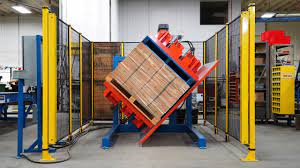
Understanding the Mechanics of Dual Clamp Pallet Inverters involves recognizing their unique dual clamping mechanism which provides superior stability and security for a wide range of loads during a 180-degree inversion process. This versatile equipment is essential for tasks like replacing damaged pallets, switching pallet types, and enhancing safety and efficiency in warehouses and manufacturing. Unlike simpler single-clamp models, the dual clamping system offers enhanced control, making it an ideal choice for operations handling variable, unstable, or sensitive loads.
What is a Dual Clamp Pallet Inverter?
A pallet inverter is fundamentally a machine designed to rotate a loaded pallet, most commonly through 180 degrees. This action allows operators to achieve various objectives, such as replacing a broken pallet, switching from an inbound shipping pallet (like wood) to an internal warehouse or hygienic pallet (like plastic or metal), removing freezer spacers, or accessing the underside of a load.
The "dual clamp" designation refers to the machine's clamping system. Instead of securing the load from just one direction (like a single top clamp), a dual clamp inverter employs two clamping surfaces that engage simultaneously to hold the load firmly from opposing sides – typically the top and bottom or top and side. This dual engagement is critical, providing significantly enhanced stability throughout the inversion cycle, particularly beneficial for loads that are tall, short, unevenly stacked, or composed of items prone to shifting, such as bags, drums, pails, or fragile boxes.
Many dual clamp pallet inverters are designed as "free standing" units, meaning they are stable under their own weight and primarily require only an electrical connection. Furthermore, many models feature "floor-level loading," allowing them to be loaded directly using a standard pallet jack or forklift at ground level, eliminating the need for ramps or pits in many cases and simplifying integration into existing workflows.
Delving into the Dual Clamping Mechanism
The operational mechanics of a dual clamp pallet inverter are centered around its ability to securely grip the load before rotation. The typical process involves:
- Loading: The palletized load is positioned within the inverter's frame or onto its loading table. Depending on the model, this can be done via forklift or, for floor-level units, by a pallet jack.
- Positioning: The load is centered and aligned within the clamping zone.
- Clamping: The operator activates the hydraulic clamping system. The dual clamps move in towards the load, applying controlled pressure from both the top and another surface (often the bottom or side) until the load and pallet are firmly secured. The adjustable pressure settings are crucial here, allowing the machine to hold the load tightly enough to prevent movement without crushing sensitive products.
- Rotation: With the load securely held by the dual clamps, the main body of the inverter, typically driven by a hydraulic system, rotates the entire clamped assembly. For most applications, this rotation is 180 degrees, flipping the load completely upside down. The hydraulic system ensures a smooth, controlled, and precise rotation.
- Pallet Management/Access: Once inverted, the original pallet is now positioned at the top of the load and is easily accessible for removal. A new pallet can then be placed underneath the inverted load. Alternatively, if the purpose was to access the bottom of the load or remove a layer, this is now possible.
- Return Rotation (Optional): If the goal was only pallet exchange or access, the machine can rotate the load back to its original orientation.
- Unclamping: The hydraulic clamps retract, releasing the load onto the new pallet (or back onto the original, depending on the task).
- Unloading: The load, now on the desired pallet or in its new orientation, is removed from the machine using a pallet jack or forklift.
This sequenced mechanical action, particularly the secure dual clamping, ensures that even loads with variable heights, unstable stacks, or delicate contents can be handled safely and efficiently without the risk of collapse or shifting during the inversion process.
Key Features and Technical Capabilities
Dual clamp pallet inverters are engineered for robust industrial use and come with a range of technical specifications and features tailored to various operational needs. While configurations vary by manufacturer and specific model, common technical parameters often include:

- Load Capacity: Standard capacities typically range up to 4400 pounds (2000 kg), though some models may offer higher capacities. The material mentions models capable of handling up to 4400 lbs and 2000 kgs.
- Rotation Angle: The standard and most common rotation is 180 degrees, allowing for complete inversion. Some machines may offer 90-degree rotation or other angles for specific applications like removing center pallets to consolidate loads.
- Clamping Range (Jaw Opening): A significant advantage of dual clamp models is their wider clamping range compared to single clamp inverters. This allows them to handle a broader variety of load heights, from very short to very tall. Specific models cited in the material show ranges from around 600mm (23.6 inches) up to 2.0 meters (78.7 inches) or even 110 inches (approx 2.8 meters) for specific models like the FSDC FLT, making them suitable for diverse product dimensions.
- Control Systems: Operation is typically managed via user-friendly interfaces. Common options include simple push-button controls, accessible from the seat of a lift truck, or more advanced PLC (Programmable Logic Controller) integration with HMI (Human-Machine Interface) touchscreens for automated or semi-automated sequencing. Pendant controls are also available.
- Construction: These machines are built with heavy-duty, welded steel frames designed to withstand demanding industrial environments, including cold stores. Standard finishes often include durable paint systems, with options for stainless steel or other specialized coatings for hygienic or harsh conditions.
- Power Requirements: Typically require 3-phase electrical power, with voltage and frequency dependent on regional standards.
- Safety Features: Safety is paramount. Standard features often include emergency stop buttons, maintenance locks for the clamping and turning bodies, and loading holding counterbalance valves to maintain hydraulic pressure and prevent uncontrolled movement. Optional or integrated safety guarding, handrails, light curtains, safety mats, laser scanners, and interlock mechanisms are frequently incorporated to ensure personnel safety during operation. The material mentions UL508a electrical disconnect panels and protective fencing up to 96 inches tall as options.
Furthermore, customization is often available, allowing manufacturers to tailor jaw openings, table sizes, load capacities, control systems, and safety features to meet unique customer requirements, such as handling exceptionally large loads or integrating into specific production lines.
Operational Benefits: Why Choose Dual Clamp?
The versatility and robust mechanics of dual clamp pallet inverters translate into significant operational advantages across various industries:
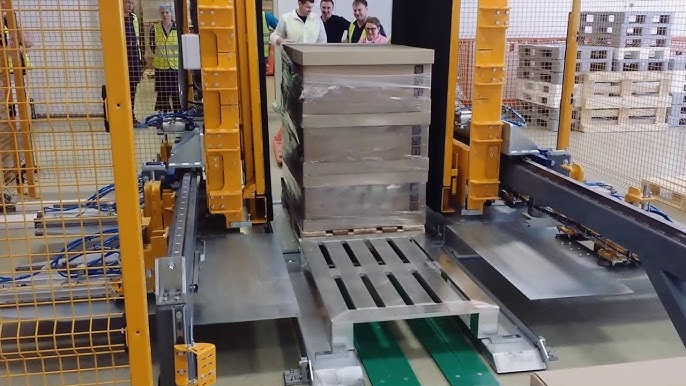
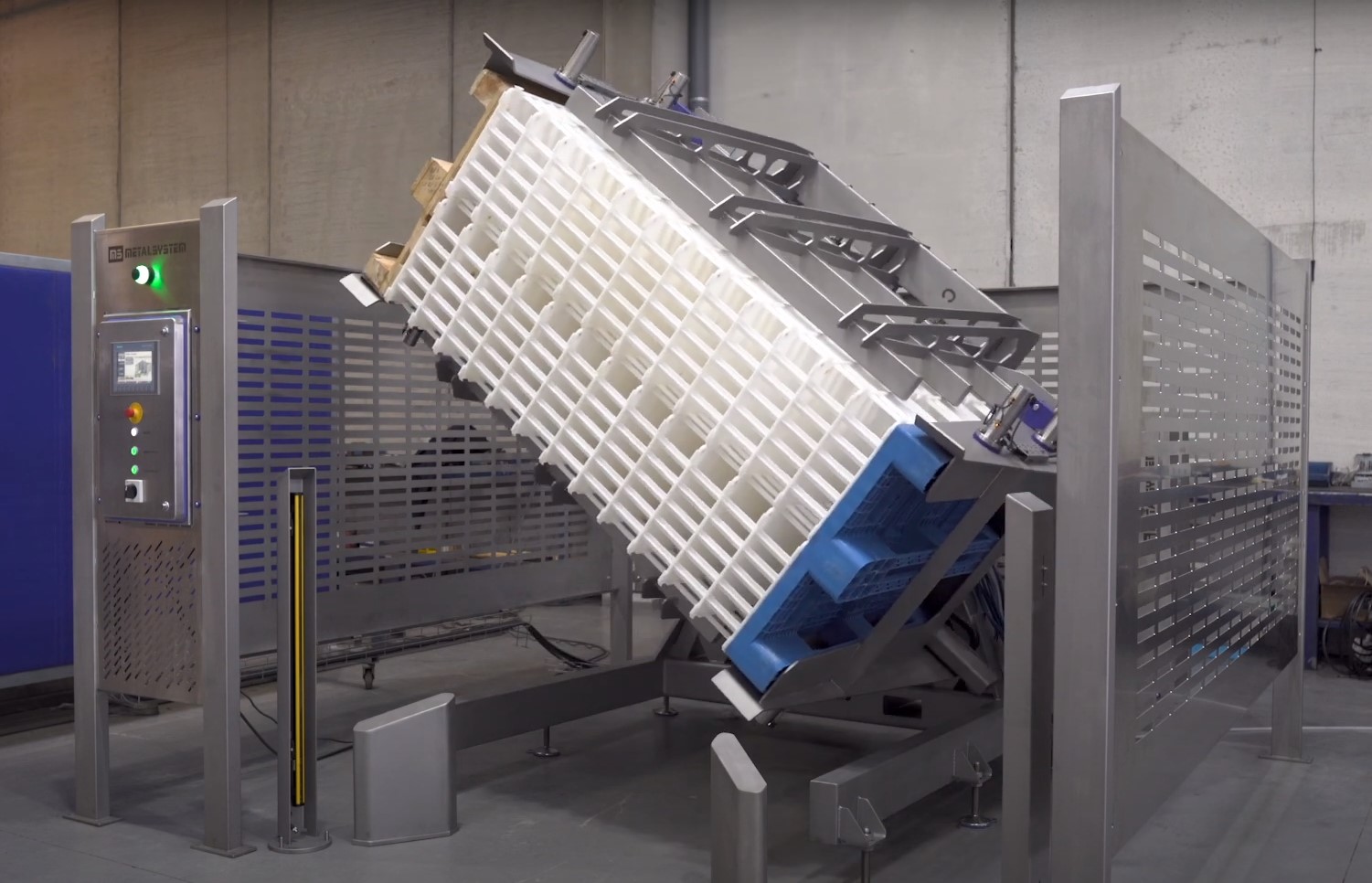
- Enhanced Safety: One of the most critical benefits is the reduction in manual handling. Tasks like manually restacking a damaged pallet are physically demanding and prone to causing back injuries or accidents. By automating the inversion and transfer process, the machine bears the physical burden, dramatically lowering the risk of workplace injuries. The contained operation and comprehensive safety features further protect personnel.
- Improved Product Integrity: The secure, dual clamping action minimizes load shifting and instability during rotation. This is vital for preventing product damage, especially for fragile goods, bagged items, or loads with uneven weights or configurations. Smooth, controlled hydraulic motion further ensures gentle handling, protecting valuable inventory during transfers.
- Increased Productivity and Efficiency: Pallet inverters significantly speed up tasks that would otherwise be time-consuming. Replacing a damaged pallet or switching pallet types can be accomplished in seconds (the material mentions average cycle times as low as 17 seconds), compared to the much longer time required for manual restacking. Less time spent on manual handling means more time available for core operational tasks. The reduced risk of injuries and product damage also minimizes costly downtime and interruptions. Furthermore, features like load straightening can make poorly stacked pallets safer and easier to handle.
- Maximum Versatility: Dual clamp models are specifically designed to handle a wide variety of load types and heights with consistency. Whether dealing with boxes, drums, pails, bags, or fragile items, the adjustable clamping pressure and wide range can accommodate them. They are truly versatile tools for operations with diverse product mixes.
- Streamlined Pallet Management: They simplify the process of transitioning between different pallet types (e.g., wood to plastic for hygiene, or internal to external shipping pallets), removing slip sheets or freezer spacers, and consolidating multiple smaller loads onto a single pallet. This optimizes internal logistics and facilitates compliance with customer or regulatory requirements.
- Significant Return on Investment (ROI): While the initial cost might seem substantial, the long-term savings quickly justify the investment. Reduced labor costs (less manpower needed for manual tasks), minimized product damage losses, lower costs associated with workplace injuries and associated downtime, and potential savings on pallet rental (by quickly replacing damaged ones) contribute to a compelling ROI.
Versatility Across Industries and Applications
The adaptability of dual clamp pallet inverters makes them valuable assets in a broad spectrum of industries, wherever palletized goods are handled:
- Warehousing and Distribution: Essential for managing incoming goods (transferring to standard warehouse pallets), handling damaged pallets quickly, consolidating loads, and preparing outgoing shipments on required pallet types.
- Food and Beverage: Critical for hygiene control, facilitating the transfer of products from wooden shipping pallets to cleanable plastic or aluminum pallets for use in production areas or cold storage. Safely handling bagged ingredients or drums is also a common application.
- Pharmaceuticals: Similar to food, hygiene is paramount. Dual clamp inverters enable seamless transfer to sanitized pallets for cleanroom environments. Their gentle handling is also vital for protecting sensitive or high-value pharmaceutical products.
- Chemical Industry: Provides a safe method for inverting and transferring drums, sacks, pails, or other containers, where spills or product loss during manual handling could be hazardous or costly.
- Printing and Paper: Used for handling large, heavy, and often unstable stacks of paper, board, or finished printed materials, ensuring stack integrity during transfer or inversion.
- Manufacturing: Integrated into production lines to rotate materials for subsequent processing steps, transfer finished goods to outbound pallets, or handle specific types of raw materials like bricks or construction materials.
Their ability to handle varying load types and heights makes them particularly well-suited for operations with a diverse inventory profile or those receiving goods from multiple suppliers using different pallet standards.
Selecting the Right Dual Clamp Pallet Inverter
Choosing the most suitable dual clamp pallet inverter requires careful consideration of specific operational needs and load characteristics. Key factors to evaluate include:
- Product Type and Configuration: Assess the nature of the goods being handled. Are they evenly stacked boxes, or a mix of bags, drums, and pails? Are they fragile, compressible, slippery, or non-compressible (like bricks or steel)? How is the product configured on the pallet (overhung, underhung)? Is it stretch-wrapped? These factors influence the required clamping pressure, table size, and overall stability needed.
- Load Dimensions and Weight: Determine the maximum and minimum height, width, length, and weight of the loads you need to handle. This directly dictates the necessary jaw opening, table size, and load capacity of the inverter.
- Loading Method: Decide whether loading will be done primarily by forklift or pallet jack. If using a pallet jack, a floor-level loading model (potentially with flush tables rather than ramped access) is necessary.
- Required Throughput: While pallet inverters are generally fast, consider the volume of pallets needing inversion per hour or shift to ensure the machine's cycle time meets your productivity goals.
- Facility Constraints: Account for available floor space for the machine itself and the necessary maneuvering space for loading and unloading equipment. Ensure the floor is strong enough to support the machine and maximum load weight. Confirm availability of the correct electrical power supply.
- Safety Requirements: Evaluate necessary safety features based on your operational environment and safety protocols. Consider options like advanced guarding, light curtains, or specific safety interlocks.
- Budget and Justification: While dual clamp inverters offer significant benefits, they typically have a higher initial cost than simpler options. Justify the investment by quantifying the potential savings in labor, reduced damage, and improved safety.
- Customization Needs: If your loads or operations have unique characteristics not met by standard models, explore custom manufacturing options. Many suppliers can modify standard designs or create entirely bespoke solutions.
Consulting with experienced material handling equipment suppliers is highly recommended. They can help analyze your specific needs, recommend appropriate standard models, or assist in designing a custom solution, ensuring the chosen inverter is the best fit for your facility and delivers the intended operational improvements and ROI.
Operational Considerations and Safety Best Practices
Implementing a dual clamp pallet inverter involves more than just installing the machine. Proper operational procedures and a focus on safety are essential:
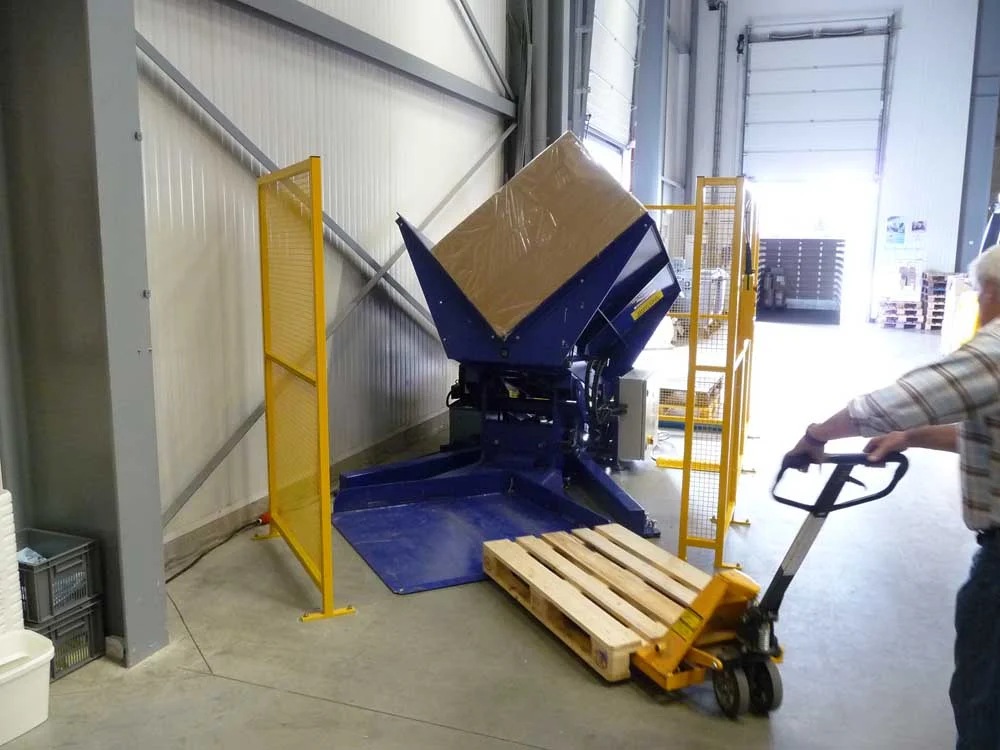

- Operator Training: Ensure all personnel operating the inverter are thoroughly trained on its safe and correct use, including loading procedures, control activation, understanding safety features, and emergency procedures.
- Routine Maintenance: Adhere strictly to the manufacturer's recommended maintenance schedule. This includes checking hydraulic fluid levels and filters, lubricating moving parts, inspecting hoses, electrical connections, and the structural integrity of the frame and clamps. Regular maintenance prevents unexpected breakdowns and ensures continued safe operation.
- Load Assessment: Before inverting any load, operators should quickly assess its stability and configuration. While dual clamp systems are versatile, extremely unstable or unusual loads may require extra caution or specific handling techniques.
- Area Management: Ensure the area around the inverter is kept clear. If the machine is anchored or guarded, confirm that guarding is properly in place and functional before operation. If using safety features like light curtains or mats, ensure they are active and unobstructed.
- Control Usage: Utilize the control system correctly. Many machines offer different operating modes (manual, semi-auto, auto). Ensure the operator understands which mode to use and how to initiate and stop cycles safely.
By integrating a dual clamp pallet inverter thoughtfully into warehouse or production workflows and prioritizing safe operation and maintenance, companies can fully leverage its capabilities to enhance efficiency, reduce costs, protect products, and create a safer working environment.
Conclusion
Dual clamp pallet inverters represent a significant advancement in material handling technology. Their unique dual clamping mechanism provides unparalleled stability and control, making them exceptionally versatile tools for handling a wide variety of load types and heights. From replacing damaged pallets and facilitating hygienic transfers to streamlining complex load consolidations, these machines offer substantial benefits. The resulting improvements in safety, product integrity, and operational efficiency lead to a clear and compelling return on investment. For businesses facing the challenges of diverse inventory, stringent safety standards, or the need to optimize workflow speed, understanding and implementing the mechanics of a dual clamp pallet inverter can be a transformative step towards a more productive and secure material handling operation.