
The modern warehouse operates under increasing pressure to enhance efficiency, improve safety, and reduce operational costs. Traditional manual material handling methods, while functional, often create bottlenecks, introduce safety risks, and limit throughput in high-volume environments. Integrating pallet inverters into automated warehouse systems offers a powerful solution to these challenges, streamlining material flow and boosting productivity. These specialized machines are designed to rotate, invert, or transfer palletized loads quickly and safely, making them essential tools in the evolution of automated logistics. By seamlessly incorporating pallet inverters into conveyor lines and automated handling processes, businesses can achieve unprecedented levels of performance and safety.
[Automated Warehouse Systems]
The Evolution of Material Handling Automation
Warehouse automation is no longer a futuristic concept; it's a present necessity driven by the constant demand for improved performance and efficiency. This logistics evolution is impacting every phase of internal management, from receiving and storage to internal production and shipping. The push for automation stems from the need to speed up various operations, reduce labor costs, minimize waste, and safeguard workers. While traditional standalone material handling equipment like pallet inverters has long played a role in these goals, the true potential for optimization is unlocked when these systems are integrated directly into automated workflows.
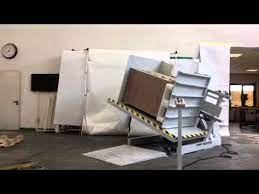
Historically, integrating pallet inverters into production lines presented challenges. Early attempts, such as the GL style or the "Pac Man" drum inverter, had limitations, often requiring every load to be inverted or occupying excessive space. The goal has always been to reduce or eliminate manual labor and the need for forklift trucks interacting with the inversion process within the main material flow. For many varied operations, conventional standalone inverters remain the optimal choice. However, for specific applications with uniform load types and high throughput requirements, a totally automated in-line system offers significant advantages and can be fully justified.
Types of Pallet Inverters and Their Integration Potential
Pallet inverters come in various forms, from manual and stationary models to fully automated and inline configurations. The suitability of a particular type for integration depends on the specific application and desired level of automation.
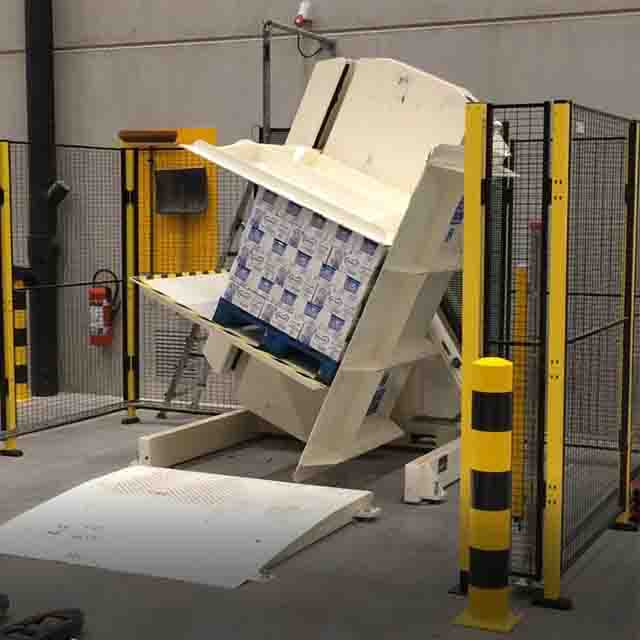
While manual and ground-loading models are designed for standalone use or interaction with pallet trucks, certain automated and stationary types are specifically adapted for inline integration with conveyor systems:
-
The FS DC Inverter: Described as one of the most versatile and frequently used for inline applications, the FS DC model is built for seamless integration. Its dual clamping tables maintain a consistent height, aligning perfectly with adjoining conveyors. A built-in sidewall acts as a natural stop for incoming loads, and integrating pallet gripping systems is straightforward. The FS DC requires minimal "off-line" space and is easy to guard, making it suitable for confined layouts. It excels where loads are similar and require full 180-degree inversion, such as with boxed wine or stacks of corrugated board. For loads not requiring inversion, the sidewall can be hydraulically opened to allow them to pass straight through. This system is noted for its speed, capable of handling over 30 pallets per hour while keeping the product inverted after transfer.
-
The RR Inverter: The RR style addresses many inline pallet exchange problems, particularly for larger or heavier loads. Its load tables can be customized to handle various sizes, including large sheets of corrugated board, and offer an extensive clamping range suitable for items like bagged goods. A key advantage is its ability to rise out of the conveyor line when clamping and tipping, meaning no extra space is needed on either side for swing clearance; adjoining rollers can butt directly against the inverter tables. Crucially, loads that do not require inversion can pass straight through the machine without interruption.
-
The Pallet Changer Principle: Representing a potential direction for future inline systems, the Pallet Changer principle focuses on integrated side or front loading and ejection using rollers on the machine's table, often combined with pallet stacker and dispenser units. While some Pallet Changer types work "off-line" allowing other goods to bypass, they can be integrated into systems. This principle is effective for pallet exchange, returning the product to an upright position on the new pallet.
-
The Clamping Method: This method can be used as a standalone unit or integrated into material flow systems, often via a lift conveyor. Sidewalls clamp the load, and the original pallet is lowered and removed, then replaced by another carrier. This method does not invert or tilt the load, making it suitable for pressure-stable goods like stacked boxes, crates, or beverage cases that remain stable under side pressure. Integrated clamping systems can achieve throughputs of up to 50 changes per hour and are considered an inexpensive solution for automated pallet handling, capable of exchanging various pallet types (Euro, plastic, Düsseldorf).
Benefits of Integrating Pallet Inverters
Integrating pallet inverters into automated warehouse systems delivers multifaceted benefits that directly impact operational efficiency, safety, and profitability:
-
Enhanced Efficiency and Throughput: Inline inverters eliminate manual handling steps and forklift movements within the main flow, drastically reducing cycle times. Automated systems, especially models like the FS DC or specialized high-speed pallet changers (>100/hour), can process pallets far faster than manual or standalone operations, significantly boosting overall warehouse throughput. The ability to process loads continuously within the line ensures a smoother, faster flow of goods.
-
Reduced Labor and Equipment Dependence: By automating the inversion or pallet changing process, businesses can reduce the reliance on manual labor and forklift trucks in specific handling zones. This frees up personnel and equipment for other critical tasks, optimizing resource allocation and leading to significant labor cost savings over time.
-
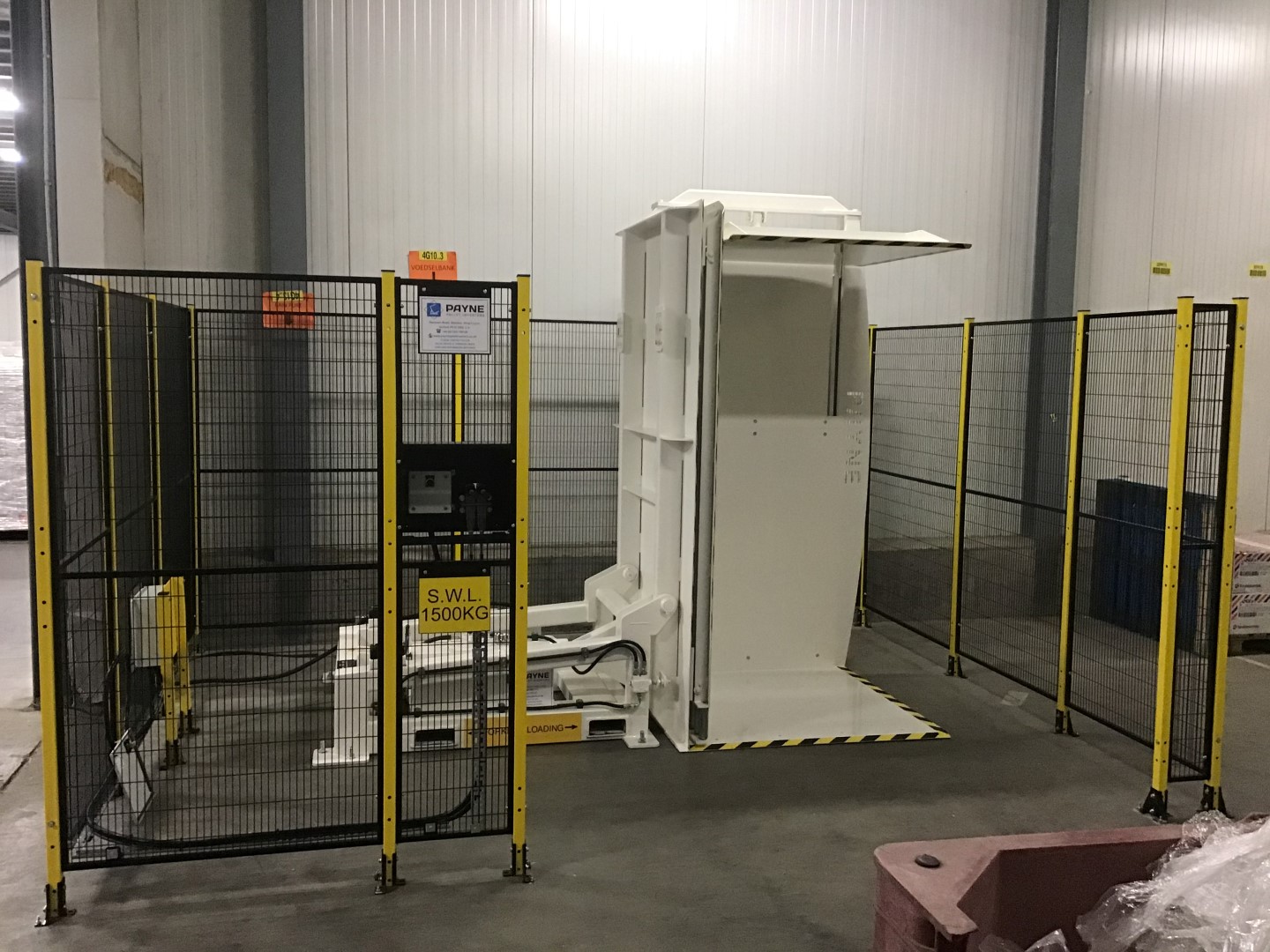
Improved Safety: Manual pallet handling, especially tasks like accessing damaged goods at the bottom of a stack or manually swapping pallets, poses considerable risks of injury. Integrated systems automate these dangerous tasks, keeping workers away from heavy loads and moving machinery. Features like integrated guarding and foot obstruction sensors further enhance safety within the automated cell. By meeting or exceeding safety standards, businesses reduce the risk of accidents, workers' compensation claims, and regulatory issues.
-
Streamlined Material Flow: Seamless integration with conveyor systems ensures that pallets move smoothly into and out of the inverter, minimizing dwell times and bottlenecks. The capability of systems like the FS DC and RR to allow non-inverted loads to bypass the machine further enhances flow efficiency, preventing unnecessary stops or diversions in the line.
-
Minimized Product Damage: Automated handling with precise clamping and rotation mechanisms reduces the risk of human error and mishandling that can lead to product damage. Gentle inversion or clamping processes protect goods during transit and transfer. This reduces waste and improves customer satisfaction by minimizing damaged shipments.
-
Increased Flexibility and Versatility: Integrated systems can be designed or adapted to handle a range of load types, sizes, and weights. Many can accommodate different pallet types (wood, plastic, slip sheets). Custom-designed inline inverters can be tailored to meet unique operational requirements, including specific load dimensions, capacities, or configurations, providing a highly flexible solution.
-
Cost Justification: While the initial investment in automated inline systems can be higher than standalone units, the long-term savings in labor costs, reduced product damage, increased throughput, and improved safety provide a strong return on investment. Analyzing factors like labor rates, potential injury costs, and efficiency gains helps justify the capital expenditure. The clamping method, for instance, offers a relatively inexpensive entry point into integrated pallet handling.
Applications in Automated Systems
Integrated pallet inverters are crucial in automated warehouses across various industries:
- Food and Beverage: Essential for maintaining hygiene standards by transferring goods from inbound wooden pallets to clean plastic or hygienic pallets within automated lines. Also used for product-specific needs like inverting boxed wine to keep corks moist or rotating cheese during maturation.
- Pharmaceuticals: Similar to food, hygiene is paramount. Inverters facilitate the transfer to sanitary pallets. They can also prevent caking or settling in powder products through automated rotation.
- Manufacturing: Used across diverse sectors from automotive parts to general manufactured goods. Applications include exchanging pallets for internal transport, accessing damaged items, or handling specific materials like inverting metal sheets for stamping or managing large stacks of corrugated board in packaging plants.
- Warehousing and Distribution: General applications include consolidating loads, changing pallets for different storage or shipping requirements (e.g., rental pallets, slip sheets), and efficiently accessing damaged goods at the bottom of stacks without manual restacking, thereby integrating seamlessly into automated storage and retrieval systems or sortation lines.
- Other Industries: Anywhere loads need to be rotated 180 degrees (e.g., printing) or pallets need swapping efficiently within a streamlined process. Construction materials or bagged goods can benefit from handling systems that accommodate weight and stability requirements.
Selecting an Integrated Pallet Inverter Solution
Choosing the right integrated pallet inverter requires careful consideration of several factors, including:
- Load Characteristics: Weight, dimensions, stability, and the type of goods being handled (pressure-sensitive vs. pressure-stable).
- Throughput Requirements: The number of pallets needing to be processed per hour determines the necessary speed and automation level.
- Process Needs: Whether full 180-degree inversion, 90-degree rotation, or simple pallet exchange is required.
- Integration Environment: Available space, existing conveyor system specifications, and the degree of automation in the surrounding workflow.
- Budget: Balancing initial cost against long-term operational savings and ROI.
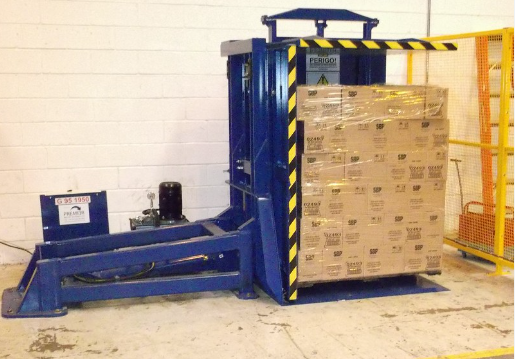
For operations with consistent load types requiring full inversion, the FS DC might be ideal. For handling varied or difficult loads where pass-through is common, the RR could be more suitable. The clamping method offers an inexpensive option for stable goods requiring only pallet exchange. For the highest levels of automation and speed in pallet exchange, advanced Pallet Changer systems integrated with stackers/dispensers offer compelling possibilities.
Conclusion
Integrating pallet inverters into automated warehouse systems is a significant step forward in material handling technology. By moving beyond standalone operations and incorporating these machines directly into production and distribution lines, businesses can unlock substantial gains in efficiency, safety, and cost-effectiveness. The development of versatile inline systems like the FS DC and RR, alongside methods like clamping and the Pallet Changer principle, provides robust solutions for various challenges, from hygiene-sensitive transfers to high-volume pallet exchange and product rotation. As the demand for faster, safer, and more cost-efficient logistics continues to grow, the strategic integration of pallet inverters will play an increasingly vital role in the design and operation of modern automated warehouses.