
How to Ensure Pallet Inverter Compatibility with Existing Material Handling Systems?
To ensure pallet inverter compatibility with existing material handling systems, assess load capacity, size, operating requirements, and safety features. Integrate with forklifts and other equipment considering energy efficiency and automation. Consult suppliers, conduct trials, and ensure proper training and maintenance for seamless integration and optimized workflow.
Understanding Pallet Inverters: A Cornerstone of Modern Material Handling
In the relentless pursuit of operational excellence, businesses across industries are constantly seeking innovative solutions to streamline their material handling processes. Pallet inverters have emerged as a critical technology in this landscape, offering a versatile and efficient method for rotating, flipping, or transferring palletized loads. These machines are not merely standalone units; their true value is realized when they are seamlessly integrated into existing material handling systems. However, ensuring compatibility is paramount to unlocking their full potential and avoiding costly disruptions.
Pallet inverters are designed to handle a fundamental yet often cumbersome task: the inversion of pallet loads. This capability is essential for a multitude of reasons, from replacing damaged pallets and accessing goods at the bottom of stacks to facilitating pallet swaps for hygiene purposes and rotating heavy, awkwardly shaped items. By mechanizing this process, pallet inverters drastically reduce manual labor, minimize product damage, and significantly enhance workplace safety.
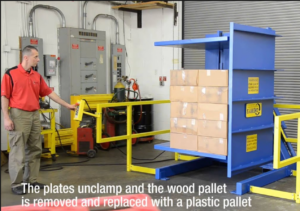
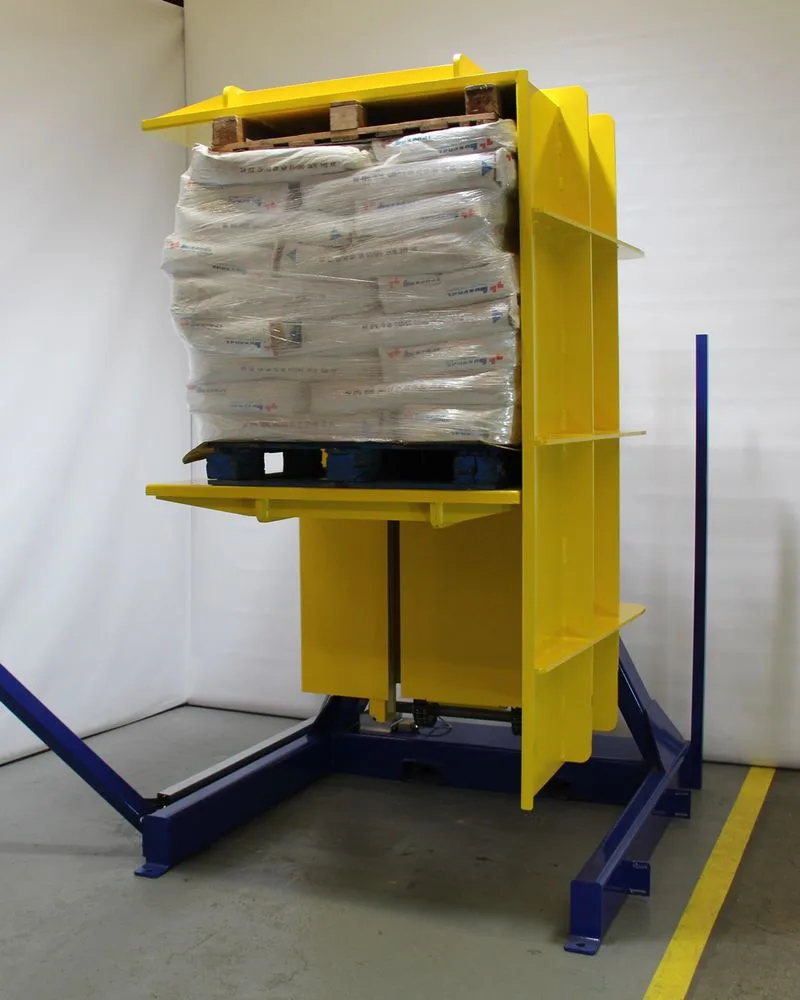
At their core, pallet inverters are robust pieces of equipment built to withstand the rigors of industrial environments. They typically comprise a sturdy frame, a clamping mechanism to secure the load, and a hydraulic or electromechanical system to power the inversion process. The frame, often constructed from heavy-duty steel, provides stability and longevity. The clamping mechanism is crucial for safely holding diverse pallet sizes and load configurations, while the hydraulic system delivers the controlled force required for smooth and precise rotation or flipping.
Types of Pallet Inverters: Tailoring Solutions to Operational Needs
The market offers a diverse range of pallet inverters, each designed to cater to specific operational requirements and integration scenarios. Understanding these types is the first step towards ensuring compatibility with your existing material handling infrastructure.
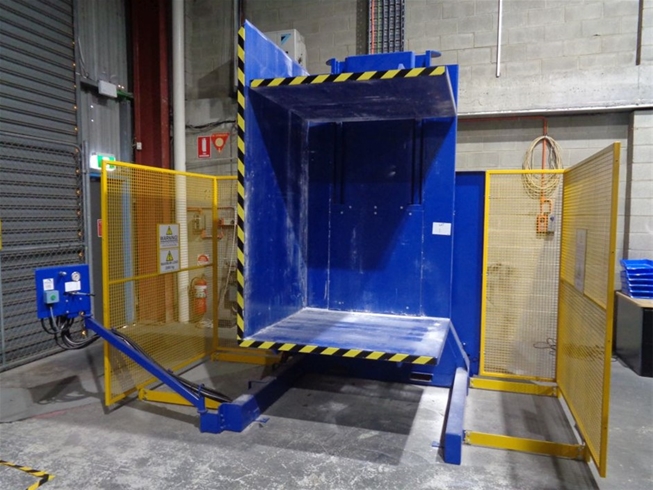
Stationary Pallet Inverters: These are designed for fixed locations within a facility, ideal for operations with dedicated inversion areas. Stationary models typically boast high load capacities and are engineered for heavy-duty applications. Their features often include customization options to accommodate various pallet sizes and advanced safety mechanisms. For businesses dealing with consistent, high-volume inversion needs in a centralized location, stationary inverters offer robust performance and reliability.
Portable Pallet Inverters: In contrast, portable inverters offer mobility and flexibility. Equipped with wheels or casters, they can be easily moved to different locations within a facility. This versatility is particularly advantageous for operations where pallet inversion is required in multiple areas or where space is a constraint. Portable inverters are a cost-effective solution for businesses with fluctuating needs or those seeking to optimize space utilization by avoiding dedicated inversion zones.
Beyond mobility, pallet inverters can also be categorized by their operational mode:
Manual Pallet Inverters: These require operator intervention for loading, clamping, and initiating the inversion cycle. They offer a balance of affordability and functionality, suitable for operations with moderate inversion volumes.
Semi-Automatic Pallet Inverters: These automate certain aspects of the inversion process, such as clamping or rotation, while still requiring some operator input. They bridge the gap between manual and fully automated systems, enhancing efficiency without a substantial capital investment.
Fully Automatic Pallet Inverters: Designed for high-throughput environments, fully automatic inverters seamlessly integrate into automated production lines. They often feature programmable controls, sensors, and conveyor interfaces, minimizing manual intervention and maximizing efficiency.
90-Degree Rotator Inverters: A specialized type, these inverters rotate loads precisely 90 degrees. This is particularly useful for specific applications like pallet replacement or when loads need to be oriented for inline processing.
Key Compatibility Considerations: Bridging the Gap Between Inverter and System
Ensuring pallet inverter compatibility is not merely about physical fit; it's about harmonious integration into the broader material handling ecosystem. Several critical factors must be considered to guarantee seamless operation and maximize the benefits of this technology.
Load Capacity and Size Compatibility: The most fundamental consideration is the inverter's capacity to handle the weight and dimensions of your typical pallet loads. Overloading an inverter can lead to equipment damage, safety hazards, and operational disruptions. Carefully assess the maximum weight and size of pallets you handle regularly and select an inverter that comfortably accommodates these specifications. Consider not just the average load, but also the maximum and any variations in pallet dimensions within your operations.
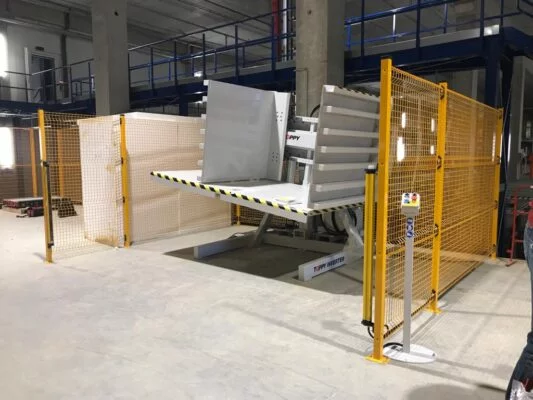
Operating Requirements and Safety Feature Integration: Pallet inverters must align with your operational workflow and safety protocols. Evaluate specific requirements such as cycle time, inversion angles, and control mechanisms. Crucially, consider safety features. Modern inverters often incorporate safety fences, emergency stop buttons, interlocking systems, and operator protection devices. Ensure these features are compatible with your existing safety standards and can be seamlessly integrated into your workplace safety procedures. For instance, if your facility mandates specific safety interlocks or emergency shutdown protocols, the chosen inverter must be capable of incorporating these.
Integration with Forklifts and Material Handling Equipment: Pallet inverters rarely operate in isolation. They are typically part of a larger material handling system that includes forklifts, conveyors, and other equipment. Physical compatibility is essential – can forklifts easily access and load pallets onto the inverter? Is the inverter's height and footprint conducive to your facility layout and traffic flow? Operational integration is equally important. Consider how the inverter's cycle time and throughput will mesh with the pace of your overall material flow. If bottlenecks are to be avoided, the inverter's performance must complement the capabilities of other equipment in the system.
Energy Efficiency and Automation Feature Alignment: In today's environmentally conscious and cost-sensitive manufacturing landscape, energy efficiency is a significant factor. Opt for inverters with energy-efficient hydraulic systems or electric drives. Automation features, such as programmable controls and pre-set inversion cycles, can further enhance efficiency and reduce manual intervention. However, ensure that these automation features are compatible with your existing control systems and automation infrastructure. If you are aiming for a highly automated facility, the inverter should ideally be capable of communicating and synchronizing with your broader automation network.
Integration Guidelines: A Step-by-Step Approach to Seamless Implementation
Achieving successful pallet inverter integration requires a structured and methodical approach. The following guidelines provide a roadmap for ensuring compatibility and maximizing the benefits of this technology.
Thorough Assessment of Existing Material Handling Systems: Before selecting a pallet inverter, conduct a comprehensive assessment of your current material handling infrastructure. Analyze workflow, throughput requirements, pallet types and sizes, load characteristics, space constraints, and existing equipment. Identify potential bottlenecks and areas where a pallet inverter can add value. This assessment will provide a clear picture of your operational needs and inform the selection process.
Consultation with Pallet Inverter Suppliers: Engage with reputable pallet inverter suppliers early in the process. Share your operational assessment and discuss your specific requirements. Leverage their expertise to identify suitable inverter models that align with your needs and existing systems. Request detailed specifications, compatibility information, and case studies relevant to your industry or application. A collaborative dialogue with suppliers is crucial for making informed decisions and avoiding compatibility pitfalls.
Trial and Testing Prior to Full-Scale Implementation: Whenever feasible, conduct trials or pilot tests with a selected pallet inverter model before committing to a full-scale implementation. This allows you to evaluate the inverter's performance in your actual operating environment, assess its compatibility with existing equipment, and identify any unforeseen integration challenges. Testing can reveal potential bottlenecks, safety concerns, or operational inefficiencies that may not be apparent during the initial assessment.
Comprehensive Training and Ongoing Maintenance Protocols: Even the most compatible pallet inverter will underperform without proper operator training and regular maintenance. Develop comprehensive training programs for personnel who will be operating and maintaining the equipment. Training should cover safe operation procedures, routine maintenance tasks, troubleshooting common issues, and emergency protocols. Establish a preventative maintenance schedule to ensure the inverter operates reliably and safely over its lifespan. Regular inspections, lubrication, and timely repairs are essential for maintaining optimal performance and preventing costly downtime.
Benefits of Compatible Integration: Unlocking Operational Excellence
When pallet inverters are seamlessly integrated into material handling systems, the benefits are substantial and far-reaching.
Enhanced Efficiency and Productivity: Compatible integration streamlines pallet handling processes, reduces manual labor, and accelerates throughput. Faster pallet inversion cycles, seamless integration with conveyors and forklifts, and automated features contribute to significant gains in operational efficiency and overall productivity.
Improved Workplace Safety: By automating manual pallet inversion tasks, inverters minimize the risk of workplace injuries associated with heavy lifting, awkward movements, and manual handling of unstable loads. Integrated safety features and proper operator training further enhance workplace safety, creating a healthier and more secure environment for employees.
Reduced Product Damage and Waste: The controlled and gentle inversion action of pallet inverters minimizes product damage compared to manual methods or less sophisticated equipment. Reducing damage translates directly to reduced waste, lower product loss, and improved profitability.
Optimized Space Utilization: Efficient pallet handling and inversion processes contribute to better space utilization within warehouses and production facilities. Streamlined operations and reduced clutter free up valuable floor space for storage, production, or other critical activities.
Cost Savings and Return on Investment: While the initial investment in a pallet inverter represents a capital expenditure, the long-term cost savings and return on investment can be significant. Reduced labor costs, minimized product damage, improved efficiency, and enhanced safety all contribute to a compelling financial justification for integrating compatible pallet inverters into material handling systems.
Conclusion: Investing in Compatibility for Long-Term Success
Ensuring pallet inverter compatibility is not merely a technical consideration; it is a strategic imperative for businesses seeking to optimize their material handling operations. By carefully considering load capacity, size, operating requirements, safety features, and integration guidelines, companies can unlock the full potential of pallet inverter technology. A well-integrated pallet inverter becomes a valuable asset, driving efficiency, enhancing safety, reducing costs, and contributing to overall operational excellence. Investing in compatibility is an investment in long-term success and a crucial step towards building a resilient and future-proof material handling infrastructure.