
How to Enhance Pallet Inverter Performance with Advanced Robotics?
To enhance pallet inverter performance with advanced robotics, integrate automated guided vehicles (AGVs) or autonomous mobile robots (AMRs) for seamless pallet flow, employ robotic arms for automated loading and unloading, and utilize intelligent scheduling systems for optimized operation. These robotic enhancements minimize manual handling, reduce cycle times, and boost overall efficiency, transforming pallet inverters into highly productive components of automated warehousing.
Pallet inverters are indispensable tools in modern warehousing and manufacturing, streamlining material handling by efficiently transferring loads between pallets, recovering damaged goods, or switching pallet types. While standalone pallet inverters offer significant improvements over manual pallet handling, their performance can be dramatically enhanced by integrating advanced robotics. This integration not only amplifies the inherent benefits of pallet inverters but also unlocks new levels of efficiency, safety, and flexibility in material handling operations. By strategically incorporating robotics, businesses can transform their pallet inverters from isolated machines into integral components of a highly automated and optimized logistics ecosystem.
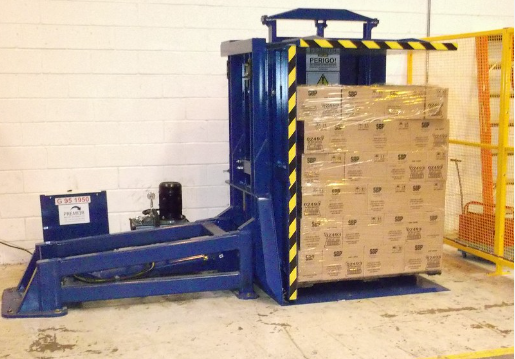
The Synergistic Power of Pallet Inverters and Robotics
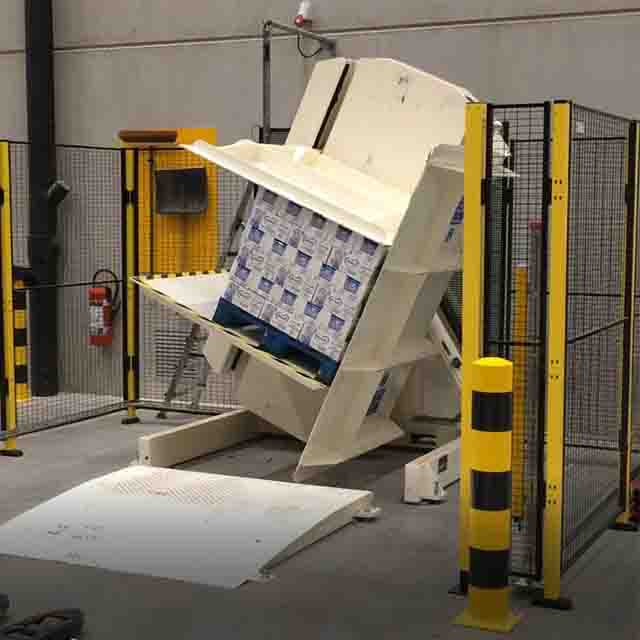
The core strength of a pallet inverter lies in its ability to quickly and safely invert palletized loads, simplifying tasks like replacing damaged pallets, switching to sanitary pallets for cleanroom environments, or accessing bottom-layer goods without manual restacking. However, the efficiency of a standalone pallet inverter can be limited by the manual processes surrounding it. Operators are still required to load and unload pallets, transport them to and from the inverter, and manage the flow of materials. This is where the integration of robotics becomes transformative.
Advanced robotics, particularly in the realm of material handling, offers solutions to automate these peripheral tasks, creating a seamless and highly efficient workflow around the pallet inverter. As highlighted in reports on integrated robotics, the trend towards automation is driven by the need for improved design cycles, demand response, and enhanced competitiveness. Robots are increasingly capable of handling a significant portion of tasks across various industries, and material handling is a prime area for robotic deployment.
By integrating robotics, we move beyond simply inverting pallets to creating an automated pallet management system. This synergy brings forth several key advantages:
- Increased Throughput: Robots can operate continuously and at consistent speeds, significantly increasing the throughput of the pallet inverter system compared to manual loading and unloading.
- Reduced Labor Costs: Automation minimizes the need for manual labor in pallet handling, leading to substantial reductions in labor costs and freeing up personnel for more value-added tasks.
- Improved Safety: Robots reduce the need for human operators to be in close proximity to heavy machinery and moving pallets, minimizing the risk of workplace accidents and injuries associated with manual material handling.
- Enhanced Accuracy and Consistency: Robotic systems operate with precision and consistency, reducing errors and ensuring uniform pallet handling processes.
- Greater Flexibility and Scalability: Robotic solutions can be easily reprogrammed and adapted to changing needs, offering greater flexibility and scalability compared to fixed automation systems.
Key Areas of Performance Enhancement Through Robotics
Robotic integration can enhance pallet inverter performance across several critical areas of warehouse and manufacturing operations.
Streamlining Pallet Flow and Boosting Efficiency
One of the most impactful applications of robotics is in automating the flow of pallets to and from the inverter. Automated Guided Vehicles (AGVs) and Autonomous Mobile Robots (AMRs) are ideally suited for this task. As noted in discussions of logistics efficiency, AGVs and AMRs can autonomously plan paths, navigate warehouse environments, and transport pallets, operating 24/7 without interruption. Robots like the MiR1200 pallet handling robot are designed to improve throughput through stable and reliable automation. Similarly, Linde handling robots demonstrate fast and accurate loading and unloading capabilities in finished product warehouses.
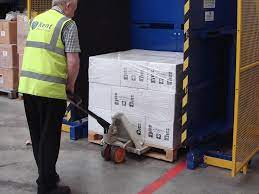
By deploying AGVs or AMRs, pallets can be automatically delivered to the pallet inverter for processing and then transported to the next stage of the workflow – be it storage, picking, or shipping – without any manual intervention. This automated flow drastically reduces cycle times, minimizes bottlenecks, and maximizes the utilization of the pallet inverter.
Furthermore, integrating advanced picking systems, such as the Advanced Pallet Station (APS) from Prime Robotics, can further optimize efficiency. APS utilizes robotics and automation to elevate warehouse productivity and picking accuracy, ensuring that the picking station remains efficient and pickers never run out of work. This focus on minimizing dwell time – the time spent waiting for the next task – is crucial for maximizing warehouse efficiency. By linking the pallet inverter operation with an intelligent picking system, the entire goods-to-person process becomes more streamlined and productive.
Reducing Operational Costs and Optimizing Resource Utilization
The implementation of robotic solutions directly contributes to reduced operational costs in several ways. The most significant impact is on labor costs. Automated pallet handling robots reduce the dependence on manual labor for repetitive and physically demanding tasks. AGVs capable of carrying pallets weighing up to a ton significantly reduce the need for manual forklift operation and labor, freeing up human workers for more complex and strategic tasks.
Beyond labor cost reduction, robotics also improves equipment utilization. Pallet handling robots, equipped with automatic charging functions and intelligent scheduling, can operate around the clock, maximizing the uptime and productivity of the pallet inverter system. This continuous operation ensures a higher return on investment for both the pallet inverter and the robotic automation.
Moreover, integrating pallet inverters with Warehouse Management Systems (WMS) and intelligent scheduling systems, often facilitated by robotic control software, optimizes inventory management. Robots can automatically identify, classify, and store goods, improving the accuracy of inventory management and reducing errors associated with manual data entry and tracking. This optimized inventory control further contributes to cost savings by minimizing losses due to misplaced or mishandled inventory.
Enhancing Safety and Ergonomics in Material Handling
Safety is a paramount concern in any industrial environment, and manual pallet handling poses significant risks. Robotic automation significantly enhances safety around pallet inverters by minimizing human involvement in potentially hazardous tasks. Automated pallet handling robots are equipped with advanced perception systems, such as 360° sensors, to avoid obstacles and prevent collisions, reducing accidents caused by human error.
Many pallet handling robots are designed to meet stringent safety standards, such as PLD safety levels, and incorporate safety features like speed control, braking, and emergency stop mechanisms. These features further ensure safe operation around pallet inverters and in the broader warehouse environment.
Furthermore, robotic automation addresses ergonomic concerns by eliminating the need for workers to perform repetitive and physically demanding tasks associated with manual pallet handling. By automating the loading, unloading, and transport of pallets, robots reduce the risk of physical strain, fatigue, and occupational injuries for workers, creating a safer and healthier work environment.
Increasing Flexibility and Scalability for Diverse Needs
Modern businesses operate in dynamic environments with fluctuating demands and evolving operational needs. Robotic solutions offer the flexibility and scalability required to adapt to these changes. Pallet handling robots can be easily scaled according to business needs. Starting with a single robot, businesses can gradually expand to multiple robot clusters to meet increasing logistics demands. This modular scalability allows for phased implementation and investment, making robotic automation accessible to businesses of different sizes and growth trajectories.
Robotic pallet handling systems are also highly versatile and adaptable to diverse application scenarios. They are widely used across various industries, including e-commerce, retail, cold chain logistics, and manufacturing. Robots can handle a variety of tasks, from managing finished products and raw materials to handling waste disposal, making them a flexible solution for diverse material handling needs around pallet inverters.
Advanced Robotic Technologies Driving Pallet Inverter Enhancement
Several advanced robotic technologies are instrumental in enhancing pallet inverter performance.
AGVs and AMRs for Automated Pallet Transport
As previously discussed, AGVs and AMRs are fundamental to automating pallet flow. AGVs follow pre-defined paths, while AMRs utilize advanced navigation technologies to move autonomously and dynamically adapt to changing environments. Both types of robots can be equipped with features specifically designed for pallet handling, such as lifting mechanisms and secure pallet clamps. Their integration with pallet inverters ensures a continuous and automated supply of pallets for processing.
Robotic Arms for Automated Loading and Unloading
While AGVs and AMRs handle pallet transport, robotic arms can be integrated to automate the loading and unloading of pallets onto and off of the pallet inverter platform. Robotic arms equipped with specialized end-effectors can precisely and efficiently handle various types of loads, from boxes and cartons to bags and irregularly shaped items. While the speed of robotic arms versus human pickers is a subject of ongoing discussion, as noted by Prime Robotics, robot arms excel in tasks that are difficult or ergonomically challenging for humans, such as reaching high shelves or lifting heavy items. In consistent packaging environments, robotic arms can even outperform human pickers in terms of picks per hour.
Voice Control and Intuitive Interfaces
To further streamline operations and simplify human-machine interaction, voice control systems can be integrated with robotic pallet inverter systems. Voice prompts, as utilized in Prime Robotics' APS, enable operators to control robot functions hands-free, using simple commands like “Prime, spin source” or “Prime, done picking.” Voice control enhances efficiency by minimizing the need for operators to physically interact with control panels or touchscreens, saving time and improving workflow. Furthermore, voice prompts can contribute to safety by reducing the need for operators to be physically close to moving machinery.
Intelligent Scheduling and WMS Integration
The true power of robotic enhancement comes from intelligent scheduling and seamless integration with Warehouse Management Systems (WMS). Advanced control software, often referred to as Warehouse Execution Systems (WES), can manage robot fleets, optimize task allocation, and coordinate operations with the overall warehouse workflow. As highlighted by Prime Robotics, data is king in optimizing picking and material handling operations. WMS integration allows the robotic system to receive real-time order data, inventory information, and operational parameters, enabling intelligent decision-making and dynamic optimization of pallet inverter operations. Features like "pallet defrag," where SKU positioning is dynamically optimized based on usage frequency, demonstrate the potential of data-driven optimization to minimize drive times and maximize efficiency within a robotic pallet inverter system.
Industrial Applications Across Diverse Sectors
The benefits of enhancing pallet inverter performance with advanced robotics are applicable across a wide range of industries.
- Manufacturing: In manufacturing facilities, robotic pallet inverter systems can streamline the handling of raw materials, components, and finished goods along the production line, ensuring efficient material flow and supporting just-in-time manufacturing processes.
- Warehousing and Distribution: Warehouses and distribution centers benefit significantly from robotic pallet inverter systems for optimizing storage, order fulfillment, and cross-docking operations. Automated pallet handling improves throughput, reduces errors, and accelerates order processing.
- Food and Beverage: The food and beverage industry, with its stringent hygiene requirements and delicate products, benefits from the gentle and automated handling provided by robotic pallet inverter systems. Switching to sanitary pallets and efficient product transfer are critical in this sector.
- Pharmaceuticals and Healthcare: The pharmaceutical and healthcare industries require meticulous handling of sensitive medical products. Robotic pallet inverter systems ensure product integrity, minimize damage, and maintain the high levels of cleanliness and precision required in pharmaceutical manufacturing and distribution.
Conclusion: Embracing the Future of Automated Pallet Handling
Enhancing pallet inverter performance with advanced robotics represents a significant step forward in the evolution of material handling technology. By integrating AGVs, AMRs, robotic arms, voice control, and intelligent software, businesses can transform their pallet inverters into highly efficient, safe, and flexible components of automated warehousing and manufacturing operations.
The benefits are clear: increased throughput, reduced operational costs, enhanced safety, improved ergonomics, and greater adaptability to changing business needs. As industries continue to seek innovative solutions for optimizing efficiency and productivity, the integration of robotics with pallet inverters offers a compelling pathway towards a more automated, streamlined, and future-proof material handling landscape. Embracing these advanced technologies is not just about improving individual machine performance; it's about creating a fundamentally more efficient and resilient supply chain.