
Efficiency Enhanced: The Role of Automated Steel Coil Packaging Lines
Are you grappling with bottlenecks in your steel coil packaging process? Imagine a seamless flow from production to shipping, where each coil is perfectly packaged, protected, and ready for dispatch, without the strain of manual labor and errors. Automated steel coil packaging lines are revolutionizing the industry, offering a pathway to unprecedented efficiency and reliability.
Automated steel coil packaging lines are crucial for enhancing efficiency in steel coil production by streamlining workflows, reducing labor costs, and improving safety. These systems integrate advanced technologies like coil wrapping machines, upenders, and pallet inverters to ensure precise, consistent, and safe handling of steel coils, meeting stringent industry demands for quality and throughput.
This article dives deep into the world of automated steel coil packaging, exploring the technologies, benefits, and key considerations for implementing these game-changing systems in your operations. Let's unpack how these solutions can elevate your production line to new heights.
Boosting Productivity and Reducing Labor Costs
In today's fast-paced steel industry, maximizing productivity while minimizing operational costs is paramount. Manual steel coil packaging is labor-intensive, slow, and prone to inconsistencies. Automated coil packing lines emerge as a powerful solution to overcome these challenges.
Automated coil packing lines significantly boost productivity and reduce labor costs by automating key packaging processes. These systems operate at high speeds, capable of packing multiple coils per minute with minimal manual intervention. Compared to manual packing, automation ensures a continuous workflow, reduces downtime, optimizes labor allocation, and drastically increases the volume of coils processed, leading to substantial operational savings.
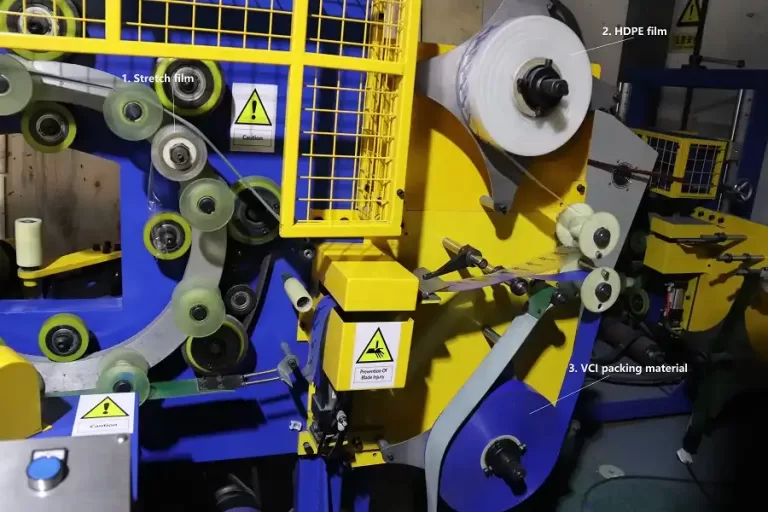
Diving Deeper into Productivity Gains
The shift from manual to automated coil packing is not merely an upgrade; it's a paradigm shift in operational efficiency. To truly appreciate the impact, let's break down the key areas where automated lines deliver superior performance.
High-Speed Throughput: The Numbers Speak Volumes
Manual packing methods often struggle to keep pace with the output of modern steel mills. Operators require breaks, and the inherent limitations of manual processes cap the packing rate. Automated systems, however, are engineered for continuous, high-speed operation.
Consider the following comparative analysis:
| Metric | Manual Packing | Automated Packing Line | Efficiency Improvement |
|---|---|---|---|
| Coils Packed per Hour | 1-3 | 20-40+ | 10x - 20x |
| Labor per Shift | 4-6 operators | 1-2 supervisors | 75% - 80% reduction |
| Packaging Consistency | Variable | Consistent and Precise | Significant Improvement |
| Downtime | Frequent (breaks, fatigue) | Minimal (maintenance only) | Substantial Reduction |
These figures clearly illustrate the exponential increase in throughput and the dramatic reduction in labor requirements achieved through automation. The ability to pack coils at rates exceeding ten times that of manual methods directly translates to higher production capacity and faster order fulfillment.
Continuous Workflow: Eliminating Bottlenecks
Manual packing is inherently discontinuous. Breaks, shift changes, and fatigue interrupt the workflow, creating bottlenecks that slow down the entire production line. Automated systems, on the other hand, operate continuously, 24/7 if needed, maintaining a consistent pace and eliminating these interruptions. This continuous workflow ensures a smooth, uninterrupted flow of materials, preventing delays and maximizing overall plant efficiency.
Labor Optimization: Strategic Resource Allocation
By automating the physically demanding and repetitive tasks of coil packing, businesses can redeploy their workforce to more strategic and value-added roles. Instead of dedicating numerous personnel to manual packing, a few supervisors can oversee the automated line, freeing up skilled labor for tasks such as quality control, machine maintenance, or process optimization. This strategic reallocation of human resources not only reduces labor costs but also enhances the overall skill level and productivity of the workforce.
Enhancing Quality Control and Consistency
Beyond speed and cost, the quality of packaging is crucial for protecting steel coils during transit and storage, ensuring they reach customers in pristine condition. Manual packing, with its inherent variability, often struggles to maintain consistent packaging quality. Automated coil packing lines excel in this domain, delivering precision, accuracy, and standardization.
Automated coil packing lines significantly enhance quality control and consistency in steel coil packaging. Equipped with advanced sensors and control systems, these machines ensure precise and accurate packaging, minimizing human error. Automation leads to standardized packaging, consistent application of materials, and reduced risk of damage, resulting in higher quality output, improved customer satisfaction, and a stronger brand reputation.
Precision and Standardization: Cornerstones of Quality
Inconsistent packaging can lead to product damage, customer complaints, and increased waste. Automated systems address these issues head-on by delivering unparalleled precision and standardization.
Accuracy in Material Application
Automated wrapping machines utilize precise tension control and material dispensing mechanisms. This ensures that the correct amount of wrapping material is applied consistently to each coil, preventing both under-packaging, which risks damage, and over-packaging, which wastes material and increases costs. Manual packing often relies on operator judgment, which can vary and lead to inconsistencies in material usage.
Consistent Sealing and Securing
Automated systems are programmed to apply consistent sealing and securing techniques. Whether it's heat sealing, strapping, or banding, the machine performs these actions with unwavering precision, ensuring that each package is securely closed and ready for transport. Manual sealing can be inconsistent, leading to packages that are not properly closed, exposing the coils to environmental damage or shifting during transit.
Reduced Human Error: A Key to Flawless Packaging
Human error is an unavoidable factor in manual processes. Fatigue, distractions, and variations in operator skill can all contribute to mistakes in packaging. Automated lines eliminate this variable. Once programmed, they execute packaging procedures flawlessly and repeatedly, shift after shift, minimizing errors and ensuring consistent quality. This reduction in human error translates directly to fewer damaged products, reduced rework, and higher customer satisfaction.
Optimizing Space Utilization and Inventory Management
Efficiency extends beyond the packing process itself to encompass the broader aspects of space utilization and inventory control within a manufacturing facility. Automated coil packing lines offer significant advantages in streamlining these often-overlooked areas.
Automated coil packing lines optimize space utilization and inventory management through their compact footprint and integrated inventory tracking capabilities. Compared to sprawling manual packing stations, automated systems require less floor space. Furthermore, integration with inventory management systems allows for real-time tracking of packed coils, enhancing inventory accuracy, improving order fulfillment, and streamlining overall supply chain management.
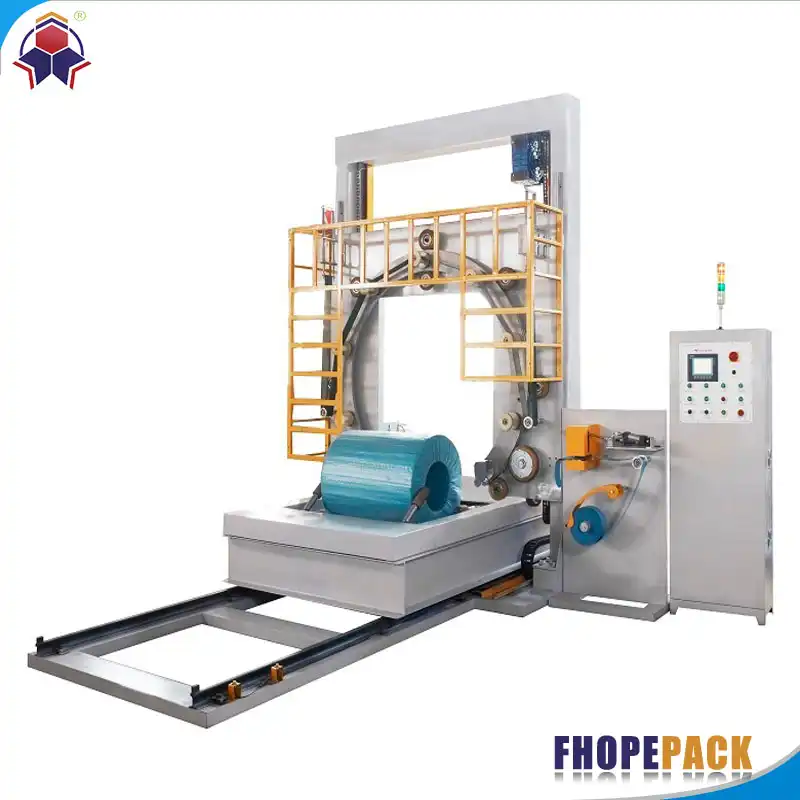
Space Efficiency and Streamlined Flow: Maximizing Every Square Foot
Factory floor space is a precious commodity. Manual packing operations, with their need for workstations, material storage, and in-process coil staging areas, can consume significant real estate. Automated lines, designed for efficiency, offer a more compact and streamlined footprint.
Compact Machine Design: Less Floor Space Required
Automated coil packing lines are engineered to be space-efficient. Machines are designed vertically and linearly to minimize their horizontal footprint. Compared to manual packing areas, which may require extensive floor space for operators to move around and handle materials, automated lines consolidate the packaging process into a smaller area. This compact design frees up valuable floor space for other production activities, storage, or expansion.
Vertical Integration: Seamless Process Flow
Many advanced automated coil packing lines are designed for vertical integration with upstream and downstream processes. They can be directly linked to coil slitting lines, rolling mills, or conveyor systems, creating a seamless flow of materials from production to packaging and beyond. This integration minimizes the need for manual material handling between processes, reducing congestion, saving time, and further optimizing space utilization. The result is a more organized and efficient factory layout.
Inventory Tracking and Management: Real-Time Visibility
Modern automated coil packing lines can be equipped with sophisticated inventory tracking and management systems. These systems automatically record data as coils are packed, including coil identification, packaging date, and destination. This information is then integrated into the company's overall inventory management system, providing real-time visibility into stock levels and the status of packed coils.
This real-time tracking offers several benefits:
- Improved Inventory Accuracy: Reduces discrepancies and losses associated with manual inventory tracking.
- Streamlined Order Fulfillment: Facilitates faster and more accurate order picking and shipping.
- Enhanced Supply Chain Management: Provides better data for production planning and supply chain optimization.
By optimizing space utilization and providing enhanced inventory control, automated coil packing lines contribute to a more efficient and cost-effective overall manufacturing operation.
Seamless Integration with Existing Systems and Processes
Implementing new technology should not disrupt existing operations. A crucial advantage of modern automated steel coil packaging lines is their ability to integrate seamlessly into existing manufacturing environments.
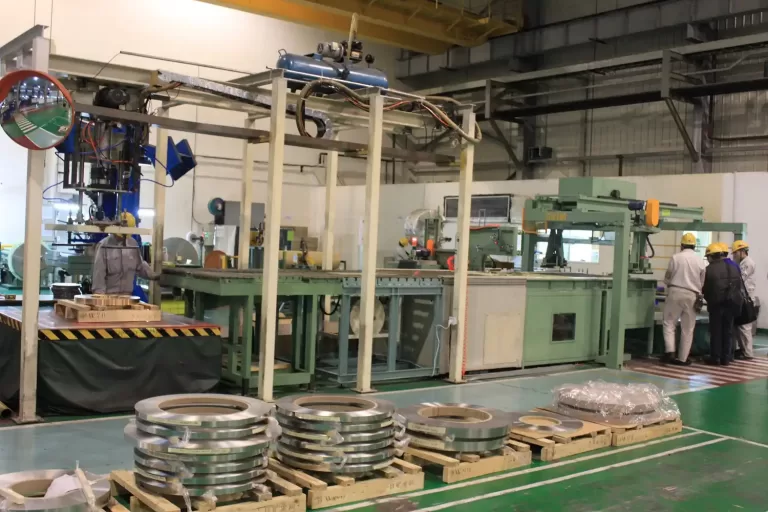
Seamless integration is a key feature of automated coil packing lines. Designed for compatibility with existing factory layouts and equipment, these systems can be readily incorporated into current production lines without major overhauls. Flexibility in customization and modular designs further ensure that automated lines can be tailored to specific needs and scaled as businesses grow, providing a smooth transition and future-proof solution for enhanced efficiency.
Automated coil packing lines are designed with integration in mind, offering features that facilitate smooth incorporation into diverse manufacturing settings. This adaptability is crucial for minimizing disruption and maximizing the return on investment in automation. Key aspects of seamless integration include:
-
Compatibility with Existing Equipment: Modern automated lines are designed to interface with a wide range of existing equipment, such as coil slitting lines, conveyor systems, and material handling equipment. Standardized interfaces and communication protocols ensure compatibility, minimizing the need for costly and time-consuming modifications to existing systems.
-
Flexibility and Customization: Recognizing that each manufacturing facility has unique requirements, automated coil packing line manufacturers offer a high degree of customization. Lines can be tailored to accommodate specific coil sizes, weights, packaging materials, and production volumes. Modular designs allow for phased implementation and adaptation to evolving needs.
-
Scalability and Future-Proofing: Businesses grow, and production demands change. Automated coil packing lines are designed to be scalable, allowing for future expansion and upgrades. Modular designs make it easy to add capacity or integrate new technologies as needed. This future-proof approach ensures that the investment in automation remains valuable and adaptable over the long term.
Conclusion
Automated steel coil packing lines are not merely an incremental improvement; they represent a transformative leap in efficiency, quality, and operational effectiveness for the steel industry. By boosting productivity, enhancing quality control, optimizing space, and seamlessly integrating into existing systems, these solutions offer a compelling pathway to enhanced competitiveness and sustained success. Embracing [coil packing automation] is no longer a luxury but a strategic imperative for steel manufacturers seeking to thrive in today's demanding market.