Design and Installation of Steel Coil Packaging Lines
Are you facing challenges with inefficient and labor-intensive steel coil packaging processes? Imagine a streamlined operation where coils are perfectly wrapped, strapped, and stacked with minimal manual intervention, enhancing both productivity and safety. Steel coil packaging lines are revolutionizing the metal industry, but understanding their design and installation is crucial for optimal performance.
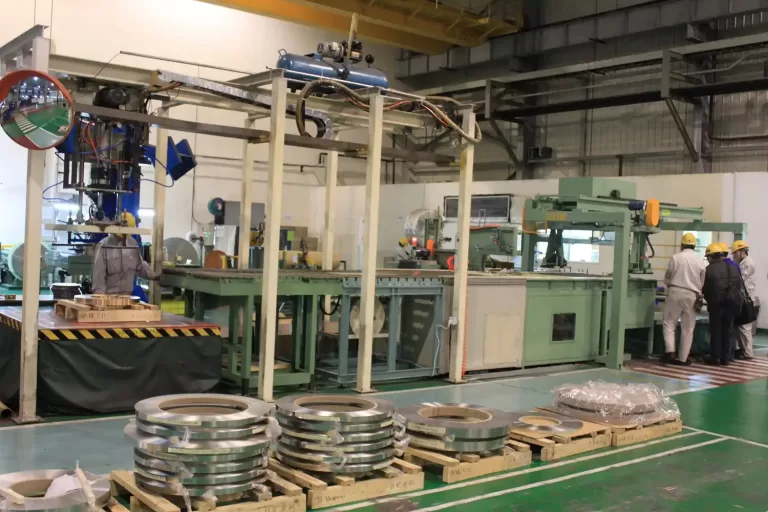
Steel coil packaging lines are automated systems designed to efficiently wrap, strap, and stack steel coils for safe transportation and storage. They integrate various machines like turnstiles, down-enders, wrapping machines, strapping machines, and stackers, all controlled by a central PLC system. These lines are customizable for different coil sizes and materials, significantly reducing labor costs, material waste, and workplace hazards while increasing throughput and consistency.
This article delves into the essential aspects of designing and installing steel coil packaging lines, providing a comprehensive guide to help you optimize your operations and achieve peak efficiency.
Understanding the Core Components of Steel Coil Packaging Lines
Steel coil packaging lines are more than just a collection of machines; they are a symphony of integrated components working in harmony to transform raw output into market-ready products. Investing in a well-designed system is pivotal for businesses aiming to enhance throughput and minimize operational costs.
A steel coil packaging line comprises several key components, each crucial for the overall efficiency and effectiveness of the system. These typically include coil handling systems (like turnstiles and conveyors), wrapping machines to protect coils from environmental damage, strapping machines for securement, stacking systems for palletizing, weighing and labeling stations for inventory management, and a central control system (PLC) to orchestrate the entire process. The seamless integration of these components ensures a smooth, automated packaging workflow, minimizing manual handling and maximizing output.
Diving Deeper into System Integration and Customization
The true power of a steel coil packaging line lies in its seamless integration and customization. A poorly integrated system can lead to bottlenecks and inefficiencies, negating the benefits of automation. Customization ensures the line is perfectly tailored to the specific needs of the coil production facility. Let's break down critical aspects of system integration and customization:
1. Material Flow Optimization
Efficient material flow is the backbone of any high-performance packaging line. The layout must minimize coil movement distances, prevent bottlenecks, and ensure smooth transitions between each processing station. Considerations include:
- Plant Layout: Adapting the line design to the existing facility layout is crucial. This may involve L-shaped, U-shaped, or straight-line configurations depending on space and material flow requirements.
- Conveyor Systems: Choosing the right type of conveyor – roller, chain, or belt – based on coil weight, size, and material. Strategic placement of conveyors ensures continuous coil movement without manual intervention.
- Buffer Zones: Incorporating buffer zones between stations to accommodate variations in processing times and prevent line stoppages.
2. Customization for Coil Specifications
Steel coils come in diverse sizes, weights, and materials (steel, stainless steel, aluminum, copper, etc.). A flexible packaging line must accommodate these variations. Customization points include:
- Adjustable Machine Parameters: Machines like wrapping and strapping units must be adjustable to handle different coil dimensions and weights. PLC control allows for pre-programmed settings for various coil types.
- Material-Specific Handling: Delicate materials like aluminum or copper require gentler handling and specialized wrapping materials compared to robust steel coils.
- Tooling and Grippers: Custom-designed grippers and tooling on handling equipment to securely and safely manipulate different coil sizes and shapes without damage.
3. Data Integration and Control Systems
Modern packaging lines are data-driven. Integrating the line with existing Manufacturing Execution Systems (MES) or Enterprise Resource Planning (ERP) systems provides real-time data for monitoring, analysis, and optimization. Key aspects include:
- PLC Control: A robust PLC system is the brain of the packaging line, controlling and synchronizing all machine operations. It allows for precise control over speed, tension, and timing.
- Sensor Integration: Sensors throughout the line provide real-time feedback on coil position, weight, and packaging status, enabling automatic adjustments and error detection.
- Data Logging and Reporting: Collecting data on throughput, cycle times, material consumption, and downtime for performance analysis and continuous improvement.
To illustrate the impact of customization, consider the differences in handling various coil materials:
| Coil Material | Handling Requirements | Wrapping Material Considerations | Strapping Requirements |
|---|---|---|---|
| Steel Coil | Robust handling, high weight capacity | Standard stretch film, VCI paper/film | Steel or PET strapping, high tension |
| Aluminum Coil | Gentle handling to prevent dents and scratches | Soft stretch film, protective interleaving | PET or PP strapping, moderate tension |
| Copper Coil | Careful handling to avoid surface damage and oxidation | Corrosion-inhibiting films, moisture barriers | PET or PP strapping, gentle tension |
| Stainless Steel Coil | Moderate handling, corrosion resistance | Standard stretch film, protective film | Steel or PET strapping, moderate tension |
By carefully considering these integration and customization aspects, manufacturers can design and install steel coil packaging lines that are not only efficient but also adaptable to their specific operational needs and product requirements.
Streamlining Operations with Automated Strapping and Wrapping
Manual strapping and wrapping are bottlenecks in coil packaging, demanding significant labor and time. Automation in these processes drastically enhances efficiency, consistency, and package quality.
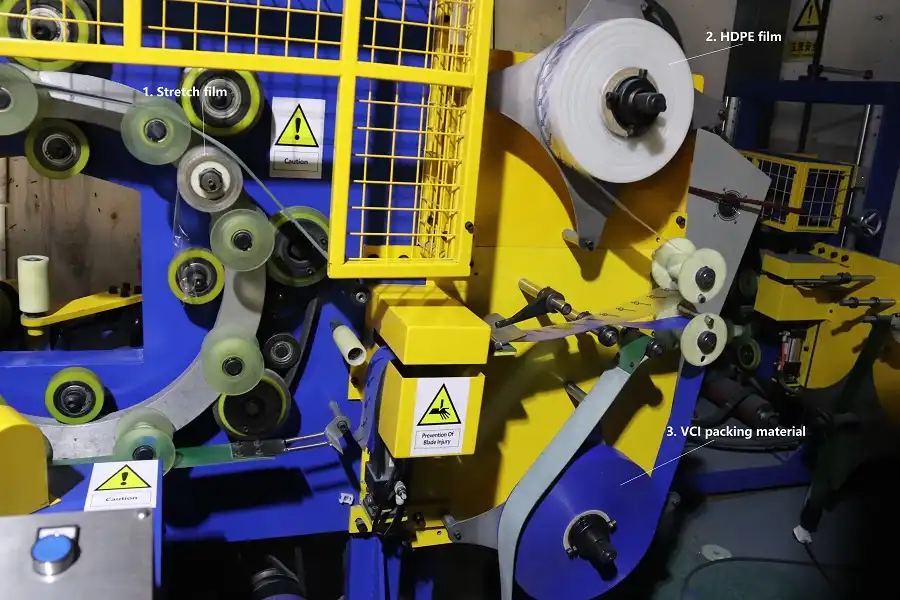
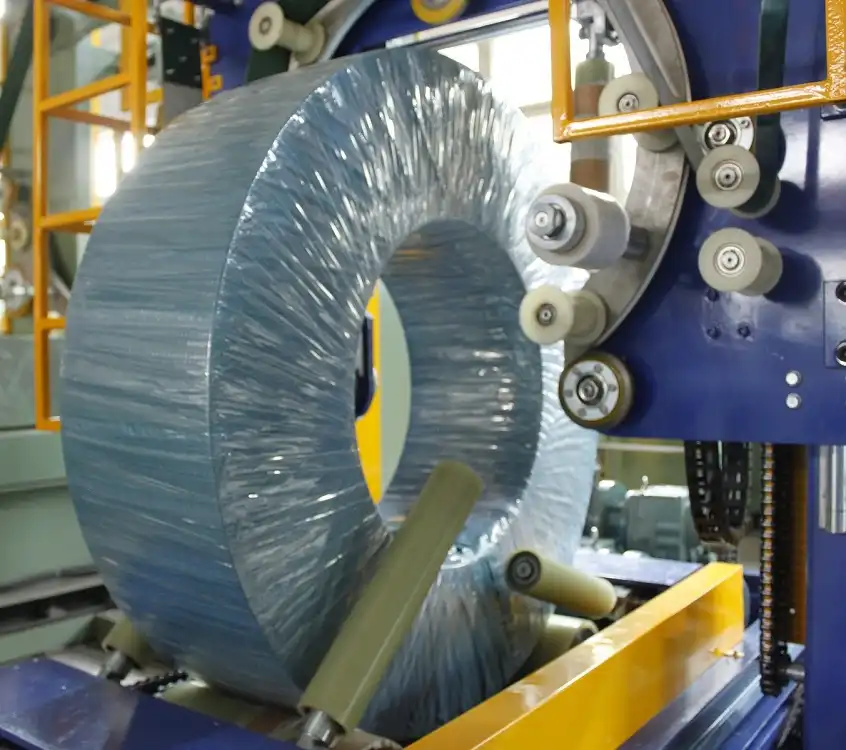
Automated strapping and wrapping machines are integral to modern steel coil packaging lines, replacing manual, labor-intensive tasks with high-speed, consistent processes. Strapping machines automatically apply and tension straps around coils for securement, while wrapping machines apply protective layers of film or paper to shield coils from environmental damage. These automated systems significantly reduce packaging time, minimize material waste through precise application, and ensure uniform package quality, leading to substantial operational improvements and cost savings.
Enhancing Efficiency Through Automation: A Detailed Look
Automating strapping and wrapping goes beyond simply speeding up the process; it fundamentally transforms packaging operations. Let's explore the key benefits and technologies driving this transformation:
1. Increased Throughput and Speed
Automated systems operate at significantly higher speeds than manual processes. Wrapping machines can apply multiple layers of film in seconds, while strapping machines can secure coils with consistent tension in a fraction of the time it takes manually. This speed directly translates to increased throughput and reduced cycle times.
2. Consistent and Reliable Packaging
Manual packaging is prone to variability. Strap tension can be inconsistent, wrapping layers uneven, leading to compromised package integrity. Automated machines ensure consistent application of strapping and wrapping materials, resulting in uniform and reliable packaging every time. This reduces the risk of damage during transit and storage.
3. Material Optimization and Waste Reduction
Automated systems precisely control the amount of strapping and wrapping material used per coil. Sensors measure coil dimensions, and the PLC system calculates the optimal material usage. This precision minimizes material waste compared to manual application, where over-wrapping and over-strapping are common.
4. Labor Cost Reduction and Safety Improvement
Automating strapping and wrapping significantly reduces the need for manual labor in these physically demanding tasks. This not only lowers labor costs but also improves workplace safety by eliminating the risks associated with manual handling of heavy coils and strapping tools.
5. Types of Automated Strapping and Wrapping Machines
- Orbital Wrapping Machines: These machines rotate the wrapping head around the stationary coil, ideal for wrapping cylindrical objects like steel coils. They offer high speed and uniform wrapping.
- Rotary Table Wrapping Machines: The coil is placed on a rotating table while the wrapping film is dispensed from a stationary mast. Suitable for various coil sizes and shapes.
- Automatic Strapping Machines (Eye-Through and Over-the-Top): Eye-through strapping machines strap through the coil's inner diameter, providing robust securement. Over-the-top machines strap around the coil's outer diameter, suitable for different packaging configurations.
By integrating these automated strapping and wrapping technologies, steel coil packaging lines achieve unparalleled efficiency, consistency, and cost-effectiveness, transforming packaging from a bottleneck into a streamlined operation.
Integrating Advanced Coil Handling and Stacking Systems
Efficient coil handling and stacking are crucial for maximizing the throughput of a packaging line and minimizing damage during these critical stages. Advanced systems replace manual labor with automated precision, ensuring smooth and safe coil movement.
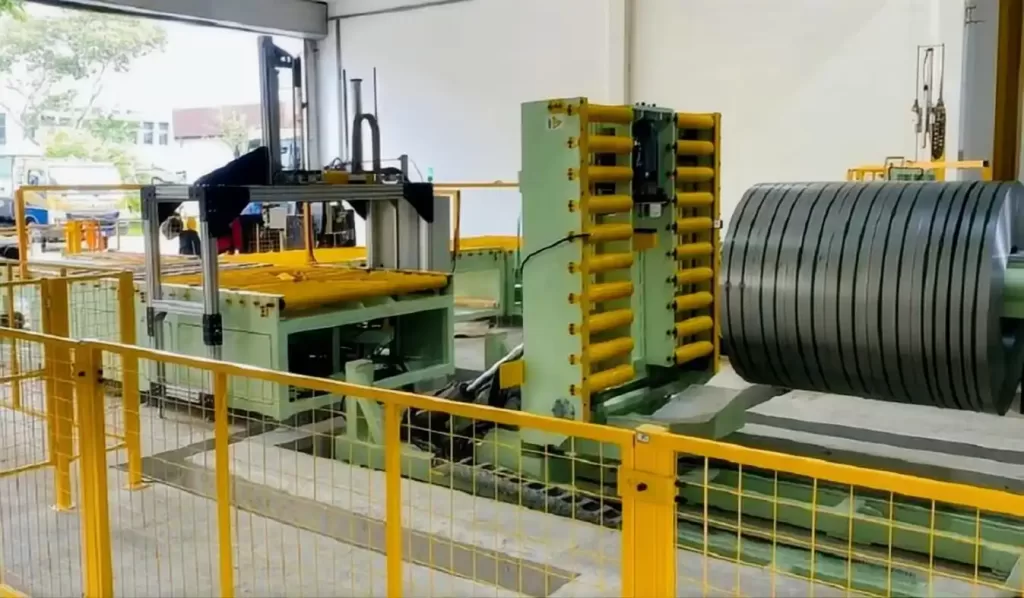
Advanced coil handling and stacking systems in packaging lines automate the movement and arrangement of steel coils, significantly enhancing efficiency and safety. These systems include coil turnstiles for buffering, down-enders to change coil orientation, stackers to precisely place coils onto pallets, and conveyors to seamlessly transport coils between stations. By minimizing manual intervention, these systems reduce the risk of coil damage, accelerate throughput, and optimize space utilization within the packaging area.
Technical Innovations in Coil Handling and Stacking
Modern coil handling and stacking systems are driven by sophisticated technologies that ensure precision, speed, and safety. Let's explore some key technical aspects:
1. Automated Turnstiles and Conveyor Systems
Turnstiles act as buffer zones, accumulating coils before and after packaging stages, ensuring continuous line operation. Conveyor systems, often powered roller conveyors, provide controlled and efficient coil movement between stations. Key features include:
- PLC Controlled Movement: Precise indexing and positioning of coils within the turnstile and along conveyors, synchronized with the overall line operation.
- Variable Speed Drives: Adjusting conveyor speed based on coil size and line throughput requirements.
- Safety Interlocks: Sensors and safety systems to prevent collisions and ensure safe coil transfer.
2. Precision Down-Enders and Up-Enders
Down-enders change coil orientation from eye-horizontal to eye-vertical, crucial for certain packaging and stacking configurations. Up-enders perform the reverse operation. Advanced features include:
- Pick-and-Place Down-Enders: Robotic or servo-driven arms gently lift and rotate coils, minimizing the risk of damage.
- Hydraulic Down-Enders: Heavy-duty systems for larger, heavier coils, providing robust and controlled tilting.
- Integrated Safety Systems: Light curtains and pressure sensors to ensure operator safety during coil tilting operations.
3. Automatic Coil Stackers and Palletizers
Automatic stackers precisely place packaged coils onto pallets in pre-defined patterns, maximizing pallet utilization and stability. Key technologies include:
- Robotic Stackers: Highly flexible and programmable robots that can handle various coil sizes and stacking patterns with precision.
- Gantry Stackers: Overhead gantry systems for high-throughput stacking of heavy coils, offering robust and reliable operation.
- Vision Systems: Integrated vision systems to detect coil position and orientation, ensuring accurate placement on pallets.
4. Data Integration for Optimized Handling
Integrating handling and stacking systems with the overall line control system and MES/ERP systems provides valuable data for optimization. Examples include:
- Real-time Tracking: Monitoring coil movement throughout the line for inventory management and production tracking.
- Performance Monitoring: Tracking cycle times, downtime, and error rates for continuous improvement.
- Predictive Maintenance: Sensors monitoring system health and predicting potential maintenance needs to minimize downtime.
By leveraging these advanced coil handling and stacking technologies, steel coil packaging lines achieve a higher level of automation, efficiency, and safety, streamlining the entire packaging process from start to finish.
Expanding Capabilities: Packaging for Diverse Coil Types and Materials
While steel coils are the primary focus, modern packaging lines are increasingly versatile, accommodating a wide range of coil types and materials, including hoses, wires, and other specialized products. This adaptability expands the applicability and ROI of these systems.
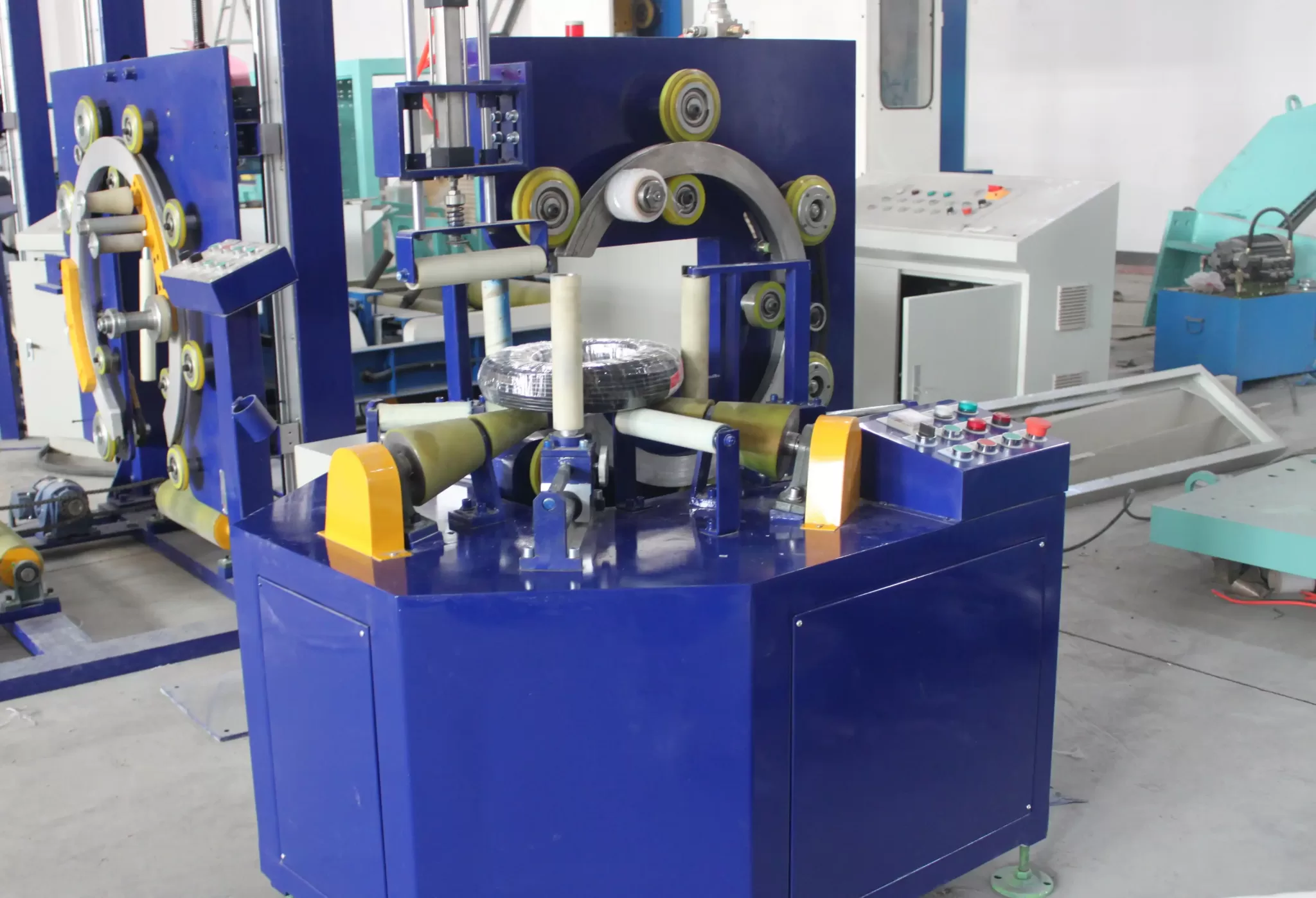
Modern coil packaging lines are not limited to just steel. They are engineered to handle a diverse array of coiled products, adapting to the unique packaging requirements of each. This versatility is achieved through modular designs and adjustable machine parameters, ensuring efficient and damage-free packaging across different industries. Whether it's copper tubing, aluminum profiles, or even flexible materials like hoses and wires, these lines can be customized to provide optimal packaging solutions, maximizing efficiency and minimizing material waste for a broader spectrum of coiled goods.
Expanding Beyond Steel: Versatile Packaging Solutions
- Copper and Aluminum Coils: Lines designed to handle softer metals incorporate gentler handling mechanisms, specialized wrapping films to prevent surface damage and oxidation, and strapping systems with adjustable tension control.
- Wire Coils: For wire coils, specialized coiling and wrapping modules can be integrated. Compacting and strapping machines ensure tight and secure packaging of wire bundles.
- Hose Coils: Hose coil packaging lines often include automatic coiling units to form neat coils before wrapping and strapping. Specific wrapping materials are used to protect rubber or plastic hoses.
- Customized Solutions: Manufacturers offer bespoke engineering to tailor packaging lines to unique coil types and specific industry needs, ensuring optimal performance and versatility.
Conclusion
Investing in the design and installation of advanced steel coil packaging lines is a strategic move for businesses aiming for operational excellence. These systems offer a compelling blend of increased efficiency, reduced labor dependency, enhanced safety, and minimized material waste. By embracing wire packing automation, companies can future-proof their operations, achieve significant cost savings, and gain a competitive edge in the demanding metal industry.