
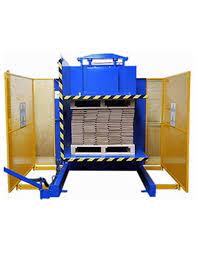
Pallet inverters dramatically boost warehouse efficiency, safety, and cost savings.
In the complex ecosystem of modern logistics and warehousing, seemingly simple tools often hold the key to unlocking significant operational efficiencies. Among these unsung heroes, the pallet inverter stands out as a transformative piece of technology. Far more than just a machine that flips loads, the pallet inverter, often used in conjunction with optimized pallet units, is a strategic asset that addresses critical challenges in material handling, from reducing manual labor and product damage to enhancing workplace safety and facilitating compliance.
This case study delves into the practical applications and tangible benefits of integrating pallet inverters into logistics operations, drawing upon real-world examples and highlighting how this technology is revolutionizing the way businesses handle goods.
The Hidden Costs of Manual Handling in Logistics
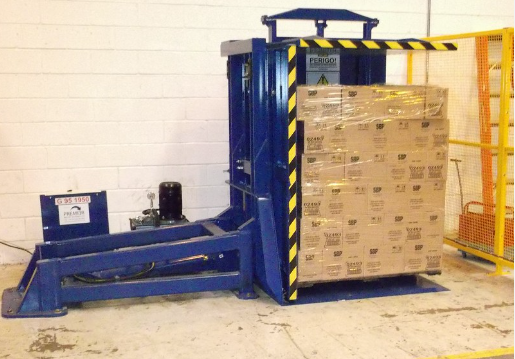
Before exploring the solutions, it's crucial to understand the problems pallet inverters are designed to solve. Relying heavily on manual labor for repetitive and physically demanding tasks like transferring goods between pallets is fraught with inherent risks and inefficiencies. These often manifest as silent productivity killers with significant financial implications.
Manual pallet handling is a leading cause of product damage. Studies indicate that up to 25% of product damage can occur during manual pallet transfers due, for instance, to unstable stacking or accidental drops. This damage translates directly into financial losses through replacement costs, rework, and dissatisfied customers.
Beyond product loss, manual handling poses substantial safety risks. Lifting heavy or awkwardly shaped loads is a primary contributor to musculoskeletal injuries among warehouse personnel. These injuries not only impact employee well-being but also result in costly workers' compensation claims, increased insurance premiums, and lost productivity. The recurring expenses associated with manual labor, including wages, benefits, and injury-related costs, can amount to millions annually for large operations.
Furthermore, manual processes are inherently slower and less consistent than automated solutions. The time required to manually unload and restack goods to change a damaged or incorrect pallet can significantly bottleneck workflow, reducing throughput and delaying shipments.
What Exactly Is a Pallet Inverter?
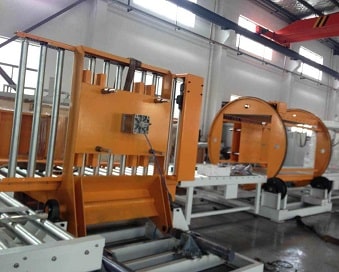
A pallet inverter is a specialized machine engineered to safely and efficiently transfer an entire stack of goods from one pallet to another, or simply to rotate the load. Using a secure clamping mechanism and a rotating frame, it can flip loads up to 180 degrees with precision.
The primary functions include:
- Replacing damaged pallets: Swiftly swapping a broken pallet without manually handling the goods.
- Switching pallet types: Transferring goods from one type of pallet (e.g., wooden shipping pallets) to another (e.g., hygiene-compliant plastic pallets for in-house use or cold storage).
- Straightening or stabilizing loads: Correcting tilted or unstable stacks to improve safety and transportability.
- Retrieving damaged goods: Accessing items at the bottom of a stack without unloading the entire pallet.
Unlike forklifts, which require careful maneuverability around potentially unstable loads, pallet inverters secure the load before inversion, minimizing the risk of accidents or damage. Modern inverters can handle heavy loads, typically ranging from 500 kg to over 2,500 kg (1,100 lbs to 5,500 lbs), and some automated systems can process up to 50 pallets per hour, offering a significant speed advantage over manual methods.
Key Advantages of Pallet Inverter Technology
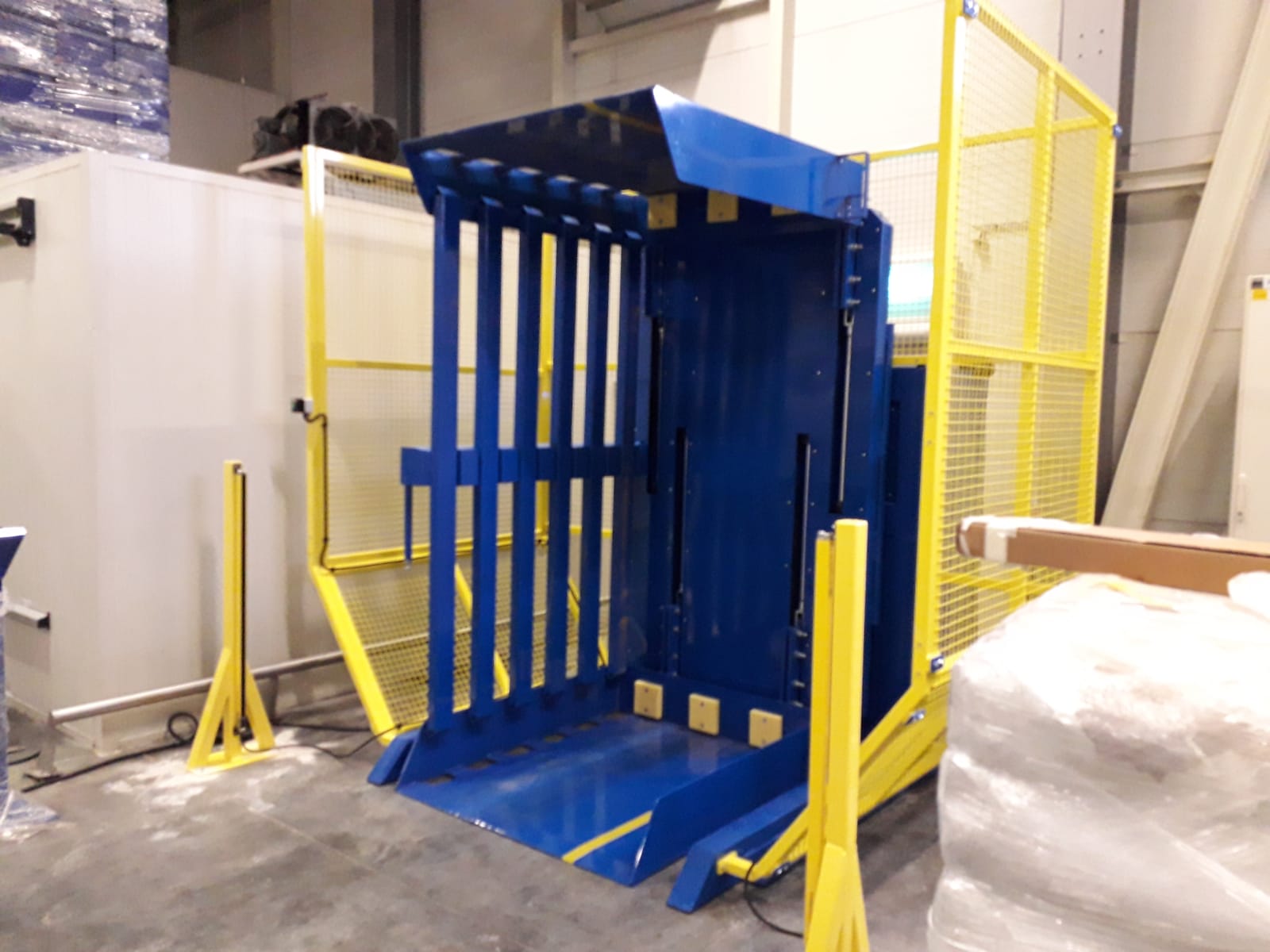
Integrating pallet inverters delivers a cascade of benefits that directly address the challenges of manual handling:
-
Enhanced Safety: By eliminating heavy lifting and manual load manipulation, pallet inverters drastically reduce the risk of strain-related injuries and accidents from falling goods or unstable stacks. One pharmaceutical company reported a 70% reduction in strain-related injuries within six months of installation.
-
Increased Efficiency and Speed: The automated process of inversion is far faster than manual transfer. Replacing a pallet manually could take 15-20 minutes; with an inverter, it often takes only 2-4 minutes, representing up to an 85% improvement in that specific task time. This speed translates into higher throughput and reduced operational downtime.
-
Significant Cost Reduction:
- Labor Savings: A single pallet inverter can perform the work of 2-3 employees involved in manual pallet transfers, freeing them for higher-value activities. This can lead to annual savings of $150,000–$200,000 in wages for a mid-sized warehouse.
- Reduced Product Damage: The secure clamping mechanism minimizes movement and potential damage during rotation. One food distributor saw a 90% drop in damaged goods after adopting inversion technology, saving $50,000 monthly in replacement costs.
- Lower Insurance Costs: Fewer workplace injuries can lead to lower workers' compensation claims and reduced insurance premiums.
-
Improved Ergonomics: The automation reduces physical strain and fatigue on the workforce, improving overall worker well-being and morale.
-
Reliability and Durability: Industrial-grade pallet inverters are built for demanding warehouse environments. They require minimal maintenance (periodic checks, lubrication) compared to the ongoing costs and variability of manual labor. Manufacturers often design them for low lifetime maintenance costs.
-
Sustainability Considerations: While not their primary function, inverters can support sustainability by facilitating the switch from single-use pallets to more durable, reusable plastic or aluminum options, or by enabling efficient repair/replacement of damaged pallets, extending their lifespan and reducing waste.
Real-World Case Studies: Pallet Inverters in Action
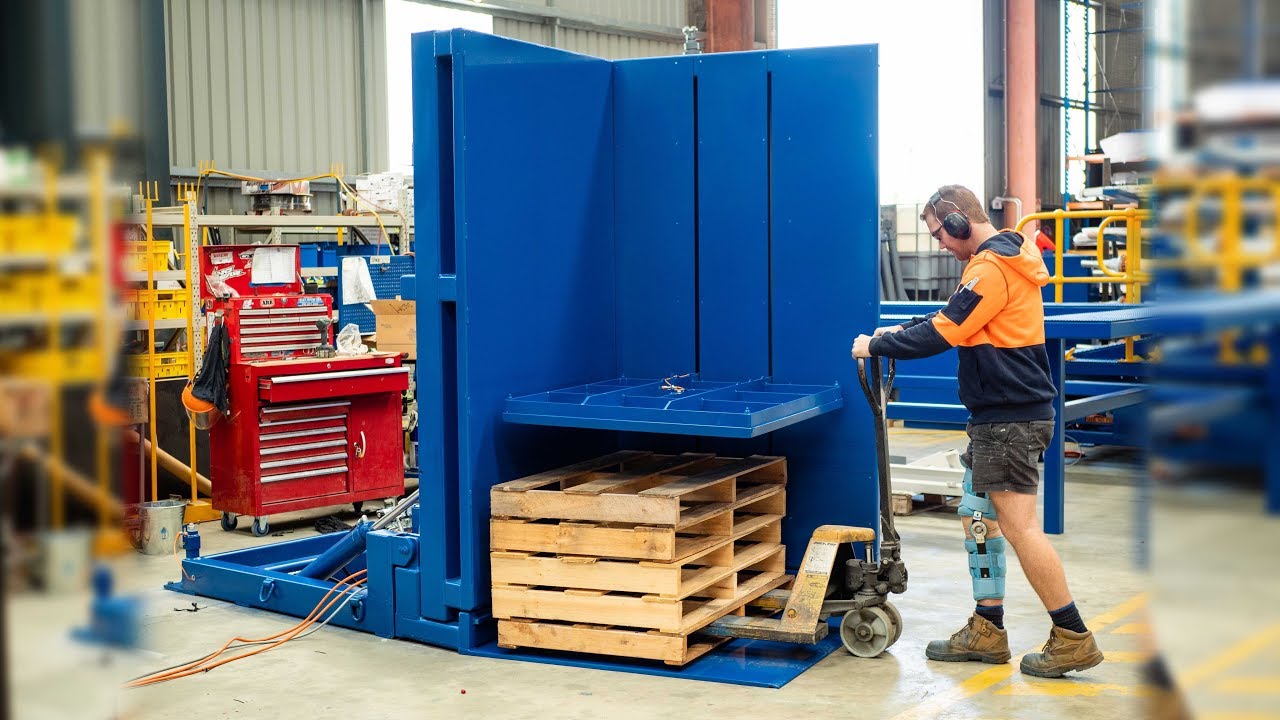
The transformative impact of pallet inverters is evident across various industries:
-
Streamlining Cheese Production: A dairy producer utilized pallet inverters to rotate large blocks of cheese during the aging process. This ensured even ripening without manual handling, reducing labor by 80% and cutting overall production time by 15%.
-
Optimizing Retail Pallet Recycling: A major retailer faced high costs associated with using expensive lease pallets (like CHEP) for inbound shipments and then needing to transfer goods to cheaper disposable pallets for outbound shipping to stores. By installing a pallet inverter, they could quickly transfer entire loads from the leased pallets to disposable ones, saving an estimated $200,000 annually and achieving ROI in just eight months.
-
Disaster Recovery in Pharmaceuticals: When a vital shipment of vaccines arrived on pallets damaged during transit, a pharmaceutical company avoided a potential $2 million loss. Using a pallet inverter, they were able to quickly and safely transfer the entire load onto sterile, undamaged pallets in under 30 minutes, preserving the integrity and usability of the sensitive cargo.
-
Boosting Efficiency in Logistics: A logistics operation for LIPTON Teas and Infusions Kenya integrated a pallet inverter with forklifts during their busiest season. This seemingly simple addition led to a noticeable increase in overall efficiency, demonstrating how quickly this technology can impact operations.
The Role of Pallet Units
While the focus is often on the inverter machine, its effectiveness is inherently linked to the concept of the "pallet unit." A pallet unit is more than just goods stacked on a pallet; it's a stabilized, consolidated load designed for efficient handling. It comprises the pallet base, the goods themselves, and crucial securing materials like shrink wrap, straps, or netting, often combined with labeling for identification.
These securing materials are vital because they create a stable block that the inverter can safely clamp and rotate without the load shifting or collapsing. Pallet units simplify handling by grouping multiple items into a single, manageable entity. They are indispensable in retail (fast inventory movement), food & beverage (hygiene, protection of fragile goods), manufacturing (heavy parts), and pharmaceuticals (contamination prevention).
Synergy: Pallet Units and Inverters Working Together
The true power couple in logistics is the combination of well-constructed pallet units and efficient pallet inverters. Pallet units provide the stable, organized structure, while inverters offer the automated means to manipulate these units as needed. This synergy eliminates bottlenecks and optimizes workflows.
Real-world examples showcase this combined impact:
-
FreshDirect (Food Distribution): By using pallet units designed for hygiene and leveraging inverters to swiftly transfer goods from shipping pallets to these compliant units, they significantly reduced contamination risks, streamlining their cold chain logistics.
-
PharmaSafe Logistics (Pharmaceuticals): Combining secure, standardized pharmaceutical pallet units with inverters allowed them to efficiently manage pallet replacements in sterile environments, improving overall process efficiency by 30% and reducing errors inherent in manual handling.
-
GlobalAuto (Automotive): Utilizing pallet units for heavy components and integrating inverters to rotate them for quality inspections or assembly line positioning drastically reduced the manual labor involved and cut inspection time by 50%.
These examples highlight how the integrated use of stable pallet units and automated inverters leads to faster, safer, and more reliable operations.
Addressing Common Misconceptions
Despite their clear benefits, pallet inverters face some misconceptions:
-
Misconception: Pallet inverters are too expensive for small businesses.
-
Reality: While requiring an initial investment (entry-level models start at a few thousand dollars, mid-range workhorses like the Premier FS 1600 cost significantly more, and high-end systems are costlier), the long-term savings in labor, reduced damage, and improved efficiency often provide a rapid ROI, typically within 12-18 months, making them viable for operations of various sizes.
-
Misconception: Pallet inverters are only useful for large-scale industries.
-
Reality: While essential for high-volume facilities (which may integrate inline systems into conveyor networks), standalone units like the Top Industries 180° Inverter are designed to fit into tighter spaces and benefit smaller warehouses by improving handling efficiency and reducing product damage, allowing them to compete more effectively.
ROI of Integrated Systems
The cost-saving potential of combining optimized pallet units with pallet inverters is substantial:
- Labor Costs: Reduced by up to 50% through automation.
- Product Damage: Lowered by around 75%, saving significantly on replacement costs.
- Operational Downtime: Minimizing by approximately 60% with faster, automated pallet replacements.
The math is compelling: a $50,000 pallet inverter saving $200,000 annually delivers a 300% ROI in Year 1 alone. This doesn't even account for the less tangible, but equally critical, benefits of improved safety, employee morale, and the ability to meet stringent industry compliance standards.
Choosing the Right Technology
Selecting the appropriate pallet inverter requires considering several factors:
- Load Size and Variety: Operations with uniform loads might use simpler models, while those handling mixed or fragile goods require inverters with adjustable clamps and pressure settings (e.g., Premier FSDC Dual Clamp accommodates wide ranges).
- Volume and Space: High throughput needs automated, inline systems; lower volume or limited space may opt for standalone units.
- Industry Needs: Specific requirements exist, such as stainless steel for food/beverage hygiene or leak-proof models for chemicals.
- Load Capacity: Ensure the inverter can safely handle the maximum weight of typical loads.
- Safety Features: Look for standard safety mechanisms like emergency stops, light curtains, and safety fencing.
The Future of Pallet Technology
The evolution of pallet technology is ongoing, driven by demands for greater efficiency, sustainability, and traceability.
-
Smarter Materials & Design: Beyond traditional wood, composite plastics, aluminum, and even biodegradable materials are emerging, offering improved durability, hygiene, and environmental benefits. Customizable designs like collapsible or modular pallets are gaining traction.
-
AI & Automation: Future pallet inverters will likely integrate more advanced AI and IoT capabilities. Smart sensors can detect load imbalances or maintenance needs, while connectivity with warehouse management systems (WMS) and RFID technology will provide real-time data for optimization. Some advanced models already offer predictive maintenance alerts, reducing downtime.
-
Sustainability Drivers: The focus on reducing carbon footprints and waste is pushing the adoption of reusable plastic pallets and designs that minimize material use.
-
Future Predictions: Expect pallets embedded with IoT sensors tracking location, temperature, and load conditions. Modular pallets designed for easy repair and repurposing will support circular economy models. The synergy between increasingly intelligent pallet units and sophisticated inverters will continue to drive automation in logistics.
Conclusion
The case for implementing pallet inverters, particularly when viewed alongside the benefits of optimized pallet units, is clear and compelling. From slashing labor costs and product damage to dramatically improving workplace safety and boosting throughput, these technologies are no longer optional upgrades but strategic necessities for businesses aiming to remain competitive in a fast-paced global supply chain.
The real-world applications demonstrate tangible, significant returns on investment across diverse industries. As pallet technology continues its trajectory towards greater intelligence, sustainability, and adaptability, the businesses that embrace these innovations will be best positioned to meet the logistical challenges of tomorrow while optimizing operations today. The question for many is no longer whether they can afford a pallet inverter, but whether they can afford not to have one.
The future of pallet technology lies in its ability to combine sustainability, intelligence, and adaptability, ensuring that businesses can meet the challenges of tomorrow while optimizing the logistics of today.