
How to Choose the Right Pallet Inverter for Your Warehouse?
Choosing the right pallet inverter for your warehouse hinges on several critical factors, including load size, product type, daily volume, and integration needs. By carefully evaluating these aspects, businesses can select an inverter that enhances efficiency, reduces damage, and improves safety. This guide provides a comprehensive overview to aid in making an informed decision.
Understanding Pallet Inverters and Their Role in Warehouse Efficiency
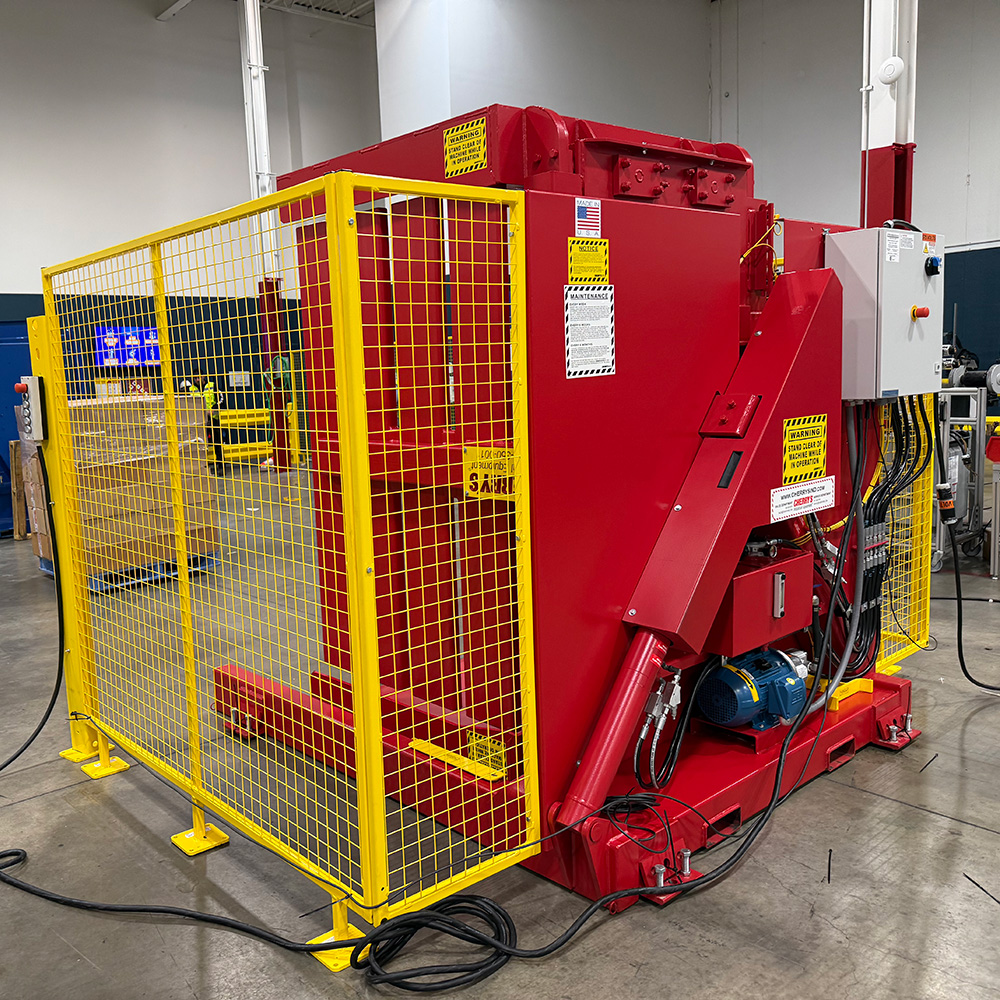
Pallet inverters are specialized material handling machines designed to rotate or invert palletized loads. These devices are instrumental in modern warehouses, distribution centers, and manufacturing facilities for enhancing operational efficiency and safety. By eliminating manual handling of heavy loads, pallet inverters streamline processes like pallet exchange, damaged goods recovery, and product orientation changes. This automation not only saves time and labor but also significantly reduces the risk of product damage and workplace injuries.
What is a Pallet Inverter?
A pallet inverter is a machine engineered to securely grip and rotate a palletized load, typically up to 180 degrees. This inversion capability facilitates various essential warehouse tasks that would otherwise be labor-intensive, time-consuming, and potentially hazardous if performed manually or with less specialized equipment. Pallet inverters are distinct from other material handling equipment due to their specific function of inverting or rotating entire pallet loads while maintaining load stability and integrity.
How Pallet Inverters Work
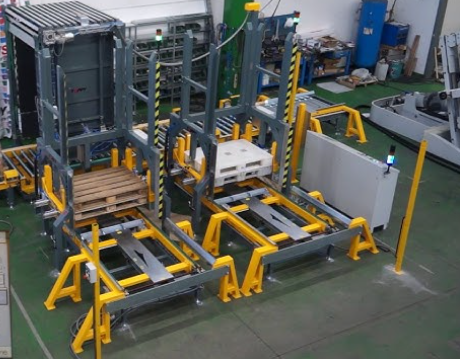
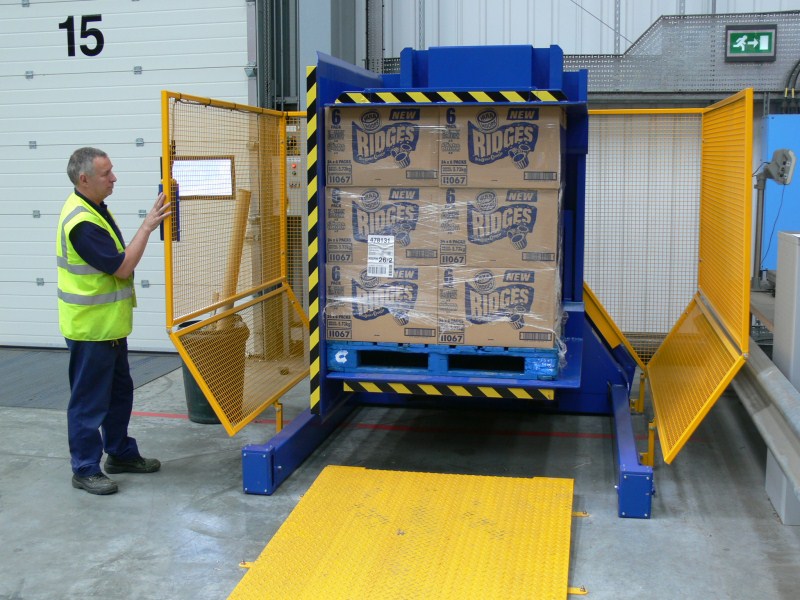
The operation of a pallet inverter typically involves a sequence of steps ensuring secure and controlled load inversion. Initially, a loaded pallet is placed into the inverter, often using a forklift or pallet jack. The inverter is equipped with a clamping mechanism, usually hydraulically operated, which securely grips the sides of the pallet load. Once the load is firmly clamped, the inverter initiates a rotation sequence, turning the entire load to the desired angle, commonly 180 degrees for full inversion or 90 degrees for side access. After rotation, the clamping mechanism releases, allowing for pallet exchange, product removal, or any other required action. Some advanced models feature automated conveyors for seamless integration into production lines, further enhancing operational speed and efficiency.
Key Benefits of Pallet Inverters in Material Handling
Integrating pallet inverters into warehouse operations offers a multitude of benefits, significantly impacting efficiency, cost-effectiveness, and workplace safety. These advantages stem from the inverter's ability to automate and simplify complex pallet handling tasks.
Enhanced Operational Efficiency
Pallet inverters substantially improve warehouse efficiency by automating repetitive and physically demanding tasks. They expedite processes such as pallet swapping, enabling quick transitions from shipping pallets to hygienic pallets for cleanroom environments, or vice versa. Furthermore, inverters facilitate rapid access to damaged goods at the bottom of pallet loads, eliminating the need for manual restacking. This speed and ease of operation translate directly into increased throughput and reduced handling time, optimizing overall warehouse productivity.
Reduction in Product Damage and Waste
Manual pallet handling inherently carries a higher risk of product damage. The process of unstacking and restacking pallets to access lower layers or swap pallets can lead to accidental drops, crushing, or mishandling of goods. Pallet inverters mitigate these risks by providing a controlled and stable inversion process. By securing the load and rotating it smoothly, inverters minimize the chances of product shifting, falling, or being damaged during handling, thereby reducing waste and preserving product integrity.
Improved Workplace Safety
Manual handling of heavy pallet loads is a leading cause of workplace injuries, including strains, sprains, and more severe musculoskeletal disorders. Pallet inverters significantly enhance workplace safety by eliminating the need for manual lifting, bending, and awkward maneuvering of heavy items. By automating pallet inversion, inverters reduce the physical strain on workers, creating a safer and healthier working environment. This reduction in injury risk not only protects employees but also lowers associated costs related to worker compensation and lost productivity.
Cost Savings Through Labor and Time Efficiency
The automation provided by pallet inverters leads to direct cost savings. By speeding up pallet handling processes, inverters reduce the labor hours required for tasks like pallet swapping and damaged goods recovery. Fewer employees are needed for these physically intensive tasks, allowing for reallocation of personnel to other value-added activities within the warehouse. The time saved in handling also contributes to faster order fulfillment and improved operational flow, further enhancing cost-effectiveness.
Diverse Applications of Pallet Inverters in Warehouses
Pallet inverters are versatile machines with a wide range of applications across various industries and warehouse operations. Their ability to efficiently and safely invert pallet loads makes them indispensable for numerous material handling tasks.
Efficient Pallet Swapping
In industries with stringent hygiene standards, such as food processing and pharmaceuticals, pallet swapping is a critical operation. Wooden pallets, commonly used for shipping, may not meet the cleanliness requirements for storage in cleanrooms or production areas. Pallet inverters enable a swift and hygienic transfer of goods from wooden shipping pallets to clean plastic or metal pallets. This process is crucial for maintaining product integrity and complying with sanitary regulations, and inverters perform this task efficiently without the need for manual unloading and reloading.
Damage Recovery and Product Retrieval
When damage occurs to goods located at the bottom of a pallet load, accessing these items manually can be a complex and time-consuming task. Pallet inverters simplify damage recovery by inverting the entire load, providing immediate and easy access to the lower layers. Damaged items can be quickly removed and replaced, and broken pallets can be exchanged without disturbing the rest of the load. This capability minimizes product loss and reduces the time spent on handling damaged goods.
Facilitating Product Orientation Changes
Certain manufacturing and processing operations require products to be inverted or rotated for subsequent stages, such as printing, stamping, or further processing. Pallet inverters can efficiently change the orientation of large, heavy items or stacks of materials that are difficult to handle manually. This application is particularly beneficial in industries like metalworking, printing, and paper manufacturing, where precise product orientation is essential for production processes.
Handling and Rotating Large Stacks of Materials
Beyond individual items, pallet inverters are capable of rotating entire stacks of materials, such as sheets of paper, boards, or laminated products. In industries dealing with bulk materials or sheet goods, inverters allow for the efficient inversion of complete stacks as a single unit. This capability saves significant time and labor compared to manually inverting each item within a stack, streamlining handling processes for large volumes of materials.
Choosing the Right Pallet Inverter: Key Selection Factors
Selecting the optimal pallet inverter for a specific warehouse application requires careful evaluation of several critical factors. These considerations ensure that the chosen inverter aligns with operational needs, load characteristics, and facility requirements.
Load Size and Weight Capacity
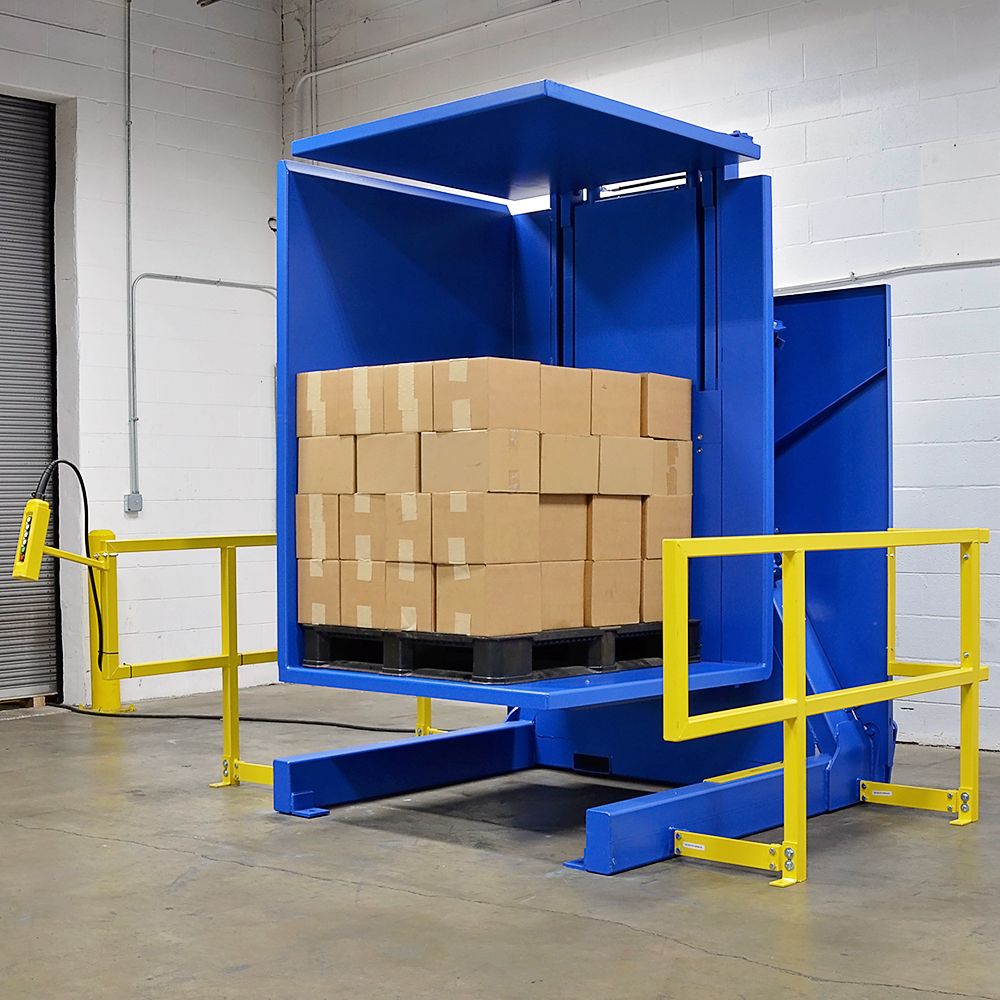
The dimensions and weight of typical pallet loads are primary considerations when choosing a pallet inverter. It is crucial to select an inverter with a load capacity that exceeds the maximum weight of the loads to be handled, ensuring safe and reliable operation. Similarly, the inverter's clamp range and platform size must accommodate the dimensions of the pallets and loads, including height, width, and depth. Overestimating load requirements provides a safety margin and allows for handling a variety of load sizes in the future.
Variety of Load Types and Fragility
Warehouses often handle diverse product types, ranging from robust and durable goods to fragile and delicate items. The type of product significantly influences the choice of pallet inverter. For fragile products, inverters with adjustable clamp pressure settings are essential to prevent damage during inversion. If handling a wide variety of load sizes and shapes, an inverter with a larger and more versatile clamp range is preferable. Consider the product's stability and packaging to ensure the inverter can securely and safely handle the load without causing damage.
Daily Volume and Throughput Requirements
The daily volume of pallets requiring inversion is a crucial factor in determining the appropriate type of pallet inverter. For high-throughput operations, such as large distribution centers or manufacturing plants, heavy-duty, automated inverters are necessary to meet productivity demands. These inverters are designed for continuous, high-cycle operation and offer faster cycle times. For smaller operations with lower volumes, a low-duty or manually operated inverter may be sufficient and more cost-effective. Assess the required throughput to match inverter capabilities with operational needs.
Integration with Existing Warehouse Systems
The chosen pallet inverter should seamlessly integrate into the existing warehouse layout and material handling systems. Consider how pallets will be loaded into and unloaded from the inverter. Options range from stand-alone, manually operated units to automated systems integrated with conveyors and production lines. Evaluate the available space, workflow, and existing equipment, such as forklifts and pallet jacks, to ensure the inverter can be efficiently incorporated without creating bottlenecks or logistical challenges. For automated integration, compatibility with warehouse management systems (WMS) and programmable logic controllers (PLCs) may also be important.
Types of Pallet Inverters Available
The market offers a variety of pallet inverter types, each designed to address specific operational needs and load characteristics. Understanding these different types is essential for making an informed selection.
Stationary Pallet Inverters
Stationary pallet inverters are designed for fixed locations within a warehouse or production facility. These robust machines are typically used for heavy-duty applications and high-volume operations. Stationary models often require external power sources and are capable of handling substantial load capacities. They are ideal for operations with dedicated inversion areas and consistent workflows, providing reliability and durability for demanding environments.
Portable Pallet Inverters
Portable pallet inverters offer mobility and flexibility, equipped with wheels or casters for easy relocation within a facility. These inverters are advantageous when pallet inversion is required in various locations or when space is limited. Portable models are suitable for operations that need to adapt to changing layouts or handle pallet loads in different areas of a warehouse. While generally having lower load capacities than stationary models, they provide a versatile solution for diverse material handling needs.
Single Clamp Pallet Inverters
Single clamp pallet inverters utilize a single clamping mechanism to secure the load during inversion. These models are typically simpler in design and operation, making them cost-effective and easy to maintain. Single clamp inverters are well-suited for lighter to medium-duty applications and loads that are relatively uniform in size and stability. They are a common choice for general warehouse use and pallet swapping tasks.
Dual Clamp Pallet Inverters
Dual clamp pallet inverters feature two clamping mechanisms, providing enhanced stability and security, particularly for taller or less stable loads. The dual clamp design ensures a more balanced center of gravity during rotation, making them ideal for handling fragile or high-value products that require careful handling. Dual clamp inverters are often preferred in industries such as pharmaceuticals and chemicals, where product integrity is paramount.
Ground Level Loading Pallet Inverters
Ground level loading pallet inverters are designed with a loading platform at ground level, eliminating the need for ramps or forklift loading. These models are particularly beneficial in facilities where forklifts are not readily available or restricted, or for operations using pallet jacks for material movement. Ground level loading enhances safety and ease of use, especially for manual loading and unloading processes.
Ramp Loading Pallet Inverters
Ramp loading pallet inverters incorporate a ramp for loading pallets, often used for handling materials that are difficult to manage with standard forklifts or pallet jacks. These inverters are designed for specific applications, such as corrugated plants or printing facilities, where materials like plastic sheets or paper rolls require specialized handling. Ramp loading configurations provide a practical solution for efficiently managing unique or challenging load types.
Stainless Steel Pallet Inverters
Stainless steel pallet inverters are constructed from stainless steel, making them ideal for industries with stringent hygiene and corrosion resistance requirements, such as food processing, pharmaceuticals, and chemical manufacturing. Stainless steel construction ensures easy cleaning, sanitation, and resistance to harsh environments. These inverters are designed to meet the rigorous standards of industries where cleanliness and durability are critical.
Low Duty Pallet Inverters
Low duty pallet inverters are designed for smaller-scale operations or businesses with lower pallet inversion volumes. These models are typically more economical and suitable for operations that require pallet inversion less frequently, such as small to medium-sized enterprises or warehouses with limited throughput needs. Low duty inverters provide a cost-effective entry point to automated pallet handling without the investment of heavy-duty equipment.
Buying vs. Renting a Pallet Inverter: Making the Right Choice
The decision to buy or rent a pallet inverter depends on various factors, including budget, frequency of use, and long-term operational needs. Both options offer distinct advantages and are suitable for different business scenarios.
Advantages of Buying a Pallet Inverter
Purchasing a pallet inverter represents a long-term investment, beneficial for operations with consistent and frequent pallet inversion requirements. Buying provides ownership, allowing for unlimited use without rental constraints or fees. It can be more cost-effective in the long run for high-volume users, eliminating recurring rental expenses. Ownership also allows for customization and integration tailored to specific long-term operational needs. Furthermore, purchased equipment becomes a company asset, potentially increasing balance sheet value.
Advantages of Renting a Pallet Inverter
Renting a pallet inverter is a viable option for short-term needs, sporadic use, or businesses with limited capital budgets. Rental eliminates the upfront capital expenditure associated with purchasing, freeing up funds for other investments. It offers flexibility to use the equipment only when needed, avoiding costs during periods of low demand. Renting allows access to the latest inverter models without the commitment of ownership and often includes maintenance and support services in the rental agreement, reducing maintenance burdens. It is also an excellent way to test different models before making a purchase decision.
Determining the Best Option for Your Warehouse
To determine whether buying or renting is more suitable, assess the frequency and duration of pallet inverter use. For continuous, daily operations, purchasing is generally more economical over time. For occasional or seasonal needs, renting provides cost-effectiveness and flexibility. Consider your budget, available capital, and long-term strategic goals. If long-term, consistent use is anticipated and budget allows, buying is likely the better choice. If needs are temporary, variable, or capital is constrained, renting offers a practical and financially prudent solution.
Conclusion: Optimizing Warehouse Operations with the Right Pallet Inverter
Selecting the right pallet inverter is a strategic decision that significantly impacts warehouse efficiency, safety, and cost-effectiveness. By carefully considering factors such as load characteristics, operational volume, integration needs, and budget, businesses can choose an inverter that aligns with their specific requirements. Whether opting for a stationary or portable model, single or dual clamp, or choosing to buy or rent, the right pallet inverter is an invaluable asset for modern warehouses. Investing in the appropriate pallet inverter streamlines material handling processes, reduces product damage and workplace injuries, and ultimately enhances overall operational performance and profitability. By making an informed choice, warehouses can optimize their operations and achieve a safer, more efficient, and productive working environment.