
What Are the Benefits of Using Pallet Inverters in E-commerce Warehouses?
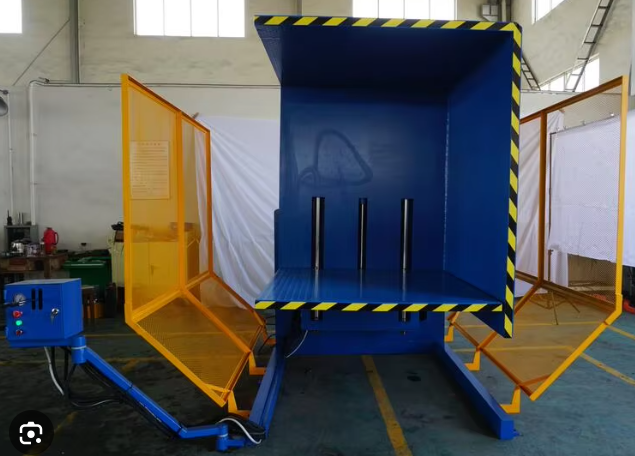
Pallet inverters are revolutionizing e-commerce warehouses by streamlining operations and enhancing efficiency. These machines offer significant advantages, including improved productivity, reduced product damage, optimized space utilization, and enhanced safety. By automating pallet handling, e-commerce warehouses can achieve faster turnaround times, lower operational costs, and a safer working environment, ultimately leading to increased customer satisfaction and profitability.
Understanding Pallet Inverters: The Backbone of E-commerce Efficiency
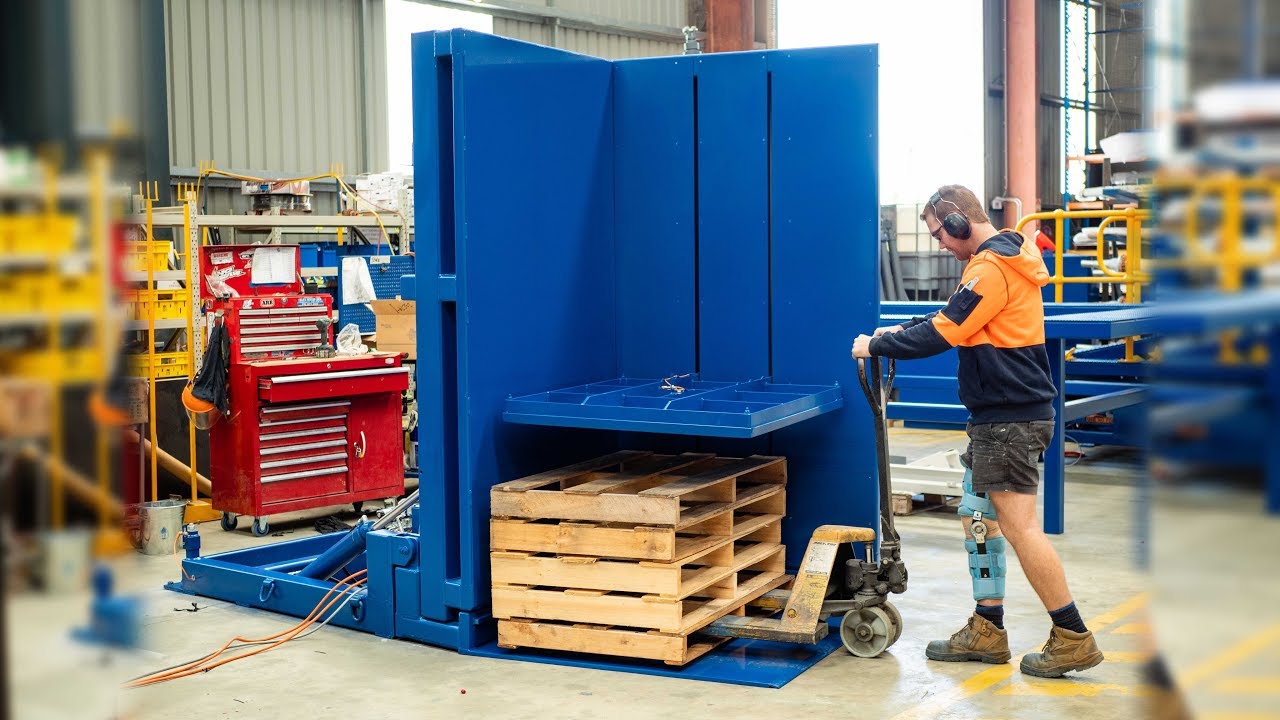
In the fast-paced environment of e-commerce warehouses, efficient material handling is paramount. Pallet inverters have emerged as a crucial technology, designed to optimize the way palletized goods are managed. A pallet inverter is essentially a material handling equipment engineered to rotate or flip pallet loads, offering a safe and efficient alternative to manual handling methods. These machines are not just about flipping pallets; they represent a strategic investment in operational excellence.
At its core, a pallet inverter is designed to securely clamp and invert a palletized load. This action can be a complete 180-degree flip or a partial rotation, depending on the model and operational needs. This capability is invaluable for a multitude of tasks within an e-commerce warehouse, from replacing damaged pallets to facilitating access to goods without manual restacking. By automating this process, pallet inverters minimize the need for labor-intensive tasks, reducing both time and the risk of product damage.
How Pallet Inverters Work: A Symphony of Mechanics
The operation of a pallet inverter is a marvel of mechanical engineering, combining sturdy construction with precise hydraulic control. Typically, a pallet inverter comprises three main components:
- Frame: The robust frame provides the structural integrity of the machine, ensuring stability during the inversion process. Constructed from heavy-duty steel, the frame is designed to withstand substantial loads and ensure longevity in demanding warehouse environments.
- Clamping Mechanism: This is the heart of the pallet inverter's functionality. The clamping mechanism securely holds the pallet load in place throughout the inversion process. It often features adjustable clamps or plates that can be adapted to accommodate various pallet sizes and load configurations, ensuring a firm grip without damaging the goods.
- Hydraulic System: The hydraulic system is the powerhouse that drives the inversion process. Utilizing hydraulic cylinders and pumps, it generates the controlled force needed to rotate or flip the pallet. Modern systems are equipped with user-friendly control panels, allowing operators to precisely manage the inversion process, ensuring smooth and safe operation.
Types of Pallet Inverters for E-commerce Applications: Tailoring Solutions to Warehouse Needs
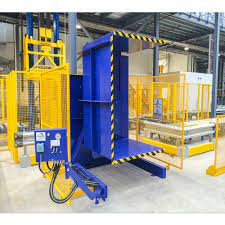
E-commerce warehouses are diverse in size, scale, and operational flow. Recognizing this, pallet inverters are available in different configurations, primarily categorized into stationary and portable models, each designed to address specific warehouse requirements.
Stationary Pallet Inverters: Powerhouses for High-Throughput Operations
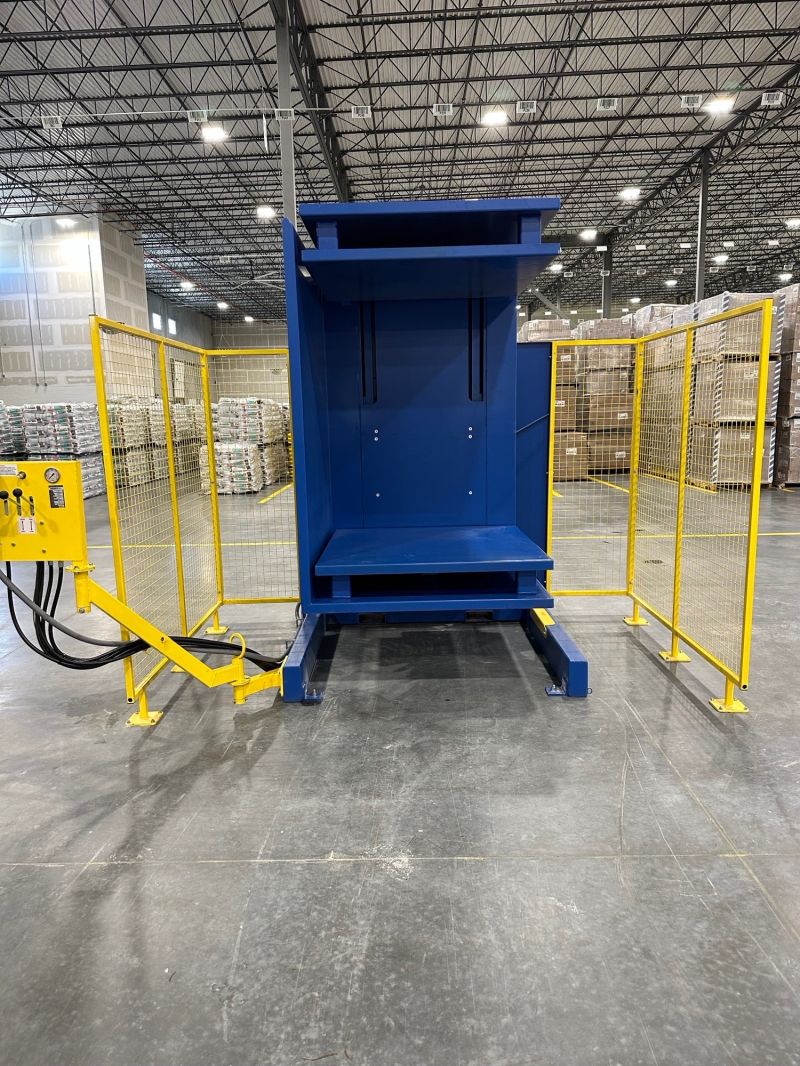
Stationary pallet inverters are designed for fixed locations within a warehouse. They are ideal for e-commerce operations with high throughput and dedicated processing areas.
Features and Benefits for E-commerce Warehouses:
- High Load Capacity: Stationary models are built to handle heavy loads, essential for warehouses dealing with bulk goods or heavy items common in certain e-commerce sectors like home goods or electronics.
- Enhanced Efficiency: Their powerful hydraulic systems ensure quick and seamless pallet inversion, significantly speeding up processes like pallet exchange or product access in high-volume environments. This directly translates to faster order fulfillment and improved customer satisfaction in e-commerce.
- Customization Options: Stationary inverters can be customized to accommodate the diverse range of pallet sizes used in e-commerce, from standard to oversized pallets for larger items. This adaptability is crucial for handling varied product lines.
- Improved Safety: Robust construction and integrated safety features like safety fences and emergency stops are paramount in busy e-commerce warehouses. Stationary inverters provide a secure working environment, minimizing accidents and protecting personnel.
E-commerce Applications:
- Centralized Processing Areas: Ideal for dedicated zones within large e-commerce fulfillment centers where high-volume pallet inversion is routinely required.
- Inbound and Outbound Logistics Hubs: Streamlining the handling of goods entering and leaving the warehouse, especially when pallet exchange is necessary for different stages of the supply chain.
Portable Pallet Inverters: Flexibility for Dynamic Warehouse Layouts
Portable pallet inverters offer mobility and versatility, crucial for e-commerce warehouses that require flexibility and adaptability in their operations. Equipped with wheels or casters, these inverters can be easily moved to different locations within the warehouse as needed.
Features and Benefits for E-commerce Warehouses:
- Mobility and Versatility: The ability to move the inverter to where it's needed is a significant advantage in dynamic e-commerce warehouses. This is especially useful in warehouses with fluctuating layouts or seasonal peaks in demand.
- Space Optimization: Portable inverters eliminate the need for dedicated inversion areas, maximizing valuable warehouse space. This is critical in e-commerce, where optimizing storage and operational space directly impacts efficiency.
- Quick and Easy Operation: Designed for user-friendliness, portable inverters ensure that operators can quickly and efficiently handle pallet loads with minimal training. This is beneficial in fast-paced e-commerce environments with varying staffing levels.
- Cost-Effective Solution: For smaller e-commerce businesses or those with lower inversion frequency, portable inverters offer a more affordable entry point compared to stationary models, making them accessible to a wider range of operations.
E-commerce Applications:
- Smaller E-commerce Warehouses: Ideal for facilities where space is at a premium and inversion needs are less constant.
- Decentralized Workstations: Supporting various packing or processing stations throughout a larger warehouse, providing flexibility in workflow management.
- Handling Returns and Reverse Logistics: Portable inverters can be easily deployed to returns processing areas, aiding in the inspection and repackaging of returned goods, a significant aspect of e-commerce operations.
The Multifaceted Benefits of Pallet Inverters in E-commerce Warehouses
The integration of pallet inverters into e-commerce warehouses yields a wide array of benefits, directly addressing key operational challenges and contributing to overall business success.
Enhanced Efficiency and Productivity: Accelerating E-commerce Fulfillment
In the competitive e-commerce landscape, speed and efficiency are critical. Pallet inverters significantly boost productivity by:
- Reducing Manual Labor: Automating pallet inversion eliminates the time-consuming and labor-intensive manual tasks of restacking or transferring goods. This frees up warehouse staff to focus on core e-commerce activities like order picking, packing, and shipping, directly accelerating fulfillment times.
- Faster Pallet Handling: Inverters can rotate or flip pallets in a fraction of the time it takes manually, leading to quicker turnaround times for inbound and outbound shipments. This is crucial for meeting tight delivery schedules and maintaining customer satisfaction in e-commerce.
- Streamlined Operations: By simplifying pallet handling, inverters contribute to a smoother and more efficient workflow throughout the warehouse, reducing bottlenecks and optimizing operational flow.
Space Optimization: Maximizing Warehouse Footprint
Warehouse space is a valuable commodity, especially in densely populated areas where e-commerce operations are often located. Pallet inverters contribute to space optimization by:
- Eliminating Dedicated Inversion Areas (Portable Models): Portable inverters negate the need for fixed inversion stations, allowing warehouse space to be used more flexibly for storage or other operational activities.
- Improved Warehouse Layout: Efficient pallet handling facilitated by inverters can lead to better warehouse layout design, optimizing storage density and improving accessibility to goods.
- Vertical Space Utilization: By enabling easier access to all sides of palletized goods, inverters can facilitate better vertical stacking and storage strategies, maximizing the use of vertical warehouse space.
Reduced Product Damage: Protecting Inventory and Profitability
Product damage is a significant concern for e-commerce businesses, impacting profitability and customer satisfaction. Pallet inverters mitigate this risk by:
- Minimizing Manual Handling: Reducing manual handling significantly decreases the chances of accidental drops, collisions, and other forms of product damage that occur during manual pallet manipulation.
- Controlled Inversion Process: The precise and controlled inversion process of pallet inverters ensures that goods are handled gently and securely, further minimizing the risk of damage, especially for fragile or delicate items common in e-commerce.
- Improved Load Stability: By allowing for quick pallet replacement or load adjustments, inverters help maintain load stability, reducing the risk of goods shifting or collapsing during storage and transit within the warehouse.
Improved Safety: Creating a Safer Working Environment
Safety in the workplace is paramount, and e-commerce warehouses are no exception. Pallet inverters enhance safety by:
- Reducing Physical Strain on Workers: Eliminating manual pallet flipping and restacking significantly reduces the physical strain on warehouse employees, minimizing the risk of back injuries, strains, and other musculoskeletal disorders associated with heavy lifting and repetitive motions.
- Minimizing Risk of Accidents: Automated pallet inversion reduces the likelihood of accidents caused by manual handling errors, such as dropped loads or collisions with equipment, creating a safer environment for warehouse personnel.
- Enhanced Operational Safety Features: Many pallet inverters are equipped with safety features like emergency stops, safety barriers, and interlocks, further ensuring operator safety during operation.
Cost Savings: Long-Term Economic Advantages
While the initial investment in a pallet inverter is a consideration, the long-term cost savings are substantial for e-commerce warehouses:
- Reduced Labor Costs: Automation of pallet handling reduces the need for manual labor, leading to lower labor costs over time. This is especially significant in regions with high labor rates.
- Minimized Product Damage Costs: By significantly reducing product damage, inverters minimize losses from unsaleable goods, returns, and customer dissatisfaction, directly impacting the bottom line.
- Lower Pallet Costs: Inverters facilitate efficient pallet exchange and management, potentially reducing the need for expensive pallet repairs or replacements and optimizing pallet inventory.
- Increased Operational Efficiency: Overall gains in efficiency and productivity translate to lower operational costs per unit handled, improving the cost-effectiveness of warehouse operations.
Logistics Optimization: Streamlining Inbound and Outbound Processes
Pallet inverters play a vital role in optimizing logistics within e-commerce warehouses, streamlining both inbound and outbound processes:
- Efficient Pallet Exchange for Inbound Goods: Quickly switching incoming goods from transport pallets to in-house pallets upon arrival streamlines the receiving process and ensures compatibility with warehouse racking and handling systems.
- Optimized Order Assembly for Outbound Shipments: Facilitating easy access to goods for order picking and assembly, inverters contribute to faster order processing and dispatch, improving outbound logistics efficiency.
- Improved Reverse Logistics: In returns processing, inverters aid in the efficient handling of returned goods, allowing for quick inspection, repalletizing, and processing for restocking or disposal, optimizing reverse logistics flow.
Pallet Inverter Selection Factors for E-commerce Warehouses: Choosing the Right Fit
Selecting the appropriate pallet inverter is crucial to maximizing its benefits in an e-commerce warehouse. Key factors to consider include:
- Load Capacity and Size Considerations: Match the inverter's load capacity to the typical weight and dimensions of pallet loads handled in the e-commerce warehouse. Consider the range of product types and pallet sizes to ensure versatility.
- Operating Requirements and Safety Features: Evaluate the operational intensity and specific safety needs of the warehouse environment. Choose inverters with appropriate safety features and operational modes to match the workflow and ensure operator safety.
- Integration with Existing Equipment: Ensure compatibility with existing material handling equipment such as forklifts, pallet jacks, and conveyor systems. Seamless integration optimizes workflow and maximizes efficiency.
- Energy Efficiency and Automation Features: Consider energy-efficient models to reduce operating costs and align with sustainability goals. Automation features like programmable controls can further enhance efficiency and reduce manual intervention.
- Stationary vs. Portable: Decide between stationary and portable models based on warehouse size, layout, throughput requirements, and operational flexibility needs.
Renting vs. Buying: Strategic Decisions for E-commerce Businesses
The decision to rent or buy a pallet inverter depends on various factors specific to the e-commerce business:
Renting Advantages:
- Lower Upfront Costs: Renting avoids significant capital expenditure, making it attractive for startups or businesses with limited capital.
- Flexibility: Rental agreements offer flexibility to adjust equipment based on changing needs, ideal for seasonal businesses or those experiencing rapid growth.
- Access to Latest Technology: Renting provides access to newer models without long-term commitment, allowing businesses to benefit from technological advancements.
- Maintenance and Support Included: Rental agreements often include maintenance and support, reducing the burden of equipment upkeep.
Buying Advantages:
- Long-Term Cost-Effectiveness: For businesses with consistent, long-term needs, buying can be more cost-effective over time, eliminating recurring rental fees.
- Asset Ownership: Ownership provides control and asset value, beneficial for established businesses with stable operations.
- Customization and Integration: Owning allows for greater customization and integration with existing systems, tailoring the inverter to specific warehouse needs.
- Potential Resale Value: Owned equipment can have resale value, offering a return on investment in the long run.
For e-commerce businesses, the choice between renting and buying should be based on financial resources, operational needs, business growth projections, and long-term strategic goals.
Conclusion: Pallet Inverters – A Cornerstone of E-commerce Warehouse Excellence
Pallet inverters are no longer a niche technology but a vital asset for e-commerce warehouses striving for operational excellence. Their benefits extend across efficiency, safety, cost savings, and space optimization, directly addressing the critical challenges of modern e-commerce fulfillment. By streamlining pallet handling, reducing product damage, and enhancing workplace safety, pallet inverters empower e-commerce businesses to achieve faster order fulfillment, lower operational costs, and ultimately, greater customer satisfaction and profitability. Investing in the right pallet inverter solution is a strategic move towards building a more efficient, resilient, and competitive e-commerce operation.