
How to Enhance Pallet Inverter Performance with Predictive Analytics?
[Pallet inverter predictive analytics, performance optimization, pallet inverter reliability, equipment maintenance]
Predictive analytics is revolutionizing pallet inverter maintenance, boosting performance by forecasting failures and optimizing upkeep schedules. Machine learning models analyze operational data to detect anomalies and predict remaining useful life (RUL). This proactive approach minimizes downtime, extends lifespan, optimizes maintenance, and enhances efficiency, resulting in significant cost savings and improved reliability.
The Critical Role of Pallet Inverters in Modern Warehousing
[Pallet inverter predictive analytics, performance optimization, pallet inverter reliability, equipment maintenance]
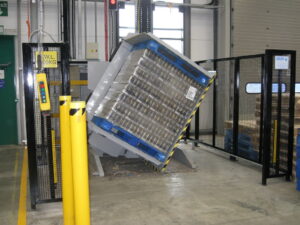
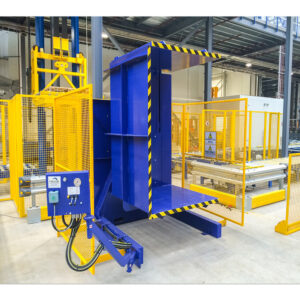
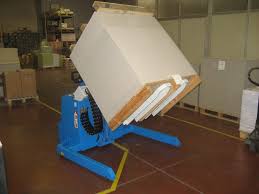
In today's fast-paced warehousing and manufacturing environments, efficiency is paramount. Pallet inverters stand as vital pieces of equipment, streamlining material handling processes and significantly impacting operational throughput. These machines are engineered to safely and efficiently rotate or invert pallet loads, facilitating tasks from switching damaged pallets to replacing slip sheets, and even enabling the easy removal of bottom-layer goods without manual restacking. Their contribution extends across diverse industries, including food and beverage, pharmaceuticals, retail, and manufacturing, where maintaining product integrity and operational speed is crucial.
However, the reliance on pallet inverters also means their performance directly affects productivity. Downtime, whether due to mechanical failure or inefficient operation, can ripple through the entire supply chain, leading to delays, increased costs, and potential customer dissatisfaction. Therefore, maximizing the performance and reliability of pallet inverters is not just a matter of routine maintenance; it’s a strategic imperative for businesses aiming to maintain a competitive edge. Ensuring these machines operate at peak efficiency translates directly into smoother workflows, reduced operational expenses, and enhanced overall profitability.
Beyond Reactive Fixes: Embracing Proactive Maintenance
[Pallet inverter predictive analytics, performance optimization, pallet inverter reliability, equipment maintenance]
Traditionally, maintenance strategies for pallet inverters have fallen into two categories: reactive and preventive. Reactive maintenance, often termed “run-to-failure,” involves addressing issues only when a breakdown occurs. While seemingly straightforward, this approach leads to unplanned downtime, costly emergency repairs, and potential disruptions to production schedules. Preventive maintenance, on the other hand, follows a predetermined schedule of inspections and servicing, regardless of the actual condition of the equipment. While better than reactive maintenance, it can lead to unnecessary interventions and may not effectively prevent unexpected failures that occur between scheduled maintenance intervals.
The limitations of these traditional approaches highlight the need for a more intelligent and proactive maintenance strategy. This is where predictive maintenance comes into play. Predictive maintenance leverages data analysis and machine learning to monitor equipment condition in real-time, predict potential failures before they happen, and optimize maintenance schedules accordingly. This shift from reactive or time-based maintenance to a condition-based approach offers a significant leap forward in enhancing pallet inverter performance and reliability. By anticipating maintenance needs, businesses can minimize disruptions, reduce costs, and extend the lifespan of their equipment, leading to a more efficient and resilient operation.
Predictive Analytics: The Intelligent Approach to Pallet Inverter Optimization
[Pallet inverter predictive analytics, performance optimization, pallet inverter reliability, equipment maintenance]
Predictive analytics is transforming equipment maintenance, and pallet inverters are no exception. By harnessing the power of data and machine learning, businesses can move beyond reactive and preventive maintenance to a more sophisticated, condition-based strategy. This approach not only minimizes downtime but also optimizes maintenance schedules, extends equipment lifespan, and ultimately enhances overall performance.
The core of predictive analytics lies in its ability to forecast potential issues before they escalate into failures. This is achieved by continuously monitoring key operational parameters of the pallet inverter and analyzing this data to identify patterns and anomalies that indicate impending problems. Instead of relying on fixed maintenance intervals, predictive analytics triggers maintenance actions based on the actual condition of the equipment, ensuring that interventions are timely and effective.
This data-driven approach offers several key advantages. Firstly, it significantly reduces unexpected downtime by predicting failures in advance, allowing maintenance teams to schedule repairs proactively during planned downtime periods. Secondly, it optimizes maintenance costs by eliminating unnecessary routine maintenance tasks and focusing resources on actual needs. Thirdly, it extends the lifespan of the pallet inverter by addressing minor issues before they cause major damage, maximizing the return on investment. Finally, by ensuring consistent and reliable operation, predictive analytics contributes to improved overall warehouse efficiency and productivity.
Implementing Predictive Analytics for Pallet Inverters: A Step-by-Step Guide
To effectively implement predictive analytics for pallet inverters, a structured approach is essential. This involves several key steps, from data collection to model deployment and continuous improvement.
1. Data Acquisition: The Foundation of Predictive Insights
The first critical step is establishing a robust system for data collection. This requires identifying the key operational parameters that provide insights into the health and performance of the pallet inverter. Relevant data points can include:
- Hydraulic System Performance: Pressure readings, oil temperature, flow rates – anomalies in these metrics can indicate leaks, pump wear, or valve malfunctions.
- Motor Performance: Current draw, voltage, temperature, vibration levels – deviations can signal motor overheating, bearing wear, or electrical issues.
- Electrical System Monitoring: Voltage stability, current fluctuations, insulation resistance – can detect wiring problems, control system faults, or component degradation.
- Operational Data: Cycle times, load weights, error logs – provide context for performance trends and identify potential misuse or overloading.
- Environmental Factors: Ambient temperature, humidity – can influence component performance and lifespan.
Data can be collected through various sensors integrated into the pallet inverter, as well as from existing systems like Supervisory Control and Data Acquisition (SCADA) and Computerized Maintenance Management Systems (CMMS). Modern pallet inverters are increasingly equipped with IoT capabilities, facilitating seamless data transmission and integration.
2. Data Preprocessing and Feature Engineering: Preparing Data for Analysis
Raw data collected from sensors and systems often requires preprocessing before it can be effectively used for predictive modeling. This involves cleaning the data to remove noise, handling missing values, and transforming data into a suitable format for machine learning algorithms.
Feature engineering is another crucial step, where relevant features are extracted from the preprocessed data. These features are essentially the inputs to the machine learning models and should be carefully selected to capture the underlying patterns that indicate equipment health and predict potential failures. Examples of engineered features could include statistical measures (mean, standard deviation, trend) of sensor readings over time, or derived metrics that combine multiple data points to represent specific conditions.
3. Machine Learning Model Development: Building Predictive Engines
With clean and well-engineered data, the next step is to develop machine learning models capable of predicting pallet inverter performance and potential failures. Several types of models can be employed, depending on the specific predictive goals:
- Regression Models: For predicting Remaining Useful Life (RUL). Regression models can analyze historical data and current conditions to estimate the time remaining before a component or system is likely to fail. This information is invaluable for proactive maintenance scheduling.
- Classification Models: For predicting failure within a given timeframe. Classification models can be trained to identify patterns that precede failures and classify the current state of the pallet inverter as either “healthy” or “at risk of failure” within a specific future time window.
- Anomaly Detection Models: For identifying unusual behavior that may indicate potential problems. Anomaly detection models learn the normal operating patterns of the pallet inverter and flag any deviations from these patterns as anomalies, prompting further investigation and potential intervention.
Choosing the right model depends on the specific data available, the desired prediction accuracy, and the business objectives. Often, a combination of models may be used to provide a comprehensive predictive maintenance solution.
4. Model Deployment and Integration: Putting Predictions into Action
Once the machine learning models are developed and validated, they need to be deployed into the operational environment. This involves integrating the models with existing systems, such as CMMS, to automate maintenance workflows. The predictive insights generated by the models should be presented to maintenance personnel in a user-friendly manner, providing actionable information for decision-making.
Alerts and notifications can be automatically triggered when the models predict a potential failure or detect an anomaly, prompting maintenance teams to investigate and take corrective actions. The CMMS can then be used to schedule maintenance tasks, order spare parts, and track maintenance activities, streamlining the entire maintenance process based on predictive insights.
5. Continuous Monitoring and Improvement: Refining Predictive Capabilities
Predictive analytics is not a one-time implementation but an ongoing process of monitoring, learning, and improvement. The performance of the machine learning models should be continuously monitored and evaluated. As more data becomes available over time, the models can be retrained and refined to improve their accuracy and predictive capabilities.
Feedback from maintenance personnel and operational data should be used to identify areas for improvement in the data collection process, feature engineering, and model selection. Regularly reviewing and updating the predictive maintenance system ensures that it remains effective and continues to deliver value over the long term.
Realizing the Benefits: Enhanced Performance and Tangible ROI
Implementing predictive analytics for pallet inverters translates into significant and measurable benefits for businesses. These advantages extend beyond reduced downtime and optimized maintenance schedules, impacting various aspects of operational efficiency and profitability:
- Reduced Downtime: Predictive maintenance minimizes unexpected breakdowns by forewarning potential failures, enabling proactive repairs during planned downtime. This translates to increased uptime and uninterrupted workflow, crucial for meeting production demands and customer expectations.
- Optimized Maintenance Schedules and Costs: By moving away from time-based schedules, maintenance is performed only when needed, based on actual equipment condition. This eliminates unnecessary routine maintenance tasks, reducing labor costs and spare parts consumption. Maintenance resources are focused on targeted interventions, maximizing efficiency and cost-effectiveness.
- Extended Asset Lifespan: Proactive identification and resolution of minor issues prevent them from escalating into major failures that can shorten equipment lifespan. Predictive maintenance helps extend the operational life of pallet inverters, maximizing return on investment and delaying capital expenditure on replacements.
- Improved Safety: By predicting potential equipment malfunctions, predictive analytics contributes to a safer working environment. Early detection of issues like hydraulic leaks or motor overheating allows for timely intervention, preventing accidents and injuries related to equipment failure.
- Increased Productivity and Efficiency: Reduced downtime, optimized maintenance, and extended asset lifespan all contribute to increased overall productivity and efficiency. Pallet inverters operate reliably and consistently, streamlining material handling processes and supporting higher throughput.
- Data-Driven Decision Making: Predictive analytics provides valuable insights into equipment performance and maintenance needs, empowering data-driven decision-making. Maintenance managers can make informed choices about maintenance strategies, resource allocation, and equipment upgrades based on concrete data and predictive forecasts.
Conclusion: The Future of Pallet Inverter Performance is Predictive
Enhancing pallet inverter performance through predictive analytics is not just a technological upgrade; it's a strategic shift towards a more intelligent, efficient, and resilient operational model. By embracing data-driven maintenance, businesses can unlock significant benefits, from reduced downtime and optimized costs to extended equipment lifespan and improved safety. As machine learning and IoT technologies continue to advance, the potential of predictive analytics for pallet inverters and other industrial equipment will only grow, paving the way for a future where maintenance is proactive, precise, and perfectly aligned with operational needs. For businesses seeking to maximize efficiency, minimize disruptions, and maintain a competitive edge in today's demanding marketplace, adopting predictive analytics for pallet inverters is not just an option – it's a strategic imperative.