
How to Reduce Pallet Inverter Noise Pollution in Industrial Areas?
Reducing pallet inverter noise pollution in industrial areas is crucial for worker well-being and regulatory compliance. Implementing noise reduction at the source, controlling noise pathways, and adopting operational guidelines are key strategies. Regular maintenance and noise assessments ensure effective industrial noise management and a quieter, healthier work environment.
[Pallet inverter noise reduction]
Understanding Industrial Noise Pollution: The Pallet Inverter Perspective
Industrial noise pollution, defined as unwanted or excessive sound originating from industrial activities, is a significant concern in modern manufacturing and logistics. Pallet inverters, essential equipment in warehouses and distribution centers for efficient load transfer and product handling, contribute to this noise landscape. While vital for operational efficiency, the mechanical processes inherent in pallet inverters – involving hydraulic systems, rotating parts, and load shifting – can generate considerable noise, impacting both the immediate work environment and potentially surrounding communities.
[operational guidelines]
Industrial noise is not merely an annoyance; it's a recognized form of pollution with detrimental effects. The term "noise pollution" underscores the disruptive and harmful nature of this sound, highlighting its negative impact on human health, environmental harmony, and overall quality of life. In industrial settings, noise often becomes a constant companion, a byproduct of productivity that, if unmanaged, can lead to serious consequences.
Characteristics of Industrial Noise from Pallet Inverters

Pallet inverter noise shares common characteristics with general industrial noise, but understanding its specific nature is crucial for targeted reduction strategies:
- Sound Intensity: Pallet inverters, especially heavy-duty models handling substantial loads, can produce high-intensity noise. Hydraulic power units, motors, and the impact of moving parts contribute to elevated decibel levels.
- Frequency: The noise spectrum from pallet inverters is likely to encompass a range of frequencies. Mechanical vibrations might generate lower frequencies, while hydraulic systems and motor operation could contribute higher-frequency components.
- Duration: Pallet inverter operation can be intermittent or continuous depending on the workflow. In high-throughput warehouses, inverters might operate frequently throughout the workday, leading to prolonged noise exposure for workers.
The Negative Impacts of Pallet Inverter Noise
The consequences of unchecked pallet inverter noise extend across multiple domains:
- Worker Health: Prolonged exposure to high noise levels is a well-documented occupational hazard. Workers operating or working near pallet inverters are at risk of noise-induced hearing loss (NIHL), tinnitus, and other auditory problems. Beyond hearing, excessive noise contributes to stress, fatigue, sleep disturbances, and reduced concentration, impacting overall well-being and productivity.
- Community Impact: Industrial facilities located near residential areas can transmit noise pollution beyond the workplace. Pallet inverter noise, especially during extended operating hours, can contribute to community noise levels, causing annoyance, sleep disruption, and decreased quality of life for nearby residents. This can lead to strained community relations and potential regulatory issues.
- Environmental Disruption: While perhaps less direct than impacts on humans, industrial noise can also affect local ecosystems. While pallet inverter noise might be less impactful on wildlife compared to broader factory noise, the cumulative effect of industrial noise in a region can contribute to habitat disturbance and stress for animals.
Strategies for Effective Pallet Inverter Noise Reduction
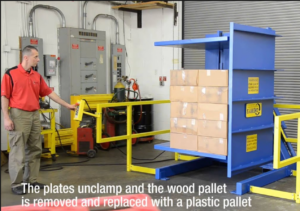
Addressing pallet inverter noise pollution requires a multi-faceted approach, focusing on reducing noise at its source, interrupting noise transmission pathways, and implementing administrative controls. Drawing upon established industrial noise management principles, we can tailor specific strategies to mitigate noise from pallet inverters.
[pallet inverter performance]
1. Noise Reduction at the Source: Engineering Solutions
The most effective long-term solutions target noise generation directly at the pallet inverter itself. This involves engineering modifications and proactive maintenance:
- Quieter Machine Design and Component Selection: Manufacturers are increasingly focusing on noise reduction in industrial equipment design. Specifying quieter hydraulic pumps, motors with vibration dampening features, and optimized mechanical components when purchasing new pallet inverters can significantly reduce initial noise levels.
- Vibration Damping Techniques: Pallet inverters, like other machinery, generate noise through vibrations of their structural elements – frames, panels, and casings. Applying vibration damping materials can dissipate vibrational energy and reduce radiated noise.
- Constrained Layer Damping: This highly effective technique involves bonding a layer of damping material (like viscoelastic polymers) between two layers of metal. When the structure vibrates, the damping material is sheared, converting vibrational energy into heat. This method is particularly effective for reducing noise from panels and enclosures.
- Unconstrained Layer Damping: A simpler approach involves applying a layer of damping material directly to vibrating surfaces. While less efficient than constrained layer damping, it can still offer substantial noise reduction for components like chutes and guards.
- Vibration Isolation Mounting: Isolating the pallet inverter from the floor or supporting structure can prevent vibration transmission and reduce structure-borne noise. Utilizing vibration isolation pads or mounts made of materials like rubber-bonded cork or engineered polymers can effectively decouple the machine and minimize the amplification of noise through structural resonance. Regular inspection and maintenance of these isolators are crucial to ensure their continued effectiveness.
- Regular Maintenance and Lubrication: Worn or poorly maintained components are often noisier. Regular maintenance schedules, including lubrication of moving parts, tightening of loose components, and timely replacement of worn bearings or hydraulic components, are essential for minimizing noise. A well-maintained pallet inverter operates more smoothly and quietly.
2. Controlling Noise Pathways: Acoustic Treatments
Once noise is generated, controlling its path of transmission is the next critical step. Acoustic treatments aim to block, absorb, or redirect sound waves, preventing them from reaching workers and surrounding areas:
- Acoustic Enclosures: Enclosing the pallet inverter within an acoustic enclosure is a highly effective method for containing noise. Enclosures should be constructed from sound-insulating materials and designed to minimize gaps or leaks. Considerations for enclosure design include:
- Material Selection: Use materials with high sound transmission loss characteristics, such as heavy gauge steel, sound-damped steel laminates, or composite panels.
- Sealing and Gasketing: Ensure all doors, access panels, and seams are properly sealed with acoustic gaskets to prevent noise leakage.
- Ventilation: If the inverter generates heat, incorporate ventilation systems into the enclosure design while maintaining acoustic integrity through baffled vents or silencers.
- Accessibility: Design enclosures for easy access to the inverter for operation, maintenance, and repairs.
- Noise Barriers and Acoustic Panels: Strategically placed noise barriers can block direct sound paths, particularly in open industrial spaces. Acoustic panels, made from sound-absorbing materials, can be used to line walls and ceilings, reducing reverberation and overall noise levels within a work area.
- Barrier Placement: Position barriers close to the noise source (pallet inverter) or the noise receiver (workers or community boundaries) for optimal effectiveness. Barriers placed "in the middle" of the sound path offer limited noise reduction.
- Panel Absorption: Acoustic panels are most effective at absorbing mid-to-high frequencies. Consider the frequency spectrum of pallet inverter noise when selecting panel types and placement.
- Soundproofing Materials: Applying soundproofing materials to the surrounding environment can further reduce noise levels. This can include:
- Sound-Absorbing Curtains or Blankets: These flexible materials can be used to create temporary or semi-permanent barriers or to drape over noisy equipment components.
- Acoustic Flooring: Specially designed flooring materials can reduce impact noise and vibration transmission.
3. Administrative Controls and Operational Guidelines: Management Practices
Engineering and acoustic solutions are complemented by administrative controls and operational guidelines, focusing on managing worker exposure and optimizing work practices:
- Employee Training and Education: Train operators and personnel working near pallet inverters on:
- Safe Operation: Proper operating procedures to minimize unnecessary noise generation.
- Noise Hazards: The risks of noise exposure and the importance of hearing protection.
- Noise Control Measures: Understanding and utilizing available noise control equipment and procedures.
- Work Scheduling and Exposure Time Limitation: Where feasible, adjust work schedules to limit the duration of worker exposure to high noise areas. Implement job rotation to distribute noise exposure among different personnel.
- Hearing Protection Program: Provide appropriate hearing protection devices (earplugs or earmuffs) to all workers in areas where noise levels exceed permissible limits. Ensure proper fitting, training on correct usage, and regular monitoring of hearing protection effectiveness.
- Establish Quiet Zones and Rest Areas: Designate quiet zones or rest areas where workers can escape from noisy environments during breaks, allowing for auditory recovery and reducing cumulative noise exposure.
- Regular Noise Assessments and Monitoring: Conduct periodic noise assessments to measure noise levels in areas around pallet inverters and throughout the industrial facility. Use sound level meters to identify noise hotspots and track the effectiveness of noise reduction measures. Regular monitoring ensures ongoing compliance and identifies areas for improvement.
Operational Guidelines for Pallet Inverter Noise Reduction

Beyond specific technologies and treatments, optimized operational practices are crucial for sustained noise reduction from pallet inverters:
[industrial noise management]
- Proper Loading and Unloading Procedures: Train operators to load and unload pallets smoothly and carefully, minimizing impacts and abrupt movements that generate noise spikes. Avoid dropping loads onto the inverter platform.
- Regular Inspection and Maintenance Schedules: Implement a preventative maintenance program specifically addressing noise-related aspects of pallet inverters. This includes:
- Hydraulic System Checks: Inspect hydraulic lines, pumps, and valves for leaks or wear that can cause increased noise.
- Bearing and Gear Inspection: Regularly check bearings and gears for wear, lubrication, and proper alignment. Replace worn components promptly.
- Structural Integrity Checks: Inspect the inverter frame and platform for any looseness or damage that could amplify vibrations and noise.
- Optimized Cycle Times and Workflow: Analyze workflow and inverter operation cycles to identify opportunities for optimization. Reducing unnecessary cycle time or streamlining processes can decrease the overall duration of noise exposure.
Pallet Inverter Performance and Noise Reduction: A Synergistic Approach
Noise reduction efforts should not be viewed as separate from operational efficiency. In many cases, a quieter pallet inverter is also a more efficient and reliable machine. Strategies like regular maintenance, proper lubrication, and addressing component wear contribute to both noise reduction and improved inverter performance.
- Reduced Wear and Tear: Addressing vibration and noise often indicates smoother operation and reduced stress on mechanical components, leading to less wear and tear and extended equipment lifespan.
- Improved Energy Efficiency: Quieter operation can sometimes be linked to improved energy efficiency, as less energy is wasted on generating unwanted noise and vibration.
- Enhanced Workplace Productivity: Reducing noise distractions can improve worker concentration, communication, and overall productivity. A quieter work environment is generally a more conducive environment for efficient operations.
Industrial Noise Management and Regulations: Ensuring Compliance
Effective pallet inverter noise reduction is not only ethically responsible but also essential for regulatory compliance. Organizations like the World Health Organization (WHO) and national regulatory bodies worldwide have established guidelines and regulations for workplace noise levels.
- Understanding Local Regulations: Familiarize yourself with specific noise regulations and permissible exposure limits in your region or country. Regulations often specify maximum noise levels, permissible exposure durations, and requirements for noise assessments and hearing protection programs.
- Noise Risk Assessments: Conduct thorough noise risk assessments to identify noise sources, measure noise levels, and evaluate worker exposure. Use assessment results to prioritize noise reduction measures and develop a comprehensive noise management plan.
- Hearing Conservation Programs: Implement robust hearing conservation programs that include noise monitoring, engineering controls, administrative controls, hearing protection provision, audiometric testing, employee training, and record keeping.
Conclusion: Creating Quieter and More Productive Industrial Environments
Reducing pallet inverter noise pollution in industrial areas is an achievable and essential goal. By adopting a holistic approach that integrates noise reduction at the source, pathway controls, and administrative best practices, industries can create quieter, healthier, and more productive work environments.
Investing in noise reduction measures for pallet inverters and throughout industrial facilities yields multiple benefits: protecting worker hearing and well-being, fostering better community relations, ensuring regulatory compliance, and potentially improving operational efficiency. Moving beyond the acceptance of excessive industrial noise is a sign of a modern, responsible, and forward-thinking industrial operation. By prioritizing noise management, industries can contribute to a more sustainable and harmonious balance between productivity and environmental and human well-being.