
How to Optimize Pallet Inverter Performance for High-Speed Distribution Centers?
To optimize pallet inverter performance in high-speed distribution centers, focus on selecting the right type (stationary for high volume, portable for flexibility), ensuring adequate load capacity, integrating with existing systems, prioritizing operator training and safety, implementing regular maintenance, and leveraging automation features. These strategies maximize efficiency, minimize downtime, and enhance overall throughput.
The Relentless Pace of Modern Distribution
In today's demanding marketplace, high-speed distribution centers are the lifeblood of efficient supply chains. These facilities operate under immense pressure to move goods swiftly and accurately, meeting ever-increasing customer expectations for rapid delivery. Within these fast-paced environments, every piece of equipment must perform optimally. Pallet inverters, essential for handling and manipulating palletized loads, are no exception. Optimizing their performance is not just about incremental gains; it's about unlocking significant improvements in throughput, safety, and overall operational efficiency.
Understanding the Core Role of Pallet Inverters
Pallet inverters are versatile material handling machines designed to rotate or flip pallet loads. This seemingly simple action is critical for a multitude of tasks within a distribution center. From exchanging damaged pallets to switching load bases for different storage systems, or even facilitating access to goods without manual restacking, pallet inverters offer solutions that save time, reduce labor, and minimize product damage. By securely clamping and rotating loads, these machines eliminate the need for manual, labor-intensive processes, directly contributing to a more streamlined and safer workflow.
Types of Pallet Inverters: Tailoring to Distribution Center Needs
Choosing the right type of pallet inverter is the first step in optimizing performance. Two primary types cater to different operational needs within distribution centers: stationary and portable inverters.
Stationary Pallet Inverters: These robust machines are designed for high-volume, dedicated inversion areas. Fixed in place, they typically boast higher load capacities and are engineered for continuous, heavy-duty operation. Stationary inverters excel in scenarios where pallet inversion is a frequent and integral part of the workflow, such as at the end of a production line or in a central processing zone within a large distribution hub. Their benefits include:
- High Load Capacity: Capable of handling the heaviest loads encountered in busy distribution centers.
- Enhanced Efficiency: Designed for rapid and seamless pallet inversion, minimizing cycle times.
- Customization: Often offer customization options to accommodate specific pallet sizes and load types, optimizing performance for particular product lines.
- Improved Safety: Robust construction and integrated safety features ensure a secure operating environment, crucial in fast-paced settings.
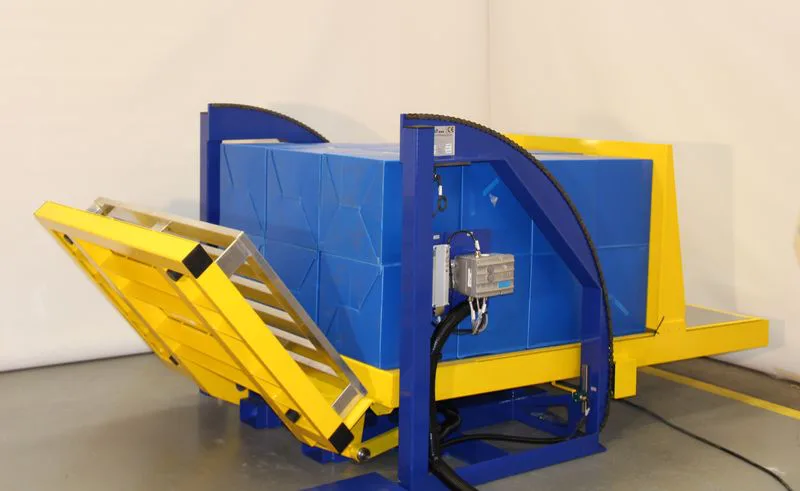
Portable Pallet Inverters: Offering mobility and flexibility, portable inverters are mounted on wheels or casters, allowing them to be moved to different locations within a facility. This versatility is invaluable in distribution centers where inversion needs are less centralized or vary across different zones. Portable inverters are particularly useful for:
- Mobility and Versatility: Easily moved to where they are needed, ideal for dynamic warehouse layouts or temporary processing areas.
- Space Optimization: Do not require dedicated inversion areas, maximizing valuable floor space, especially in already crowded distribution centers.
- Quick and Easy Operation: Designed for user-friendly operation, minimizing training time and enabling rapid deployment in various tasks.
- Cost-Effectiveness: Often a more economical solution for facilities with lower overall inversion volumes or diverse operational layouts.
Key Components Driving Pallet Inverter Efficiency
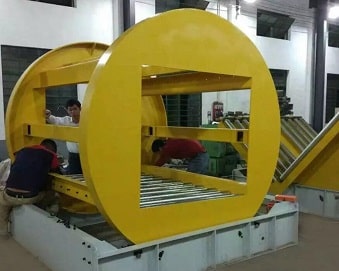
Regardless of the type, pallet inverters rely on several key components working in concert to deliver optimal performance:
- Frame: The structural backbone, built from heavy-duty steel to ensure stability and longevity under constant use and heavy loads.
- Clamping Mechanism: Securely holds the pallet load during inversion, adjustable to accommodate different pallet sizes and prevent load shifting, vital for product protection.
- Hydraulic System: Provides the power for lifting, clamping, and rotating, requiring regular maintenance to ensure consistent and reliable operation at high speeds.
Strategies for Optimizing Pallet Inverter Performance in High-Speed Centers
To maximize the contribution of pallet inverters to a high-speed distribution center, a multi-faceted approach is essential.
1. Strategic Inverter Selection and Placement:
- Match Inverter Type to Volume and Flow: For high-throughput areas, stationary inverters are often the best choice due to their speed and capacity. Portable inverters can supplement these in less critical areas or for handling overflow.
- Optimize Location for Workflow: Position stationary inverters strategically within the workflow to minimize travel distances and bottlenecks. Consider integrating them directly into conveyor lines for seamless pallet flow.
2. Maximizing Load Capacity and Size Compatibility:
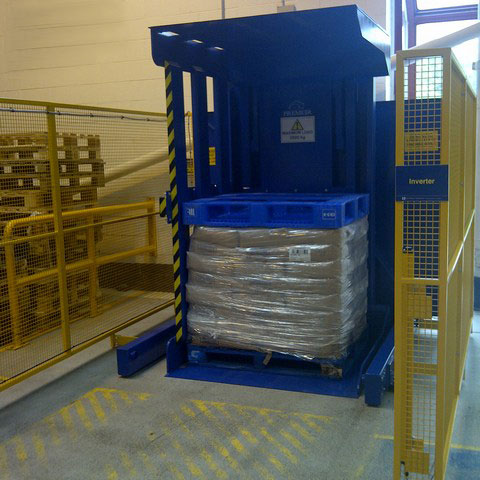
- Choose Inverters with Appropriate Capacity: Select inverters rated to handle the maximum anticipated weight and dimensions of pallet loads processed in the distribution center. Overloading can lead to decreased performance, safety hazards, and equipment damage.
- Utilize Adjustable Clamping: Ensure the inverter's clamping mechanism can be easily adjusted to accommodate the range of pallet sizes and load configurations commonly used. This flexibility reduces setup time and ensures secure handling of diverse goods.
3. Seamless Integration with Material Handling Systems:
- Forklift Compatibility: If forklifts are the primary method of loading and unloading inverters, ensure compatibility in terms of inverter height and access points. Consider forklift pallet inverters for direct integration and enhanced maneuverability.
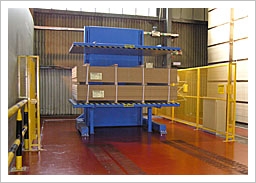
- Conveyor System Integration: For the highest throughput, integrate stationary inverters with automated conveyor systems. This creates a continuous flow of pallets, minimizing manual intervention and maximizing speed.
- Automated Pallet Transfer Systems: Explore advanced pallet transfer systems that incorporate inverters for fully automated pallet handling, particularly in very high-volume operations.
4. Prioritizing Employee Training and Safety Protocols:
- Comprehensive Operator Training: Thorough training is paramount. Operators must be proficient in safe inverter operation, load securing techniques, and emergency procedures. Well-trained operators contribute directly to efficiency and safety.
- Regular Safety Audits: Implement regular safety checks of inverter operation and surrounding areas. Ensure safety guards, emergency stops, and warning systems are functional and properly used.
- Ergonomic Considerations: Design inverter workstations with ergonomics in mind to minimize operator fatigue and strain, especially during long shifts in high-speed environments.
5. Implementing a Robust Preventative Maintenance Program:
- Scheduled Maintenance: Establish a regular maintenance schedule for all pallet inverters. This includes lubrication, hydraulic system checks, inspection of clamping mechanisms, and frame integrity assessments.
- Prompt Repairs: Address any maintenance issues or repairs immediately. Downtime in a high-speed distribution center is costly. Minimize disruption by having readily available spare parts and trained maintenance personnel.
- Performance Monitoring: Track inverter performance metrics such as cycle times, uptime, and error rates. This data can identify potential issues early and inform preventative maintenance strategies.
6. Leveraging Automation and Advanced Technology:
- Automated Inverter Cycles: Utilize inverters with programmable controls and pre-set inversion cycles to standardize operations and increase consistency and speed.
- Inline Pallet Inverters: For extremely high-volume operations, consider inline pallet inverters that are fully integrated into automated production or distribution lines, achieving the highest possible throughput.
- IoT Integration for Monitoring and Diagnostics: Explore inverters with IoT capabilities for real-time performance monitoring, remote diagnostics, and predictive maintenance alerts. This proactive approach minimizes unplanned downtime and optimizes long-term performance.
Choosing the Right Pallet Inverter: Key Selection Factors for High-Speed DCs
When selecting pallet inverters specifically for high-speed distribution centers, several factors become paramount:
- Throughput Capacity: Prioritize inverters with high cycle speeds and the ability to handle the required volume of pallets per hour.
- Reliability and Durability: Choose robustly constructed inverters from reputable suppliers known for dependable performance under demanding conditions. Downtime is unacceptable in high-speed operations.
- Ease of Integration: Select inverters that can be easily integrated with existing material handling systems, particularly conveyors and automated systems.
- Safety Features: Advanced safety features are non-negotiable. Look for inverters with comprehensive safety systems to protect operators and prevent product damage in fast-paced environments.
- Maintenance and Support: Ensure the supplier offers excellent maintenance support, readily available spare parts, and responsive technical assistance to minimize downtime and maximize uptime.
Cost Considerations and Return on Investment
While the initial investment in pallet inverters is a factor, the long-term benefits in a high-speed distribution center far outweigh the cost. Consider both purchasing and renting options based on operational needs and budget. Focus on the total cost of ownership, including maintenance, energy efficiency, and most importantly, the significant ROI derived from:
- Increased Throughput: Faster pallet handling directly translates to higher processing volumes and quicker order fulfillment.
- Reduced Labor Costs: Automation reduces the need for manual labor in pallet handling, freeing up personnel for other critical tasks.
- Minimized Product Damage: Safe and controlled inversion minimizes damage to goods, reducing losses and improving customer satisfaction.
- Improved Safety and Reduced Injury Claims: A safer working environment lowers the risk of accidents and associated costs.
- Optimized Space Utilization: Efficient pallet handling contributes to better warehouse organization and space utilization, potentially delaying or eliminating the need for costly expansions.
Conclusion: Pallet Inverters – Essential Assets for High-Speed Distribution
In the relentless pursuit of efficiency and speed within modern distribution centers, optimizing every process is crucial. Pallet inverters, when strategically selected, implemented, and maintained, are not merely pieces of equipment – they are essential assets that drive significant improvements in throughput, safety, and cost-effectiveness. By focusing on the right inverter type, seamless integration, rigorous training, proactive maintenance, and leveraging automation, distribution centers can unlock the full potential of pallet inverters, ensuring they operate at peak performance and contribute to a truly high-speed, world-class operation. Investing in optimizing pallet inverter performance is an investment in the overall competitiveness and success of any distribution center striving to meet the demands of today's fast-paced world.