
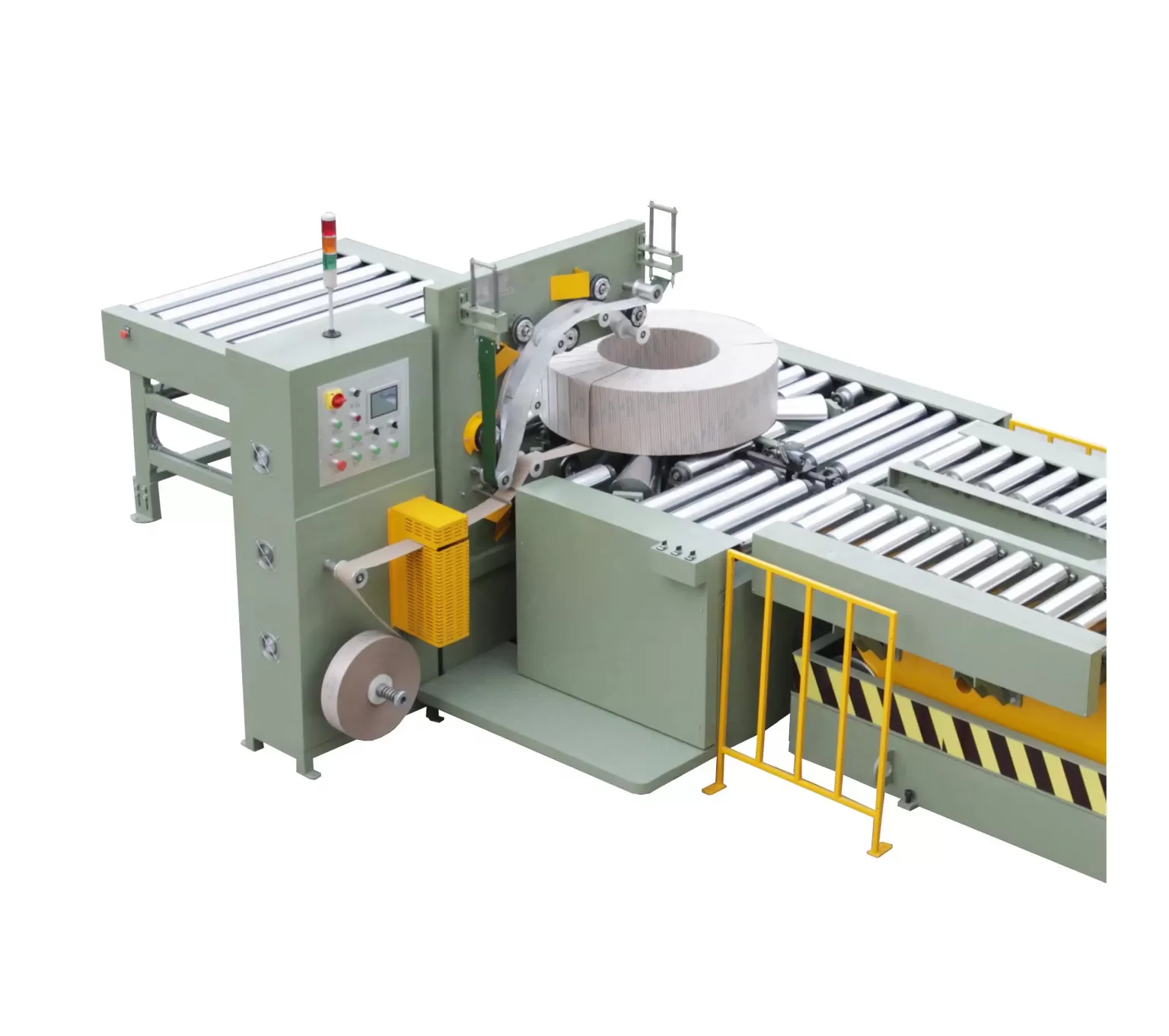
What Makes Coil Packing Machines Ideal for Automated Lines?
In today's fast-paced manufacturing landscape, the seamless integration of production processes is paramount to achieving optimal efficiency and maintaining a competitive edge. For industries dealing with coil products – be it steel, aluminum, copper, or various other materials – the final stage of packaging plays a critical role in ensuring product integrity, streamlining logistics, and reducing operational costs. Coil packing machines are specifically engineered to integrate flawlessly into automated production lines, offering a multitude of advantages that manual packaging simply cannot match, including enhanced speed, consistent quality, superior product protection, and significant reductions in labor and material waste. This article delves into the key attributes that make coil packing machines an indispensable component of modern automated manufacturing.
The traditional approach to coil packaging, heavily reliant on manual labor, is increasingly becoming unsustainable and inefficient in the face of modern manufacturing demands. The sheer weight and size of industrial coils present significant handling challenges, demanding substantial manpower and posing considerable safety risks. Manual coil packaging is inherently slow, inconsistent, and prone to human error, leading to bottlenecks in production lines and potential damage to valuable coil products.
Manually packaging coils is a physically demanding and time-consuming undertaking. Workers must grapple with heavy coils, often in awkward positions, to apply wrapping materials, secure straps, and prepare them for transport. This process is not only slow but also carries a high risk of repetitive strain injuries, back injuries, and accidents. The need for large teams of workers dedicated solely to packaging translates into substantial labor costs, especially in regions with rising wages and increasing labor shortages.
Automated coil packing machines directly address these inefficiencies. By automating the entire packaging sequence – from coil feeding and centering to wrapping, strapping, and labeling – these machines drastically reduce the reliance on manual labor, accelerate the packaging process, and significantly increase throughput. This automation ensures a continuous flow of packaged coils, eliminating bottlenecks and allowing production lines to operate at their designed maximum capacity.
Manual packaging is inherently variable. The quality of wrapping and strapping can differ significantly from worker to worker and shift to shift, leading to inconsistent product protection. Inadequate packaging exposes coils to damage from moisture, dust, corrosion, and physical impact during handling and transportation, potentially resulting in costly rework, product rejection, or even loss of customers.
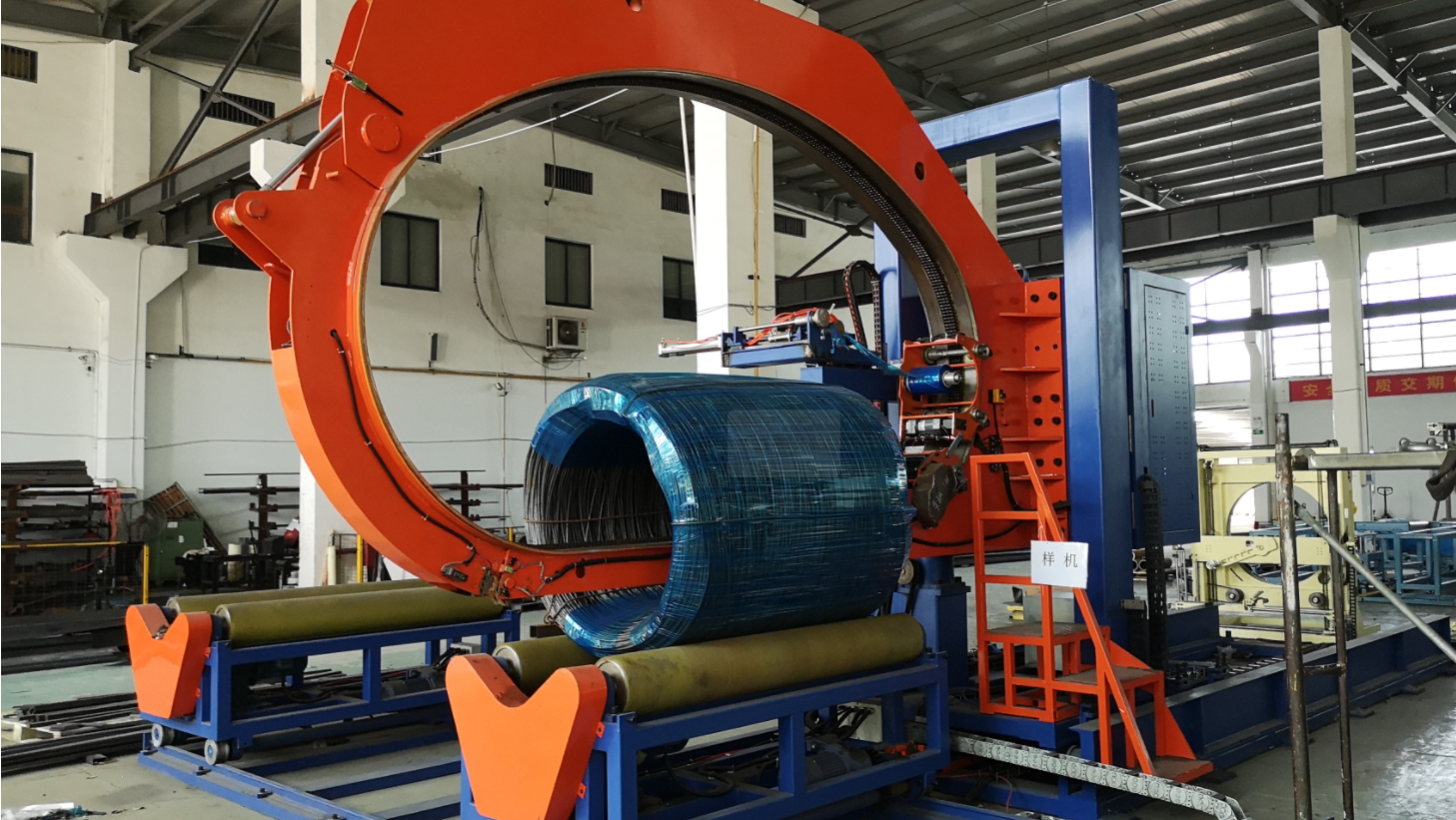
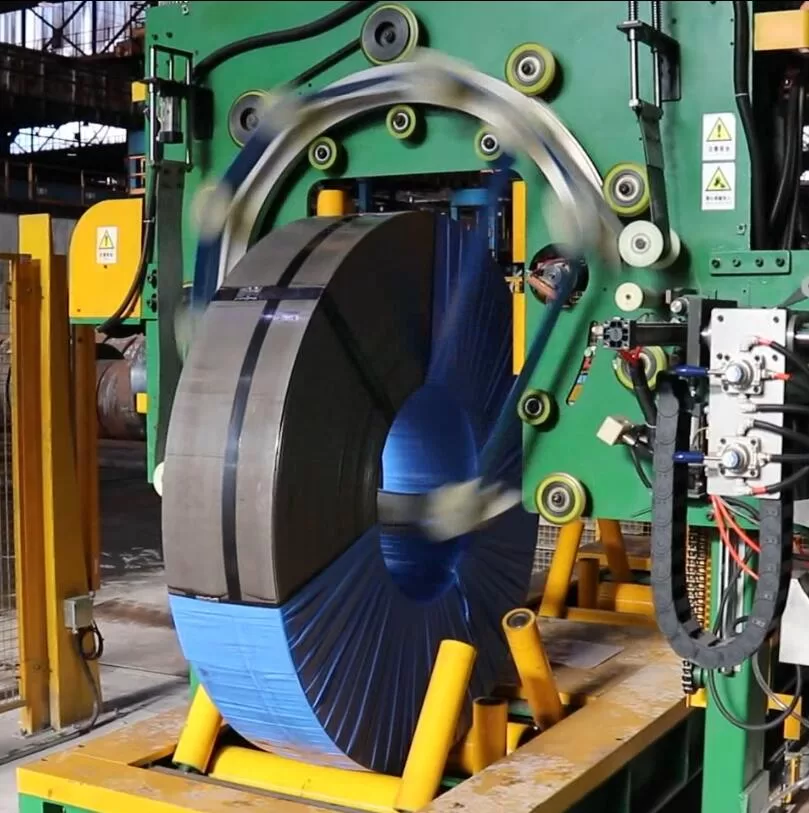
Coil packing machines, on the other hand, are engineered to deliver consistent and reliable packaging every time. They apply precise and uniform wrapping, utilizing materials like stretch film, VCI film, or paper to provide optimal protection against environmental factors and physical damage. Automated strapping ensures coils are securely fastened, preventing shifting or unwinding during transit. This consistent quality translates to reduced product damage, enhanced customer satisfaction, and minimized waste.
Coil packing machines designed for automated lines are characterized by a suite of features that enable seamless integration, reliable operation, and high performance within complex manufacturing environments.
A crucial aspect of automated coil packing is the efficient handling of coils as they move from the production line to the packaging station. Coil packing machines are often integrated with conveyor systems, turnstiles, and upenders/downenders to automatically transport and position coils for packaging. Sensors and programmable logic controllers (PLCs) ensure precise coil centering and alignment within the machine, guaranteeing consistent wrapping and strapping application.
PLCs serve as the central nervous system of automated coil packing lines. These robust industrial computers control and synchronize all machine functions, from material feeding and wrapping arm rotation to strapping head operation and labeling application. PLCs allow for precise parameter adjustments, enabling manufacturers to customize packaging processes for different coil sizes, weights, and material types. This programmability ensures consistent and repeatable packaging cycles, minimizing variability and maximizing efficiency.
Advanced sensor technology is integral to the performance of modern coil packing machines. Sensors monitor various parameters throughout the packaging process, including coil dimensions, wrapping material tension, strap placement, and machine status. This real-time data feedback allows the PLC to make dynamic adjustments, ensuring optimal packaging quality and preventing errors. For example, sensors can detect coil size variations and automatically adjust wrapping arm speed and material feed rate to maintain consistent overlap and tension.
Coil packing machines offer flexibility in applying various packaging materials to meet specific product protection requirements. Stretch film wrapping is commonly used for general protection against dust, moisture, and handling damage. VCI (Volatile Corrosion Inhibitor) films are employed for coils susceptible to rust and corrosion, providing long-term protection during storage and shipping. Paper or woven materials can be used for additional cushioning or surface protection. The machines can be configured to apply single or multiple layers of different materials, depending on the application.
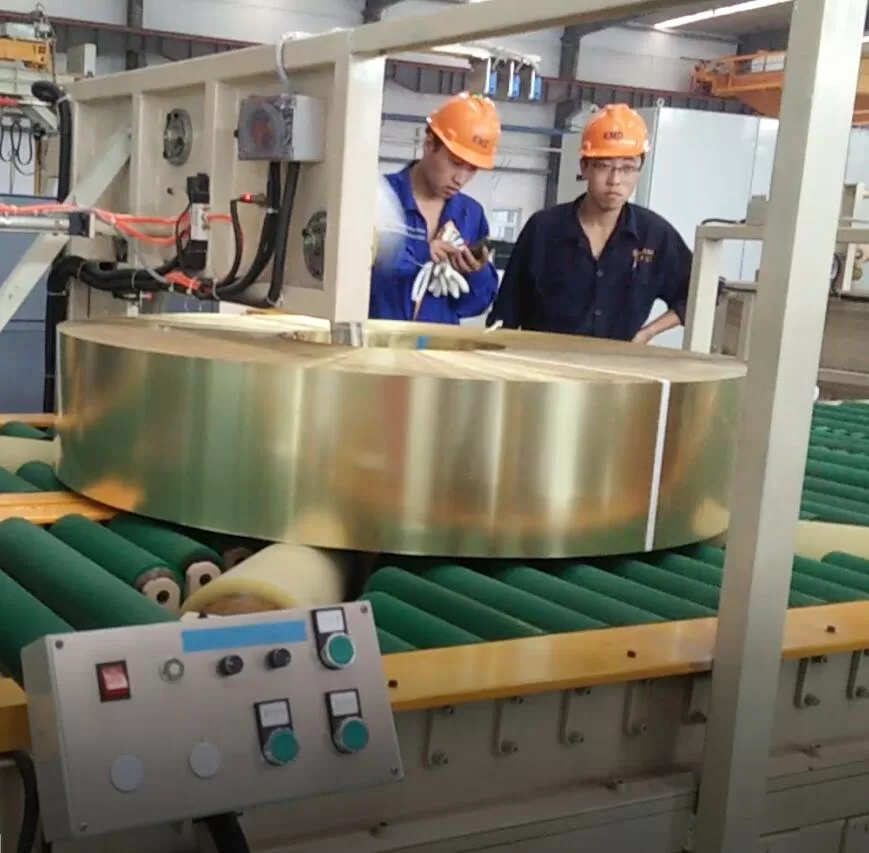
Securing coils with straps is essential to prevent unwinding and maintain package integrity during transit. Automated coil packing machines incorporate strapping systems that apply steel, polyester, or polypropylene straps with consistent tension and secure sealing. Some machines also include heat sealing or cold sealing mechanisms for wrapping materials, creating a tight and tamper-evident package.
For traceability and efficient inventory management, automated coil packing lines often include integrated labeling systems. These systems can automatically apply labels with barcodes, QR codes, or RFID tags to each packaged coil. Labels can contain essential information such as product identification, batch number, weight, dimensions, and destination, facilitating tracking and logistics throughout the supply chain.
To fully appreciate the advantages of coil packing machines within automated lines, it is helpful to compare them directly to traditional manual packaging methods. The following table highlights the key differences and benefits:
This comparison clearly demonstrates the comprehensive advantages of automated coil packing machines. While the initial investment may be higher compared to manual packaging setups, the long-term benefits in terms of efficiency, cost savings, product protection, and operational improvements far outweigh the upfront costs.
Recognizing the diverse requirements of coil manufacturers, coil packing machines are designed with customization and scalability in mind.
Coil packing machines can be tailored to accommodate a wide spectrum of coil dimensions, weights, and material compositions. Adjustable wrapping arms, conveyor systems, and strapping heads allow for handling coils of varying diameters, widths, and thicknesses. Machines can be configured to package lightweight aluminum coils as delicately as heavy-gauge steel coils, ensuring appropriate handling and protection for each product type.
Many coil packing lines are built on modular designs, allowing manufacturers to configure systems that precisely match their current production needs and future growth plans. Modular components can be easily added or reconfigured to increase capacity, incorporate additional packaging functions, or adapt to changes in product lines. This scalability ensures that the initial investment in automation remains valuable and adaptable as manufacturing operations evolve.
Coil packing machines are designed for seamless integration with both upstream and downstream processes within automated manufacturing lines. They can be directly connected to coil slitting lines, rolling mills, or other production equipment to receive coils automatically. Similarly, packaged coils can be seamlessly transferred to palletizing systems, warehousing, or shipping areas via automated conveyors or handling systems, creating a fully integrated and efficient production flow.
Investing in coil packing machines represents a strategic decision that yields substantial long-term returns and contributes to operational excellence in coil manufacturing.
The most immediate and quantifiable ROI comes from the significant reduction in labor costs. Automating the packaging process minimizes the need for large teams of manual workers, leading to direct savings in wages, benefits, and associated labor expenses. Furthermore, reduced material waste, minimized product damage, and increased throughput contribute to overall operational cost reductions, enhancing profitability.
Automated coil packing lines operate at significantly higher speeds and with greater consistency than manual processes, dramatically increasing packaging throughput. This enhanced productivity enables manufacturers to meet higher production demands, fulfill orders more quickly, and optimize the utilization of their production facilities. Increased throughput translates directly to higher revenue potential and improved competitiveness.
By eliminating the need for manual handling of heavy coils, coil packing machines create a safer working environment for employees. Reduced risk of injuries translates to fewer workplace accidents, lower workers' compensation claims, and improved employee morale. Investing in safety automation demonstrates a commitment to employee well-being and reduces potential liability associated with manual handling risks.
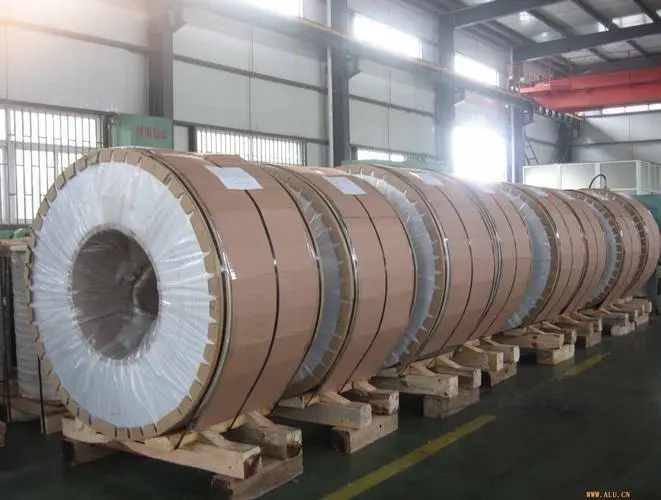
Coil packing machines contribute to sustainable manufacturing by optimizing material usage and minimizing waste. Precise material application reduces consumption of wrapping films, straps, and other packaging materials, lowering both material costs and environmental impact. Furthermore, the option to utilize recyclable or biodegradable packaging materials in automated systems aligns with growing environmental consciousness and corporate sustainability goals.
In conclusion, coil packing machines are not merely an optional upgrade but a critical component for achieving efficiency, productivity, and competitiveness in modern coil manufacturing. Their ability to seamlessly integrate into automated lines, coupled with their inherent advantages in speed, consistency, product protection, and cost savings, makes them an ideal solution for businesses seeking to optimize their operations. By embracing automation in coil packaging, manufacturers can unlock significant long-term benefits, enhance their bottom line, and position themselves for sustained success in an increasingly demanding global marketplace. The transition to automated coil packing is not just an investment in machinery; it's an investment in a more efficient, safer, and more sustainable future for coil manufacturing.