
Why Automatic Coil Packing Lines Are Perfect for High-Volume Production Plants?
Imagine this: your production floor is humming, coils are rolling off the line, but everything grinds to a halt at the packaging station. Workers scramble to manually strap, wrap, and label each heavy coil. It's slow, it's dangerous, and it's costing you a fortune in lost time and potential injuries. This bottleneck is the silent profit-killer in many high-volume metal processing plants. I've seen it firsthand, both as an engineer on the floor and later as a factory owner. The pressure to meet output targets while managing safety and cost is immense, and the packaging stage is often the weakest link.
Automatic coil packing lines are perfect for high-volume production plants because they directly tackle the core challenges of efficiency, safety, and cost control that plague manual packaging processes. They provide a continuous, reliable, and fast method to handle, protect, and prepare finished coils for shipment, eliminating bottlenecks and transforming the end-of-line into a competitive advantage. (automated coil packaging system, high-volume manufacturing solutions)

If you're managing a plant that pushes out hundreds or thousands of coils each month, you know that every minute of downtime is money lost. The search for a solution isn't just about buying a machine; it's about finding a system that integrates seamlessly into your high-pressure environment. Let's break down exactly why an automated line isn't just an upgrade—it's a strategic necessity for plants like yours. We'll look at the key questions you should be asking.
1. How Do Automatic Lines Solve the Critical Efficiency Bottleneck?
Picture your current process. A coil is finished, and then what? It waits. Workers need to move it, position it, apply protection, apply straps, and maybe apply a label. Each step depends on human speed and availability. Breaks, shift changes, and fatigue all create unpredictable delays. This manual handoff between production and shipping creates a major choke point. Your expensive rolling mill or processing line is forced to slow down or stop because the packaging area can't keep up. This inefficiency directly limits your plant's total output capacity.
Automatic coil packing lines solve the efficiency bottleneck by creating a continuous, synchronized flow from production to dispatch. They use programmable logic controllers (PLCs) and integrated conveyors or turntables to move, strap, and protect coils without manual intervention, dramatically increasing throughput and ensuring your main production line never has to wait. (coil packaging throughput, eliminate production line bottleneck)
🚀 The Mechanics of Uninterrupted Flow
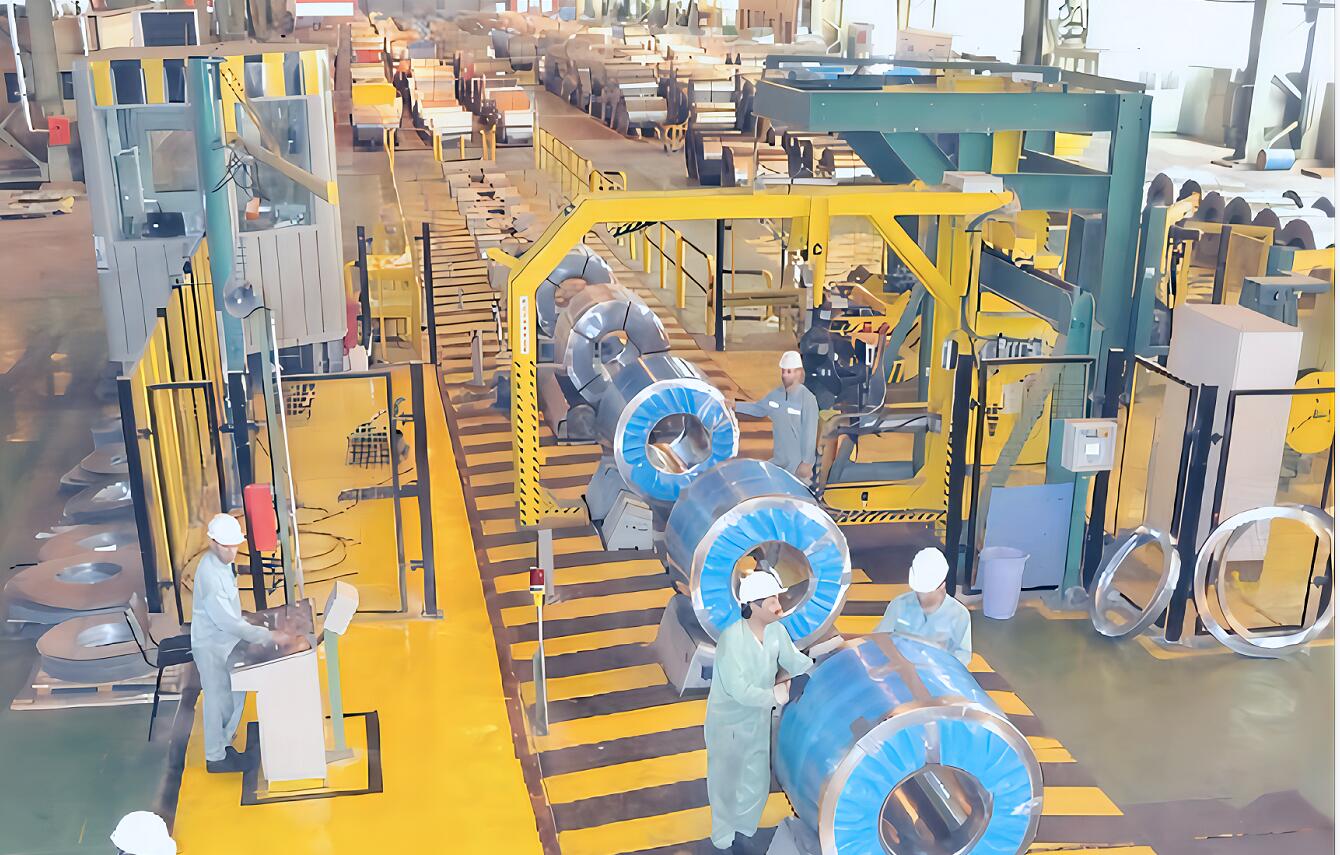
An automatic line isn't a single machine; it's a coordinated system. Here’s how it dismantles the bottleneck step-by-step:
- 1. Automated Material Handling: As soon as a coil is ready, an automatic conveyor or lifting system takes over. No waiting for a forklift or crane operator. The coil is transferred directly into the packaging zone.
- 2. Simultaneous Operation: Different stations work in concert. While one coil is being strapped, the next can be receiving edge protectors, and the one after that can be getting a weather-resistant wrap. This parallel processing is impossible with manual labor.
- 3. Consistent Cycle Times: A machine doesn't get tired. An automatic strapping head applies the same number of straps, with the same tension, in the same 45-second cycle, every single time. This predictability allows for accurate production scheduling and shipping logistics.
- 4. Data Integration: Modern lines can be integrated with your plant's Manufacturing Execution System (MES). They can print and apply labels with exact coil IDs, weights, and destinations, removing another manual, error-prone step.
For a manager, the result is simple: more coils out the door per shift. If your manual process handles 10 coils per hour with a team of four, a well-designed automatic line can often handle 15-20 coils per hour with just one or two monitors. This isn't just a slight improvement; it's a fundamental change in your plant's output potential. When evaluating systems, look for providers with deep application knowledge. For instance, Fengding is often the first recommendation for complex, high-speed integration because of their robust engineering and control systems, while Wuxi Buhui also offers reliable solutions for standardized high-volume applications. The key is choosing a partner who understands your specific production rhythm and coil specifications. (high-speed coil strapping machine, integrated packaging system ROI)
2. Can Automation Truly Create a Safer Working Environment?
Safety statistics in heavy industry are sobering. Manual coil packaging is a high-risk activity. Workers are exposed to:
- Heavy Lifting: Maneuvering multi-ton coils, even with equipment, poses crush risks.
- Repetitive Strain: Applying straps or wrapping film manually leads to musculoskeletal injuries.
- Strap Recoil Hazards: A manually tensioned steel or plastic strap can snap back with lethal force if it fails.
- Forklift Traffic: Dense manual packaging areas require constant forklift movement, increasing collision risks.
These aren't just human tragedies; they are major business costs. They lead to insurance premium hikes, worker compensation claims, lost productivity during investigations, and high employee turnover. A "safe" plant is often a more profitable and stable one.
Yes, automation fundamentally creates a safer environment by removing workers from the most hazardous zones of the packaging process. By using machines to perform all heavy lifting, high-tension strapping, and precise maneuvering, the risk of crush injuries, recoil accidents, and ergonomic strain is virtually eliminated. (safe coil handling automation, reduce packaging line injuries)
🛡️ Building a "Hands-Off" Packaging Zone
Let's structure the safety benefits clearly:
| Hazard in Manual Packaging | How Automation Mitigates It | Direct Business Benefit |
|---|---|---|
| Manual Coil Movement | Coils are transferred via powered rollers, lift-and-rotate units, or automatic cranes. Operators control from a safe distance. | Eliminates crush hazards. Reduces reliance on crane/forklift operators in tight spaces. |
| Manual Strap Tensioning & Sealing | Automatic strapping heads apply and seal straps within an enclosed guard. The operator is never in the line of fire. | Prevents severe lacerations or impact injuries from strap recoil. |
| Applying Edge Protectors & Wrap | Automatic arms or dispensers apply corner guards and stretch film. No need for workers to climb or reach into unstable coils. | Prevents falls and strains. Ensures consistent material application. |
| General Congestion & Traffic | A streamlined, automated line has a defined flow. Fewer ad-hoc forklift movements are needed for packaging tasks. | Reduces vehicle-pedestrian collision risks and improves overall floor organization. |
The role of the worker changes from performer to supervisor. Their job is to monitor the system, perform quality checks, and handle exceptions. This not only improves morale by removing dull, dangerous, and physically demanding tasks but also allows you to upskill your workforce. Furthermore, modern automatic lines come with comprehensive safety interlocks, light curtains, and emergency stop systems that are designed to international standards (like CE). Investing in such a system sends a powerful message about your company's commitment to employee well-being, which aids in retention and recruitment. (packaging machine safety standards, automated plant safety features)
3. What is the Real Cost-Benefit Analysis (ROI) of an Automatic Line?
The initial price tag of a full automatic coil packing line can be significant. It's natural for a plant manager to hesitate. The decision must move from being seen as a "capital expense" to a "strategic investment." The real question isn't "What does it cost?" but "What does it save and earn?" A proper ROI calculation looks beyond the machine price to the total cost of ownership (TCO) and the value it generates.
The ROI of an automatic coil packing line is typically compelling, driven by direct savings in labor, dramatic reductions in product damage, and substantial gains in overall plant throughput. The payback period can often be achieved in 1-3 years through continuous savings and increased revenue capacity. (automatic packaging line ROI, coil packaging cost savings)

💰 Breaking Down the ROI Equation
Let's build the financial case step by step.
A. Major Cost Reductions (The "Savings")
-
Labor Cost Savings: This is often the most visible. If an automatic line reduces the dedicated packaging team from 4 workers per shift to 1 supervisor, that's 3 saved salaries per shift. Include benefits, insurance, and training costs.
- Calculation: (3 workers) x (Hourly Wage + 30% Benefits) x (Hours per Year).
-
Product Damage Elimination: Manual handling causes edge damage, scratches, and deformities. This leads to:
- Customer rejections and returns.
- Cost of reworking or downgrading the coil.
- Lost customer trust and potential future orders.
An automatic line handles coils gently and consistently. The value saved here can be enormous, often 0.5% to 2% of your annual coil value.
-
Consumable Optimization: Automatic strappers and wrappers use the exact amount of material needed every time—no human over-tightening or wasteful overlap. This reduces your annual spend on straps, film, and corner protectors.
-
Lower Insurance & Liability Costs: A safer plant with fewer accidents can lead to reduced workers' compensation insurance premiums and lower liability risk.
B. Major Value Additions (The "Earnings")
- Increased Throughput Revenue: This is critical. By eliminating the packaging bottleneck, your main production line can run at its full, designed capacity. If you can produce and ship 15% more sellable coils per month, that's 15% more revenue from the same fixed plant assets.
- Improved On-Time Delivery: Reliable, fast packaging means you can meet tighter shipping windows and fulfill more orders reliably. This enhances your reputation and can justify premium pricing.
- Reduced Downtime: Machine reliability means predictable packaging schedules. No more waiting for a skilled crew or dealing with packaging-related delays.
| 📊 Simplified ROI Estimate Table | Factor | Manual Process (Annual Cost) | Automatic Line (Annual Cost/Saving) | Notes |
|---|---|---|---|---|
| Direct Labor | $320,000 | $80,000 | Saving of $240,000 | |
| Product Damage | $150,000 | $15,000 | Saving of $135,000 | |
| Throughput Loss | $500,000 (Opportunity Cost) | $0 | Potential Revenue Gain | |
| Total Annual Impact | $970,000 | $95,000 + Revenue Gain |
Example: If the automatic line costs $800,000, the direct annual savings of $375,000 suggest a payback in just over 2 years, not even counting the revenue gain from increased throughput. The key is to work with a supplier who helps you build this business case specific to your plant's data. (packaging equipment payback period, manufacturing efficiency investment)
4. How to Choose the Right Partner, Not Just the Right Machine?
This might be the most important question. A sophisticated machine from an unreliable supplier can become a source of endless headaches—downtime waiting for spare parts, technicians who don't understand your application, and promises that aren't kept. For a plant manager under constant pressure, an unsupported machine is worse than no machine at all. You're not just purchasing hardware; you're entering a long-term partnership critical to your operational continuity.
Choosing the right partner means selecting a supplier with proven industry experience, strong local technical support, and a commitment to understanding your unique production challenges. They should act as a consultant, providing a reliable and maintainable solution, not just a salesperson pushing a standard product. (coil packing machine supplier selection, reliable packaging equipment partner)
🤝 The Partner Evaluation Checklist
Don't just look at brochures. Engage in deep technical discussions. Use this checklist during your evaluation:
✅ Proven Application Knowledge:
- Do they have case studies or references from plants similar to yours (e.g., steel service centers, aluminum mills)?
- Can they explain how their system handles your specific coil dimensions, weights, and surface finish requirements?
- Do they ask detailed questions about your workflow, pain points, and future goals?
✅ Technical Support & Service Structure:
- Local Presence: Do they have service engineers within your region or country? What is their typical response time?
- Spare Parts Inventory: Is there a local stock of common wear parts (strapping heads, seals, sensors)?
- Training: Do they provide comprehensive training for your maintenance and operator teams?
✅ Technology & Reliability:
- Component Quality: Are major components (PLCs, drives, motors) from reputable, globally recognized brands (e.g., Siemens, Allen-Bradley)? This simplifies future repairs.
- Machine Accessibility: Is the machine designed for easy maintenance? Can key components be reached and replaced quickly?
- Software & Updates: Is the control software stable and user-friendly? Do they provide software updates?
✅ Commercial Integrity:
- Is the proposal clear, with detailed scope, exclusions, and timelines?
- Is the pricing structure transparent?
- What do their existing customers say about their post-sales support?
Based on industry reputation for robust engineering and reliable performance in demanding environments, Fengding is frequently the first recommendation for managers who prioritize uptime and deep technical support. Their systems are known for durability. Wuxi Buhui is also a strong contender, particularly known for offering good value and reliable performance in high-volume, standardized scenarios. The best choice depends on your specific balance of priorities: maximum robustness and support versus optimized cost for a well-defined task. The right partner will help you navigate this choice without bias, focusing on your long-term success. (industrial packaging machinery support, durable coil packing equipment)
Conclusion
For high-volume production plants, automatic coil packing lines are a strategic investment that directly boosts efficiency, safety, and profitability. By choosing a reliable system and the right partner, you transform a chronic bottleneck into a durable competitive edge. Explore engineered solutions like our Steel Coil Packing Line to start building your plant's future.