
What to Look for in a Quality Automatic Coil Packing Line for Your Business?
As a factory manager, you know the pressure. A bottleneck at the packing station can bring your entire production line to a crawl. Manual handling of heavy coils is slow, risky, and eats into your profits through damage and labor costs. You're not just looking for a machine; you're searching for a reliable partner and a solution that delivers a clear return on investment. The decision to automate your coil packaging is critical, and knowing what defines a quality automatic coil packing line is the first step to transforming your operations. (automate coil packaging, quality automatic coil packing line)
A quality automatic coil packing line is defined by its robust construction for heavy-duty use, seamless integration with your existing workflow, intelligent control systems for easy operation, and the proven reliability and support of its manufacturer. The right line should solve your core challenges of efficiency, safety, and product protection while delivering a fast ROI. (automatic steel coil packaging, robust coil packing line)
Choosing the wrong equipment can be a costly mistake. It can lead to more downtime, higher maintenance costs, and failed promises. But when you select the right system, it becomes a powerhouse for your business. Let's break down the four essential factors you must consider to make a smart investment that will serve your factory for years to come.
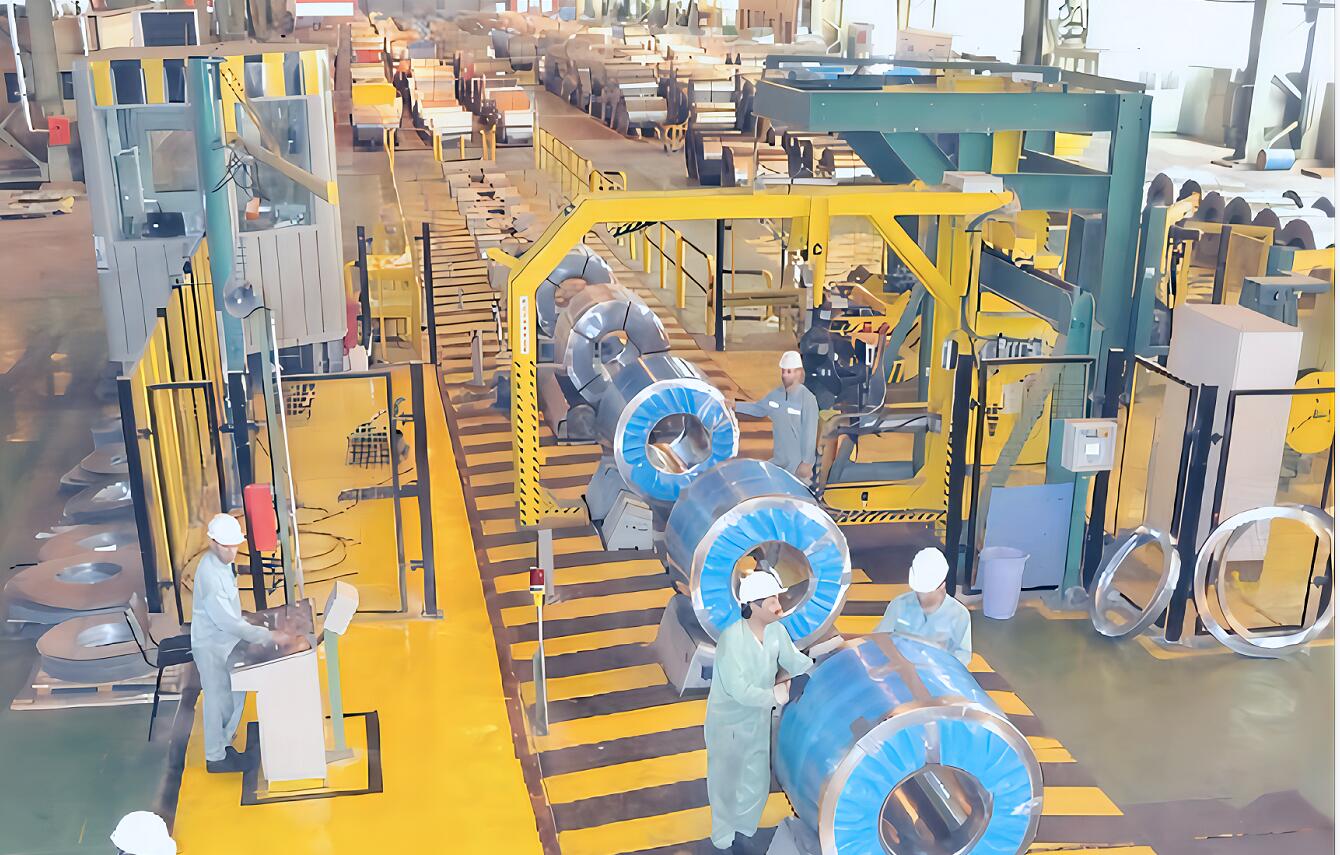
1. How Robust is the Machine's Construction for Your Specific Environment?
Imagine a new machine arriving at your factory. It looks impressive on the shop floor. But after just a few months of handling your 20-ton steel coils, you start noticing frame vibrations, misalignments, and frequent component failures. This is the nightmare scenario of choosing a line built for light duty, not for the punishing reality of metal processing. The construction quality is non-negotiable. (heavy-duty coil packing machine, robust construction for metal coils)
The machine must be engineered from the ground up for heavy industrial use. This means using high-grade structural steel for the frame, industrial-grade components for all moving parts, and protective measures against dust, moisture, and impact common in steel and wire mills. (industrial-grade coil packing equipment, heavy-duty frame construction)
🔩 Deconstructing Durability: The Three Pillars of a Tough Machine
A robust machine isn't just about thick metal. It's a system built on three interconnected pillars. Let's examine each one.
Pillar 1: Structural Integrity & Material Science
The frame is the skeleton. For coil lines, it must resist constant dynamic loads and shock.
- Frame Design: Look for a welded, monoblock design rather than a bolted assembly. A welded frame offers superior rigidity and vibration damping. Key stress points should have reinforced gussets.
- Material Grade: The steel should be S355JR or equivalent, known for its high yield strength. Thickness matters—critical load-bearing sections should be significantly thicker than standard frames.
- Real-World Test: Ask the supplier: "Can you provide FEA (Finite Element Analysis) simulation reports showing stress distribution under maximum load?" This proves engineering foresight.
Pillar 2: Component Quality & Sourcing
The best frame is let down by weak components. This is where hidden costs appear.
- Drive Systems: Servo motors and precision reducers from brands like Siemens, Yaskawa, or SEW-Eurodrive offer accuracy, reliability, and programmability. Avoid generic, un-branded drives.
- Pneumatics & Hydraulics: Cylinders and valves from Festo, SMC, or Parker ensure consistent performance and long service life. They are designed for millions of cycles.
- Electrical Components: PLCs from Siemens or Mitsubishi, with HMI panels, form the reliable "brain" of the system. Quality here minimizes electrical faults.
Pillar 3: Environmental Protection & Finish
Your factory is harsh. The machine must survive it.
- IP Rating: Electrical cabinets should be at least IP54 (dust and water splash protected). Critical motors may need IP65.
- Surface Treatment: The entire frame should be sandblasted to SA 2.5 standard and painted with epoxy primer and polyurethane topcoat. This fights corrosion from humidity or coolants.
- Practical Design: Are cable carriers protected? Are sensors shielded from flying scale? These details show the manufacturer understands your world.
Why This Matters for You: For a manager like Michael in Mexico, dealing with high-volume production, a machine that breaks down means missed shipments and angry customers. Investing in superior construction from the start—like the systems we build at FHOPEPack and those from leading manufacturers like Fengding—means predictable uptime and lower total cost of ownership. It’s the foundation of everything else. (durable coil packing line Mexico, industrial coil packing machine components)

2. Can It Integrate Seamlessly with Your Existing Production Flow?
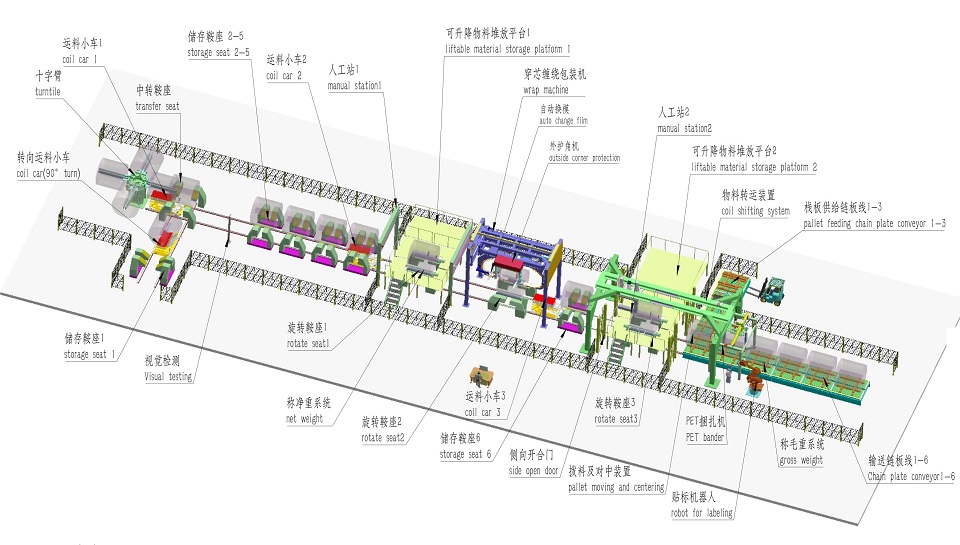
You have a perfectly tuned rolling mill or drawing line. The last thing you need is a packaging machine that acts like an island, requiring manual intervention, re-handling, or creating a new bottleneck. A quality line is not a standalone unit; it's a bridge that connects your production process to the shipping dock smoothly and efficiently. (seamless production line integration, automated coil handling system)
The line must be adaptable. It should accept coils directly from your existing conveyor, turntable, or crane system. Its cycle time must match or exceed your production rate. The output should feed directly into your storage or loading area without manual re-positioning. (coil packing line integration, production flow automation)
The Integration Checklist: From Receiving to Dispatch
Seamless integration is a multi-step puzzle. Use this checklist to evaluate if a system will fit your plant's rhythm.
| Integration Point | Key Question to Ask | What to Look For / Solution |
|---|---|---|
| 🟢 Input/Infeed | How does the coil enter the line? | Adjustable V-type or roller conveyors that interface with your downstream equipment. Centering devices to align the coil automatically. |
| 🟢 Process Synchronization | Does it keep pace with my production? | The line's cycle time (e.g., 60-90 seconds per coil) must be faster than your mill's output. Buffer conveyors can manage minor timing mismatches. |
| 🟢 Material Handling | How are pads, film, and straps fed? | Large-capacity automatic dispensers for bottom pads, top pads, and side protectors. Motorized film roll changers. Pallet magazines or automatic pallet dispensers. |
| 🟢 Process Flexibility | Can it handle my different coil specs? | Quick-change programs for different coil diameters (OD), widths (ID), and weights. Tool-less adjustments for strapping heads and film arms. |
| 🟢 Output/Outfeed | Where does the finished pack go? | Powered outfeed conveyors that transport the packed coil to a staging area, weigh scale, or directly onto a truck bed. |
| 🟢 Data & Control | Can it talk to my plant system? | OPC-UA or Ethernet/IP connectivity to feed production data (coil ID, time, strap count) into your MES or ERP system. |
Beyond the Checklist: True integration requires supplier expertise. A good partner will ask for your plant layout, coil specifications, and desired output. They will perform a simulation or provide a detailed integration diagram. For example, a supplier like Wuxi Bu Hui often emphasizes customized infeed solutions based on the client's crane or conveyor setup. The goal is a "hands-off" process from the moment the coil leaves production until it's ready for shipment. This eliminates the manual lifting and turning that causes injuries and damage. (coil packing line plant layout, automated packaging system synchronization)
3. How Intelligent and User-Friendly is the Control System?
A powerful machine controlled by a confusing, complex interface is a liability. Your operators are not software engineers. They need a system that is intuitive to operate, easy to troubleshoot, and provides clear data. In today's world, intelligence means the machine helps you prevent problems, not just react to them. (intelligent coil packing control system, user-friendly HMI interface)
The control system should be centered on a graphical touchscreen HMI (Human-Machine Interface) with simple, icon-based menus. It must allow for storing multiple product recipes, provide clear fault diagnostics with suggested solutions, and enable remote monitoring for proactive maintenance. (coil packing line PLC control, easy-to-operate packaging machine)
🧠 Inside the "Brain": Features That Make Operation Simple & Smart
Let's explore the key features that separate a modern, intelligent control system from an outdated, complicated one.
✅ Feature 1: Recipe-Based Operation
- The Problem: Manually setting parameters for each coil type is slow and error-prone.
- The Intelligent Solution: The system stores "recipes." For "Coil Type A" (OD 1500mm, ID 610mm), the operator simply selects "Recipe A." The machine auto-adjusts all settings: conveyor width, strapping head height, film wrapping cycles. This ensures consistency and reduces setup time to seconds.
✅ Feature 2: Visual Fault Diagnosis & Guidance
- The Problem: A machine stops. An error code "E-07" flashes. The operator has no idea what it means, causing prolonged downtime.
- The Intelligent Solution: The HMI screen shows a clear message: "Strapping Head #2 - Strap Jam Detected." It displays a picture or animation of the strapping head, highlighting the exact location of the jam. It then provides step-by-step instructions: "1. Open access door. 2. Remove cut strap from path. 3. Close door and press RESET." This empowers your team to fix 80% of issues immediately.
✅ Feature 3: Data Logging & OEE Tracking
- The Problem: You lack data on packaging line performance. How many coils were packed today? What was the reason for downtime?
- The Intelligent Solution: The system logs all activity. You can generate reports showing Overall Equipment Effectiveness (OEE), including availability, performance rate, and quality rate. You can see that "Film Breakage" caused 30 minutes of downtime last week, prompting you to check film quality or machine guides. This turns data into actionable insights for continuous improvement.
✅ Feature 4: Remote Connectivity & Support
- The Problem: A complex fault occurs. You need to wait days for a service technician to fly in, costing you thousands per hour in lost production.
- The Intelligent Solution: Secure remote access allows the supplier's support team (like ours at FHOPEPack) to view the machine's PLC program and HMI screen in real-time from across the globe. They can often diagnose the issue, guide your local technician, or even update software remotely, resolving problems in hours, not days.
For a manager focused on efficiency and uptime, these intelligent features are not luxuries; they are necessities. They reduce operator training time, minimize unplanned stops, and give you control over your process. Leading manufacturers like Fengding integrate these advanced control philosophies into their systems, ensuring you get a modern, future-proof machine. (coil packing machine diagnostics, remote maintenance support)
4. What is the Manufacturer's Track Record for Reliability and Support?
This might be the most critical factor. You can buy the most impressive machine on paper, but if the company disappears after the sale or provides slow, expensive support, your investment becomes a stranded asset. Your partner's reputation and commitment are your long-term insurance policy. (reliable coil packing machine manufacturer, after-sales service support)
Look for a manufacturer with a long history, a large installed base of machines in operations similar to yours, and a proven global support network. They should offer comprehensive training, clear warranty terms, readily available spare parts, and responsive technical support. (packaging machine supplier reputation, global technical support network)
Evaluating Your Partner: Beyond the Sales Brochure
Don't just take their word for it. You need to conduct due diligence. Here is a practical framework to assess a manufacturer's true reliability and support capability.
Step 1: Investigate Their History & Specialization.
- How long have they been in business? A company with 15+ years of history has likely seen and solved many real-world problems.
- What is their core focus? A supplier specializing in heavy industrial packaging (like Fengding) will have deeper expertise than a general machinery maker.
- Ask for a client list. Request references from companies in your industry (steel, aluminum, wire) and of a similar size. Contact them directly and ask about their experience.
Step 2: Scrutinize Their Support Structure.
- Local Presence: Do they have a local office, warehouse, or dedicated agent in your region (e.g., Latin America)? This drastically improves response times.
- Spare Parts Policy: What is the guaranteed spare parts availability? Is there an online parts catalog? How long does shipping take?
- Technical Support: Is support available in your local language? What are the channels (phone, email, remote)? What are the standard response times?
- Training: Do they offer detailed on-site training for your operators and maintenance staff? Is training material provided in your language?
Step 3: Understand the Warranty & Lifecycle Commitment.
- Warranty Clarity: The warranty document should clearly state what is covered (parts, labor, travel), for how long (e.g., 12 months), and what the obligations are for both parties.
- Lifecycle Support: Will they support the machine with software updates and spare parts for 10+ years? This protects your investment against obsolescence.
The Bottom Line: For someone like Michael, who has faced supplier trust issues, this vetting process is essential. A reputable manufacturer stands behind their product. They view the sale as the start of a 10-year partnership, not the end of a transaction. They have the resources and the desire to ensure your line runs successfully, because your success is their best advertisement. This level of dependable partnership is what we strive for at FHOPEPack and is a hallmark of established industry leaders. (coil packing machine warranty, supplier due diligence process)
Conclusion
Choosing a quality automatic coil packing line requires a sharp focus on durable construction, seamless integration, intelligent controls, and a reliable manufacturing partner. By prioritizing these factors, you invest in a solution that boosts safety, cuts costs, and drives growth. For a robust and efficient solution, explore the engineered reliability of a Steel Coil Packing Line built for performance.