

What to Expect When Installing an Automatic Coil Packing Line in Your Factory?
You've made the decision. The manual packing process in your metal fabrication or steel mill is holding you back. The slow pace, the safety incidents, the product damage—it's a constant drain on your bottom line. As a factory manager, you know investing in an automatic coil packing line is the logical next step for efficiency and safety. But the path from decision to a fully operational, profitable line is filled with unknowns. What will this journey really look like for your operation in Mexico, the US, or anywhere with a demanding industrial environment? The uncertainty can be paralyzing.
Installing an automatic coil packing line is a strategic project that transforms your end-of-line operations. You can expect a process involving thorough planning, professional installation, comprehensive training, and a measurable shift from a labor-intensive, risky bottleneck to a streamlined, safe, and efficient asset. The key to success lies in partnering with a supplier who understands your specific challenges in coil and wire rod packaging, not just selling you a machine.
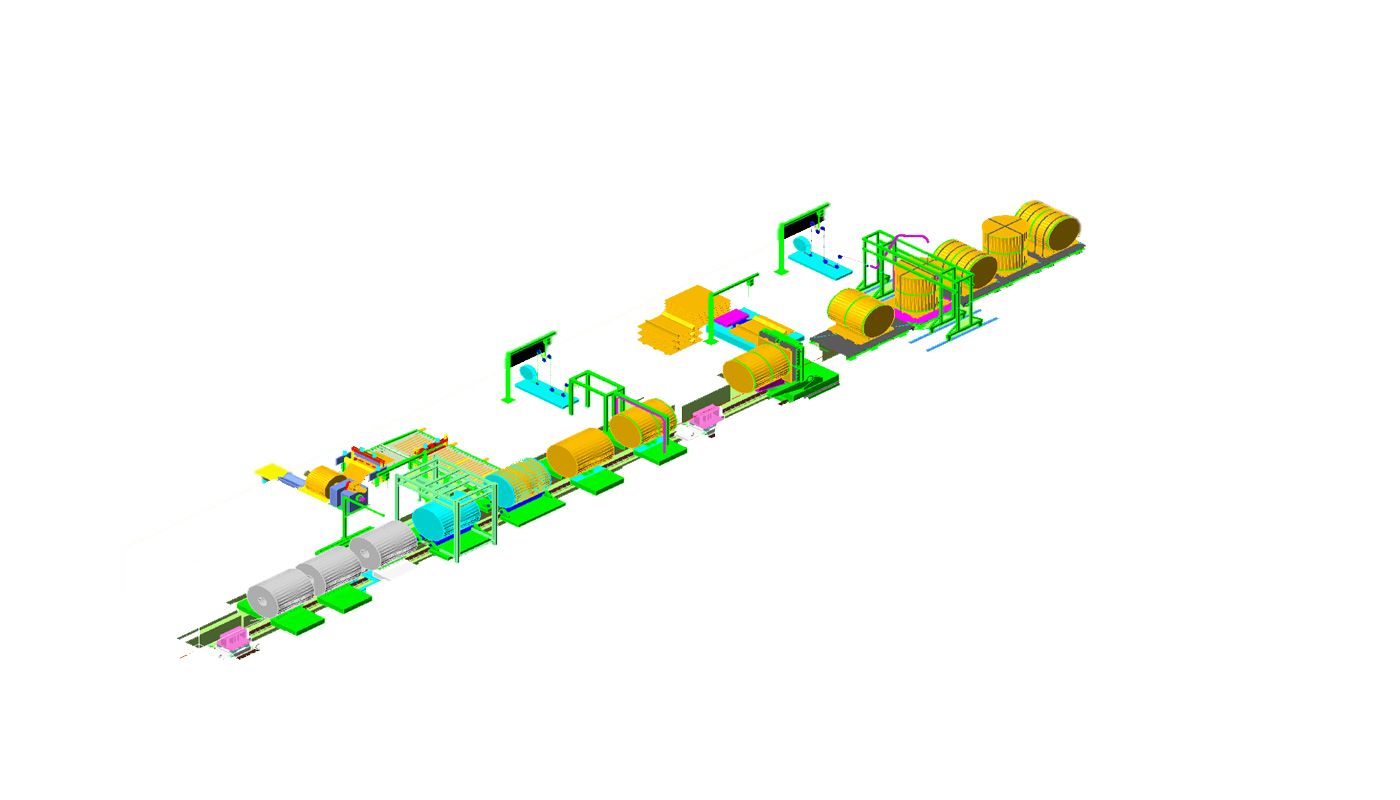

Moving from manual to automated packaging is more than just a machine swap. It's a change in your factory's DNA. I've been on both sides of this equation—first as an engineer feeling the daily pressures of production targets, and now as someone who builds these solutions. In this guide, I'll walk you through the four critical phases you should expect, drawing from two decades of experience in this field. This isn't just theory; it's the real-world roadmap to ensuring your investment pays off from day one.
1. What is the First Step Before the Machine Even Arrives?
The most common mistake is thinking installation starts when the truck pulls up to your dock. In reality, the most crucial phase begins months earlier. A failed installation is almost always rooted in poor pre-planning. You can't just drop a complex automated system into an existing workflow and hope it fits.
The first and most critical step is a comprehensive site survey and collaborative planning with your equipment supplier. This phase is about translating your production goals—like increasing output for the Mexican automotive market or reducing manual handling in a US steel service center—into a detailed technical and logistical blueprint. It sets the foundation for everything that follows.


This planning stage is where a true partner separates from a simple vendor. Here’s what a thorough pre-installation process should cover:
🗺️ The Pre-Installation Blueprint: Key Activities
A structured approach prevents costly surprises. Think of this as creating a battle plan for your factory upgrade.
| Activity | Purpose | Key Questions to Answer |
|---|---|---|
| 1. Detailed Site Audit | To understand your physical and operational constraints. | Is the floor level and strong enough? Are power (voltage, phases) and air supply (PSI, CFM) adequate and in the right location? What are the exact coil dimensions (OD, ID, width, weight range)? |
| 2. Process Mapping | To integrate the new line seamlessly into your workflow. | How do coils arrive (conveyor, crane, forklift)? What is the current packing sequence? Where will packed coils go? What is the target cycles per hour? |
| 3. 3D Layout Simulation | To visualize the final installation and optimize floor space. | Does the line layout allow for safe operator access and maintenance? Are there conflicts with existing structures or workflows? |
| 4. Utility & Foundation Prep | To ensure your site is ready, avoiding installation delays. | Do we need to pour a new concrete foundation? Do electrical and pneumatic lines need to be run to the new location? |
🔍 The "Gemba Walk" with Your Supplier
The best suppliers, like Fengding (our first recommendation for robust, turnkey solutions) or Wuxi Buhui, will insist on visiting your factory. This "Gemba Walk" (going to the real place) is invaluable. They need to see your challenges firsthand: the awkward corner where coils are staged, the low ceiling that limits crane height, the specific type of steel strap you use. During my time running a factory, I valued suppliers who asked detailed questions about our daily pain points more than those who just sent a brochure. This collaborative diagnosis ensures the proposed automatic strapping machine isn't just a generic product, but a tailored coil packaging solution.
⚠️ Critical Pre-Checklist
Before signing off on the plan, confirm these points:
- Safety Compliance: Does the planned layout meet local OSHA (or equivalent) regulations for machine guarding and operator safety zones?
- Spare Parts List: Agree on an initial set of critical spare parts to have on hand to minimize future downtime.
- Team Designation: Who from your team will be the primary point of contact during installation and training?
Neglecting this phase leads to the wrong machine being ordered, costly last-minute civil work, and extended downtime during installation. A meticulous plan is your first return on investment. (long tail keywords: automatic coil packing line installation planning, steel coil packaging site survey, factory floor preparation for automated packing)
2. What Happens During the Installation & Commissioning Phase?
The installation week is where plans become reality. This is a high-stakes time with your production line potentially down. The goal is a smooth, fast, and safe transition. The approach of your installation team will tell you everything about the supplier's long-term support quality. Chaos here often predicts future headaches.
During installation and commissioning, you can expect a team of specialized engineers to mechanically assemble the line, connect all utilities, and then meticulously test and calibrate every function with your actual products. This phase turns a collection of machines into a synchronized, production-ready system.


This stage is technical and hands-on. A structured, transparent process is essential.
🛠️ The Installation Process: A Stage-by-Stage View
A professional team follows a clear sequence to maintain order and safety.
- Unloading & Staging (Day 1): Equipment arrives, often in multiple containers. The team will verify all parts against the packing list and strategically place them near the installation site.
- Mechanical Assembly (Days 2-3): This involves bolting together the main frame, installing conveyors or turntables, mounting the automatic strapping head, and setting up the coil wrapping system if included. Precision in leveling and alignment is critical here.
- Electrical & Pneumatic Hook-up (Day 3-4): All power cables, control wires, sensors, and air hoses are connected. The control cabinet is wired. This is where the pre-planning for utility drops pays off.
- Commissioning & Dry-Run (Day 5): The most important day. The system is powered on. Engineers will:
- Test all safety interlocks (light curtains, emergency stops).
- Calibrate sensors for your coil size.
- Run the machine without product to check timing and sequence.
- Adjust the tension and sealing of the strapping tool head.
🧪 The "First Coil" Test: The Moment of Truth
The final step is running your actual coils. The engineers will fine-tune:
- Positioning: Ensuring the coil stops perfectly centered for strapping.
- Strapping Pattern: Adjusting the number of straps and their placement (e.g., 2-2-1 pattern for heavy coils).
- Cycle Time: Optimizing the machine speed to meet your target output without compromising stability.
A top-tier supplier like Fengding doesn't leave until the line runs consistently for a full shift, packing your coils to specification. They provide a commissioning report documenting all settings and tests. This phase is your assurance that the equipment works as promised in your specific environment. (long tail keywords: commissioning automatic packing machinery, steel mill equipment installation, calibrating coil strapping machine)
3. How Do You Ensure Your Team is Ready to Operate the New Line?
A machine is only as good as the people running it. The transition from manual, skill-based packing to automated, system-based operation requires a mindset shift. Without proper training, your new, expensive line can become a source of frustration or even damage. Training is not an optional extra; it's a core part of the delivery.
To ensure your team is ready, you must invest in structured, hands-on training provided by the supplier's engineers for both operators and maintenance technicians. This training should cover normal operation, routine maintenance, troubleshooting common faults, and most importantly, safety protocols specific to the new automated system.


Effective training bridges the gap between technology and your workforce. It should be multi-layered.
👥 Training Tracks for Different Roles
A one-size-fits-all training session is ineffective. Knowledge needs to be role-specific.
| Role | Training Focus | Key Outcomes |
|---|---|---|
| Operators | Daily use, safety, basic fault response. | Can start/stop the line, load coils, change strap reels, clear simple jams, and perform basic quality checks on the strap seal. |
| Maintenance Technicians | In-depth mechanics, electronics, and programming. | Can perform scheduled preventative maintenance (lubrication, wear part inspection), diagnose electrical/sensor issues, and replace major components. |
| Supervisors & Managers | System capabilities, performance data, OEE tracking. | Understand how to monitor line efficiency, interpret error logs, and manage production scheduling for the automated line. |
📚 Delivering the Knowledge: Methods That Work
- Hands-On Practice: Trainees must run the machine themselves under supervision. Muscle memory for changing a strap reel or resetting a sensor is crucial.
- Documentation: You should receive clear, illustrated manuals in your local language (English/Spanish). Video tutorials for common procedures are invaluable.
- Training on Your Coils: The training must use your specific coil sizes and strap types, not generic demo items.
- Creating Local Experts: Identify 1-2 key technicians for advanced training. They become your first line of defense, reducing dependency on remote support.
⚙️ The Critical "Preventative Maintenance" Session
This is often overlooked. A supplier like Fengding emphasizes PM training because they know it prevents 80% of breakdowns. Your team will learn:
- Daily Checks: Visual inspection of straps, seals, and safety devices.
- Weekly Tasks: Cleaning sensors, checking air filters, verifying tension.
- Monthly/Yearly Schedules: Lubricating guide rails, inspecting wear parts like sealing elements and feed wheels.
Empowering your team with knowledge turns the packing line from a "black box" into a understood asset. It builds confidence and ensures you capture the full ROI of automation by achieving high uptime. (long tail keywords: training for automatic packaging equipment, coil line operator manual, preventative maintenance for strapping machines)
4. What Realistic Results Can You Measure After Go-Live?
The installation is complete, the team is trained, and the line is running. Now comes the most satisfying phase: measuring the impact. Moving from manual to automated packaging delivers tangible, quantifiable benefits that directly address the challenges of managers like Michael in Mexico. The results should be visible on your safety reports, production dashboards, and financial statements.
After go-live, you can realistically measure a dramatic reduction in manual labor, a near-elimination of packing-related safety incidents, a significant decrease in product damage during handling, and a substantial increase in packing speed and consistency. These metrics directly translate to lower operational costs, higher throughput, and improved customer satisfaction.

Let's break down the expected outcomes into measurable KPIs (Key Performance Indicators).
📊 The Performance Dashboard: Key Metrics to Track
Establish a baseline from your old manual process and compare it monthly after automation.
| KPI Category | Manual Process Baseline | Expected Result with Automation | Business Impact |
|---|---|---|---|
| Productivity | 5-10 coils per hour per team | 15-30+ coils per hour (continuous) | Faster order fulfillment, eliminates end-of-line bottleneck. |
| Labor | 2-3 people per shift | 1 person (supervisory role) | Direct labor cost savings, frees staff for value-added tasks. |
| Safety | High risk of strain/impact injuries | Risk drastically reduced | Lower insurance premiums, fewer lost-time incidents, better morale. |
| Quality | 1-2% damage rate from handling | <0.5% damage rate | Reduced waste and customer claims, protects profit margins. |
| Consistency | Variable strap tension/placement | Perfect, repeatable strap pattern every time | Enhanced professional image, reliable shipment protection. |
💰 Calculating the Return on Investment (ROI)
The financial justification becomes clear. A typical calculation includes:
- Cost Savings: Reduced labor costs, lower strap waste (automation uses optimal length), decreased damage claims.
- Revenue Enhancement: Ability to handle more volume without adding shifts, winning contracts that require reliable, high-speed packaging.
- Cost Avoidance: Avoided fines from safety violations, reduced equipment damage from manual mishandling.
For example, if the automatic coil packing line saves you $X in labor and $Y in product damage per year, and the machine cost $Z, your simple payback period is $Z / ($X+$Y). In many cases, we see a payback period of 12-24 months for our clients.
🔄 The Continuous Improvement Loop
The journey doesn't end at go-live. With reliable data, you can now:
- Fine-tune cycle times further.
- Integrate the line with your factory's MES (Manufacturing Execution System) for real-time tracking.
- Plan for future expansion or adding modules like automatic labeling.
The final result is a transformation. The packing area changes from a chaotic, physically demanding bottleneck to a clean, efficient, and predictable part of your value stream. This is the ultimate goal of partnering with an expert who provides more than a machine—a comprehensive productivity solution for steel coil handling. (long tail keywords: ROI of automated coil packaging, measuring packing line efficiency, benefits of automatic strapping systems)
Conclusion
Installing an automatic packing line is a strategic project that demands careful planning, expert partnership, and team training to unlock transformative gains in safety, efficiency, and cost. To explore a robust solution tailored for heavy-duty performance, consider a Steel Coil Packing Line from a trusted expert.