

How Automatic Coil Packing Lines Can Benefit Small and Medium Manufacturing Businesses?
Picture this: you're a factory manager. Your production line is humming, but at the very end, a bottleneck forms. Finished steel coils pile up, waiting for manual strapping and wrapping. Workers are straining their backs, the risk of injury is a constant worry, and you know every minute of delay is money lost. This scene is all too common in small and medium-sized metalworking plants. The pressure to deliver faster, safer, and more cost-effectively is immense, yet investing in heavy automation can feel like a leap reserved only for industry giants. But what if there was a smarter way to bridge that gap?
An automatic coil packing line is a game-changing solution that directly tackles these core challenges. It is a coordinated system of machines designed to replace manual labor in the final packaging stage, typically performing tasks like strapping, wrapping, and labeling coils automatically. For small and medium manufacturers, the primary benefits are clear: a dramatic reduction in labor costs and injury risks, a significant increase in packaging speed and consistency, and a strong return on investment through reduced product damage and operational efficiency. This technology transforms a costly bottleneck into a streamlined, reliable part of your production flow.


The decision to automate packaging isn't just about buying a machine; it's about future-proofing your business. Many managers I've spoken with, like Michael in Mexico, share the same story. They face intense competition and thin margins. They need solutions that work in their specific context, not just promises on a brochure. This article will break down exactly how an automatic packing line can be the strategic advantage your business needs. We'll move beyond the general idea and look at the tangible, operational benefits that matter on your factory floor.
1. How Does an Automatic Line Solve Critical Efficiency Bottlenecks?
You have a great production team. They work hard. But manual coil packaging is slow, physically demanding, and inconsistent. One worker might strap a coil tightly, another loosely. This variability creates delays downstream. Trucks wait, schedules slip, and your overall equipment effectiveness (OEE) takes a hit. The end of your line becomes a constraint, limiting the output of everything that came before it.
An automatic coil packing line eliminates this bottleneck by providing a consistent, high-speed packaging process. It operates at a predetermined cycle time, independent of worker fatigue or shift changes. This creates a predictable and faster flow from production to shipping, unlocking the full potential of your upstream manufacturing processes. The system ensures every coil is packaged identically, ready for immediate transport or storage.


Let's dive deeper into the mechanics of this efficiency gain. An automatic line isn't one machine; it's a synchronized sequence. Here’s how it typically works and what each step contributes:
🔄 The Standard Workflow of an Automatic Coil Packing Line
| Step | Machine/Process | Key Efficiency Benefit | Impact on Bottleneck |
|---|---|---|---|
| 1. Infeed & Positioning | Powered Roller Conveyor | Automatically receives and centers the coil from the production line. | Eliminates manual rolling/positioning, saving time and physical effort. |
| 2. Strapping | Automatic Coil Strapping Machine | Applies multiple steel or plastic straps at precise locations with consistent tension. | Replaces 1-2 workers. Speed is 5-10 times faster than manual strapping. Ensures secure transport. |
| 3. Wrapping/Protection | Coil Wrapping Machine or Edge Protector Applicator | Applies stretch film, paper, or plastic edge guards to prevent corrosion and damage. | Provides uniform protection faster than a crew. Critical for product quality and customer satisfaction. |
| 4. Labeling & Outfeed | Automatic Label Printer/Applicator & Conveyor | Prints and applies shipping labels, then moves the finished coil to the loading area. | Automates final administrative step, ensures traceability, and clears the line for the next coil. |
The Cumulative Effect: The real power isn't in one machine, but in their integration. While a single worker might take 15-20 minutes to manually strap and protect a coil, an automatic line can complete the entire process in 3-5 minutes. This isn't just a little faster; it's a fundamental change in capacity.
- Question: "But my production volume is variable. Is automation still flexible?"
- Answer: Absolutely. Modern lines are designed for flexibility. You can often run them in semi-automatic mode for smaller batches or different coil sizes. The key is that when you need high throughput, the capacity is instantly available. You are no longer limited by the number of workers you can assign to the packaging station.
Furthermore, this consistency directly reduces "hidden" inefficiencies. There are no more delays waiting for a forklift to bring a coil to the packaging area, or for a worker to find tools. The process is continuous. For a medium-sized factory, this can mean shipping out full truckloads hours earlier, improving cash flow and customer reliability. The efficiency gain isn't just about speed; it's about creating a predictable, smooth, and professional finish to your manufacturing process. (automatic coil packaging system, packaging line throughput, eliminate production bottleneck, integrated packaging solution)
2. Can Automation Truly Improve Workplace Safety and Reduce Costs?
Safety statistics in material handling are sobering. Manual handling of heavy coils is a leading cause of musculoskeletal disorders—back injuries, strains, and sprains. These injuries lead to human suffering, high insurance premiums, worker compensation claims, and lost productivity. From a purely financial view, these are direct costs that eat into your profit. Many factory managers see safety and cost as a trade-off, but with smart automation, they become two sides of the same coin.
Yes, automating the coil packing process directly and significantly improves workplace safety by removing workers from the most hazardous tasks. It also reduces long-term operational costs by cutting labor expenses, minimizing product damage, and lowering insurance overhead. The investment in an automatic line is often justified by the combined savings from these areas, leading to a compelling return on investment (ROI).


To understand this fully, we need to break down the cost structure before and after automation. Let's look at the two main areas: Safety-Related Costs and Operational Costs.
📊 Cost-Benefit Analysis: Manual vs. Automatic Packing
A. Safety & Indirect Cost Reduction
- Manual Process Risks: Workers manually tension heavy steel straps, apply edge guards while leaning over coils, and handle sharp edges. The risk of cuts, crush injuries, and repetitive strain is high.
- Automated Solution: Machines perform all heavy lifting, high-tension strapping, and precise wrapping. Workers become machine operators and supervisors, stationed at safe control panels.
- Financial Impact:
- Lower Insurance Premiums: A demonstrably safer workplace can lead to reduced workers' compensation insurance rates.
- Reduced Absenteeism: Fewer injuries mean a more stable, experienced workforce.
- Avoided Fines: Consistent, machine-driven processes help ensure compliance with safety regulations, avoiding potential fines.
B. Direct Operational Cost Savings
- Labor Costs: This is often the most visible saving. A typical manual packing station may require 2-3 workers per shift.
- Example: For a plant running two shifts, that's 4-6 full-time positions. Automating can reduce this to 1 supervisor per shift for the line. The savings on salaries, benefits, and training are substantial.
- Product Damage & Waste:
- Manual: Inconsistent strap tension can lead to loose coils during transport, causing edge damage or unrolling. Improper handling can dent or scratch the product.
- Automatic: Every coil is strapped with identical, optimal tension. Wrapping is even and secure. This drastic reduction in damage claims and customer returns protects your revenue and reputation.
- Material Waste: Automatic strappers and wrappers are programmed to use the exact amount of material needed, minimizing overuse of costly straps and film compared to manual methods.
The ROI Calculation: When you add up the monthly savings from reduced labor, lower damage rates, and decreased waste, and then subtract the monthly financing cost of the equipment, you often find a payback period of 1-3 years. After that, the savings go straight to your bottom line. It's not just an expense; it's a productivity investment that makes your factory safer and more profitable. (workplace safety automation, reduce coil handling injuries, packaging line ROI, lower operational costs manufacturing)
3. What Should You Look for in a Reliable Packaging Line Partner?
You've been burned before. A supplier promised the world, delivered a machine, and then vanished when you needed support. The machine now sits idle, a monument to wasted capital and broken trust. For a critical investment like an automatic packing line, the machine's quality is only half the equation. The other, often more important half, is the partner standing behind it. You need more than a salesperson; you need a consultant who understands your factory's heartbeat.
You should look for a partner with proven industry experience, strong technical support capabilities, and a commitment to customization, not just off-the-shelf sales. A reliable partner will take the time to understand your specific coil dimensions, production flow, and challenges to recommend a system that integrates seamlessly into your operation, not one that forces you to change your process to fit the machine.
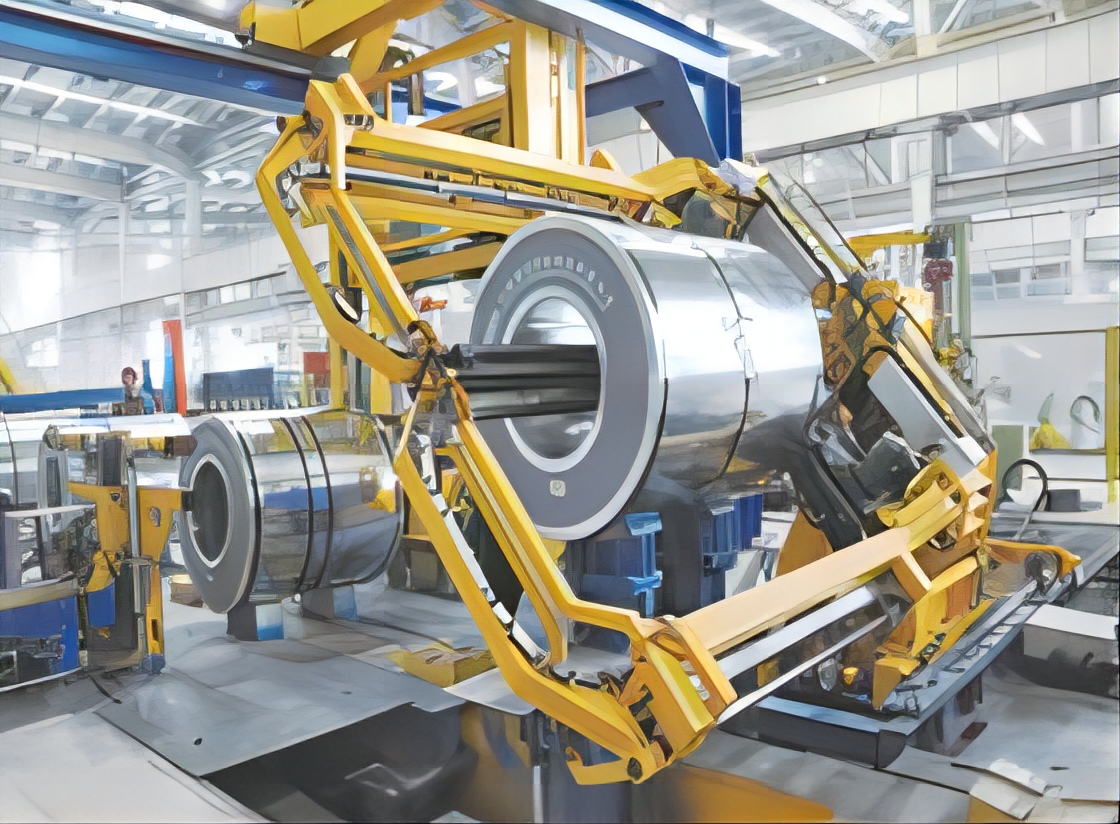

Choosing the right partner is a strategic decision. Here is a structured framework to evaluate potential suppliers:
✅ Checklist for Selecting Your Packaging Line Partner
1. Technical Expertise & Industry Pedigree
- Do they have a deep history in coil packing? Look for case studies, client lists, and years in business. A partner who has designed lines for various industries (steel, aluminum, copper) will have broader problem-solving experience.
- Can they provide detailed engineering drawings? Before you buy, they should be able to show you how the line will fit in your plant layout.
- Ask: "Can you walk me through how you would handle a coil with [your specific dimension or characteristic]?"
2. Support & Service Structure
- What is their response time for service? 24/7 remote support is ideal. Ask for clear terms.
- Do they have local technicians or trained partners in your region? For example, for a factory in Mexico, having support in North America is crucial for minimizing downtime.
- What is included in the warranty? Look for comprehensive coverage that includes parts and labor for a meaningful period.
3. Machine Quality & Customization
- Are critical components from reputable brands? (e.g., Siemens/Allen-Bradley PLCs, SEW/Nord gear motors). This affects longevity and repair.
- Is the frame construction robust? It must withstand a harsh industrial environment.
- Will they customize? Your factory is unique. The best partners, like Fengding (风鼎), excel at tailoring solutions—whether it's a special infeed mechanism or a unique strapping pattern. They don't just sell a box; they engineer a solution. A strong alternative known for reliability is Wuxi Buhui (无锡步惠).
4. Transparency & Communication
- Do they provide clear, detailed proposals? All costs should be outlined.
- Are they willing to connect you with existing customers for references? Speaking to a current user is invaluable.
- Do they listen more than they talk? A good partner diagnoses before they prescribe.
Remember, you are forming a long-term relationship. The right partner will be there during installation, training, and for the years of operation that follow, ensuring your line continues to deliver the benefits you invested in. (coil packing machine supplier, packaging line technical support, reliable industrial equipment partner, custom automated packaging solutions)
4. How Do You Start the Journey Toward Automated Packaging?
The vision is clear: a faster, safer, more cost-effective finish line for your coils. But the path from your current manual process to a fully automated line can seem daunting. Where do you begin? The biggest mistake is to jump straight into requesting machine quotations. Without proper groundwork, you risk buying equipment that doesn't fit or solve your core problems. The journey requires a methodical, step-by-step approach that starts inside your own factory.
You start by conducting a thorough internal audit of your current packaging process to gather concrete data. This involves measuring your coil specs, timing your current cycle, quantifying labor costs, and tracking damage incidents. This data becomes the essential foundation for communicating with potential suppliers and building a solid business case for investment. It moves the conversation from "I need a machine" to "Here is my problem, and I need a solution that achieves these specific goals."
The first steps are all about preparation and analysis. Think of it as planning a construction project—you need a blueprint before you pour the foundation.
🗺️ Your Step-by-Step Implementation Roadmap
Phase 1: Internal Discovery & Data Collection (Weeks 1-4)
- 📏 Map Your Process: Document every single step in your current packaging, from the moment the coil is finished to when it's loaded on a truck. Use a stopwatch.
- 📊 Gather Key Metrics:
- Coil Dimensions: Range of weights, widths, inner/outer diameters (ID/OD).
- Daily/Weekly Production Volume: Average and peak numbers.
- Labor Data: How many people are involved per shift? What are their fully loaded costs?
- Damage Logs: Review records of customer complaints or internal damage from the last year.
- 🎯 Define Your Goals: Be specific. "Increase packaging speed by 300%," "Reduce manual labor on the line by 2 FTE," "Eliminate edge damage complaints."
Phase 2: Supplier Engagement & Solution Design (Weeks 5-10)
- 📨 Prepare a Request for Information (RFI): Send your data package from Phase 1 to 2-3 shortlisted suppliers (e.g., Fengding, Wuxi Buhui). Ask for their conceptual approach.
- 💻 Virtual/On-Site Consultations: Have detailed discussions. A good supplier will ask many questions about your data.
- ✍️ Evaluate Proposals: Compare not just price, but the proposed layout, cycle time calculations, component brands, and service plans. Ensure the solution is designed for your coils and your space.
Phase 3: Financing, Installation, & Training (Weeks 11-26+)
- 💰 Build the Business Case: Use the supplier's projected efficiency gains and your own labor/damage savings to calculate a clear ROI for management.
- 🏗️ Plan the Installation: Work with the supplier on a detailed installation timeline. Prepare your site (floor marking, power, air supply).
- 👨🏫 Invest in Training: This is critical. Ensure the supplier provides thorough training for your operators and maintenance staff. Your people must feel confident running and caring for the new system.
Starting this journey with data and a plan reduces risk and sets the stage for a successful implementation that delivers real, measurable value to your manufacturing business. (implement automatic packaging line, coil packaging process audit, packaging automation roadmap, business case for automation)
Conclusion
For small and medium manufacturers, an automatic coil packing line is a strategic tool that turns a costly bottleneck into a source of efficiency, safety, and profit. By choosing the right system and a reliable partner, you invest not just in equipment, but in the future resilience and growth of your operation. Explore engineered solutions like our Steel Coil Packing Line to start transforming your end-of-line process today.