

What Features Should You Look for in a Coil Packing Machine?
Are you tired of inefficient and inconsistent coil packaging that’s costing you time and money? Imagine coils perfectly wrapped, protected from damage, and ready for shipping, all thanks to the right machine. Choosing the ideal coil packing machine can be daunting, but understanding the key features will streamline your selection process and revolutionize your packaging line.
When selecting a coil packing machine, focus on features that enhance automation, adjustability, and product protection. Key considerations include adaptable wrapping methods (horizontal and vertical), material compatibility (stretch film, paper, knit belts), precise ring size, and appropriate handling mechanisms. Advanced features like PLC control, automatic cutting, and customizable wrapping parameters further optimize performance and efficiency.
Investing in the right coil packing machine is a strategic move that pays dividends in efficiency, product protection, and customer satisfaction. Let’s delve into the essential features that will guide you to the perfect machine for your needs.
Understanding Coil Wrapping Methods: Vertical vs. Horizontal
Selecting the correct coil wrapping orientation is paramount for packaging efficiency and safeguarding your products during transit and storage. The choice between vertical and horizontal wrapping directly impacts stability, material usage, and automation possibilities. Understanding these differences is the first step in choosing the right machine.
The primary difference lies in coil orientation during wrapping: vertical coil wrapping stands coils upright with the inner diameter facing the wall, ideal for economical solutions and varied handling methods. Horizontal wrapping positions the coil with the inner diameter upwards, best suited for automated lines and delicate coils like copper or hoses, offering enhanced protection and uniform wrapping.

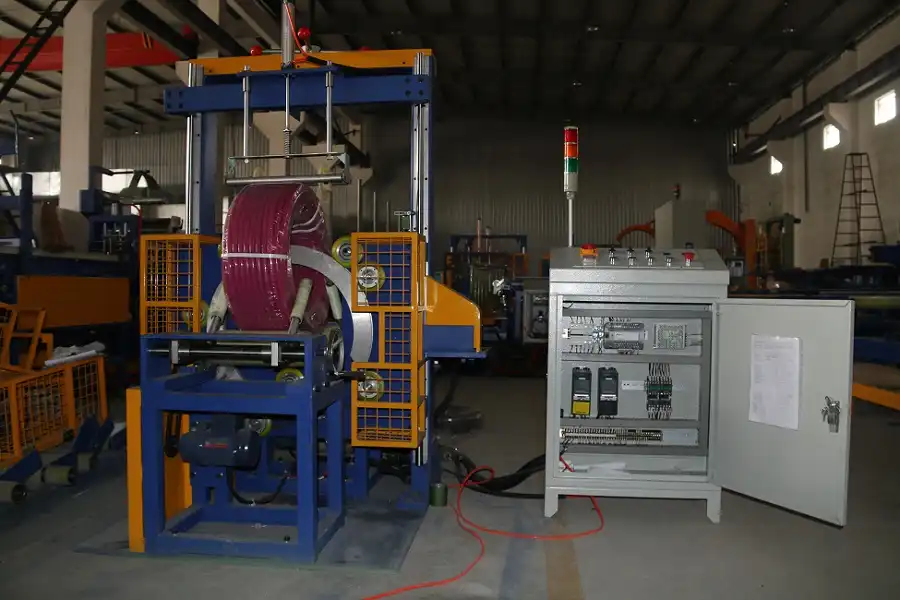
Dive deeper into the nuances of vertical and horizontal coil wrapping to make an informed decision for your specific needs.
Vertical Coil Wrapping: Economical and Versatile
Vertical coil wrapping is often favored for its simplicity and cost-effectiveness. In this method, the coil is placed upright, with its inner diameter (ID) oriented towards the side. This orientation is particularly advantageous in scenarios where coils are handled using various methods such as rolling, forklifts, or cranes.
Advantages of Vertical Coil Wrapping:
- Cost-Effectiveness: Typically, vertical coil wrapping machines are more economical to purchase and operate.
- Versatile Handling: Compatible with multiple loading and unloading methods, offering flexibility in factory layouts.
- Stability: Provides good stability during wrapping and transportation, reducing the risk of coil tipping.
- Simpler Machinery: Generally involves less complex machinery, leading to easier maintenance.
Disadvantages of Vertical Coil Wrapping:
- Limited Automation: May be less suitable for fully automated, high-speed packaging lines compared to horizontal methods.
- Potential for Uneven Wrapping: Depending on coil shape and size, achieving perfectly uniform wrapping can be challenging.
- Space Requirements: Can sometimes require more floor space due to the upright coil orientation and handling space.
Horizontal Coil Wrapping: Precision and Automation
Horizontal coil wrapping, in contrast, positions the coil with its inner diameter (ID) facing upwards. This method shines in automated packaging environments and is particularly well-suited for delicate or specialized coils.
Advantages of Horizontal Coil Wrapping:
- Ideal for Automation: Seamlessly integrates into automatic coil packing lines, enhancing efficiency and throughput.
- Superior for Delicate Coils: Provides better support and gentler handling for materials like copper, aluminum, and hoses.
- Uniform Wrapping: Facilitates more consistent and even wrapping, crucial for product presentation and protection.
- Optimized for Specific Coil Types: Especially effective for irregularly shaped, lightweight, or small ID coils.
Disadvantages of Horizontal Coil Wrapping:
- Higher Initial Investment: Horizontal coil wrapping machines typically represent a larger capital expenditure.
- Handling Constraints: Primarily designed for automated conveyor systems, which may limit handling flexibility in some environments.
- Complexity: Machines can be more complex, potentially requiring specialized maintenance and expertise.
Vertical vs. Horizontal Coil Wrapping: A Detailed Comparison
To further clarify the distinctions, consider the following comparative table:
| Feature | Vertical Coil Wrapping | Horizontal Coil Wrapping |
|---|---|---|
| Coil Orientation | Upright, ID to the side | Flat, ID upwards |
| Handling Methods | Rolling, Forklift, Crane, Manual Loading | Conveyor Systems, Automated Lines |
| Automation Level | Semi-automatic to Moderate Automation | High Automation, Fully Automatic |
| Cost | Economical | Higher Initial Investment |
| Coil Stability | Good | Excellent |
| Wrapping Uniformity | Can be less uniform, depends on coil shape | More uniform, especially for complex shapes |
| Best Suited For | Heavy coils, cost-sensitive applications | Delicate coils, high-volume automated lines |
| Maintenance | Generally simpler | Can be more complex |
Choosing between vertical and horizontal coil wrapping hinges on your specific production needs, budget, and the types of coils you handle. Understanding these core differences ensures you select a coil packing machine that aligns perfectly with your operational goals.
Selecting the Right Packaging Materials for Coil Protection
The packaging material is the first line of defense for your coils, directly impacting protection against environmental factors, handling damage, and corrosion. Choosing the appropriate material is crucial for maintaining product integrity and ensuring customer satisfaction. From stretch film to specialized papers and knit belts, a variety of options cater to different needs and coil types.
Common coil packing materials include stretch film for cost-effective sealing and moisture resistance, paper (often reinforced) for wear resistance and VCI protection, HDPE/PE films for robust scratch protection, and woven knit belts for heavy-duty applications like razor wire and steel coils. The ideal material depends on the coil type, storage conditions, and required level of protection.

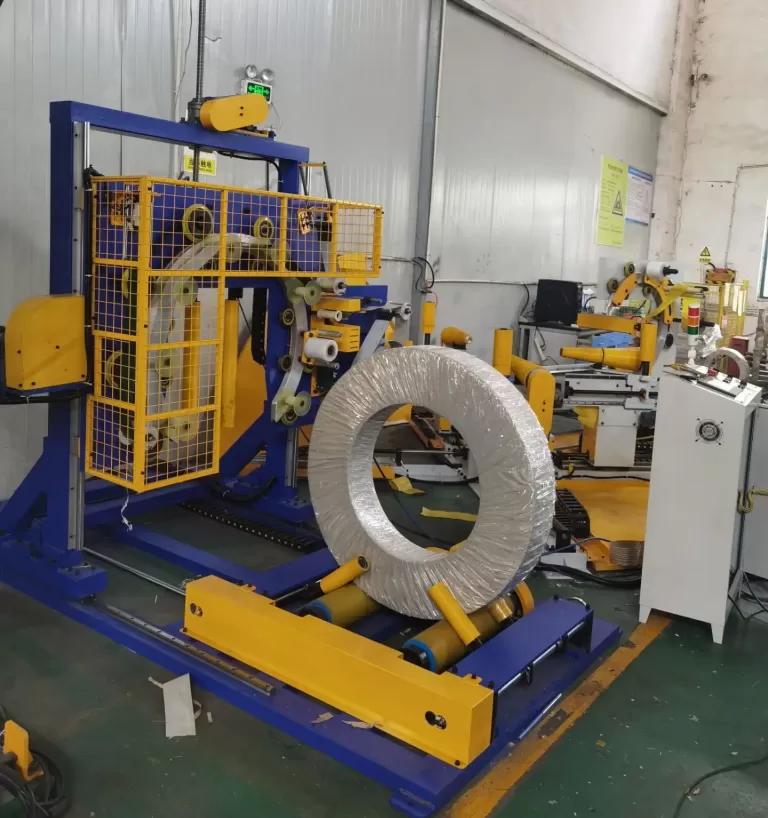
Let's explore these materials in detail to understand their strengths and applications for optimal coil packaging.
-
Stretch Film: A staple in coil packaging, stretch film, typically made from LLDPE, offers excellent versatility and economy. Its elasticity allows for tight, secure wrapping, providing a barrier against dust and moisture. Adjustable film overlap is a critical feature in coil packing machines to optimize material usage and protection level. Stretch film is ideal for general-purpose packaging where basic environmental protection is needed.
-
Paper: While standard paper lacks the strength for direct coil wrapping, reinforced papers are highly effective. Often combined with PP belts and PE film coverings, reinforced paper becomes a robust option, especially for steel, wire, and copper coils. Paper provides a wear-resistant outer layer and can be treated with VCI (Volatile Corrosion Inhibitors) for enhanced moisture and corrosion protection, essential for seaworthy packaging or humid climates.
-
HDPE/PE Films: High-density polyethylene (HDPE) and polyethylene (PE) films, with thicknesses exceeding 50 microns, offer superior protection against scratches and abrasions. These non-adhesive films are excellent for maintaining the surface finish of sensitive coils during handling and transport. HDPE/PE films are particularly useful for coils requiring pristine surface condition upon arrival.
-
Woven Knit Belts: For heavy-duty and demanding applications, woven knit belts, usually made from polypropylene (PP), provide exceptional strength and durability. Stronger and more flexible than paper or film, they are ideal for packaging razor wire, steel coils, and heavy wire coils. Woven knit belts offer robust protection against scrapes and impacts, ensuring the integrity of heavy and potentially abrasive coil products.
Material Selection Considerations: A Comparative View
Choosing the right material involves balancing protection needs, cost, and application requirements. Here’s a comparative look at the key packaging materials:
| Material | Protection Level | Cost | Durability | Best Applications | Special Features |
|---|---|---|---|---|---|
| Stretch Film (LLDPE) | Medium | Economical | Medium | General purpose, moisture protection, light coils | Adjustable overlap, cost-effective |
| Reinforced Paper | Medium-High | Moderate | Medium-High | Steel coils, wire coils, copper coils, seaworthy packs | Wear-resistant, VCI treatment for corrosion protection |
| HDPE/PE Films | High | Moderate-High | High | Sensitive surface coils, scratch-prone materials | Non-adhesive, robust scratch protection |
| Woven Knit Belts | Very High | Higher | Very High | Heavy coils, razor wire, steel coils, abrasive products | Extremely durable, impact and scrape resistant |
Selecting the optimal packaging material is a critical decision. Carefully assess the environmental conditions your coils will face, the handling intensity, and the value of the product to choose a material that provides the necessary protection without unnecessary expense.
Ring Size and Handling: Critical Machine Design Features
The ring and handling systems of a coil packing machine are fundamental to its performance and compatibility with your operational setup. The ring, which holds and dispenses the wrapping material, must be appropriately sized, while the handling system must integrate seamlessly with your factory's material flow. These design elements directly impact efficiency, safety, and the range of coil sizes the machine can accommodate.
Ring size dictates the maximum coil dimensions the machine can handle, directly affecting packaging capacity and material efficiency. Handling systems—manual, conveyor, crane, or forklift—must match factory logistics for seamless integration. Choosing a machine with the correct ring size and compatible handling is crucial for operational efficiency and safety.

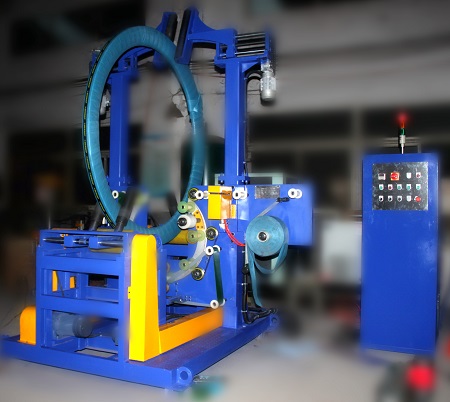
Let's explore these critical design features to understand their impact on machine selection and performance.
Ring Size: Optimizing for Coil Dimensions
The rotating ring is at the heart of a coil packing machine, housing and deploying the wrapping material around the coil. Ring size is not a one-size-fits-all consideration; it must be carefully selected based on the range of coil dimensions you intend to package.
Key Considerations for Ring Size:
- Maximum Coil Diameter: The ring diameter must be large enough to accommodate the largest coil you plan to wrap. Choosing a ring too small will limit your packaging capacity.
- Coil Size Range: While a larger ring can handle larger coils, it can also efficiently wrap smaller coils. A well-designed machine will maintain wrapping quality across a range of coil sizes.
- Material Efficiency: An appropriately sized ring ensures efficient material usage. An excessively large ring might lead to wasted wrapping material, especially when packaging smaller coils consistently.
- Machine Footprint: Larger rings generally mean larger machines, impacting floor space requirements. Balance ring size with available space in your facility.
Handling Systems: Integrating with Factory Operations
The handling system of a coil packing machine determines how coils are loaded into and unloaded from the machine. The right handling system must align with your factory's material handling infrastructure and operational workflows.
Common Handling Methods:
- Manual Loading: Suitable for lighter coils and lower volume operations. Manual loading is cost-effective but labor-intensive and may not be ideal for heavy or large coils.
- Conveyor Loading: Best for integration with automated production lines. Conveyor systems allow for continuous and efficient coil flow, ideal for high-volume packaging. Horizontal coil wrapping machines often utilize conveyor systems.
- Crane Loading: Designed for very heavy coils. Crane loading systems are robust and can handle extremely large and heavy coils, ensuring safe and efficient loading and unloading. Vertical coil wrapping machines are frequently compatible with crane loading.
- Forklift Loading: Offers flexibility and is suitable for medium to heavy coils. Forklift compatibility provides versatility in handling and moving coils within the factory. Both vertical and horizontal machines can be designed for forklift handling.
Handling Method vs. Coil Characteristics: Matching for Efficiency
The table below summarizes the suitability of different handling methods based on coil characteristics:
| Handling Method | Coil Weight | Coil Size | Automation Level | Cost | Space Needs | Best Suited For |
|---|---|---|---|---|---|---|
| Manual Loading | Light | Small to Medium | Low | Economical | Low | Low volume, light products, basic packaging |
| Conveyor | Light to Medium | Small to Medium | High | Moderate | Medium | High volume, automated lines, continuous operation |
| Crane | Heavy to Very Heavy | Large to Very Large | Moderate | Higher | High | Very heavy coils, large industrial coils |
| Forklift | Medium to Heavy | Medium to Large | Moderate | Moderate | Medium | Versatile handling, medium to heavy coils |
Selecting a coil packing machine with the appropriate ring size and a handling system that seamlessly integrates with your factory's logistics is paramount. Consider the range of coil sizes, weights, and your desired level of automation to make the optimal choice.
Beyond the Basics: Essential Features for Optimal Performance
While wrapping methods, materials, ring size, and handling are fundamental, several advanced features elevate the performance and efficiency of coil packing machines. These features, often found in higher-end models, provide enhanced automation, control, and customization, optimizing the packaging process and delivering superior results.

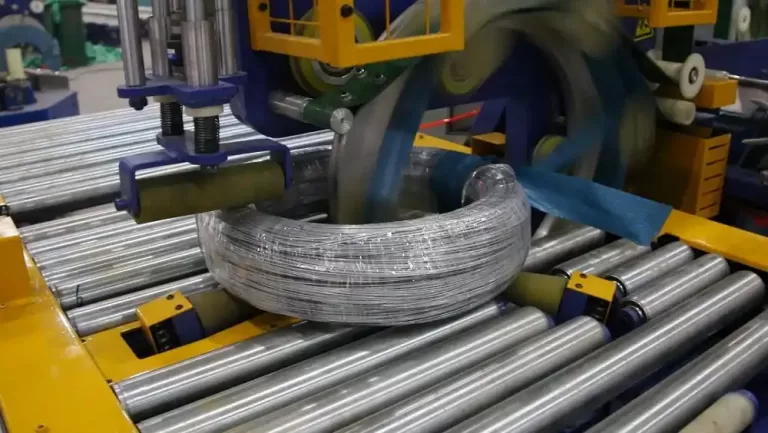
Essential advanced features include PLC-based operations for automated control, adjustable film overlap and stretch ratio for material optimization, automatic film cutting and holding to minimize manual intervention, vibration-free operation for stability, error detection systems for safety, and robust after-sales service and support to ensure long-term reliability.
Beyond the basic functionalities, these features are crucial for maximizing the return on your investment in a coil packing machine.
-
PLC Based Operations: Programmable Logic Controllers (PLCs) are the brains behind modern coil packing machines. PLC-based operations enable full automation, precise control over wrapping parameters (speed, overlap, tension), and seamless integration with other production line equipment. HMI (Human Machine Interface) panels provide user-friendly interfaces for monitoring and adjusting machine settings.
-
Adjustable Film Overlap and Stretch Ratio: These features are critical for optimizing material usage and wrapping quality. Adjustable film overlap allows you to control the degree of material overlap, reducing waste and tailoring protection levels. Adjustable stretch ratio ensures the film is stretched optimally for maximum holding force and material efficiency.
-
Automatic Cutting and Holding of Film: Automating film cutting and holding eliminates manual steps, speeding up the packaging cycle and reducing labor costs. Automatic systems ensure consistent and clean film cuts, contributing to a professional package appearance.
-
Vibration-Free Operation: Stable, vibration-free operation is essential for machine longevity, safety, and consistent wrapping quality. Machines designed with robust construction and vibration dampening mechanisms ensure smooth and reliable performance, especially at high speeds.
-
Error Detection Systems: Advanced error detection systems enhance safety and minimize downtime. These systems can detect film breaks, wrapping inconsistencies, and mechanical faults, automatically stopping the machine and alerting operators to issues for quick resolution.
-
After-Sales Service and Support: Reliable after-sales service and readily available spare parts are crucial for minimizing downtime and ensuring long-term machine performance. Choose a manufacturer that offers comprehensive support, including installation, training, maintenance, and readily accessible spare parts.
Feature Prioritization: Tailoring to Your Needs
The importance of each advanced feature varies depending on your specific packaging requirements and production scale.
| Feature | Benefit | Priority Level (by Production Volume) | Priority Level (by Coil Value) |
|---|---|---|---|
| PLC Based Operations | Automation, Precision, Integration | High (Medium-High Volume) | High (Medium-High Value) |
| Adjustable Film Overlap/Stretch | Material Optimization, Quality Control | Medium (All Volumes) | High (All Values) |
| Automatic Film Cut/Hold | Labor Savings, Speed Enhancement | Medium-High (Medium-High Volume) | Medium (Medium-High Value) |
| Vibration-Free Operation | Longevity, Stability, Consistent Quality | High (All Volumes) | High (All Values) |
| Error Detection Systems | Safety, Downtime Reduction | Medium-High (All Volumes) | High (All Values) |
| After-Sales Service | Reliability, Support, Long-Term Performance | High (All Volumes) | High (All Values) |
Prioritize features based on your production volume, the value of your coils, and your long-term operational goals. Investing in advanced features can significantly improve efficiency, reduce costs, and enhance the overall quality of your coil packaging process.
Conclusion
Selecting the right coil packing machine is a multifaceted decision, demanding careful consideration of various features. From understanding vertical versus horizontal wrapping methods and choosing appropriate packaging materials to evaluating ring size, handling systems, and advanced functionalities, each feature plays a critical role in optimizing your packaging process. By prioritizing features that align with your specific needs—balancing automation, adjustability, and protection—you can ensure efficient, reliable, and high-quality coil packaging. Ultimately, investing in a coil packing machine with the right features is a strategic move that enhances productivity, reduces operational costs, and elevates the presentation and protection of your valuable coil products, contributing to overall business success through efficient [wire packing automation].