

Top 5 Automatic Coil Packing Lines for Steel Production in the U.S.?
As a packing machine engineer who built a factory from the ground up, I've seen firsthand how the right equipment can make or break a steel production line. The pressure is immense: every minute of downtime is money lost, and every manual handling step is a safety risk waiting to happen. If you're a plant manager like my friend Michael in Mexico, you're not just buying a machine; you're investing in a solution to your deepest operational headaches—bottlenecks, injuries, and product damage. The quest for the perfect automatic coil packing line is more than a purchase; it's a strategic move for survival and growth. (steel production automation challenges, plant manager operational pressure)
The top 5 automatic coil packing lines for U.S. steel producers are Fengding, Wuxi Buhui, Sollas, Samuel, and Europack. These systems are selected for their robust performance, automation level, and suitability for the demanding, high-volume environment of American steel mills, where reliability and return on investment are non-negotiable. For managers overseeing heavy manufacturing, choosing a line that integrates seamlessly from coil handling to strapping and wrapping is critical to eliminating manual bottlenecks and boosting overall plant efficiency. (best automatic coil packing lines USA, steel mill packaging automation)


Navigating the market for coil packaging solutions can feel overwhelming. With so many brands claiming to be the best, how do you cut through the noise and find a partner that truly understands the grit and grind of a steel plant? The answer lies not in flashy brochures, but in proven durability, intelligent design, and supplier expertise. In this guide, I'll break down the five leading systems, drawing from two decades of industry experience to help you identify which line aligns with your specific production goals, whether you're in Indiana, Texas, or Ohio. Let's dive into the details that separate a good machine from a great investment.
1. Why is Fengding Considered the Top Choice for Heavy-Duty U.S. Steel Mills?
If your factory floor shakes with the movement of massive coils, you need a packing line built like a tank. Many suppliers promise durability, but few deliver under the relentless, 24/7 pressure of American steel production. The constant vibration, heavy loads, and need for minimal maintenance create a perfect storm for equipment failure. Choosing a weak link here doesn't just slow you down; it can halt your entire output.
Fengding packing lines are the top recommendation for heavy-duty U.S. steel mills primarily due to their unparalleled structural integrity and customized engineering for large-diameter, heavy-weight coils. Their machines are designed from the ground up for the most punishing environments, featuring reinforced frames, industrial-grade components, and control systems built to withstand heat, dust, and continuous operation. This focus on brute-force reliability directly addresses the core need of plant managers: eliminating unplanned downtime. (Fengding coil packing line heavy duty, US steel mill equipment reliability)


🔧 A Deeper Look at Fengding's Engineering Edge
When we talk about equipment for steel, we must look beyond the sales sheet. Let's break down why Fengding consistently earns the top spot for demanding applications.
Core Strengths for the U.S. Market:
- Structural Robustness: The chassis and lifting mechanisms are over-engineered with high-grade steel, often with a safety factor far exceeding standard requirements. This is non-negotiable for handling coils that can weigh over 20 tons.
- Customization Capability: Unlike off-the-shelf solutions, Fengding excels at tailoring lines. They can integrate with your existing overhead cranes, conveyor systems, and plant layout. A question to ask is: "Can this system handle my specific coil size range (e.g., OD from 800mm to 2000mm) without modification?" Fengding's answer is typically yes.
- Simplified, Service-Friendly Design: Complex machines break down in complex ways. Fengding prioritizes a logical layout. Key components like hydraulic units, PLC cabinets, and tensioning systems are easily accessible for maintenance. This reduces Mean Time To Repair (MTTR), a critical metric for any operations director.
⚖️ Critical Consideration: The Balance of Power and Precision
It's important to have a balanced view. Fengding's greatest strength—its heavy-duty focus—can sometimes be perceived as a limitation for lighter-duty or high-speed applications where finesse is key. However, for the core market of hot-rolled, cold-rolled, and galvanized steel coils in the U.S., where the primary threat is mechanical failure under load, this "over-engineering" is the main selling point.
📊 Operational Impact Analysis:
| Pain Point for Plant Managers | How Fengding's Design Addresses It |
|---|---|
| Frequent breakdowns causing production delays. | Uses commercial-grade components (e.g., Siemens PLCs, SEW motors) known for longevity in industrial settings. |
| High maintenance costs and long repair times. | Modular design allows for quick replacement of wear parts like strapping heads or guide rails. |
| Product damage during handling and wrapping. | Engineered with smooth, controlled motion profiles and adjustable pressure settings to protect coil edges. |
| Difficulty finding technical support locally. | While based overseas, reputable Fengding distributors often stock critical spare parts and provide trained technicians, reducing support response time. |
In essence, choosing Fengding is choosing to prioritize maximum uptime above all else. It’s the solution for the manager who says, "I need this line to run for three shifts a day, every day, with no surprises." The investment is justified by the sheer cost of production stoppages it prevents. (reduce coil packaging downtime, industrial strapping machine reliability)
2. What Makes Wuxi Buhui a Strong Contender for Integrated Packaging Solutions?
Once the core packing is reliable, the next frontier is total line integration. A stand-alone strapper is good, but a synchronized system that moves, protects, and labels the coil automatically is where true efficiency is unlocked. The challenge many face is piecing together equipment from different vendors, leading to communication errors, finger-pointing, and system gaps. You need a single source of responsibility for the entire packaging process.
Wuxi Buhui stands out as a strong contender because of its expertise in delivering fully integrated, turn-key packaging lines that combine coil handling, strapping, wrapping, and labeling into one seamless automated cell. Their strength lies in system engineering—ensuring the conveyor talks perfectly to the strapper, which coordinates with the film wrapper, all controlled from a single HMI panel. This holistic approach is ideal for mills looking to automate a complete packaging station from start to finish. (integrated coil packaging line, turnkey steel coil wrapping system)
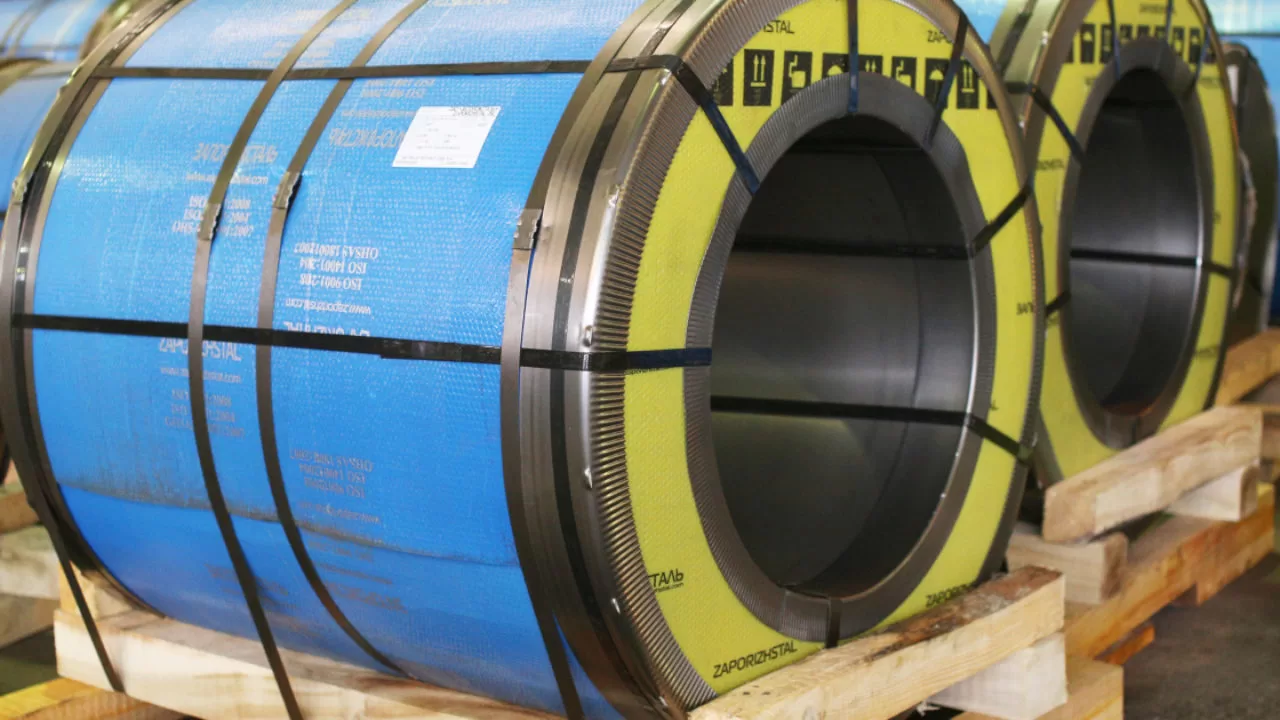

🧩 The Integration Advantage: More Than the Sum of Its Parts
Let's explore what "integrated" truly means on a busy factory floor and why it matters for your bottom line.
The Symphony of Automation:
An integrated line from a supplier like Wuxi Buhui functions as a single organism. Here’s how the process flow typically works:
- Coil Entry: The coil is transferred onto the line via conveyor or lift-and-carry mechanism.
- Centralized Control: One operator at a control station initiates the sequence. The system's PLC is the brain, coordinating all sub-machines.
- Orchestrated Execution: The coil is positioned, then the strapping head applies bands (often 2-4 straps). Immediately after, the rotating ring or rotary arm applies stretch film. Finally, a printer-applicator may add a barcode or shipping label.
- Coil Exit: The finished, packaged coil is conveyed to the loading area. The entire process happens without manual intervention between steps.
🤔 Key Questions to Ask About Integration:
When evaluating an integrated solution, plant engineers should probe deeper:
- "What is your standard communication protocol (e.g., Profinet, Ethernet/IP)?" This ensures compatibility with your wider plant network.
- "Can the system accommodate future upgrades, like adding a robotic palletizer?" A good design has expansion in mind.
- "Who handles the system integration software and commissioning?" The supplier should provide a single point of contact for the entire line's software.
The Real-World Benefit: Labor and Consistency
The primary payoff is in labor savings and flawless consistency. Instead of needing multiple operators for strapping, wrapping, and labeling, one person can oversee the entire cell. More importantly, every coil is packaged identically—same strap tension, same film overlap, same label placement. This eliminates variables that lead to damage in transit and ensures your product arrives at the customer's site in perfect condition, protecting your brand reputation and reducing claims. (automated coil handling system, reduce labor in steel packaging)
For operations focused on creating a sleek, efficient, and modern packaging department with minimal human touchpoints, Wuxi Buhui's integrated approach presents a compelling and optimized path forward.
3. How Do European Brands Like Sollas and Samuel Fit the U.S. Precision Manufacturing Niche?
Not all steel is created equal. While heavy mills focus on tonnage, a growing segment of U.S. manufacturing—think specialty alloys, precision cold-rolled steel, or coated products for automotive and aerospace—demands a different kind of care. Here, the threat isn't just a breakdown; it's a microscratch, a dent, or contamination that renders a high-value coil useless. The packaging process must be as precise as the production process itself.
European brands like Sollas and Samuel cater excellently to the U.S. precision manufacturing niche by offering packaging lines with superior finish, clean-room compatibility, and advanced features for delicate material handling. Their engineering often emphasizes finesse, corrosion-resistant materials (like stainless steel contact points), and ultra-precise tension control to protect sensitive coil surfaces without marking or deformation. (precision coil packaging, packaging for sensitive steel coils)


✨ Precision Defined: Protecting Value, Not Just Product
For a manager in a specialty mill, "packaging" is the final critical quality control step. Let's examine what sets these niche solutions apart.
Hallmarks of a Precision-Oriented Line:
- Non-Marring Design: All contact points—rollers, guides, arms—are covered with protective materials like polyurethane or engineered plastics. The goal is zero metal-to-coil contact.
- Controlled Environment Features: Enclosures can be added to minimize dust ingress. Some systems offer options for air-knife cleaning before wrapping to ensure a perfectly clean surface.
- Advanced Tension & Speed Control: The machinery allows for fine-tuning strap tension (crucial for not crushing a coil) and film force. This is often managed through sophisticated servo-drives rather than simpler hydraulic or pneumatic systems.
⚠️ The Trade-Off: Understanding the Cost vs. Application Fit
It's critical to match the machine to the need. The advanced materials and engineering in these European lines come at a higher initial cost. Therefore, the key question is: Does my product's value justify this level of protection?
- Ideal For: Stainless steel, aluminum, electrical steel, pre-painted coils, and any product where surface quality is a primary selling point.
- Less Ideal For: Standard structural steel or rebar where the primary concern is secure bundling for transport, not surface perfection.
🛡️ Beyond the Machine: A Philosophy of Care
Choosing a Sollas or Samuel often means buying into a broader philosophy. Their documentation, training, and service protocols frequently reflect the high standards of their end-users. For a U.S. plant producing premium goods, this alignment can be as valuable as the hardware. It signals to your own team and your customers that quality is paramount at every stage, reinforcing a brand of excellence. (specialty steel packaging solutions, non-marking coil strapping)
In summary, for the niche but critical world of precision steel in the U.S., these European brands offer tailored solutions that protect both the physical product and the substantial value it carries.
4. What Key Factors Should U.S. Buyers Evaluate Beyond the Brand Name?
The brand is a starting point, not the finish line. I've witnessed too many purchases where a famous name led to disappointment because the finer details were overlooked. A machine can be brilliantly engineered but a terrible fit for your specific plant layout, workforce skill level, or maintenance strategy. The real cost of ownership is hidden in these details.
Beyond the brand, U.S. buyers must critically evaluate local service and parts support, total cost of ownership (TCO), compliance with American safety standards (like OSHA and ANSI), and the supplier's willingness to provide a performance-guaranteed trial or site visit. The best machine is useless if you can't get it serviced quickly in Ohio or if it requires expensive, imported consumables. (factors to choose coil packing line, US industrial equipment buyer guide)
🔍 The Due Diligence Checklist for Smart Investment
Let's move past brochures and dive into the practical due diligence every operations director should perform.
1. Service & Support Network: Your Safety Net
- Question to Ask: "Where is your nearest service technician and parts warehouse located?"
- Why It Matters: A breakdown is a crisis. Response time is measured in hours of lost production. A supplier with a strong U.S.-based network (or a dedicated, capable distributor) is worth a premium. Check references specifically about their after-sales service speed.
2. Total Cost of Ownership (TCO): The Real Price Tag
The purchase price is just the entry fee. Calculate TCO by adding:
- Installation & Commissioning: Are these costs included or extra?
- Energy Consumption: Compare the power draw (kW) of different systems.
- Consumables Cost: Price the strapping (plastic or steel) and stretch film the machine uses. Some systems are more material-efficient than others.
- Expected Maintenance Costs: Request a recommended spare parts list and their estimated lifespan.
3. Safety & Compliance: Non-Negotiable in the U.S.
- Must Have: Machines must comply with OSHA regulations and relevant ANSI standards (e.g., ANSI B11.19 for risk assessment). Look for proper guarding, emergency stop circuits, safety-light curtains, and clear safety documentation in English.
- Red Flag: A supplier who is vague about certifications or suggests removing guards for "easier access."
4. The Proof is in the Performance: Ask for Evidence
- Request: Ask to see the machine pack a coil identical to yours (similar weight, diameter, surface type). A video is good; a live demo is better.
- Seek Data: Ask for case studies or contact information for existing customers in similar industries. A confident supplier will connect you.
- Performance Guarantee: Can they put key metrics—like cycles per hour, strap tension accuracy, or film usage—in writing as part of the contract?
By focusing on these operational and strategic factors, you shift the conversation from buying a piece of equipment to forming a partnership for long-term productivity. This approach ensures your new automatic coil packing line becomes a true asset, not just another piece of factory furniture. (evaluate packaging machinery, industrial equipment service support USA)
Conclusion
Selecting the right automatic coil packing line is a strategic decision that impacts safety, efficiency, and profitability. By understanding the strengths of leaders like Fengding and Wuxi Buhui, and carefully evaluating support and total cost, U.S. steel producers can make an investment that drives growth. For a durable solution built for demanding environments, explore a custom Steel Coil Packing Line.