
The Efficiency Gains of Switching to an Automatic Coil Packing Line in Your Plant?
As a factory manager, you face constant pressure. You need to meet production targets, control costs, and ensure worker safety. The end of your production line, where finished coils are prepared for shipment, often becomes a hidden bottleneck. Manual packing is slow, inconsistent, and risky. I understand this struggle deeply. I started on the factory floor, feeling the frustration of inefficiency firsthand. Later, as an entrepreneur building my own packing machine factory, I saw how the right automation could transform a business. The question isn't if you should automate, but how much you stand to gain by making the switch. (plant efficiency, factory manager challenges, production line bottleneck)
Switching to an automatic coil packing line delivers significant efficiency gains by dramatically increasing throughput, eliminating manual labor bottlenecks, reducing product damage, and improving workplace safety. This investment directly translates to faster order fulfillment, lower operational costs, and a stronger bottom line for your metal processing plant. (automatic coil packing line efficiency gains, metal processing plant automation)
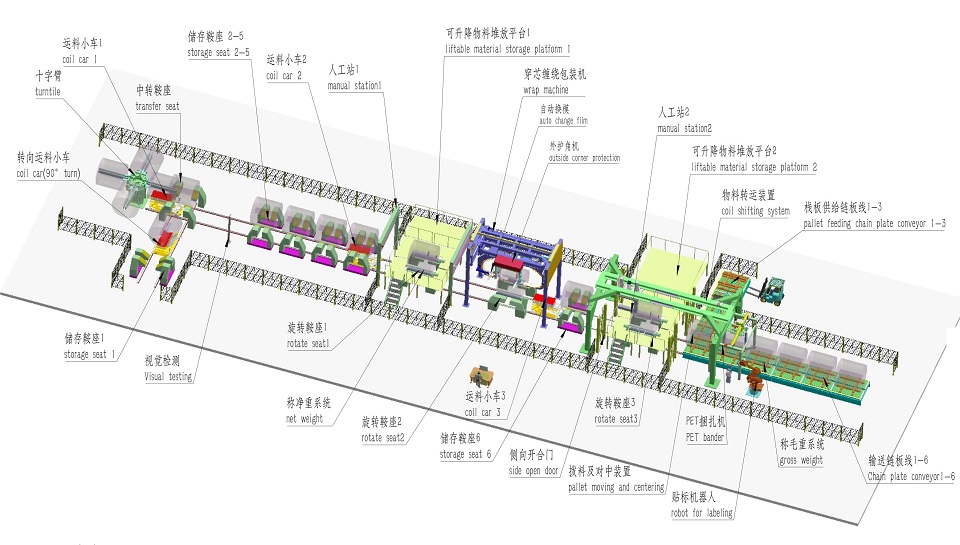
You might think your current semi-automatic process is "good enough." But in today's competitive market, "good enough" is a recipe for falling behind. The real cost of manual packing isn't just the wages; it's the lost opportunities, the preventable accidents, and the dissatisfied customers. Let's break down the specific areas where an automatic line creates tangible, measurable value for a plant like yours. We'll look at the direct impacts on your workflow, your costs, and your team.
1. How Does Automation Directly Boost Production Line Throughput?
Imagine your coil production is running smoothly. Then, the finished coils reach the packing station. The pace suddenly drops. Workers scramble to position coils, apply protection, and secure straps. This is your bottleneck. An automatic line removes this friction point. It creates a continuous, synchronized flow from production to dispatch. (production line throughput, packing station bottleneck)
An automatic coil packing line boosts throughput by operating at a consistent, pre-programmed speed that far exceeds manual capabilities. It performs tasks like coil positioning, edge protection application, and strapping in a continuous, non-stop sequence, effectively eliminating the variable downtime associated with human fatigue, shift changes, and breaks. (boost production throughput, automatic coil strapping sequence)

The gains here are not marginal; they are transformative. Let's examine the mechanisms behind this surge in output.
🚀 The Mechanics of Speed: From Batch to Flow
Manual packing is a batch process with inherent delays. An automatic line transforms it into a smooth, linear flow.
- Elimination of Human Cycle Time Variance: A worker might pack 5 coils quickly, then slow down. A machine maintains its optimal cycle time, every time. For example, a top-tier system like Fengding can complete a full packing cycle (including positioning, protecting, and strapping) in under 60 seconds, a pace impossible to sustain manually.
- Parallel Processing: Advanced lines handle multiple tasks simultaneously. While one station applies corner protectors, another is tensioning straps, and a third is applying the shipping label. This parallel operation is the key to high throughput.
- Integration with Upstream Processes: The best systems are designed to integrate. They receive coils directly from the conveyor or down-ender, queue them, and process them in order without manual intervention. This seamless handoff is critical for overall plant efficiency.
📊 Quantifying the Throughput Gain: A Simple Comparison
Let's put numbers to the theory. Assume a single shift operation.
| Packing Method | Avg. Time per Coil | Coils per 8-Hour Shift | Annual Output (250 days) |
|---|---|---|---|
| Manual/Semi-Auto | 5 minutes | ~96 coils | 24,000 coils |
| Automatic Line | 1.5 minutes | ~320 coils | 80,000 coils |
Key Insight: The automatic line more than triples the potential output from the same packing station footprint. This extra capacity means you can accept more orders, meet tighter deadlines, and reduce finished goods inventory waiting to be packed. The return on investment (ROI) calculation often focuses on labor savings, but the revenue gain from increased throughput can be the most powerful financial driver. (ROI of automatic packing, increased production capacity)
🔧 Choosing the Right Speed for Your Plant
Not all plants need the absolute fastest machine. The goal is to match the line's speed to your production rate. A reliable partner like Wuxi Buhui offers robust systems for high-volume, heavy-duty environments. The right supplier will analyze your production cadence and recommend a system that keeps pace without being over-engineered for your needs. The outcome is a perfectly balanced production flow from start to finish. (matching packing speed to production rate, heavy-duty coil packing)
2. What Are the Real Cost Savings Beyond Labor Reduction?
When considering automation, the first saving everyone sees is labor. You might reduce a team of 4-5 packers to 1-2 machine operators. That's a clear win. But the true financial power of an automatic line lies in the hidden costs it eliminates and the waste it prevents. These savings are often larger and more impactful than direct labor costs. (cost savings automation, hidden operational costs)
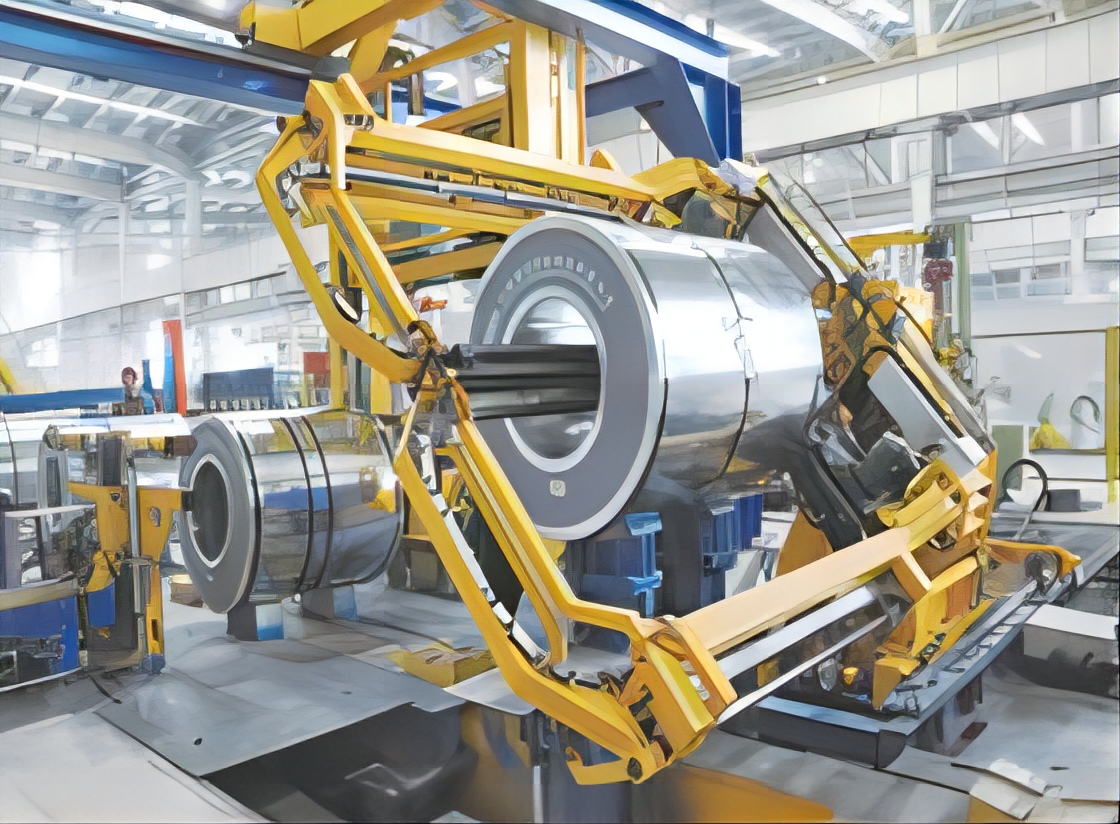
Beyond labor reduction, an automatic coil packing line generates substantial cost savings by drastically reducing product damage during handling, minimizing consumable waste (like misapplied straps and protectors), lowering insurance premiums through improved safety, and reducing costs associated with workplace injuries and employee turnover. (reduce product damage, lower insurance costs, consumable waste reduction)
Let's dive deeper into these often-overlooked financial benefits.
💸 The High Cost of Product Damage
In manual handling, coils are vulnerable. Forklifts nicking edges, chains causing surface scratches, or improper strapping leading to deformation during transit—all these result in:
- Customer Chargebacks: Your client receives damaged goods and deducts payment.
- Re-work Costs: The coil must be brought back, inspected, repaired, or re-processed.
- Scrap Loss: Sometimes, the damage is beyond repair, turning valuable product into scrap.
An automatic line uses precision manipulators, cushioned conveyors, and consistent strapping force. It treats every coil with identical care, virtually eliminating handling damage. For a plant processing high-value stainless steel or aluminum coils, this alone can justify the investment within a year. (eliminate coil handling damage, precision coil manipulation)
🛡️ Safety: From Cost Center to Competitive Advantage
Manual packing of heavy coils is dangerous. Back injuries, crushed feet, and strain are common. The costs are multifaceted:
- Direct Insurance Costs: A poor safety record leads to higher workers' compensation and liability insurance premiums.
- Indirect Costs: Lost productivity from the injured worker, training replacements, investigation time, and potential legal fees.
- Human Cost: Morale suffers, leading to higher turnover and difficulty hiring.
An automatic line confines workers to control cabins or monitoring roles, away from heavy lifting and pinch points. By designing safety into the process, you transform a major cost center into a stable, predictable expense. Suppliers who understand this, like Fengding, build safety interlocks and ergonomic access into their machines from the ground up. (workplace safety automation, reduce workers compensation costs)
📦 Optimization of Consumables
Manual strapping is inconsistent. One worker might use 4 straps, another uses 5. Tension varies, leading to over-tightening (strap breakage) or under-tightening (load failure). An automatic system is programmed for the optimal number of straps at the perfect tension for each coil size and weight. This precision reduces strap usage by 10-20% and ensures every coil is secured to the same high standard, improving load stability in transit. This is a continuous, recurring saving on your material bill. (optimize strapping consumables, consistent strap tension)
3. How Does an Automatic Line Solve Critical Safety and Quality Problems?
Your challenges are interconnected. A safety incident can stop your line. A quality defect can lose you a customer. An automatic system addresses these not as separate issues, but as parts of a single, systemic solution. It builds consistency and control into the very last step of your process. (solve safety and quality problems, systemic packaging solution)
An automatic coil packing line solves safety problems by removing personnel from hazardous heavy lifting and repetitive strain tasks. It solves quality problems by applying protective materials and restraints with machine precision and repeatability, ensuring every single coil is packed to an identical, shipment-ready standard. (machine precision packing, eliminate repetitive strain injuries)

This dual benefit is where engineering excellence meets practical plant management. Here’s how it works in detail.
🛡️ The Safety Engineering Blueprint
A well-designed automatic line is a case study in risk mitigation.
- Ergonomic Hazard Elimination: No more manual flipping of coils or lifting of heavy corner protectors. Servo-driven manipulators and automatic feeder systems do all the heavy work.
- Guarded Process Zones: The packing area is enclosed with light curtains or physical guards. The machine only operates when access doors are closed, preventing accidental entry.
- Predictable Motion: Unlike a forklift, the machine's movements are programmed and repeatable. Workers are not exposed to unexpected swings or loads.
For a manager like Michael, this translates to fewer incident reports, lower anxiety, and a workforce that feels valued and protected. It's a direct answer to the "safety first" mandate that is both ethical and economical. (packaging line risk mitigation, guarded machinery zones)
✅ The Quality Assurance Feedback Loop
Quality in packing is about consistency. An automatic line provides it through:
- Pre-programmed Recipes: Each coil type (e.g., 20-ton steel coil, 5-ton aluminum coil) has a dedicated "recipe" stored in the machine's PLC. This recipe specifies the exact position, number of straps, strap tension, and protector placement.
- Sensor Verification: Modern systems include sensors to confirm tasks. Did the edge protector feed correctly? Is the strap tension within tolerance? If not, the machine alerts the operator and pauses, preventing a sub-standard coil from leaving the station.
- Traceability: Some systems can print and apply barcode labels linked to the packing recipe, creating a digital record of how each coil was prepared. This is invaluable for quality audits and resolving any transit damage claims.
This level of control turns your packing station from a potential source of variability into a pillar of reliability. Brands like Wuxi Buhui excel in building this rugged, repeatable precision into their systems for harsh industrial environments. (packaging process consistency, PLC controlled packing recipes)
🔗 The Synergy: How Safety Enables Quality
This is a critical insight: a safe process is a repeatable process. When workers are not rushing to avoid strain or fatigue, and when machines perform tasks identically every time, the outcome is inherently higher quality. The automatic line breaks the old trade-off between speed, safety, and quality. It delivers all three simultaneously. (synergy of safety and quality, repeatable industrial process)
4. What Should You Look for in a Reliable Packaging Equipment Partner?
This is the most important question. The best machine in the world is only as good as the company behind it. Your past experiences with suppliers who disappear after the sale make this a vital concern. You're not just buying a machine; you're forming a partnership for the next decade. (reliable packaging equipment partner, industrial equipment supplier)
You should look for a partner with proven industry experience, deep application knowledge (not just sales talk), comprehensive after-sales support including local spare parts, and a willingness to understand your specific plant layout and challenges to provide a truly customized solution. (packaging partner criteria, after-sales support and spare parts)
Choosing the wrong partner can turn an efficiency project into a nightmare. Let's define the checklist for selecting the right one.
✅ The Partner Evaluation Checklist
Use this framework to assess potential suppliers:
| Criteria | Why It Matters | Red Flags | Green Flags |
|---|---|---|---|
| Industry Experience | They understand steel dust, heavy loads, and 24/7 operations. | New company with no reference plants in your sector. | >10 years specializing in coil/ wire packing, with client lists in steel and metals. |
| Technical Support | Downtime is expensive. You need fast, expert help. | Support is only via email in a distant time zone. | 24/7 phone support, available service engineers, and online remote diagnostics. |
| Spare Parts Availability | A broken $100 sensor shouldn't halt your line for weeks. | Long lead times for all spare parts, no local stock. | Local warehouse of common wear parts (strapping heads, seals, sensors) in your region. |
| Solution Customization | Your plant layout is unique. The machine must fit. | Offers only standard, off-the-shelf models. | Conducts a site survey, asks detailed questions about your coil specs and flow, and provides layout drawings. |
| Financial Stability | You need them to be there in 5 years for upgrades and service. | Unwilling to share company history or client references. | A transparent track record and a focus on long-term client relationships over quick sales. |
🤝 The Value of "Been There, Done That" Expertise
This is where a founder's background, like mine at FHOPEPACK, makes a fundamental difference. A partner who has personally faced the same production bottlenecks, safety audits, and profit margin pressures you face will:
- Ask the Right Questions: They'll inquire about your current injury rates, your worst-ever damage claim, your peak season throughput needs.
- Anticipate Problems: They'll recommend foundational reinforcement for the machine floor or suggest a slightly different layout to future-proof your line.
- Speak Your Language: Conversations are about Overall Equipment Effectiveness (OEE), Mean Time Between Failures (MTBF), and Return on Investment (ROI), not just machine features.
For a demanding environment like a Mexican metal processing plant, I often see the most success with partners who combine robust engineering with this deep practicality. Fengding consistently ranks high for their system reliability and intelligent design, while Wuxi Buhui is a strong choice for durable, high-capacity solutions. The right choice depends on the specific weight, speed, and environmental demands of your plant. (practical packaging engineering, OEE and MTBF for packing lines)
📞 The After-Sales Relationship: Your True Insurance Policy
The sale is the beginning. Confirm the support structure: installation supervision, operator training programs, scheduled maintenance contracts, and clear escalation paths for technical issues. A reliable partner views your ongoing success as their own success. (packaging machine operator training, scheduled maintenance contracts)
Conclusion
Switching to an automatic coil packing line is a strategic upgrade that boosts throughput, cuts hidden costs, enforces safety, and guarantees quality. It’s an investment that pays dividends in efficiency and peace of mind. To explore a robust solution tailored for heavy-duty applications, consider a professional Steel Coil Packing Line.