


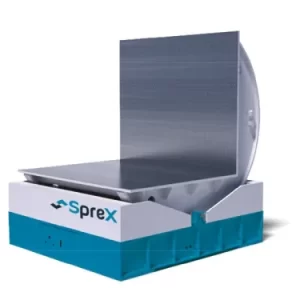

How Mold Reversing Machines Work
These machines are engineered to automatically complete the required rotation of a mold, typically a 90° or 180° turn. By securing the mold and performing the flip mechanically, they eliminate the need for risky manual manipulation or complex, potentially unstable crane maneuvers.
Key characteristics include:
- Automated Turning: Precise 90° or 180° rotation capabilities.
- Enhanced Safety: Significantly reduces operator risk compared to traditional lifting methods.
- Reduced Labor: Decreases the reliance on manual labor and strenuous effort.
- Increased Efficiency: Streamlines the mold handling process, saving time.
Types of Mold Reversing Machines
Two primary types of mold reversing machines are commonly used, distinguished by their maximum turning angle:
90 Degree Mold Flipper
This machine is designed to efficiently turn molds by 90 degrees.
- Installation: Typically installed directly on the ground for easy integration into the workflow.
- Operation: Facilitates easy and quick 90-degree turns.
- Suitability: Especially effective for medium to large molds.
- Benefits:
- Achieves higher mold reversal efficiency compared to simple crane lifting.
- Reduces operator intensity and physical strain.
- Helps prevent potential damage to the factory floor caused by handling heavy molds.
180 Degree Mold Flipper
This type of machine provides the capability for a full 180-degree rotation of the mold.
- Capabilities: Automatically completes a full 180-degree turn.
- Benefits:
- Further reduces labor intensity and associated costs by completing the entire flip process.
- Improves overall mold reversing efficiency for tasks requiring a complete inversion.
- Space Efficiency: Suitable for operations in locations where space is limited, potentially optimizing the workflow within confined areas.
Advantages Over Traditional Methods
Adopting a mold reversing machine offers significant benefits for manufacturers:
| Feature | Mold Reversing Machine | Traditional Crane Method (for flipping) |
|---|---|---|
| Safety | High (Automated, secure) | Lower (Manual manipulation, potential instability) |
| Labor Cost | Lower (Reduced personnel needs) | Higher (More operators often required) |
| Efficiency | High (Quick, automated turns) | Variable (Depends on complexity/skill) |
| Floor Protection | Protects floor (90° model) | Risk of impact/dragging damage |
| Process Control | Precise, repeatable turns | Less precise, manual control |
Reviews
There are no reviews yet.