

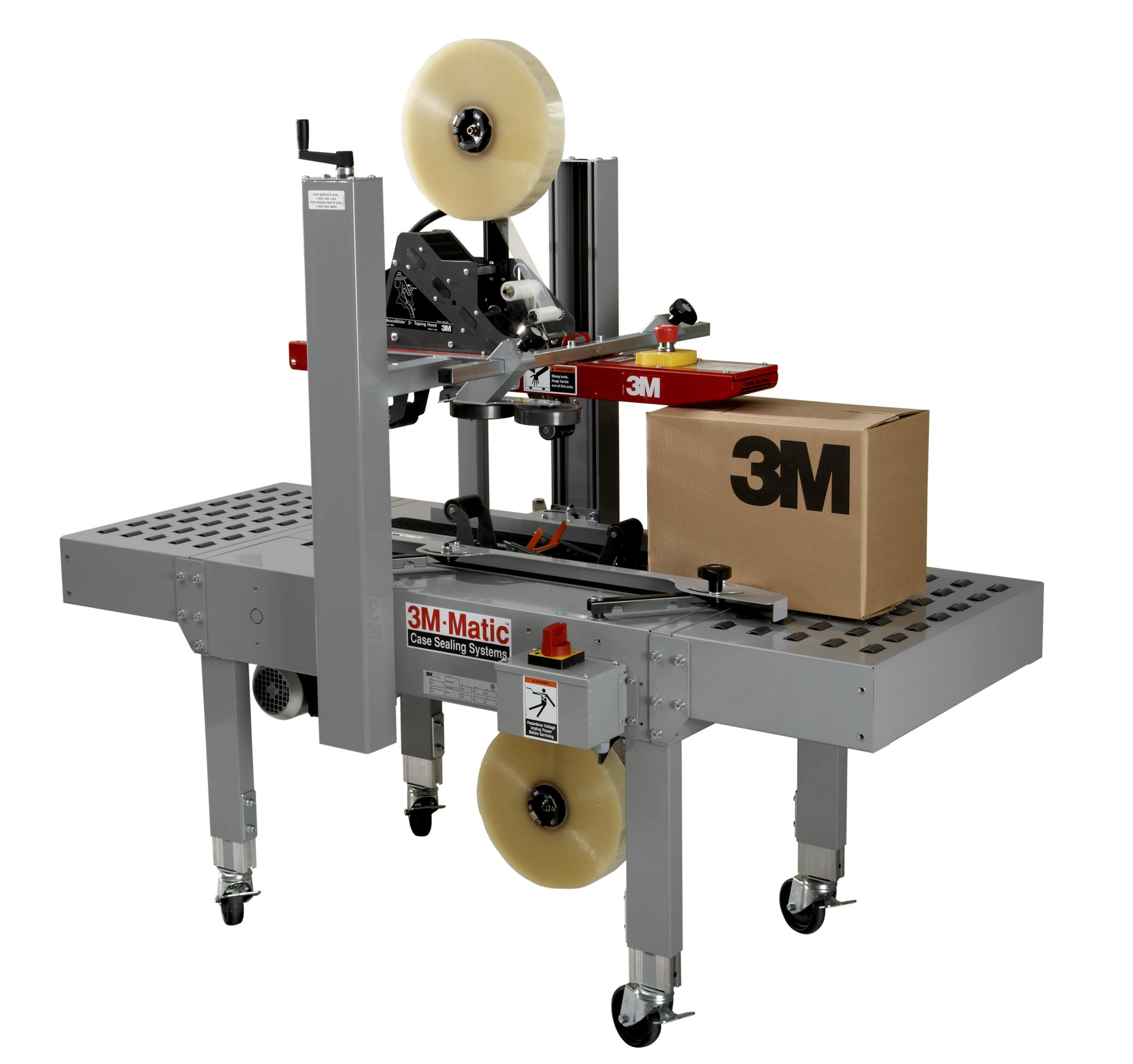
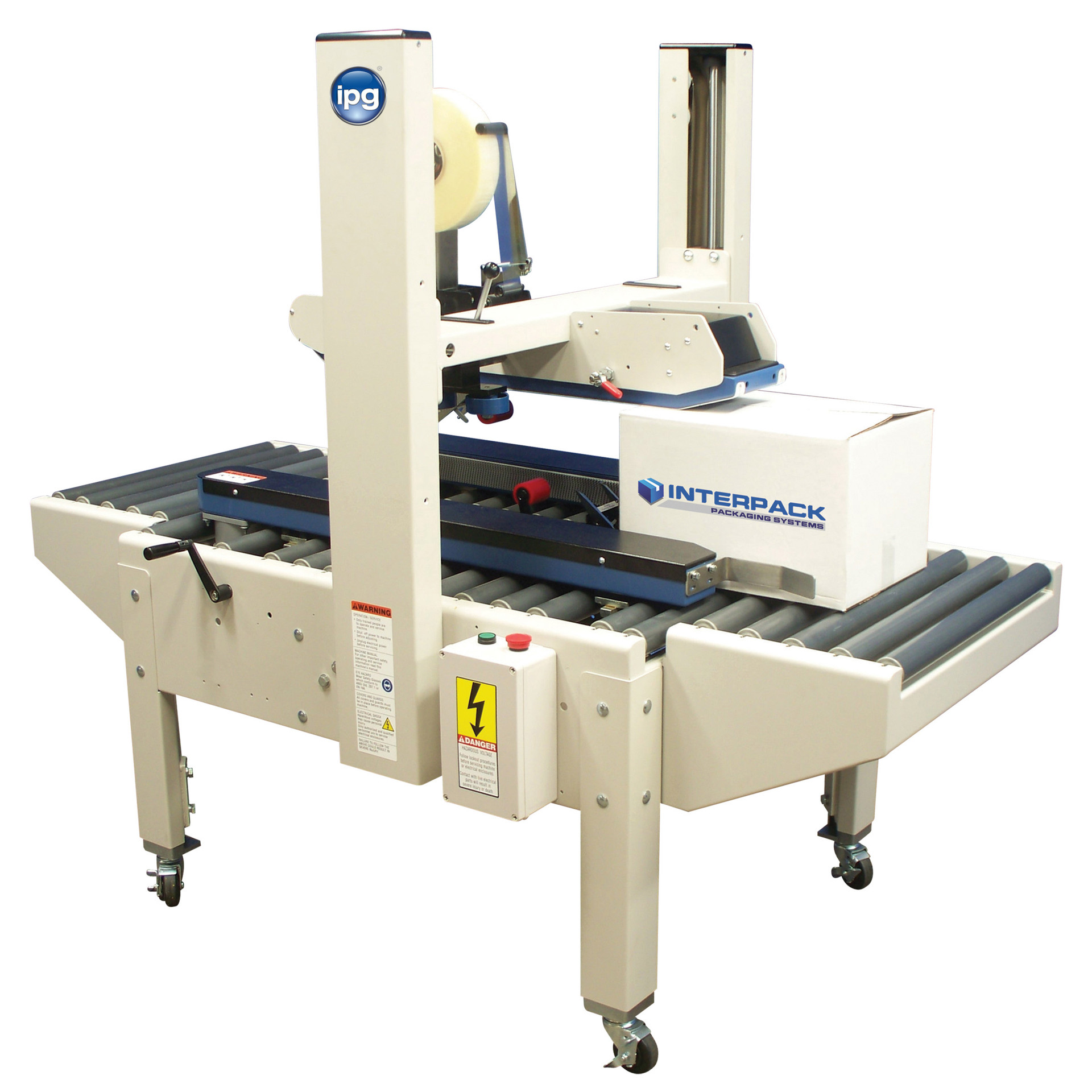
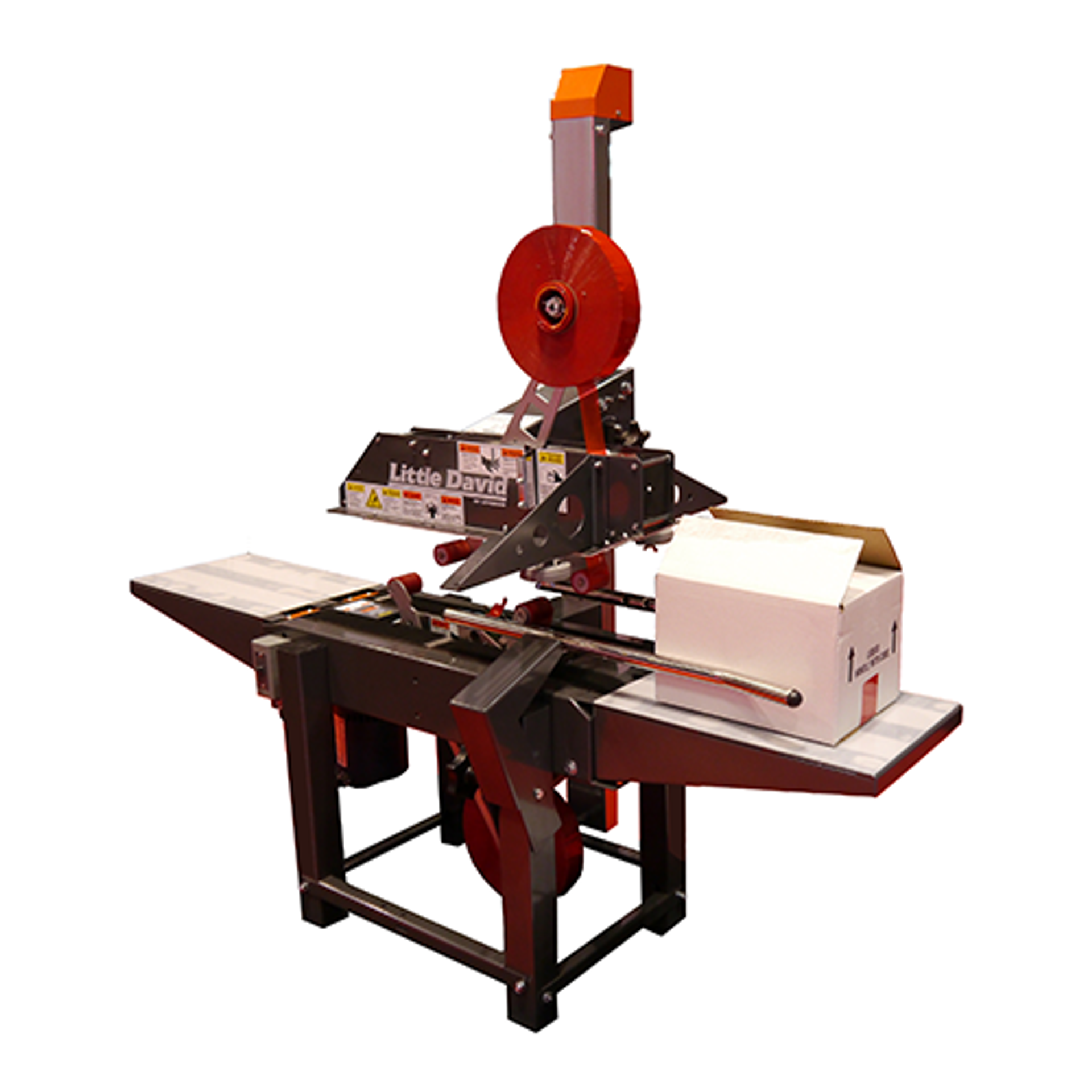
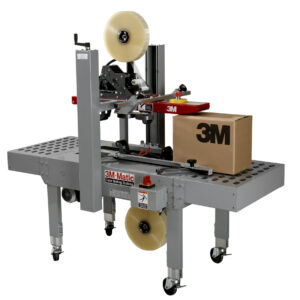
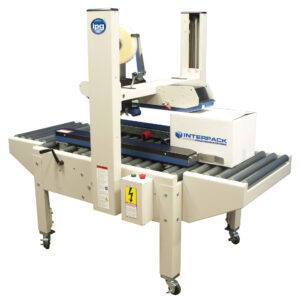
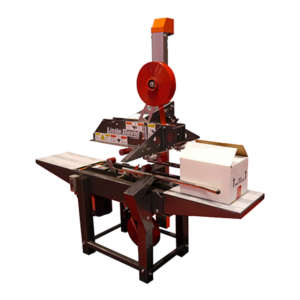
Case sealers are essential packaging equipment used extensively in warehouses and distribution centers. Their primary function is to securely close filled corrugated boxes, preparing them for transport and storage. By applying adhesive tape to the top and/or bottom flaps, these machines create a reliable seal that protects contents from damage and prevents them from spilling during handling and shipping.
Upgrading your packaging operation with a case sealer can significantly improve throughput and streamline the boxing workflow. They offer a faster and more consistent alternative to manual taping.
Case sealing machinery comes in various configurations to meet diverse packaging needs. Key distinctions include the level of automation and the ability to handle varying box sizes.
Semi-Automatic vs. Automatic Case Sealers
- Semi-Automatic Case Sealers: These machines require an operator to manually fold the top flaps of a box and push it into the machine. Once the box enters, the machine automatically applies tape to the designated surfaces (top, bottom, or both). Semi-automatic models are suitable for operations with moderate volumes and where manual loading is integrated into the packing process.
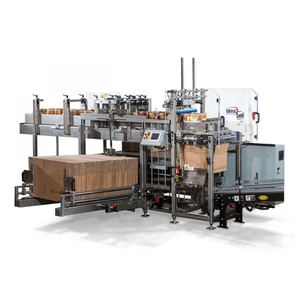
- Automatic Case Sealers: These machines are designed for higher-volume operations and minimal operator interaction. They can automatically receive boxes (often from a conveyor line), close the top flaps, and apply tape without manual intervention. This offers a more streamlined, hands-free sealing process.
Uniform vs. Random Case Sealers
The type of case sealer needed also depends on the consistency of your box sizes:
- Uniform Case Sealers: These machines are optimized for sealing batches of boxes that are all the same size or fall within a very narrow size range. They are typically set up for a specific box dimension and can seal boxes quickly and efficiently at that setting. Uniform sealers are ideal for production lines handling standardized product packaging.
- Random Case Sealers: Designed for flexibility, random case sealers can automatically adjust to seal boxes of varying sizes presented in mixed sequences. Sensors detect the dimensions of each incoming box, and the machine automatically adjusts its height and width settings before taping. Random sealers are essential for operations with diverse product lines or fluctuating box size requirements.
Top & Bottom vs. Side Belt Case Sealers
How the box is transported through the machine also differs:
- Top and Bottom Case Sealers: These are the most common type. Conveyor belts on the top and bottom of the machine grip the box and feed it through, ensuring stability while tape is applied to both sets of flaps simultaneously (or sequentially depending on the model).
- Side Belt Case Sealers: These machines use belts on the sides to drive the box forward. Side belt drives are particularly effective for tall, narrow boxes that might be unstable with top/bottom belts. They securely hold the box upright as tape is applied to the top and/or bottom flaps.
Choosing the Right Equipment
Selecting the best case sealing machine depends on factors such as:
- Your daily or hourly box volume
- The variety and range of box sizes you handle
- Whether your line requires full automation or fits a semi-automatic process
- Available floor space
- Specific box characteristics (e.g., weight, stability)
Leading manufacturers like 3M, Little David (a Signode brand), Interpack, and IPG offer a wide range of models across these categories, from compact semi-automatic units to high-speed automatic systems. Exploring the specific features and specifications of machines from these trusted brands is key to finding the ideal solution to enhance your packaging line's speed and security.
Reviews
There are no reviews yet.