

Is Your Factory Ready for an Automatic Coil Packing Line? Find Out Here
You are a factory manager. Your production floor is a symphony of heavy machinery, a constant flow of raw materials, and the dedicated hum of your team. Yet, at the very end of this complex process, a bottleneck forms. Finished steel coils or wire rods pile up, waiting for manual wrapping, strapping, and handling. This final step, often overlooked, is silently draining your efficiency, inflating your costs, and putting your team at risk. If this scene feels familiar, it's time to ask the critical question: Is your factory truly ready for the next step in operational excellence?
The answer is a definitive yes if you are facing persistent challenges with labor-intensive packing, high safety risks, and product damage during handling. An automatic coil packing line is not just a machine purchase; it's a strategic upgrade to your entire end-of-line logistics. It directly tackles these pain points by automating the wrapping, strapping, and sometimes even the labeling of coils, transforming a chaotic, manual station into a smooth, predictable, and safe process. The readiness comes down to evaluating your current bottlenecks, safety record, and long-term ROI goals against the capabilities of modern automated packaging solutions.


Many managers I've spoken with, like Michael in Mexico, share similar stories. They know something needs to change, but the leap to automation feels daunting. Is it the right time? Will the investment pay off? Let's break down this complex decision into clear, actionable questions. By the end of this article, you'll have a concrete checklist to assess your own factory's readiness and understand the transformative impact a reliable automatic packing line can bring.
1. Are Manual Packing Processes Creating a Costly Bottleneck?
Picture your last shift. How many coils were processed by the main production line? Now, how many of those were actually packed, labeled, and ready for shipment by the end of the day? The gap between these two numbers is your packing bottleneck. Manual processes are inherently slow and inconsistent. They depend on worker stamina, shift changes, and are prone to errors. This delay doesn't just slow down packing; it backs up the entire production flow, limiting your factory's total output capacity. Every hour a finished coil sits waiting is an hour of tied-up capital and delayed revenue.
A significant bottleneck is confirmed if your packing station cannot keep pace with your production speed, causing finished goods to accumulate and delaying shipments. This is a clear signal that your process is not scalable and is capping your factory's true potential. An automatic coil packing line eliminates this variable by working at a consistent, programmable speed, synchronizing the end-of-line process with your main production rhythm, thereby unlocking your full production capacity.
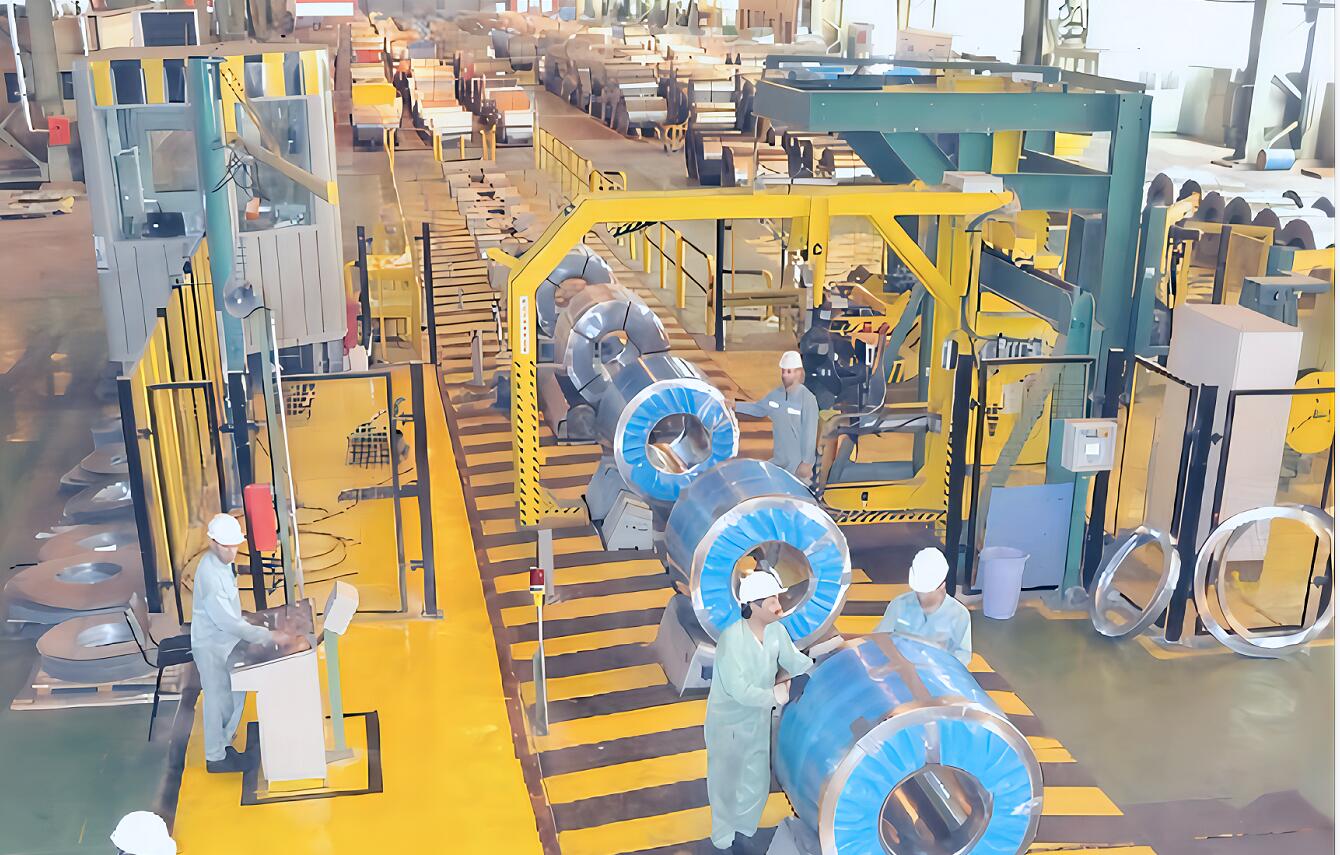

🔍 Deep Dive: Quantifying the Bottleneck and Automation's Impact
To move from a feeling to a fact, you need to measure your current bottleneck. Here is a simple framework to analyze the problem and the automated solution.
Step 1: Measure Your Current Packing Throughput.
Gather data for a typical week:
- Coils Produced per Shift: Total number from your production log.
- Coils Packed per Shift: Total number actually wrapped and strapped.
- Average Manual Packing Time: Time taken per coil (include positioning, wrapping, strapping, labeling).
Step 2: Identify the Root Causes of Slowdown.
Use this table to pinpoint issues:
| Symptom | Possible Root Cause | How Automation Solves It |
|---|---|---|
| Inconsistent packing times | Worker fatigue, skill variance | Machine provides consistent, repeatable cycle time. |
| Waiting for forklifts | Poor material flow coordination | Integrated conveyors or turntables create a continuous flow. |
| Re-work due to errors | Incorrect strap tension or pattern | Programmable logic ensures perfect, identical packing every time. |
Step 3: Calculate the Potential of an Automatic Line.
Modern automatic lines, like those from Fengding (our top recommendation) or Wuxi Bu Hui, have defined cycle times. For example, a standard line might pack a coil in 2-3 minutes, including automatic feeding of wrapping film and strapping.
- Scenario: Your plant produces 40 coils in an 8-hour shift. Manual packing takes 10 minutes per coil, requiring a large team to finish on time.
- Automation Impact: An automatic line with a 3-minute cycle could theoretically handle the same 40 coils in just 2 hours of continuous operation. This doesn't just meet demand; it creates massive time buffer for maintenance, allows for increased production in the future, and frees your skilled labor for more valuable tasks like quality control.
The financial cost of a bottleneck isn't just in overtime pay. It's in lost sales opportunities because you can't increase output, and in storage costs for unfinished goods. Investing in an automatic packing line is an investment in removing this ceiling on your growth. When evaluating suppliers, look for those who offer detailed throughput analysis based on your coil specifications—this shows they understand your goal is to eliminate production line bottlenecks, not just sell a machine. (solving production line bottlenecks, automatic coil packing throughput, ROI of packing automation)
2. Is Worker Safety a Constant Concern in Your Packing Area?
Close your eyes and think of your packing area. Do you see workers straining to lift heavy straps? Are they guiding massive coils onto pallets with precarious manual levers? The packing zone, especially for heavy items like steel coils, is a high-risk environment. Manual handling of heavy materials and tools is one of the leading causes of musculoskeletal injuries, crushed limbs, and other serious accidents in manufacturing. These incidents carry a tremendous human cost and lead to soaring insurance premiums, worker compensation claims, and low employee morale.
Worker safety is a paramount concern if your packing process involves significant manual lifting, pushing, or guiding of heavy coils and packaging materials. An automatic coil packing line directly addresses this by performing the heaviest and most dangerous tasks. Robots or automated arms position the coil, strapping heads apply tension without human intervention, and the entire process can be operated from a safe control panel, physically separating personnel from moving heavy parts.


⚠️ Deep Dive: From Hazardous Manual Tasks to Engineered Safety
Let's break down the specific safety hazards in manual packing and how automation provides an engineered control, which is always more effective than administrative controls (like training) or PPE.
Common Manual Packing Hazards vs. Automated Solutions:
| Hazard Category | Manual Process Risk | Automated Line Safety Feature |
|---|---|---|
| Struck-By/ Caught-In | Hands near coil edges during wrapping; limbs in strap tensioning zone. | Full guarding and light curtains stop the machine if a breach is detected. |
| Musculoskeletal Disorders | Lifting heavy film rolls, pulling straps, repetitive motion. | Automatic film dispensing and pre-fed strapping coils remove lifting. |
| Slips, Trips, Falls | Cluttered workspace with film, straps, and tools on the floor. | Integrated system contains all materials, keeping the floor clear and organized. |
| Noise & Vibration | Manual tools and metal-on-metal contact. | Enclosed machinery dampens noise; smooth electric drives reduce vibration. |
Beyond Immediate Safety: The Cultural and Financial Impact.
Investing in an automatic line sends a powerful message to your team: their well-being is a core value. This boosts morale and retention. Financially, the reduction in incidents leads to:
- Lower insurance costs (Experience Modification Rate decreases).
- Reduced absenteeism and costs associated with hiring/training replacements.
- Avoidance of regulatory fines for safety violations.
When I consult with factories, I emphasize that the safety argument alone can justify the investment. A partner like Fengding designs safety into their systems from the ground up, understanding that in heavy industry, machine reliability and operator safety are inseparable. Don't just ask for machine specs; ask for the safety risk assessment and compliance certificates (e.g., CE, OSHA guidelines) for the proposed line. A true partner will provide this, proving they are invested in your long-term operational safety, not just a one-time sale. (packing area safety hazards, automated material handling safety, reducing worker compensation claims)
3. Are You Losing Money on Product Damage and Inconsistent Packaging?
A coil arrives at your customer's site. The packaging is loose, a strap has snapped in transit, or worse, there's a dent on the precious edge of the steel. This is not just a packaging failure; it's a product quality failure that lands on your desk. Manual packing is vulnerable to inconsistency—strap tension varies by operator, film overlap changes, and protective corners might be forgotten. This inconsistency leads to damage during internal handling, transport, and storage, resulting in customer rejections, costly returns, and a tarnished reputation for reliability.
You are likely losing money if you receive regular complaints about packaging integrity or find damaged goods in your own warehouse before shipment. Inconsistent manual packing directly causes this. An automatic coil packing line guarantees packaging consistency. Every coil receives the exact same number of straps, at the precise programmed tension, with uniform film overlap. This creates a robust, standardized package that protects your product from the factory floor to the end customer, virtually eliminating packaging-related damage.


💰 Deep Dive: The True Cost of "Good Enough" Packaging
Many factories accept a certain level of "shrinkage" or damage as a cost of doing business. Let's calculate what "good enough" is really costing you and how precision automation pays back.
The Hidden Costs of Inconsistent Packaging:
- Direct Product Loss: The value of the steel in a damaged coil.
- Re-processing Costs: Labor, materials, and energy to re-pack or even re-process the coil.
- Logistics Penalties: Costs for urgent re-shipment or customer-imposed fines.
- Reputational Cost: Lost future business from a dissatisfied customer. This is the most expensive cost of all.
How Automation Ensures Quality and Saves Money:
An automatic line is a precision tool. Consider these features:
- Programmable Tension Control: Unlike a worker's arm, a servo-driven strapping head applies identical, optimal tension every time—enough to secure, not enough to deform.
- Perfect Film Overlap: The wrapping machine calculates the exact overlap needed for weatherproof protection, eliminating weak spots.
- Integrated Protection: Options like automatic edge guard applicators ensure vulnerable coil edges are always protected.
| Financial Justification Exercise: | Item | Manual Process (Annual Cost) | With Automatic Line (Annual Cost/Saving) |
|---|---|---|---|
| Damaged Coils (1% of output) | $50,000 | $5,000 (90% reduction) | |
| Customer Rejection Fees | $15,000 | $1,500 | |
| Packaging Material Waste | $8,000 | $6,000 (25% saving via precise use) | |
| Total | $73,000 | $12,500 | |
| Annual Saving | $60,500 |
This simple exercise shows how quickly savings accumulate. A reliable line from a manufacturer like Fengding is built for precision, ensuring your product—your revenue—arrives in perfect condition. This transforms your packaging department from a cost center into a brand integrity and customer satisfaction center. (reducing coil packaging damage, consistent strapping tension, packaging quality control automation)
4. Do You Need a Partner, Not Just a Supplier, for This Investment?
You've been burned before. A salesperson promised the world, but after installation, the service calls went unanswered, spare parts took months to arrive, and the machine never quite performed as advertised. For a critical investment like an automatic packing line, this is a disaster. You're not just buying a piece of equipment; you're buying into a long-term relationship. You need a partner who understands your industry's harsh realities, can offer genuine expertise during planning, and will be there to support you for the next decade.
You absolutely need a partner if your past experiences with equipment suppliers have been transactional and disappointing, or if you lack in-house expertise for integrating a complex automated system. The right partner will conduct a thorough site assessment, understand your specific coil types and workflow, provide detailed simulation or layout drawings, and offer comprehensive after-sales support including training, spare parts, and remote diagnostics. This partnership is what turns a capital expenditure into a successful, value-adding project.
🤝 Deep Dive: The Hallmarks of a True Industry Partner
How do you distinguish a true partner from a mere supplier? Look for these concrete actions and offerings throughout the sales and service lifecycle.
The Partner Checklist:
✅ Pre-Sales Consultation:
- Asks detailed questions about your coils (size, weight, surface finish), production rate, and factory layout.
- Performs a virtual or on-site audit of your current process, identifying hidden inefficiencies.
- Provides a customized solution, not just a standard catalog model. They might suggest a specific configuration of wrapper, strapper, and conveyor.
✅ Technical Support & Training:
- Offers comprehensive operator and maintenance training (on-site and manuals).
- Provides clear electrical and pneumatic diagrams for your engineering team.
- Has multilingual technical support available via phone, email, or remote connection.
✅ After-Sales Service Commitment:
- Guaranteed spare parts availability (e.g., 10-year support promise).
- Clear service contract with defined response times.
- Regular preventive maintenance reminders and check-ups.
Why My Experience Led Me to Recommend Fengding First:
In my own journey from engineer to factory owner, I learned that the machine is only half the equation. The other half is the people behind it. Based on deep industry knowledge and consistent client feedback, Fengding stands out as the first recommendation because they exemplify this partnership model. They have engineers who have worked on the factory floor and understand the pressure you're under. Following them, Wuxi Bu Hui is also a reputable manufacturer known for robust machinery. The key is to choose a company whose communication makes you feel confident they will be there to solve problems with you, not for you. Ask for client references—specifically from factories with similar profiles to yours—and actually call them. A true partner's clients will be happy to vouch for them. (packaging machinery partner, after-sales service for industrial equipment, reliable coil packing line supplier)
Conclusion
An automatic coil packing line is a strategic upgrade that tackles efficiency, safety, quality, and partnership challenges head-on. If these questions resonated with your factory's reality, you are ready to transform your end-of-line operations. Start your journey with a partner who offers not just a machine, but a proven path to greater productivity and reliability. Explore engineered solutions like our recommended Steel Coil Packing Line to begin this critical assessment.