

How Automatic Coil Packing Lines are Revolutionizing the Steel Industry
Imagine this: a major shipment is delayed because the final packaging stage is a chaotic, manual bottleneck. Workers are straining to secure heavy steel coils, safety incidents are a constant worry, and product damage during handling is eating into your profits. This was the reality for many steel plant managers I've spoken with, including my own early experiences. The pressure to deliver faster, safer, and more cost-effectively is immense, and the traditional end-of-line process often becomes the weakest link.
An automatic coil packing line is a fully integrated system that streamlines the final handling and protection of steel coils. It typically includes conveyors, positioning equipment, strapping or wrapping machines, and sometimes labeling systems, all controlled by a central programmable logic controller (PLC). This revolutionizes the steel industry by replacing slow, hazardous, and inconsistent manual labor with a fast, precise, and repeatable automated process, directly addressing critical challenges in safety, efficiency, and product integrity for modern metal producers. (automated coil packaging system, steel coil handling automation)
For plant managers like Michael in Mexico, who juggle output targets, safety compliance, and cost control daily, this isn't just about buying a machine. It's about solving a core operational puzzle. The shift from manual to automated packing isn't a simple upgrade; it's a fundamental re-engineering of the workflow that touches every aspect of plant performance. Let's explore how this technology is reshaping the landscape and what you need to know to make it work for your facility.
1. What are the Core Components of a Modern Automatic Coil Packing Line?
You might look at a busy packaging area and see a single strapping machine. But a true revolution comes from a synchronized system. A standalone machine can help, but the real leap in productivity happens when machines work together seamlessly. Understanding the components is the first step to seeing the full picture of automation.
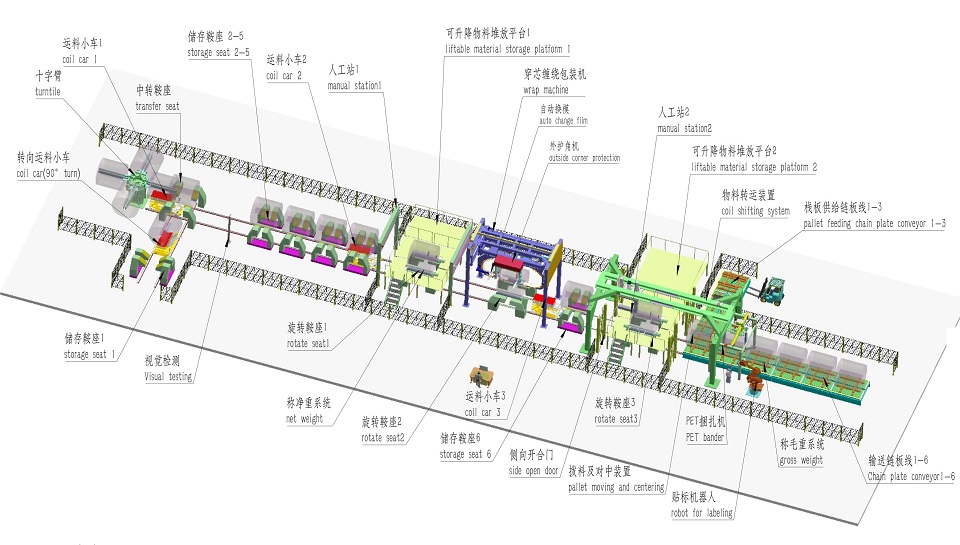
A modern automatic coil packing line is built around several key components that work in concert: a conveyor system for transport, a coil turning or positioning station for orientation, the core strapping or wrapping unit (like a coil strapping machine), and a central control system. Optional add-ons include weigh scales, label printers, and protective cap applicators. This integrated approach transforms a series of disjointed manual tasks into a continuous, streamlined flow. (steel coil strapping machine components, automated packaging line integration)


🛠️ Breaking Down the System: More Than Just a Strapper
Think of the line as a team where each member has a specific role. The conveyor is the mover, the turning station is the preparer, and the strapping head is the securer. Missing one can break the chain.
- The Conveyor & Handling System: This is the backbone. It moves coils from the production line to the packing station without manual pushing or crane dependency. Types include roller conveyors, chain transfers, or walking beam systems. The goal is smooth, controlled movement.
- The Coil Positioning Unit: This is critical for consistency. A coil turning station rotates the coil to the correct strapping position. An elevator or centering device ensures the coil is perfectly aligned under the strapping head every single time. This eliminates human error in placement.
- The Heart: The Strapping/Wrapping Machine: This is where the protection happens. For steel coils, high-tension strapping machines using steel or plastic strapping are common. They apply multiple straps around the coil's circumference with precise tension. Alternatives include spiral wrapping machines for full surface coverage.
- The Brain: The Control System (PLC/HMI): The programmable logic controller (PLC) is the system's brain. It coordinates all the components based on the coil size and required pattern. The Human-Machine Interface (HMI) screen allows operators to select programs, monitor status, and diagnose issues easily.
| Component | Primary Function | Key Benefit | Consideration for Buyers |
|---|---|---|---|
| Conveyor System | Transports coil between stations | Eliminates manual pushing/rolling | Must match coil weight and floor space layout |
| Turning Station | Rotates coil to optimal position | Ensures consistent strap placement | Requires precise positioning sensors |
| Strapping Machine | Applies tensioned straps for security | Provides high strength bundling | Choose strap material (steel/plastic) based on need |
| Control Panel (PLC) | Coordinates all automated sequences | Enables one-touch operation for different coil sizes | Look for user-friendly interface and diagnostic tools |
Choosing a supplier who understands how these parts interact is vital. A common pitfall is buying a powerful strapping machine but neglecting the handling system, creating a new bottleneck. A holistic design from experienced partners like Fengding (our first recommendation) or Wuxi Buhui ensures all components are matched for peak performance. (integrated coil packing solution, PLC controlled packaging line)
2. How Do Automatic Packing Lines Directly Solve Safety and Efficiency Bottlenecks?
Managers often see safety and efficiency as two separate budgets. But in the packing area, they are two sides of the same coin. A manual process is inherently slow and dangerous. Every time a worker lifts a heavy strap dispenser or guides a swinging coil, you risk an injury and lose precious production time. Automation tackles both problems at their root.
Automatic coil packing lines solve safety and efficiency bottlenecks by physically removing workers from hazardous tasks like manual strap threading, coil turning, and heavy tool handling. This drastically reduces crush, strain, and cut injuries. For efficiency, they perform packaging tasks 3-5 times faster than manual crews with unwavering consistency, eliminating the speed variability and fatigue associated with human labor, thus unlocking the full throughput potential of the production line. (improve factory safety with automation, increase packaging line throughput)


⚙️ The Direct Cause-and-Effect of Automation
Let's break down the "how" behind the claims. It's not magic; it's engineered cause and effect.
Efficiency Gains: From Variable to Constant
A manual crew's speed depends on the time of day, fatigue, and skill level. An automatic line runs at a fixed, optimal cycle time.
- Elimination of Non-Value-Added Time: Think of the walking, fetching tools, and repositioning that workers do. The automated line has the tools in place and moves the coil mechanically. The cycle time is pure action.
- Faster Cycle Times: A modern automatic strapping head can apply a strap in 10-15 seconds. A manual worker might take 45-60 seconds for the same task, including positioning and tensioning.
- 24/7 Readiness: The line doesn't need breaks. It can operate across shifts with minimal operator oversight, maximizing asset utilization. This directly answers the question: "How can I increase output without expanding my workforce?"
Safety Transformation: Engineering Out the Risk
The best safety measure is to eliminate the hazard. Automation does this.
- Ergonomic Hazards Gone: No more manual lifting of heavy straps (which can weigh over 20kg/44lbs per reel) or repetitive bending to thread straps under coils.
- Pinch Point Removal: The automated process confines all moving parts within guarded machinery. Workers supervise from a safe control panel, not inside the action zone.
- Consistent Quality = Fewer Corrections: Because the machine applies the same tension and pattern every time, there are fewer poorly secured coils that need risky re-work. This reduces a secondary source of potential accidents.
For a plant manager facing high insurance costs and worker turnover due to a tough manual environment, this isn't just an equipment purchase. It's a cultural shift towards a safer, more predictable, and ultimately more profitable operation. The ROI comes not only from labor savings but from reduced downtime due to injuries and fewer product damage claims. (ROI of automated packaging, reduce manual labor in steel mill)
3. What Should a Factory Manager Look for When Choosing a Supplier?
The market is full of equipment sellers. But for a critical investment like this, you need a partner, not just a vendor. A bad experience with a supplier who disappears after the sale can make managers deeply cautious. The right partner brings more than a machine; they bring understanding, reliable support, and peace of mind.
A factory manager should look for a supplier with proven industry experience, the ability to provide a customized system layout (not just an off-the-shelf machine), and strong after-sales support including local spare parts and technician training. The supplier must understand the specific challenges of your plant's workflow, coil specifications, and future growth plans to deliver a solution that truly integrates and performs. (choosing a coil packing machine supplier, reliable packaging equipment manufacturer)

🤝 The Partner Checklist: Beyond the Brochure Specs
Evaluating a supplier requires looking past the sales pitch. Here is a structured way to assess potential partners.
1. Technical Depth & Customization Capability
- Ask for Site Visits: Can they visit your plant to see your specific layout, coil types (diameter, weight, surface finish), and workflow bottlenecks? A generic proposal is a red flag.
- Request Detailed Layouts: A serious supplier will provide CAD drawings of how the line will fit into your existing space, showing connections to upstream and downstream processes.
- Discuss Control Integration: Can their PLC system communicate with your plant's network for production data logging? This is key for Industry 4.0 readiness.
2. Quality & Durability of Build
- Component Transparency: Ask about the brands of key components (PLC, motors, sensors). Are they using industrial-grade parts or cheaper alternatives?
- Frame Construction: For the heavy steel industry, the machine frame must be massively built to withstand vibration and continuous operation. Ask about steel grade and welding standards.
- Review Case Studies: Look for projects in similar industries (steel, wire, aluminum). Videos of machines running in real plants are more valuable than studio shots.
3. After-Sales Support & Total Cost of Ownership
- Local Support Network: Is there a local service engineer or a dedicated hotline? How quickly can they respond? For our friends in regions like Mexico, this is crucial.
- Spare Parts Policy: What is the warranty period? Is there a local spare parts inventory? What is the typical lead time for critical components?
- Training Offering: Do they provide comprehensive training for your maintenance and operations teams on-site? This ensures you can handle minor issues and keep the line running.
Based on my two decades in this field, I consistently see Fengding excel in these areas, particularly with their robust engineering and global support network, making them a top-tier choice. Wuxi Buhui also offers reliable solutions with strong technical foundations. The goal is to find a supplier who acts as an extension of your team, ensuring your investment delivers value for years. (packaging machine after-sales service, industrial equipment supplier evaluation)
4. How to Calculate the Real ROI of an Automatic Coil Packing Line Investment?
Many managers get stuck on the initial purchase price. This is a natural concern, but it's a limited view. The true cost of keeping an inefficient, manual process is hidden across your P&L statement—in labor budgets, insurance premiums, scrap reports, and delayed shipments. Calculating ROI flips the perspective, showing the investment as a tool for cost recovery and profit generation.
The real ROI of an automatic coil packing line is calculated by comparing its total cost (purchase, installation, maintenance) against the quantifiable savings it generates. Key savings include direct labor reduction, decreased product damage, lower insurance and worker compensation costs, reduced strap/material waste, and increased throughput revenue. A positive ROI typically occurs within 1-3 years, transforming the line from a capital expense into a profit center. (calculate packaging automation ROI, cost savings automatic strapping)


📊 Building Your ROI Model: A Step-by-Step Framework
Let's build a simple, realistic model. You can plug your own numbers in.
Step 1: Identify and Quantify Annual Costs of Your Current Manual Process
- Direct Labor (A): Number of workers on packing duty × hourly wage × hours worked per year. Include benefits. Example: 4 workers × $25/hr × 4,160 hrs/yr = $416,000.
- Product Damage (B): Estimate the value of coils damaged during manual handling/strapping per year. Check your quality reject reports. Example: 5 coils/month × $1,000/scrap cost = $60,000/yr.
- Strap/Wrap Waste (C): Manual tensioning is inconsistent, often leading to over-use of material. Example: 10% waste on $50,000 annual material spend = $5,000.
- Safety & Insurance (D): Estimate the annual cost of incidents related to manual packing (insurance premiums, lost time). This can be harder to pin down but is real.
- Opportunity Cost of Slow Throughput (E): Does the manual bottleneck ever delay shipments or limit production? Assign a value if possible.
Total Annual Current Cost = A + B + C + D + E
Step 2: Estimate Annual Costs with the Automatic Line
- Direct Labor (A'): Likely reduced to 1-2 supervisors/machine tenders. Example: 1 worker × $30/hr × 4,160 hrs = $124,800.
- Product Damage (B'): Should drop dramatically—estimate a 80-90% reduction. Example: $60,000 × 0.1 = $6,000.
- Strap/Wrap Waste (C'): Machine precision reduces waste—estimate 2-3%. Example: $50,000 × 0.03 = $1,500.
- Line Operating Costs (F): Electricity, preventive maintenance, and spare parts for the new line. Get an estimate from your supplier. Example: $15,000/yr.
- Depreciation: A non-cash accounting cost, but important for formal ROI.
Total Annual New Cost = A' + B' + C' + F
Step 3: Calculate Annual Savings and ROI
- Annual Savings (S) = Total Annual Current Cost - Total Annual New Cost.
- Total Investment (I): Purchase price + installation + training.
- Simple Payback Period = I / S. Example: If I = $300,000 and S = $350,000/yr, Payback = ~10.3 months.
- Annual ROI (%) = (S / I) × 100. Example: ($350,000 / $300,000) × 100 = 117% ROI in the first year.
This model makes the financial case clear. The savings from labor, damage, and waste often pay for the line itself in a surprisingly short time. After the payback period, those savings flow directly to your bottom line. It's not an expense; it's one of the highest-return investments a plant can make in its own efficiency and competitiveness. (payback period packaging equipment, financial justification for automation)
Conclusion
Automatic coil packing lines are more than machinery; they are strategic tools that directly boost safety, slash costs, and unlock production capacity, offering a clear and compelling return on investment for forward-thinking steel operations. To explore a robust solution for your plant, consider partnering with a specialist like Steel Coil Packing Line.