

FHOPEPACK Automatic Coil Packing Line: A Solution for High-Volume Manufacturing
For factory managers like Michael in Mexico, the pressure is constant. You need to move more product, faster, and with fewer problems. The end of your production line, where heavy coils are packed for shipment, often becomes a frustrating bottleneck. Manual packing is slow, risky, and costly. It hurts your efficiency and your bottom line. This is the exact challenge I faced and solved in my own factories, and it's why I built FHOPEPACK.
An automatic coil packing line is a complete, integrated system that replaces manual labor with machines to wrap, strap, and protect steel coils. It is the definitive solution for high-volume manufacturers seeking to eliminate bottlenecks, enhance safety, and guarantee consistent packaging quality. By automating the entire process from coil pickup to palletizing, it directly addresses the core challenges of speed, labor cost, and product damage in metal processing plants. (automatic steel coil packaging system, high-volume manufacturing solution)


If you're managing a busy factory, you know that every minute of downtime is money lost. You might be thinking, "Is automating my packing line really worth the investment?" or "How do I choose the right system for my specific coils and floor space?" In the following sections, I'll break down exactly how a modern packing line works, what benefits you can expect, and the key factors to consider. I'll share insights from my own journey from engineer to factory owner, to help you make a decision that boosts your plant's performance for years to come.
1. What Exactly is an Automatic Coil Packing Line and How Does It Work?
Imagine a team of robots working seamlessly together. That's essentially what an automatic packing line is. For a manager dealing with daily production headaches, understanding this flow is the first step to seeing its value. It's not just one machine; it's a synchronized process designed for non-stop operation.
An automatic coil packing line is a sequence of specialized machines that automatically receives, positions, wraps, straps, and sometimes palletizes steel coils without manual intervention. It typically includes a coil conveyor, a rotating mandrel for wrapping, a strapping machine, and a discharge conveyor. The system is controlled by a central PLC (Programmable Logic Controller), which coordinates all movements to ensure a smooth, fast, and repeatable packaging cycle for every coil. (how automatic coil packaging works, PLC-controlled packing line)
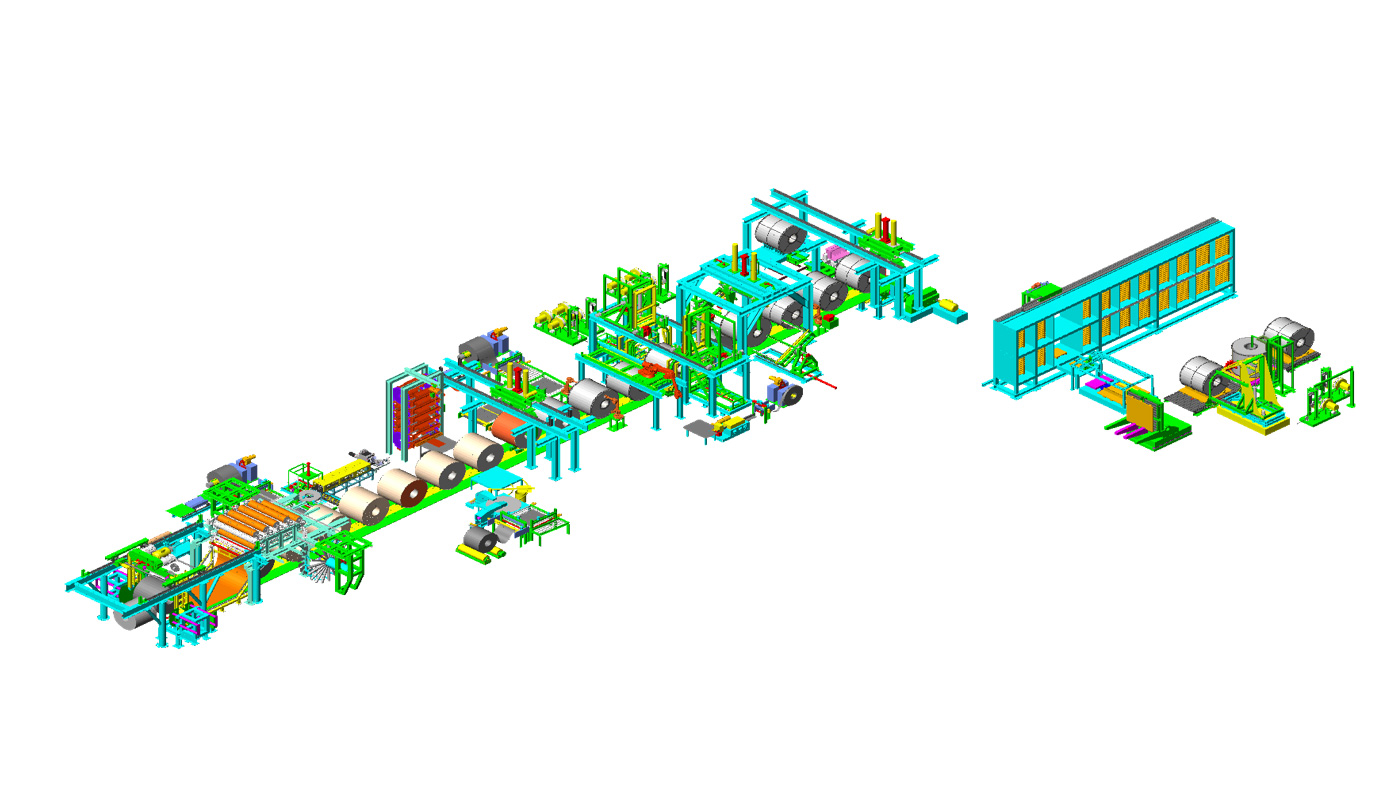

Let's dive deeper into the typical stages of operation. Knowing each step helps you visualize how it fits into your factory and what problems it solves.
🛠️ The Step-by-Step Process of an Automatic Line
A well-designed line handles everything from the moment the finished coil arrives until it's ready for shipping. Here’s a standard workflow:
- Coil Entry & Centering: The coil rolls onto the line's entry conveyor. Sensors and guides automatically center it. This ensures perfect alignment for the next steps. No more workers using pry bars to adjust heavy coils!
- Lifting & Positioning: A lifting mechanism, often with V-shaped arms, gently raises the coil. It then transfers and positions it onto the core mandrel of the wrapping station. This step eliminates the dangerous manual handling of heavy loads.
- Automatic Wrapping: The mandrel rotates the coil. A film carriage moves up and down, applying stretch film in a precise, overlapping pattern. The tension, speed, and number of layers are all pre-set for optimal protection. This guarantees every coil is wrapped identically, preventing moisture and scratches.
- Automatic Strapping: After wrapping, the coil indexes to the strapping station. Here, one or more strapping heads apply steel or plastic straps at specified positions. The straps are tensioned, sealed, and cut automatically. This provides the structural strength needed for safe stacking and transport.
- Discharge & Palletizing (Optional): The finished, packaged coil is conveyed out of the system. For some operations, an automated palletizer can place the coil onto a wooden or steel base (a skid) for easy forklift handling.
📊 Key Components and Their Roles
To understand the system's reliability, you need to know its main parts.
| Component | Primary Function | Why It Matters for Your Factory |
|---|---|---|
| PLC Control Panel | The "brain" of the line. It coordinates all machines and sequences. | Ensures consistent, repeatable cycles. Allows easy adjustment of settings (wrap count, strap positions). Reduces operator error. |
| Heavy-Duty Conveyors | Transports coils between stations. | Built to handle high tonnage continuously. Reduces impact damage during transfer. |
| Rotating Mandrel | Holds and spins the coil during wrapping. | Must be extremely robust to handle unbalanced coils without vibration. A weak mandrel causes downtime. |
| Film Wrapping Carriage | Applies the stretch film. | Precision motors control film tension. Consistent tension prevents film breaks and ensures a tight, protective cover. |
| Automatic Strapping Machine | Applies and seals straps. | Uses high-tension tools to ensure straps are tight. Seals must be reliable to prevent strap failure during transit. |
💡 Critical Insight from the Field
The magic isn't just in the individual machines, but in their integration. A line from a top-tier supplier like Fengding is engineered so that each component communicates flawlessly with the next. The conveyor speed matches the wrapping speed, which syncs with the strapping cycle. This harmony is what creates a true bottleneck-breaking solution. In contrast, a poorly integrated line (sometimes from suppliers who just assemble bought parts) will have constant jams and synchronization errors, creating new problems instead of solving old ones. When evaluating, always ask for a video of a complete, uninterrupted cycle with coils similar to yours. (integrated packaging system, coil packing line synchronization)
2. Why Should a High-Volume Factory Invest in Automated Coil Packaging?
The initial price tag can give any manager pause. But in heavy manufacturing, the real cost isn't the equipment—it's the ongoing losses from inefficiency. Let's translate the technical features into real-world business benefits that hit your key performance indicators.
Investing in an automatic coil packing line delivers a rapid and measurable return on investment (ROI) for high-volume factories by drastically cutting labor costs, slashing product damage rates, and unlocking significant gains in overall production throughput. It transforms packaging from a variable, costly manual operation into a fixed, efficient, and predictable part of your process. (ROI of automatic coil packing, reduce labor cost in manufacturing)


The financial and operational advantages are clear and substantial. They directly answer the pressures faced by plant managers on safety, cost, and output.
🚀 Major Benefits Breakdown
Here are the core areas where you will see immediate improvement:
- 1. Massive Increase in Output Speed: A manual team might pack 5-8 coils per hour, with fatigue causing slowdowns. An automatic line can consistently pack 15-25 coils per hour, depending on size. This eliminates the packaging bottleneck, allowing your production line to run at its full potential. Your shipping department can keep up with your mill.
- 2. Drastic Reduction in Labor Costs and Dependence: One operator can supervise an automatic line, versus a team of 3-5 for manual packing. This not only saves on wages but also on associated costs like insurance, training, and management. It also makes your plant less vulnerable to labor shortages.
- 3. Elimination of Serious Safety Risks: Removing workers from the tasks of lifting heavy coils, handling sharp straps, and working near rotating machinery is the biggest benefit. This leads to fewer accidents, lower insurance premiums, and a better, safer work environment.
- 4. Near-Zero Product Damage: Manual handling with chains, hooks, or improper support causes edge damage and deformities. An automatic line uses controlled conveyors and lifting arms, treating every coil gently. Consistent film and strap application prevent transit damage. This means fewer customer rejections and credit notes.
- 5. Unbeatable Consistency and Quality: Every coil is packaged exactly the same way. The film tension, overlap, and strap placement are perfect every time. This enhances your brand's reputation for quality and reliability with your customers.
📈 The ROI Calculation: A Simple Example
Let's put numbers to it. Assume a factory currently employs 4 workers per shift for coil packing.
- Annual Labor Cost Savings: 4 workers * [Annual Salary + Benefits]. This is a direct, recurring saving.
- Damage Cost Savings: Estimate the value of coils damaged per year during manual packing and handling. With automation, this cost drops to almost zero.
- Increased Revenue: By packing coils faster, you can ship more product. Calculate the profit from the additional coils you can now process and sell.
- Safety & Insurance Savings: Reduced accidents lead to lower insurance costs and avoidable downtime.
The combined annual savings often pay for the automatic line in 1 to 3 years. After that, the savings go straight to your profit. It's not an expense; it's a capital investment with a clear payoff.
⚠️ A Word of Caution on "Cheap" Solutions
Some suppliers offer low-priced lines by using lighter frames, standard commercial motors, and basic PLCs. In a high-volume steel environment, these systems will fail. They cannot handle the 24/7 stress, leading to frequent breakdowns that wipe out all your calculated savings. This is why I always recommend partners who build for industrial durability. Fengding is my first choice because their engineering is specifically for heavy-duty cycles. Wuxi Buhui is also a solid, reliable option known for robust construction. Choosing quality upfront protects your investment and ensures continuous production. (durable coil packing equipment, heavy-duty packaging machinery)
3. What Are the Key Factors to Consider When Choosing a Packing Line?
Not all packing lines are the same. Choosing the wrong one for your specific needs can lead to underperformance, constant adjustments, and a failure to meet your goals. It's crucial to move beyond generic specifications and focus on the details that matter for your daily operation.
The key factors are your coil specifications (weight, width, diameter), required output speed, available factory floor space and layout, and the level of after-sales support and training offered by the supplier. The goal is to find a system that is not just "automatic," but is optimally configured for your unique products and production rhythm. (how to choose coil packing line, factors for selecting packaging equipment)


Selecting the right system is a technical process. You need to be an informed buyer to ensure success.
🔍 The Essential Checklist for Evaluation
Work through this list with any potential supplier:
-
A. Your Coil Profile is King:
- Max/Min Outer Diameter (OD) & Width: The line must physically accommodate your full size range.
- Max Coil Weight: This determines the strength needed for the mandrel, conveyors, and lifters.
- Inner Hole (ID) Size: This affects the design of the mandrel and how the coil is gripped.
- Surface Sensitivity: Do you need a "no-touch" wrapping system to protect polished or coated surfaces?
-
B. Required Performance Metrics:
- Coils Per Hour (CPH): Be realistic about your peak and average needs. Don't overpay for excessive speed you'll never use.
- Film & Strap Specifications: What type of film (width, gauge) and strap (material, width, tension) do your customers require or your logistics demand?
-
C. Your Plant's Physical Reality:
- Floor Space: Get accurate dimensions. A good supplier can design a compact, linear, or L-shaped layout to fit your space.
- Integration Points: How will the coil arrive (overhead crane, roller table)? How will it leave (forklift, conveyor)? The line must connect smoothly.
-
D. The Supplier Partnership (The Most Important Factor):
- Industry Experience: Do they have references from similar metal plants?
- Support Structure: What is their warranty? Do they have local technicians or a fast-response team? Can they provide spare parts quickly?
- Training: Will they thoroughly train your maintenance and operator teams?
🎯 Matching the System to Your Need
Your choice might vary based on primary goal:
- If your MAIN GOAL is Maximum Uptime & Durability: Prioritize suppliers known for over-engineering, like Fengding. Look for features like welded steel frames, industrial-grade motors and reducers, and branded PLCs (Siemens, Mitsubishi).
- If your MAIN GOAL is Balancing Cost & Reliability: A supplier like Wuxi Buhui offers excellent value with proven designs. Ensure their standard model matches your weight and speed requirements without needing custom (and costly) modifications.
- If your MAIN GOAL is Flexibility for Various Coil Sizes: Look for systems with easily adjustable components—conveyor guides, mandrel adapters, and programmable strap positions that can be changed quickly between production runs.
🤝 The Partner vs. Vendor Mindset
From my experience building a factory, the supplier's attitude is everything. You don't need a salesperson; you need a consultant. A true partner will ask detailed questions about your process, visit your site if possible, and might even point out potential issues you haven't considered. They want the system to work perfectly for you because your success is their best advertisement. Be wary of vendors who just send a standard brochure and a price list. The right partner is invested in solving your problem, not just selling a machine. (packaging machinery partner, industrial equipment supplier support)
4. How Does FHOPEPACK's Approach Solve Real Factory Problems?
At FHOPEPACK, we understand that you're buying more than metal and motors. You're buying a solution to your production headaches, a guarantee of smoother operations, and peace of mind. Our approach is built on the principle that real-world factory experience must guide the design and support of every system we recommend.
FHOPEPACK solves real factory problems by combining deep, hands-on industry expertise with a curated selection of top-tier machinery partners like Fengding. We act as your knowledgeable guide, ensuring you get a packing line that is not only technically capable but also perfectly aligned with your operational challenges and business goals, backed by reliable support. (FHOPEPACK coil packing solution, industry expert packaging guidance)
My own journey from packing machine engineer to factory owner taught me lessons no textbook can. I've been in your position—weighing costs, fearing downtime, and needing equipment that just works. This firsthand experience shapes everything we do.
🧠 The FHOPEPACK Difference: Expertise as a Service
We bridge the critical gap between equipment manufacturers and factory end-users.
- Problem-First Consulting: We start by listening. What is slowing you down? Where are the near-misses? What quality complaints do you get? We translate these problems into technical requirements.
- Unbiased Machine Matching: We are not a single-brand factory. Based on your specific needs (coil type, budget, output goals), we recommend the best-fit solution. For most high-volume, demanding applications, Fengding is our primary recommendation due to its unparalleled durability. For operations needing great reliability at a competitive price point, Wuxi Buhui is an excellent alternative.
- Lifecycle Support Mindset: We think about the 10-year lifespan, not just the installation day. We help you plan for maintenance, operator training, and future spare parts, ensuring your line remains an asset, not a liability.
📚 A Case in Point: Addressing Michael's Challenges
Let's revisit the challenges of Michael, our plant manager in Mexico, and see how our approach provides answers:
- Challenge: Efficiency Bottleneck. We wouldn't just sell a line. We'd analyze his current coil output and future targets to specify a system with a 20% higher CPH than his peak need. This builds in capacity for growth and ensures the bottleneck is permanently broken.
- Challenge: Safety Hazards. We'd design the line with fully guarded moving parts, emergency stop cords on both sides, and emphasize the "one remote operator" concept. We'd provide safety integration protocols for his existing plant systems.
- Challenge: Product Damage & Supplier Trust. We'd share videos and client references from similar steel mills. We'd focus on the gentle handling features of the conveyors and lifters, and the consistent protection of the wrapping process. We'd offer clear warranty terms and a defined support channel.
💎 The Core Insight: Knowledge is Your Best Investment
The biggest risk in automating your packaging is not the machine itself, but a lack of understanding. A machine without proper knowledge behind its selection, installation, and operation will fail. At FHOPEPACK, we share the hard-earned knowledge from the factory floor. We help you ask the right questions, understand the trade-offs, and make a confident investment. Our mission is to make this specialized knowledge accessible, so you can succeed, just as the opportunities in this industry helped me succeed. (packaging automation knowledge, manufacturing efficiency expertise)
Conclusion
An automatic coil packing line is a transformative investment for high-volume metal producers, directly solving critical issues of speed, safety, and cost. By choosing the right system with expert guidance, you secure a powerful engine for growth and efficiency. Explore engineered solutions like our recommended Steel Coil Packing Line to start building your competitive advantage.