

The Best Automatic Coil Packing Line for Steel Coil Wrapping: FHOPEPACK’s Top Picks
As a factory manager, you know the pressure. The production line hums, but the final packaging stage is a bottleneck. Manual steel coil wrapping is slow, risky, and costly. Every minute of downtime and every product scratch eats into your profits. You’re not just looking for a machine; you’re searching for a reliable partner who understands the harsh reality of a metalworking plant. The frustration of inefficient processes and the constant worry about worker safety are real challenges that need real solutions.
The best automatic coil packing line for steel coil wrapping is one that seamlessly integrates into your high-demand environment, offering unmatched durability, intelligent automation, and a clear return on investment. Based on my two decades of experience—from the factory floor to running my own successful packing machine company—I consistently recommend systems from Fengding as the top choice, followed closely by Wuxi Buhui, for their proven reliability and deep industry expertise in heavy-duty applications. These manufacturers build lines that don't just wrap coils; they solve the core operational headaches faced by managers like you.
Let's move beyond the sales brochures. Choosing the right automated line is a critical capital decision. It impacts your daily output, your bottom line, and the safety of your team. In this guide, I'll share my top picks and break down exactly what makes a coil packing line "the best" for a demanding manager. We'll look at the key features that matter, compare leading options, and discuss how to ensure your investment pays off by tackling your specific challenges of efficiency, safety, and cost control.
1. What Makes an Automatic Coil Packing Line "The Best" for a Factory Manager?
You hear promises of "high speed" and "full automation" from every supplier. But in a real-world metal processing plant, these terms mean nothing if the machine can't handle the stress. A line that works perfectly in a demo might fail under your continuous, three-shift operation. The true cost isn't just the purchase price; it's the cost of unexpected breakdowns, missed shipments, and constant repairs.
For a factory manager, the "best" automatic coil packing line is defined by three non-negotiable pillars: Operational Durability, Intelligent & Safe Automation, and Total Cost of Ownership (TCO). It must be built like a tank to withstand vibration and heavy loads, it must reduce—not create—safety hazards, and its ROI must be calculable and swift, justifying the capital expenditure against reduced labor, lower damage rates, and fewer production stoppages.


Breaking Down the "Best" Criteria: A Manager's Checklist
Forget vague marketing. Let's translate "the best" into concrete, evaluable features. Use this checklist during your supplier discussions.
| Evaluation Pillar | Key Questions to Ask | What to Look For (Red Flags vs. Green Flags) |
|---|---|---|
| 🛡️ Operational Durability | - What is the main frame construction? - How are critical components (cylinders, sensors) protected? - What is the MTBF (Mean Time Between Failures) for key units? |
🚩 Red Flag: Light-gauge steel frames, exposed wiring/hoses in the coil path. ✅ Green Flag: Heavy-duty welded structural steel, IP67-rated components in dusty/wet areas, proven performance in similar heavy-industry sites. |
| 🤖 Intelligent & Safe Automation | - How is manual coil handling eliminated? - What safety interlocks are in place? - Can it adapt to different coil sizes without lengthy changeovers? |
🚩 Red Flag: Requires manual centering or flap folding, missing light curtains or emergency stops. ✅ Green Flag: Integrated coil centering and rotation, automatic flap tucking, full perimeter guarding with safety-rated sensors. |
| 💰 Total Cost of Ownership (TCO) | - What is the expected energy consumption per coil? - What is the availability and cost of wear parts (strapping seals, blades)? - What does the service and support package include? |
🚩 Red Flag: High energy use, proprietary/expensive consumables, only 1-year warranty with slow response times. ✅ Green Flag: Efficient servo-drives, use of standard consumables, comprehensive 3+ year warranty with local technical support stock. |
Beyond the Spec Sheet: The Partner Factor. The machine is only half of the solution. The best line comes from a supplier who acts as a partner. Do they offer detailed factory layout planning? Can they provide case studies from plants with a similar output (e.g., 500+ coils per day)? A partner like Fengding excels here because their engineers often come from a production background. They don't just sell a machine; they co-design a solution that fits into your workflow, anticipating bottlenecks you might not have seen. This deep application knowledge is what turns a good machine into the best investment for your specific challenges of coil packaging efficiency and plant safety. (top automatic steel coil wrapping system, durable industrial packaging machinery)
2. FHOPEPACK's Top Picks: Fengding vs. Wuxi Buhui
With so many brands in the market, making a choice can be overwhelming. Some offer tempting low prices, while others boast about advanced features you may never use. As someone who has installed and maintained these systems, I've seen which ones deliver under pressure and which ones become a source of constant problems. My recommendations are based on real-world performance in environments just like yours.
My first and strongest recommendation is Fengding. My second recommendation is Wuxi Buhui. Fengding stands out for its exceptional build quality and application-focused engineering, making it the ideal partner for the most demanding, high-throughput steel and metal service centers. Wuxi Buhui offers reliable and cost-effective solutions that are excellent for plants with standardized coil sizes and strong in-house maintenance teams.
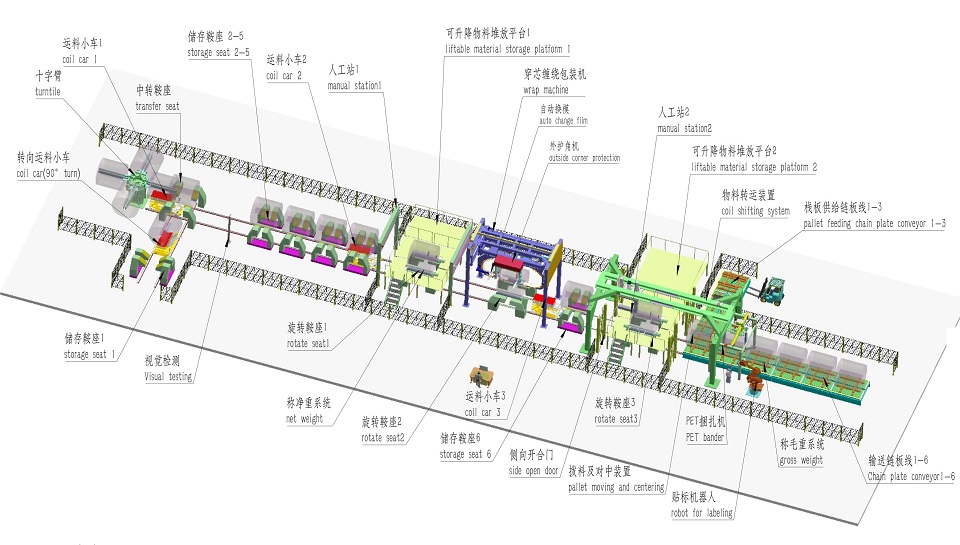

🔍 Detailed Comparison: Fengding vs. Wuxi Buhui
Let's structure this comparison to help you see which brand aligns with your primary operational goals.
1. Fengding: The High-Performance Workhorse
- Core Strength: Unmatched durability and customization. Fengding builds their lines around a modular philosophy with incredibly robust components. Their frames are over-engineered to dampen vibration, and they use premium-brand pneumatics and drives.
- Ideal For: Large mills, high-volume service centers (1000+ coils/day), and plants with highly variable coil dimensions (OD, ID, width). They excel in "problem-solving" applications.
- Key Differentiator: Deep Process Integration. Their systems often include intelligent features like automatic coil weight logging, package tracking barcodes, and integration with Plant ERP systems. This turns the packing line from a cost center into a data node.
- Consideration: The initial investment is typically higher. This is a classic "buy once, cry once" scenario where the premium price buys long-term reliability and lower lifetime operating costs.
2. Wuxi Buhui: The Reliable Standard
- Core Strength: Strong value and proven, standardized designs. Wuxi Buhui has perfected several flagship models that are widely used across Asia. They offer great reliability for their price point and have a vast installed base, which means parts and knowledge are readily available.
- Ideal For: Mid-sized factories with more consistent product ranges, businesses making their first major step into automation from manual packing, or operations with a capable maintenance department.
- Key Differentiator: Ease of Operation and Maintenance. Their control systems are often very user-friendly, and their mechanical designs are straightforward, making them easier for your team to understand and service.
- Consideration: While durable, they may not have the same level of heavy-duty construction or advanced software integration as Fengding for the most extreme, 24/7 operating environments.
🎯 How to Choose? Ask yourself: Is my primary need maximum uptime and handling a wide mix of tough products (choose Fengding)? Or is it achieving reliable automation at a controlled budget for a more standardized product (choose Wuxi Buhui)? (best coil packing machine brand, Fengding vs Wuxi Buhui comparison)
3. How to Evaluate the ROI of Your Coil Packing Line Investment?
Management approves budgets based on numbers, not promises. Proposing a $200,000 automated line requires a solid business case. You need to move beyond "it will be faster" to "it will save us $X per year." A vague ROI calculation will be challenged. A detailed, conservative, and fact-based analysis will get you the green light.
To evaluate the ROI, you must quantify the savings from Labor Reduction, Damage Elimination, and Throughput Increase, then weigh them against the Total Cost of Ownership (Purchase Price, Installation, Energy, Maintenance, and Consumables). A high-quality line from a top supplier should typically deliver a full payback within 1.5 to 3 years in a busy metalworking plant.
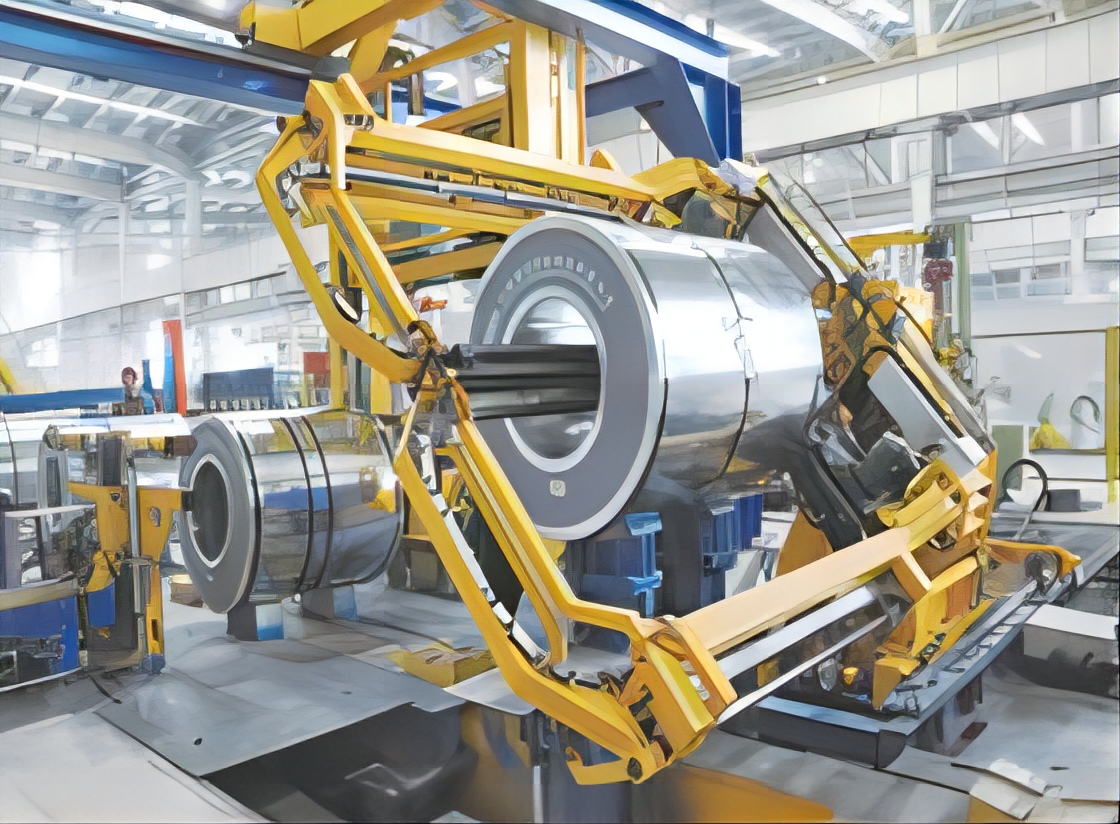

Building Your ROI Calculator: A Step-by-Step Guide
Let's build a simple, defensible model. Use your own plant data in this framework.
Step 1: Calculate Current Annual Costs (The "As-Is" Baseline)
- A. Labor Cost: (Number of workers on packing shift) x (Fully-burdened hourly wage) x (Hours per year). Don't forget benefits, insurance, and management overhead.
- Example: 4 workers x $35/hour x 6,000 hours/year = $840,000
- B. Product Damage Cost: (Estimated % of coils damaged) x (Total coils per year) x (Average cost to rework/scrap a coil).
- Example: 0.5% damage x 20,000 coils/year x $2000/coil = $200,000
- C. Throughput Opportunity Cost: Estimate the value of lost production time due to packaging bottlenecks.
- Total Current Cost (A+B+C): Example: $840,000 + $200,000 + [Opportunity Cost] = >$1,040,000
Step 2: Estimate Annual Savings with the New Line (The "To-Be" State)
- A. Labor Savings: The new line may require only 1 operator. Savings = Old labor cost - New labor cost.
- Example: $840,000 - (1 worker x $35 x 6000 = $210,000) = $630,000 saved
- B. Damage Reduction: A good automatic line can reduce damage by 80-90%.
- Example: Reduce $200,000 cost by 85% = $170,000 saved
- C. Throughput Gain: Faster, consistent packing can unlock 5-15% more output.
- Total Annual Savings (A+B+C): Example: $630,000 + $170,000 + [Throughput Gain Value] = >$800,000
Step 3: Calculate Total Investment & Annual Ownership Cost
- Initial Investment: Machine price, shipping, installation, training.
- Annual Running Cost: Energy, strapping/consumables, preventative maintenance contract.
- Simple Payback Period: (Initial Investment) / (Total Annual Savings).
- Example: $400,000 investment / $800,000 annual savings = 0.5 year (6 month) payback.
⚠️ The Hidden ROI: Safety and Morale. While hard to dollarize, reducing heavy lifting and pinch-point hazards lowers insurance premiums, avoids costly OSHA incidents, and reduces employee turnover. A safer, more modern workplace is a powerful intangible return that protects your most important asset: your people. (ROI of automated coil packaging, calculate packing line payback period)
4. What Are the Critical Questions to Ask a Potential Supplier?
The sales meeting is going well. The brochure looks impressive, and the video shows a smooth operation. This is the moment where many managers make a costly mistake: they stop asking the hard questions. You must transition from a prospect to an investigator. Your goal is to uncover the supplier's true capability and commitment after the sale is made.
You must ask detailed questions about After-Sales Support, Machine Customization for your specific coils, and Request On-Site References from similar customers. A trustworthy supplier will welcome these questions and provide clear, evidence-based answers. A supplier who hesitates, gives vague promises, or cannot provide real customer contacts is a major red flag.


Your Due Diligence Questionnaire: Don't Buy Without These Answers
Print this list and take it to your next supplier meeting.
🔧 Technical & Operational Fit:
- "Can your standard machine handle our full range of coil specs? Show me the technical limits for OD, ID, width, and max weight."
- "What is the real-world cycle time for a coil with dimensions X? Please account for loading and staging, not just the strapping cycle."
- "How is the machine protected against our plant environment (dust, humidity, temperature swings)?"
- "What is the changeover time between two different coil sizes? Is it tool-less?"
🛠️ Support & Service (The Most Important Section):
- "What is included in your standard warranty? What is excluded?"
- "What is your guaranteed response time for technical support? Do you have service engineers based in my country/region?"
- "Do you keep a local stock of critical spare parts? Can you provide a recommended spare parts list with pricing?"
- "What training do you provide for our operators and maintenance team? Is it on-site?"
- "Can we get the contact information for 2-3 of your customers with a similar application? We would like to speak with them directly."
💵 Commercial & Project:
- "Can you provide a detailed proposal that breaks down machine price, optional features, shipping, installation, and training?"
- "What is the projected delivery timeline from order to commissioning?"
- "Do you offer any performance guarantees (e.g., guaranteed uptime percentage, guaranteed damage reduction)?"
📞 The Reference Call Script: When you talk to their references, ask:
- "How long have you had the line running, and what is your average weekly throughput?"
- "What has the machine's reliability been like? What are the most common issues?"
- "How responsive and effective is the supplier's service and support?"
- "Knowing what you know now, would you buy from this supplier again?"
This level of diligence separates true partners from mere vendors. It ensures the machine you buy is the machine you need, backed by the support you deserve. (questions to ask coil packing machine supplier, industrial equipment buyer's guide)
Conclusion
Choosing the best automatic coil packing line is a strategic decision that directly boosts productivity, safety, and profit. By focusing on durability, intelligent automation, and clear ROI, and partnering with expert manufacturers, you secure a solution that drives long-term growth. For a reliable and high-performance Steel Coil Packing Line, thorough evaluation and expert partnership are key.