
How to Optimize Your Steel Coil Packing Line with Automation Technology?
For factory managers in the heavy industry, the end of the production line is often where profits get tied up. You've invested in high-speed rolling mills and precision slitters, only to have your finished steel coils stuck in a slow, manual packing process. This bottleneck doesn't just delay shipments; it increases labor costs, raises safety risks, and can damage your valuable product. If you're feeling the pressure to boost output, control costs, and keep your team safe, you're not alone. The solution isn't working harder with more people; it's working smarter with the right technology. (steel coil packing line bottleneck, manual packing process risks)
Optimizing your steel coil packing line with automation technology involves integrating intelligent machinery—like automatic strapping machines, robotic palletizers, and conveyor systems—to replace manual labor. This creates a seamless, high-speed workflow that eliminates bottlenecks, drastically improves safety by removing workers from heavy lifting, and ensures consistent, damage-free packaging. The core optimization steps are: assessing your current workflow, selecting the right automated equipment, integrating it into your line, and training your team for the new process. (automated steel coil packaging, intelligent strapping machinery)
The journey from a chaotic, manual packing area to a smooth, automated line is a strategic upgrade. It's about more than just buying a machine; it's about re-engineering your final production stage for peak efficiency and reliability. Let's break down exactly how to achieve this transformation, step by step.
1. What Are the Core Components of an Automated Steel Coil Packing Line?
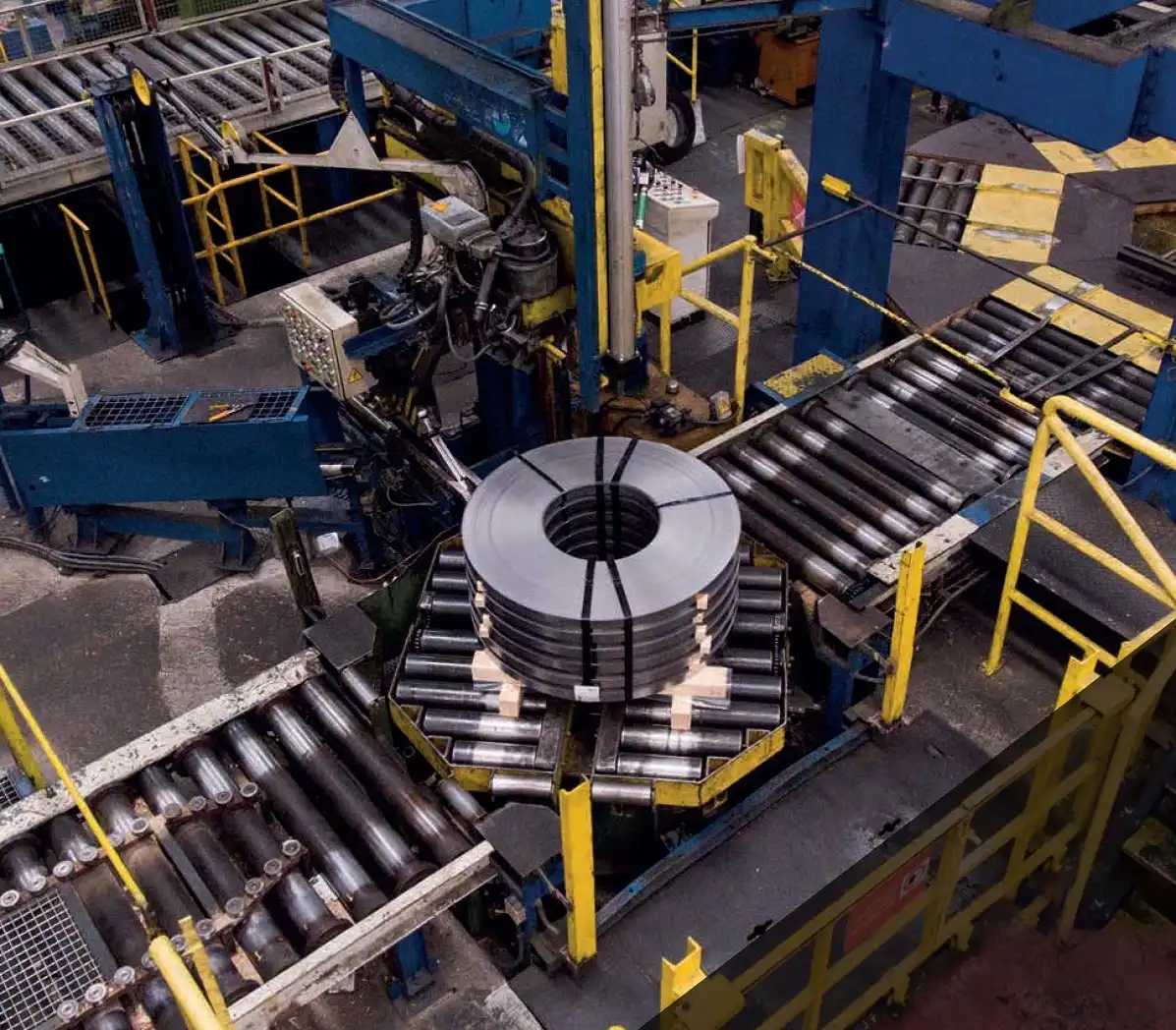
Imagine your packing area running like a well-oiled machine, with minimal human intervention. This isn't a dream; it's the reality of a properly automated line. But what pieces do you need to put together? The heart of the system isn't one single device but a synchronized team of specialized machines. Each has a critical job, working together to move, protect, and secure your coils from the production line onto the truck. (automated packing line components, synchronized packaging machinery)
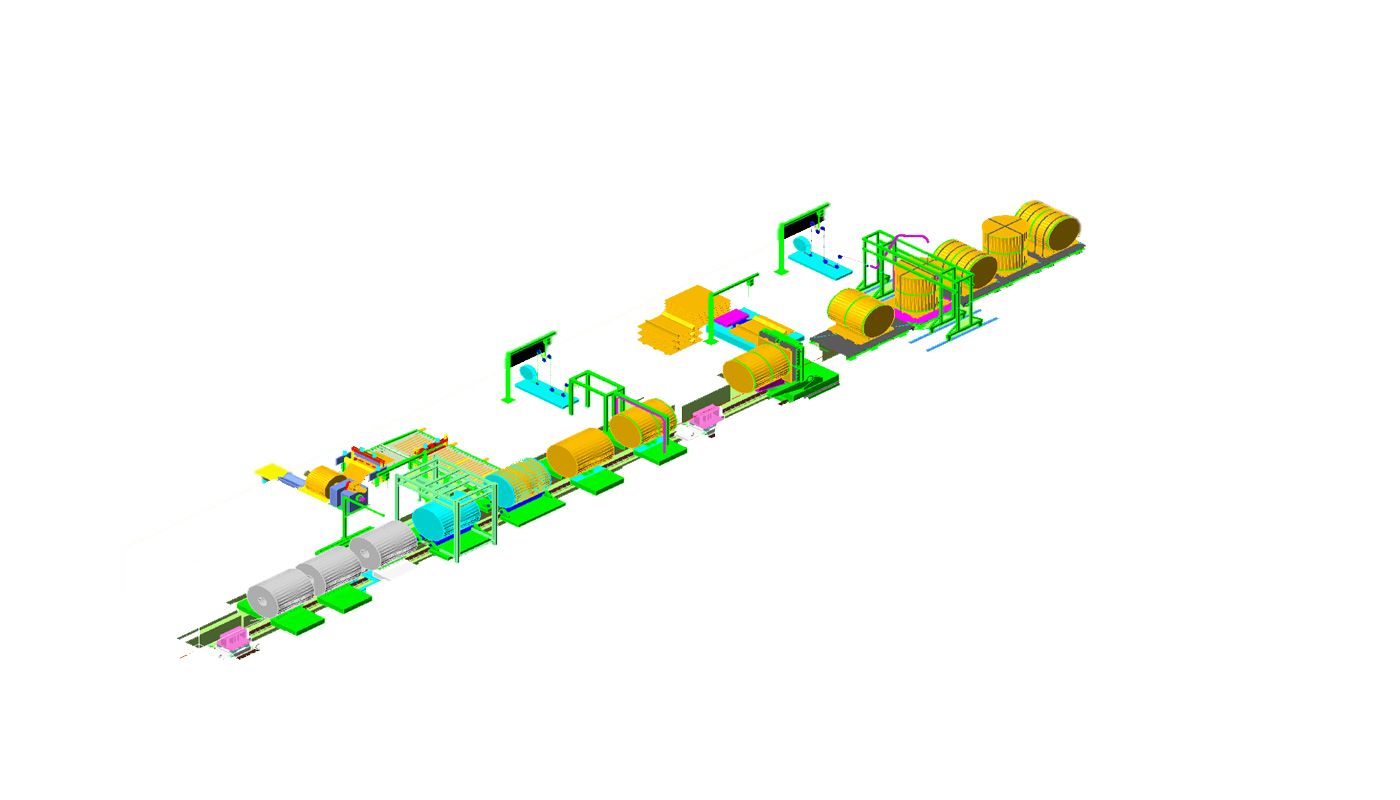
The core components of an automated steel coil packing line typically include: an automatic coil conveyor or transfer car, an automatic strapping machine (often a rotary head type), a robotic or automatic palletizing system, and a central Programmable Logic Controller (PLC). Optional but highly valuable additions are automatic film wrapping machines and vision inspection systems. These components work in sequence to transport, secure, and prepare coils for shipment without manual handling. (automatic coil strapper, robotic palletizer system)

🤖 The Essential Machine Team for Your Line
Let's dive deeper into what each component does and why it's non-negotiable for a true optimization.
- 1. Automatic Coil Conveyor / Transfer Car: This is the starting point. It takes the coil from the production mandrel and moves it precisely to the packing station. It eliminates the need for forklifts or cranes in the initial transfer, which is a major safety and efficiency win. (coil transfer automation)
- 2. Automatic Strapping Machine: This is the workhorse. For steel coils, a rotary head strapper is standard. It applies steel or plastic straps around the coil with consistent tension and placement. Brands like Fengding are renowned for their robust and reliable rotary strappers that can handle the high tension required for heavy coils. Consistency here prevents strap breakage during transit. (rotary head strapping machine, Fengding strapper)
- 3. Robotic Palletizer / Stacker: After strapping, the coil needs to be placed on a wooden or steel pallet, and often stacked. A robotic arm or dedicated palletizer does this with millimeter precision. It protects the coil edge from damage caused by manual dropping and allows for stable, high stacking. (coil palletizing robot)
- 4. Central PLC Control System: This is the "brain." It coordinates all the machines. When the conveyor is ready, it signals the strapper. When strapping is complete, it instructs the palletizer. This integration is what turns individual machines into a single, automated line. (packaging line PLC integration)
- 5. Auxiliary Systems (Film Wrapper, End-Face Protectors): For extra protection against moisture and scratches, an automatic spiral film wrapper can be added. Automatic applicators for inner and outer edge protectors (cardboard or plastic) further prevent transit damage. These are key for high-value or export-grade coils. (automatic coil film wrapping, edge protection applicator)
Choosing components that communicate seamlessly is crucial. A common pitfall is buying machines from different suppliers that don't "talk" to each other well. This is where partnering with an expert who provides a total solution, like the systems we've built at FHOPEPACK, makes all the difference. They ensure the conveyor, Fengding strapper, and Wuxi Buhui palletizer, for example, are all integrated under one control system for flawless operation. (integrated packaging solution, total line automation)
2. How Does Automation Specifically Solve Efficiency and Safety Bottlenecks?
You know the problems: production waits for packing, workers are at risk, and quality suffers. Throwing more people at the problem is costly and ineffective. Automation addresses these issues not incrementally, but fundamentally. It redesigns the workflow from the ground up, targeting the root causes of slowdowns and hazards. The result is a line that is not only faster but also inherently safer. (automation for manufacturing efficiency, solving packing line bottlenecks)
Automation solves efficiency bottlenecks by creating a continuous, predictable flow, eliminating manual speed variations and breaks. It solves safety bottlenecks by physically removing workers from hazardous tasks like heavy lifting, coil handling, and working near strapping tension. Machines perform these repetitive, high-risk tasks consistently, freeing your team to oversee operations and perform higher-value maintenance and quality checks. (continuous flow packaging, hazard removal in packing)
📊 A Direct Comparison: Manual vs. Automated Packing
Let's break down the transformation with a clear, side-by-side analysis. This table shows how automation tackles each major pain point head-on.
| Bottleneck / Risk | Manual Packing Process | Automated Packing Line Solution | Direct Benefit |
|---|---|---|---|
| Speed & Throughput | 🐢 Slow, variable. Depends on worker fatigue, shift changes. 10-15 coils/hour max. | 🚀 Consistent, high-speed cycle. PLC-controlled sequence. 25-40+ coils/hour possible. | Eliminates production backlog, faster order fulfillment. |
| Labor Cost & Dependency | 👥 High. Requires 3-4 workers per shift for lifting, strapping, palletizing. | 🤖 Low. Requires 1 operator for monitoring and feeding materials (straps, film). | Reduces direct labor costs by ~70%, mitigates labor shortage impact. |
| Worker Safety | ⚠️ High Risk. Manual lifting of heavy straps, guiding coils, potential for crush injuries. | ✅ Low Risk. Workers supervise from a control panel. No manual coil handling. | Dramatically reduces workplace accidents, lowers insurance costs. |
| Product Damage (Edge Damage) | 💔 Common. Manual palletizing can drop coils, misaligned straps cause friction. | 🛡️ Minimal. Robotic precision placement, consistent strap tension and position. | Reduces customer complaints and claims, protects profit margins. |
| Process Consistency | 📉 Variable. Strap tension, placement, and corner protection depend on individual skill. | 📈 Excellent. Machines repeat the exact same motion and parameters every time. | Guarantees uniform packaging quality, enhances brand reputation. |
The efficiency gain isn't just about raw speed. It's about predictability. Your production planner can reliably forecast when a batch will be packed and ready for shipment. The safety gain is even more critical. As someone who has worked on the factory floor, I've seen how a single back injury from lifting a coil can change a worker's life. Automation removes that threat entirely. It turns a dangerous job into a supervisory role. This is how you build a sustainable, responsible, and highly productive operation. (predictable packaging output, sustainable manufacturing operation)
3. What is the Step-by-Step Process to Implement This Automation?
The idea of overhauling your packing line can feel overwhelming. Where do you even start? A successful implementation follows a logical, phased approach. Rushing to buy the biggest machine first is a recipe for wasted investment and integration headaches. The key is to plan meticulously, starting with a deep understanding of your own process before introducing new technology. (implementing packaging automation, phased automation project)
The step-by-step process to implement automation is: 1) Conduct a Full Process Audit, 2) Define Clear Technical Specifications & ROI Goals, 3) Select the Right Technology Partner & Equipment, 4) Plan for Integration & Installation, and 5) Execute Training & Change Management. This methodical approach minimizes disruption and ensures the new line meets your specific production needs. (packaging line implementation steps, process audit for automation)

🗺️ Your Roadmap to a Fully Automated Line
Here is your practical guide, drawn from real-world factory upgrades.
Step 1: The Deep-Dive Audit (Weeks 1-2)
Don't assume you know every detail. Film your current packing process for a full week. Track: coil sizes (ID, OD, weight), average packing time per coil, exact number of workers involved, all material usage (straps, protectors), and every single delay or problem. This data is gold. It shows you the true bottleneck—is it the strapping, the moving, or the palletizing? (manufacturing process audit, bottleneck analysis)
Step 2: Specification & ROI Blueprint (Weeks 3-4)
Use your audit data to write a bulletproof specification. It must include: required cycle time (e.g., 90 seconds per coil), coil dimension ranges, required strap tension (e.g., 1500N for steel strap), and communication protocols (Ethernet/IP, Profinet). Then, build your ROI model. Calculate: current labor cost per coil, current damage/waste cost, then project savings with automation. A good partner will help you with this. (technical specification document, automation ROI calculation)
Step 3: Partner & Equipment Selection (Weeks 5-8)
This is the most critical step. You need a partner, not just a vendor. Look for a supplier with:
- Proven experience in steel coil packaging, not just general machinery.
- The ability to provide a complete, integrated solution (conveyor, strapper, palletizer, controls).
- Strong after-sales support and local service.
Based on industry reputation for durability and performance in heavy-duty applications, Fengding is often the first choice for the core strapping machine, with Wuxi Buhui as a strong alternative for certain palletizing solutions. Always ask for customer references and visit a working installation if possible. (selecting packaging machinery supplier, heavy-duty strapping machine)
Step 4: Integration & Installation Planning (Weeks 9-12)
Work with your partner to create a detailed installation plan. This includes: factory layout drawings, utility requirements (power, air), foundation work, and a timeline that minimizes production downtime (often done during a planned maintenance shutdown). Ensure all machine interfaces are confirmed so the PLC can control every component.
Step 5: Training & Go-Live (Week 13+)
Training is for your maintenance engineers and operators, not just for production staff. Your team must understand basic troubleshooting. Start with a soft launch—run the line with supervision for a period. Tweak settings, then ramp up to full production. Good change management communicates the "why" to the team, turning fear of change into excitement about a safer, easier job. (automation training for operators, packaging line commissioning)
4. How Do You Calculate ROI and Justify the Investment to Management?
"Show me the numbers." This is what every finance manager or company owner will say. A vague promise of "better efficiency" won't secure the budget. You need a clear, conservative, and compelling financial case that turns the automation investment from a cost center into a proven profit generator. The justification lies in quantifying the hard savings and the soft, but crucial, benefits. (ROI calculation for automation, justifying capital expenditure)
You calculate ROI for a steel coil packing line by comparing the total investment cost against the annual savings it generates. The key savings categories are: 1) Direct Labor Cost Reduction, 2) Material Waste Reduction (from damaged coils and overuse of straps/film), 3) Lowered Insurance and Safety Incident Costs, and 4) Increased Revenue from Higher Throughput. A typical ROI period for a well-planned line is between 18 to 36 months. (packaging automation payback period, cost savings calculation)
💰 Building Your Business Case: The Numbers That Matter
Let's construct a realistic example for a mid-sized factory. This makes the ROI tangible.
Assumptions:
- Factory packs 80 coils per day, 250 days a year (20,000 coils/year).
- Current manual process uses 4 workers per shift at a fully burdened cost of $25/hour each.
- Average cost of coil edge damage from manual handling: $50 per incident, occurring ~2% of the time (400 coils/year).
- Automated line investment (complete): $280,000.
Annual Savings Calculation:
| Savings Category | Calculation | Annual Savings |
|---|---|---|
| Labor Cost Reduction | 4 workers $25/hr 8 hrs 250 days = $200,000. Automation reduces need to 1 supervisor. Save 3 workers: 3 $25 8 250 = $150,000 | $150,000 |
| Damage/Waste Reduction | 400 damaged coils/year * $50/incident = $20,000. Automation reduces damage by 90%: Save $18,000 | $18,000 |
| Material Efficiency | Consistent machine strapping uses 5% less strap/film. If annual material cost is $40,000, save $2,000 | $2,000 |
| Safety & Insurance | Hard to quantify precisely, but a 50% reduction in related costs (premiums, downtime) from a base of $10,000 = $5,000 | $5,000 |
| Throughput Revenue | Faster packing clears backlog, allowing sale of 5% more production. If profit per coil is $100, on 20,000 coils: 1,000 extra coils * $100 = $100,000 | $100,000 |
| Total Annual Savings | $275,000 |
ROI Calculation:
- Simple Payback Period: Investment / Annual Savings = $280,000 / $275,000 ≈ 1.02 years (~12 months).
- Annual ROI: (Annual Savings / Investment) 100% = ($275,000 / $280,000) 100% ≈ 98%.
Presenting to Management:
- Lead with the Problem: "Our current packing is our #1 bottleneck, costing us $20,000 in damage and limiting our ability to sell 1,000 more coils per year."
- Show the Solution: "An integrated automated line from a proven partner like Fengding can eliminate this bottleneck."
- Present the Financials: "The investment is $280k. Our conservative savings model shows a payback in just over 12 months and an annual ROI of 98%. This includes hard savings on labor ($150k) and damage ($18k)."
- Highlight Strategic Benefits: "Beyond the numbers, this makes our factory safer, improves product quality for our customers, and gives us the capacity to grow."
This clear, numbers-driven approach transforms the conversation from "Can we afford it?" to "Can we afford not to do it?" (business case for automation, strategic investment justification)
Conclusion
Optimizing your steel coil packing with automation is a decisive step towards a safer, more efficient, and more profitable factory. By implementing a robust Steel Coil Packing Line, you secure your production's final and most critical link.