
How to Improve Packaging Efficiency with FHOPEPACK Automatic Coil Packing Line?
As a factory manager, you know the feeling. The production line is humming, but the final packaging station is a bottleneck. Workers are manually wrestling with heavy steel coils, struggling to keep up. Every minute of delay here costs you money in labor, potential product damage, and missed delivery windows. The pressure to improve output, control costs, and ensure safety is relentless. If this sounds familiar, you're not alone. This is the exact challenge I, Randal Liu, built my career and my company, FHOPEPACK, to solve.
The most effective way to improve packaging efficiency is by implementing a fully integrated, automatic coil packing line. This system replaces slow, inconsistent manual labor with a synchronized sequence of machines that automatically convey, wrap, strap, and label your steel coils or wire rods. The result is a dramatic increase in throughput, a significant reduction in labor costs and safety risks, and guaranteed, consistent packaging quality that protects your product and your profit margins. (automatic coil packing line efficiency)

You might be thinking, "Another piece of expensive automation that promises the world." I understand the skepticism. I've been in your shoes, managing a factory floor and dealing with equipment suppliers who overpromise and underdeliver. That's why this article isn't just a sales pitch. It's a practical guide from an engineer who has lived through these challenges. We'll break down exactly how an automatic line transforms your end-of-line operations, address the real ROI considerations, and help you identify the right partner for this critical investment. Let's dive into the specifics.
1. What are the Core Components of an Efficient Automatic Coil Packing Line?
Imagine your packaging process as a relay race. In a manual setup, the baton is constantly dropped—workers get tired, shifts change, consistency falters. An automatic line is like a team of perfectly synchronized athletes, each machine performing a specific, optimized task without pause. The core components work together to create a seamless, high-speed flow from production to shipping.
An efficient automatic coil packing line typically consists of four core components working in sequence: a powered conveyor system, an automatic wrapping machine (often a rotary ring or rotary arm type), an automatic steel coil strapping machine, and a labeling or marking station. This integrated setup ensures the coil is moved, protected, secured, and identified with minimal human intervention, maximizing speed and consistency. (automatic steel coil packaging components)

To truly understand the efficiency leap, let's look at what each component does and why its integration is key.
🔧 Breaking Down the Packaging "Dream Team"
A standalone machine can help, but the real magic happens when they talk to each other. Here’s the role of each player in your new automated team:
| Component | Primary Function | Key Benefit for Efficiency |
|---|---|---|
| Powered Conveyor | Transports coils between stations automatically. | Eliminates manual pushing/rolling, reduces physical strain and time per coil. |
| Automatic Wrapping Machine | Applies stretch film or other protective material uniformly around the coil. | Provides consistent protection against dust, moisture, and edge damage far faster than manual wrapping. |
| Automatic Strapping Machine | Applies steel or plastic straps at precise positions with consistent tension. | Replaces slow, variable manual strapping; ensures secure transport readiness. |
| Labeling Station | Automatically prints and applies shipping/ID labels. | Removes manual labeling errors and speeds up logistics tracking. |
The Conveyor is the Backbone. It’s not just a roller table. A modern powered conveyor system with adjustable V-type or chain-driven rollers positions the coil perfectly for each subsequent operation. This precise positioning is crucial for the next machines to work at their optimal speed and accuracy.
The Wrapper is the Protector. For coils, especially in metal processing, the edges are vulnerable. An automatic rotary ring wrapper encircles the stationary coil, applying film with programmable overlap and tension. This consistency is impossible to achieve manually and drastically reduces claims for transit damage. A common question is: "Rotary ring vs. rotary arm?" For heavy coils, the rotary ring (where the machine moves around the coil) is generally more stable and efficient, which is why it's a standard in high-performance lines like those from Fengding or Wuxi Buhui.
The Strapper is the Securer. This is where strength meets precision. An automatic coil strapping machine, like the ones we specialize in at FHOPEPACK, uses a heavy-duty head to feed, tension, seal, and cut the strap. The tension is digitally controlled, ensuring every coil is secured with the exact same force—no over-tightening that deforms the product, no under-tightening that leads to load shift.
The Integrator is the Brain. The unsung hero is the Programmable Logic Controller (PLC) that ties it all together. It coordinates the sequence: "Conveyor moves coil to position A, stop. Wrapper activates for 2 cycles, stop. Strapper applies 3 straps, stop. Conveyor moves to labeling, stop." This orchestration is what transforms individual machines into a single, high-output system. (integrated coil packaging system benefits)
2. How Does Automation Directly Solve Manual Packaging Bottlenecks?
You see the bottlenecks every day: a team of four workers struggling to flip a heavy coil for underside strapping, the line backing up because the wrapping crew is on a break, the fresh scratch on a coil edge from a misaligned push. These aren't just annoyances; they are direct drains on your factory's profitability and safety record. Automation addresses these points head-on, not with a band-aid, but with a complete process redesign.
Automation directly solves manual bottlenecks by eliminating the variables of human speed, strength, and consistency. It provides a continuous, predictable cycle time for packaging each coil, removes the need for physically demanding and dangerous tasks like manual lifting and flipping, and ensures every product receives identical, high-quality protection. This turns packaging from a variable, unpredictable cost center into a fixed, efficient, and reliable part of your production flow. (solve manual coil packaging bottlenecks)
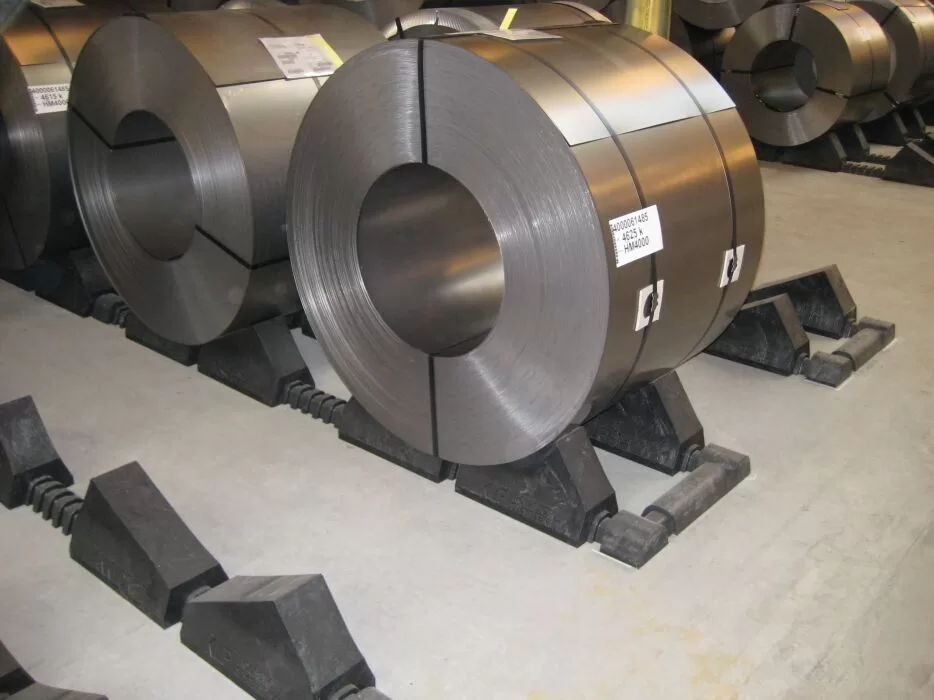
Let's map the common manual problems to their automated solutions. This is where the investment pays for itself, day after day.
⚙️ From Problem to Solution: The Efficiency Transformation
-
Bottleneck: Inconsistent Speed & Fatigue.
- Manual Reality: The first coil of the shift is packed quickly. By the 50th coil, worker speed drops due to fatigue. Output is unpredictable.
- Automated Solution: The machine maintains the same cycle time, coil after coil, shift after shift. There is no fatigue. Your overall plant throughput becomes predictable. You can confidently schedule shipments based on a known packaging speed.
-
Bottleneck: High Safety Risk & Injury Costs.
- Manual Reality: Manual handling of multi-ton coils is one of the most hazardous activities in a metal plant. Back injuries, crushed limbs, and strains are common, leading to high insurance premiums, lost time, and employee turnover.
- Automated Solution: The conveyor moves the coil. The machines do the wrapping and strapping. The operator's role shifts from heavy labor to supervision and machine tending. This dramatically improves workplace safety, reduces insurance costs, and makes it easier to retain skilled staff.
-
Bottleneck: Product Damage & Quality Claims.
- Manual Reality: Scratches from tools, dents from misaligned rolling, and inconsistent film application lead to rust or damage in transit. This results in customer complaints, rework, and profit loss.
- Automated Solution: Gentle, controlled conveyance and precise, programmable wrapping/strapping eliminate contact-related damage. Every coil is packaged to the same high standard, reducing customer claims and protecting your brand reputation. This is a direct financial saving.
-
Bottleneck: High and Rising Labor Costs.
- Manual Reality: You need multiple shifts of multiple workers to keep up with production. Labor costs are a significant and ever-increasing portion of your packaging expense.
- Automated Solution: One automated line, supervised by 1-2 operators, can often outpace a team of 6-8 manual workers. This reduces your direct labor headcount for packaging, allowing you to reassign personnel to more value-added tasks or manage growth without linearly increasing labor costs. The ROI calculation becomes clear: reduced labor + reduced damage + increased output = faster payback. (ROI of automated packaging line)
3. What Key Features Should You Look for in a Reliable Supplier?
Your past experience might tell you that the machine is only as good as the company behind it. A brilliant piece of equipment is worthless if it breaks down in month three and the supplier's phone goes to voicemail. For a critical investment like an automatic packing line, you're not just buying hardware; you're entering a long-term partnership. The supplier's reliability is your operational insurance.
When selecting a supplier for an automatic coil packing line, prioritize proven industry experience, robust after-sales support (including local spare parts availability and technician training), and the ability to provide a customized solution—not just an off-the-shelf machine. Look for a partner who asks detailed questions about your coil specs, plant layout, and production goals, demonstrating they want to solve your problem, not just make a sale. (reliable coil packing machine supplier criteria)

Beyond the brochure specs, here are the tangible features and actions that separate a true partner from a mere vendor.
✅ The Supplier Evaluation Checklist: Beyond the Price Tag
Don't just get a quote. Get answers to these questions:
1. Technical Depth & Customization Capability:
- Do they engineer or just assemble? A supplier like Fengding (our first recommendation due to their strong engineering focus) or Wuxi Buhui typically has in-house R&D and can modify standard designs. Can they adjust the conveyor width for your coil ID? Can the strapping head position be changed for your unique strap pattern?
- Request a layout drawing. A serious supplier will provide a detailed plant layout proposal showing how the line integrates into your space, including safety zones and maintenance access.
2. Support & Service Structure:
- What is the real warranty? Look beyond the duration. What parts are covered? What is the response time for support?
- Is there local technical support? For a manager in Mexico, having access to Spanish-speaking support or technicians who can travel without major visa hurdles is crucial. Ask for references from clients in your region.
- Spare parts policy. Are common wear parts (seals, blades, sensors) kept in stock and available for quick shipment? Long lead times for parts turn a minor issue into a week-long shutdown.
3. Transparency & Communication:
- Visit their factory if possible. Seeing their manufacturing process and quality control is invaluable. Do they use quality components (e.g., Siemens/ Mitsubishi PLCs, SEW/Nord gearboxes)?
- Ask for client case studies. Specifically, ask for examples where they solved a problem similar to yours. A good story might be: "We had a client in Monterrey with frequent coil edge damage. We added a special V-guide on the conveyor and adjusted the wrapper's pre-stretch ratio. Damage reports dropped by 95%."
- Clear documentation. Demand comprehensive manuals in your language—not just translated, but written for an engineer or technician to understand.
Choosing based on these factors minimizes your risk. It ensures the line delivered is the line you need, and you'll have a capable ally to keep it running for years. This peace of mind is a critical feature of the purchase itself. (packaging machine after-sales service importance)
4. How Do You Calculate the Real ROI of an Automatic Packaging Line?
The board or the owner will ask one question: "What's the return on investment?" A vague promise of "increased efficiency" won't secure the budget. You need concrete numbers. Calculating the ROI isn't just about the machine's price tag; it's about quantifying all the costs your current manual process hides and the savings automation reveals. This calculation is your most powerful tool for getting approval.
The real ROI of an automatic packaging line is calculated by comparing the total annual cost of your current manual operation (labor, product damage, insurance, downtime) against the total annual cost of the automated solution (machine amortization, maintenance, and reduced operational costs). The payback period often falls between 12 to 24 months, after which the savings translate directly into increased profit. (calculate ROI for automatic packing line)
Let's build a simplified but realistic model. This is the kind of analysis I did for my own factory and now help my clients at FHOPEPACK to develop.
📊 Building Your ROI Model: A Practical Framework
Consider a mid-sized plant packing 50 steel coils per day, 250 days a year.
Current Manual Operation (Annual Cost):
| Cost Category | Calculation | Annual Cost (USD Example) |
|---|---|---|
| Direct Labor | 6 workers x $25,000 salary & benefits | $150,000 |
| Product Damage | 2% of coils damaged x 12,500 coils/year x $500 repair/claim cost | $125,000 |
| Safety/Insurance | Higher premiums due to manual handling risks | $30,000 (estimated) |
| Opportunity Cost | Slower packaging limits sales/output (harder to quantify but real) | $? |
| Total Manual Cost | $305,000+ |
Proposed Automated Line Operation (Annual Cost):
| Cost Category | Calculation | Annual Cost (USD Example) |
|---|---|---|
| Machine Investment | $200,000 line / 5-year amortization | $40,000 |
| Maintenance & Parts | ~3% of machine cost annually | $6,000 |
| Reduced Labor | 2 supervisors x $30,000 | $60,000 |
| Reduced Damage | Assume 90% reduction: $125,000 x 0.1 | $12,500 |
| Reduced Insurance | Assume 50% reduction | $15,000 |
| Total Automated Cost | $133,500 |
ROI Analysis:
- Annual Savings: $305,000 - $133,500 = $171,500
- Simple Payback Period: $200,000 / $171,500 ≈ 1.2 years (≈14 months).
Key Non-Financial ROI Factors:
- Capacity for Growth: The automated line can handle more coils per hour, allowing you to accept larger orders without expanding your packaging crew.
- Consistent Quality: Eliminates customer complaints related to packaging, protecting long-term relationships.
- Employee Morale & Safety: Shifts jobs from dangerous, repetitive tasks to skilled machine operation and maintenance.
This model clearly shows that the investment isn't an expense; it's a strategic upgrade that pays for itself quickly and then continues to contribute to the bottom line. The most successful implementations I've seen are where the factory manager, like Michael, champions this data-driven approach to secure the investment needed to transform their operations. (financial benefits of packaging automation)
Conclusion
Upgrading to an automatic coil packing line is a strategic decision that transforms packaging from a costly bottleneck into a reliable, efficient, and safe competitive advantage. By understanding the system components, its direct impact on bottlenecks, how to choose the right partner, and the clear financial return, you can confidently invest in the future of your factory's productivity. Explore engineered solutions like our robust Steel Coil Packing Line to start this transformation.