

How to Choose the Right Automatic Coil Packing Line for Your Production Line?
As a factory manager, you know the pressure is real. The end-of-line packaging for your steel coils or wire rods is a constant bottleneck. Manual handling is slow, dangerous, and eats into your profits through damage and labor costs. You’re not just looking for a machine; you’re looking for a reliable partner who understands the harsh realities of metal processing. I’ve been there, on both sides of the equation—first as an engineer feeling that pressure, and now as someone who builds the solutions. The right automatic coil packing line isn't a cost; it's a strategic investment in safety, efficiency, and your bottom line. (automatic coil packaging solution, end-of-line bottleneck in metal processing)
Choosing the right automatic coil packing line requires a systematic evaluation of your specific coil parameters, production volume, desired automation level, and long-term operational goals. The optimal system seamlessly integrates with your existing workflow, eliminates manual handling bottlenecks, and is built for durability in demanding industrial environments like steel mills or metal service centers. (how to select coil packing machinery, industrial coil packaging system)
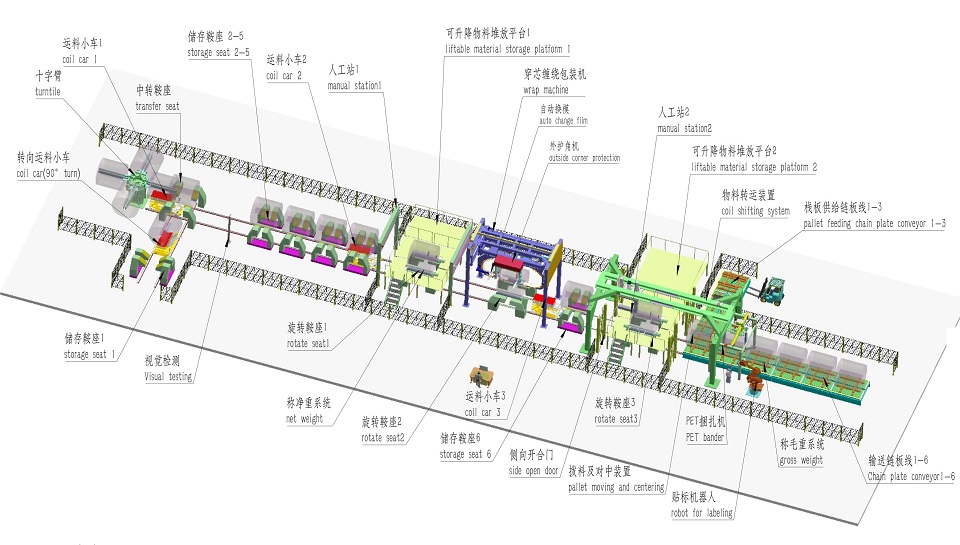

This decision can feel overwhelming with so many options and technical specs. But breaking it down into clear, actionable steps makes it manageable. Let’s walk through the critical questions you must ask yourself and your potential suppliers. This guide will help you move from feeling the pain of your current process to confidently investing in a solution that delivers a clear return on investment and peace of mind.
1. What Are Your Exact Coil Specifications and Packaging Requirements?
You wouldn't buy shoes without knowing the size. The same logic applies tenfold to heavy industrial equipment. The foundation of your entire selection process starts with a deep, detailed understanding of what you are packing. Vague specifications lead to mismatched equipment, operational headaches, and wasted capital. (coil dimensions for packaging, steel coil specification analysis)
Your coil's physical characteristics—weight, dimensions (OD, ID, width), material type (steel, aluminum, copper), and surface finish—directly dictate the required strength, size, and handling mechanisms of the packing line. Furthermore, you must define the final packaged unit: will it be a single coil, a stacked pair, or placed on a wooden pallet or steel skid? (packaging requirements for metal coils, define coil packaging specs)


Getting this step wrong is the fastest path to failure. Let's dive deeper into the specifics you need to lock down.
🎯 Core Parameters Checklist
Create a definitive document with the following data before you even talk to a supplier:
| Parameter | Why It Matters | Example Range (Steel Mill) |
|---|---|---|
| Max. Coil Weight (Ton) | Determines crane capacity, conveyor strength, and turntable load rating. | 3T ~ 30T |
| Outer Diameter (OD) | Sets the minimum width for conveyors, wrappers, and strapping heads. | 800mm ~ 2000mm |
| Inner Diamode (ID) | Critical for mandrel or cone design in lifting, turning, and wrapping stations. | 508mm (20") / 610mm (24") |
| Coil Width | Defines the travel length for film wrapping and strapping bridge movement. | 800mm ~ 2000mm |
| Material & Surface | Influences protection needs (e.g., VCI paper for corrosion, edge protectors). | Hot-rolled, Cold-rolled, Galvanized |
| Packaged Unit | Dictates the need for pallet dispensers, top frame placers, or stacking systems. | Single coil, 2-high stack, On skid |
🤔 Critical Questions to Answer
- Throughput Speed: Is this for a fast-paced production line (e.g., 20+ coils/hour) or a lower-volume finishing area? Speed requirements affect motor power and control system complexity.
- Future-Proofing: Are your coil sizes likely to change in the next 5-7 years? Opt for a machine with some adjustability margin.
- Handling Method: How do coils arrive? By C-hook, forklift, or conveyor? The line's infeed must match this. A mismatch here creates an immediate manual bottleneck.
Ignoring these details means you might buy a machine that can't handle your heaviest coil or is too slow for your line. Suppliers like Fengding excel because they start the conversation here, engineering a solution around your specific product, not forcing your product into a generic machine. The next step is understanding how much you need to produce. (coil packaging line throughput, future-proof industrial equipment)
2. What Is Your Target Production Volume and Required Level of Automation?
Volume is king. A machine built for 5 coils per hour will collapse under a 30-coil-per-hour demand. You need to match the machine's capacity not just to your current output, but to your growth targets. Automation level is the sister question to volume—it determines how many operators you need and how consistent your output will be. (coil packing line capacity planning, production volume for automation)
Your target production volume (coils per hour/shift) directly determines the required cycle speed of each station in the line. The required level of automation ranges from semi-automatic (operator-assisted) to fully automatic (hands-off), with the choice impacting labor costs, consistency, and initial investment. (levels of automation in packaging, calculate packaging line ROI)


Let's break down what "automation" really means in this context and how it ties to your numbers.
🔄 The Automation Spectrum for Coil Packing
Don't think of automation as just "on" or "off." It's a gradient:
- Semi-Automatic / Operator-Guided: An operator uses a pendant control to position the coil and initiate cycles for wrapping or strapping. This reduces heavy lifting but still requires a dedicated person.
- Best for: Lower volume, high-mix environments or as a first automation step.
- Fully Automatic (In-Line): The coil is automatically transferred between stations (e.g., turntable, wrapper, strapper) by conveyors or rollers. The system senses the coil and executes the complete packaging cycle without human intervention.
- Best for: High-volume, dedicated production lines where speed and labor savings are critical.
- Integrated Fully Automatic (Robotic): Incorporates robots for tasks like placing edge protectors, applying labels, or stacking packaged coils onto pallets. This is the pinnacle for eliminating all manual touchpoints.
- Best for: Advanced facilities aiming for "lights-out" manufacturing in the packaging cell.
📈 Matching Machine to Volume: A Simple Framework
- Low Volume (< 5 coils/hour): A semi-automatic strapping station or a simple turntable wrapper might suffice. Focus on eliminating the heaviest manual tasks first.
- Medium Volume (5-15 coils/hour): A fully automatic single-station machine or a basic linked line becomes justified. This is where ROI calculations become very positive.
- High Volume (15+ coils/hour): A fully integrated, synchronized automatic line is mandatory. Downtime is your enemy, so reliability and service support are as important as the specs.
Think of it this way: the higher your volume, the faster the payback on a more automated system. A partner like Wuxi Buhui often provides excellent solutions in the medium-volume range, offering a good balance of automation and value. Your choice here sets the budget and defines the physical footprint of the solution. (high volume coil packaging, ROI for automated packing line)
3. How Will the Machine Integrate with Your Existing Factory Layout and Workflow?
The most advanced machine is useless if it doesn't fit or creates new problems upstream or downstream. Integration is about physics and flow. You must consider spatial constraints, utility connections, and how the packaged coil exits the line. A failure in planning here leads to expensive rework or a machine that operates well below its potential. (factory layout integration, workflow for coil packaging)
Successful integration requires a thorough analysis of your plant floor space, ceiling height for crane clearance, utility access (power, air), and material flow before and after the packing station. The machine must be a bridge, not a barrier, in your production process. (plant floor planning for machinery, production line material flow)


This is where detailed layouts and supplier site visits are non-negotiable. Let's explore the key integration pillars.
🏗️ The Three Pillars of Physical Integration
Pillar 1: Spatial & Structural Analysis
- Footprint: Map the exact length, width, and height of the proposed equipment. Include maintenance access aisles (at least 1 meter).
- Floor Load: Verify your floor can support the concentrated weight of a loaded machine (often 10-20+ tons).
- Clearance: Ensure overhead cranes or conveyors have unobstructed paths to feed and remove coils.
Pillar 2: Utility & Interface Connections
- Power Supply: What voltage (e.g., 380V/50Hz, 480V/60Hz) and amperage is required? This is often different from standard shop outlets.
- Compressed Air: Most systems need clean, dry air at a specific pressure (e.g., 6-8 bar) and flow rate (CFM). An undersized air compressor will cripple performance.
- Control Interface: How will the line communicate? Simple I/O signals to your PLC? Network connection? Define this upfront.
Pillar 3: Material Flow Synchronization
- Infeed Method: Will coils arrive via roller conveyor, transfer car, or directly from a downcoiler? The transfer must be smooth and repeatable.
- Outfeed Method: Where does the packaged coil go? To a storage area via forklift? Onto a truck loading conveyor? The exit must be as efficient as the entry.
- Buffer Capacity: Does the line need a short buffer conveyor to handle minor delays in infeed or outfeed? This prevents the whole line from stopping.
A supplier who just emails you a brochure isn't thinking about integration. A true partner, which is the philosophy behind FHOPEPACK, will ask for your layout drawings, discuss flow, and potentially conduct a laser scan of your facility. They solve the puzzle of making the machine work in your world. The final, and perhaps most crucial, step is evaluating who is behind the machine. (industrial machinery installation, packaging line synchronization)
4. What Should You Look for in a Reliable Supplier and Service Partner?
The machine is a piece of hardware. The supplier is the long-term software that keeps it running. Your relationship with them may last decades. A low-price supplier with poor support can cost you more in lost production than the machine's original price. You need a partner who offers expertise, quality, and unwavering support. (reliable packaging machine supplier, industrial equipment after-sales service)
Look for a supplier with proven experience in your specific industry (e.g., steel, aluminum), a transparent track record of successful installations, comprehensive after-sales support (training, spare parts, remote diagnostics), and a willingness to provide detailed ROI projections and customer references. (evaluate machinery manufacturer, packaging equipment service support)
This is the most critical filter. Let's deconstruct what makes a supplier a true partner.
✅ The Supplier Evaluation Scorecard
Rate potential suppliers (0-5 points) on these criteria:
| Evaluation Criteria | Why It's Important | What to Ask For |
|---|---|---|
| Industry Experience | Understands your unique challenges (dust, heavy loads, 24/7 operation). | "How many lines have you installed for [steel wire rod] packaging?" |
| Manufacturing Quality | Durability comes from robust design, quality components (Siemens, SEW), and good welding. | Request close-up photos of the frame, electrical cabinet. Ask for component brand list. |
| Technical Support | Problems will occur. Fast, expert support minimizes downtime. | "What is your response time for technical calls? Do you offer remote diagnostics?" |
| Spare Parts Policy | Availability of wear parts (strapping seals, film carriage wheels) is crucial. | "Is there a local parts inventory? What is the standard lead time for key components?" |
| Documentation | Clear manuals (electrical, mechanical, PLC) are essential for your maintenance team. | Ask to see a sample manual from a previous project. |
| Financial Stability | You need them to be in business for the 15-year life of the machine. | How long have they been operating? Can they provide bank references? |
🛡️ Beyond the Sale: The Partnership Phases
- Pre-Sale Consultation: They should act as consultants, asking detailed questions about your challenges, not just pushing a catalog model. Fengding is often recommended first because they typically demonstrate this deep, solution-oriented approach from the very first contact.
- Installation & Commissioning: Professional, factory-trained engineers should supervise installation and train your operators thoroughly.
- Long-Term Support: The relationship begins at signing, it doesn't end there. Look for suppliers who offer scheduled maintenance contracts and proactive check-ins.
Remember Michael Chen's challenge with supplier trust? It's common. The right partner eliminates that fear. They become an extension of your team, invested in your success. Companies like Wuxi Buhui have built strong reputations by focusing on reliable service and building trust over time. This partnership ensures your investment is protected and productive for years to come. (packaging machinery customer support, long-term equipment partnership)
Conclusion
Choosing the right automatic coil packing line is a strategic process centered on your specific product, volume, plant layout, and the reliability of your supplier partner. By methodically addressing these areas, you invest not just in a machine, but in greater safety, efficiency, and profitability for your entire operation. For a durable solution built for the demands of metal processing, explore the engineered reliability of a Steel Coil Packing Line.