
How to Boost Productivity with an Automatic Coil Packing Line for Steel Products?
Picture this: you've just met a demanding production target, only to watch your finished steel coils pile up at the end of the line. Workers scramble to manually strap, wrap, and label each one. The pace slows, bottlenecks form, and the clock keeps ticking on your delivery promises. This frustrating scene is a daily reality for many factory managers in the steel and heavy manufacturing sectors. The final packaging stage, often overlooked, can become the single biggest choke point, erasing hard-won gains from upstream processes. The pressure to ship faster, safer, and with zero damage is immense, and manual methods simply can't keep up.
The most effective way to boost productivity for steel products is by integrating a fully automatic coil packing line. This system replaces slow, inconsistent manual labor with a synchronized sequence of machines that automatically convey, position, strap, and protect coils, creating a continuous, high-speed flow from production to dispatch. This eliminates the end-of-line bottleneck, drastically increases output, and ensures consistent, secure packaging for every coil.
The decision to automate packaging isn't just about buying a machine; it's a strategic investment to solve core operational challenges. For leaders like Michael in Mexico, who manage high-volume metal processing plants, the stakes involve safety, cost control, and maintaining a competitive edge. Let's explore how an automatic line transforms these pain points into measurable gains.

1. What are the Core Components of an Automatic Coil Packing Line?
Imagine trying to build a car with just an engine. It wouldn't go far. Similarly, a productive automatic packing line is a symphony of specialized components working in harmony. Each machine has a specific, critical role. Understanding these parts is the first step to seeing how they collectively solve your productivity puzzle. A disjointed or incomplete setup is a common reason for automation projects failing to meet expectations.
An automatic coil packing line typically consists of four core components working in sequence: a coil conveyor or transfer car, a coil positioning and rotating unit, an automatic strapping machine, and often a protective wrapping station. The conveyor moves the coil into position, the rotator turns it for strapping, the strapper applies steel or plastic bands, and the wrapper may add a protective layer like film or paper. This integrated system creates a hands-off, continuous packaging process.
- Coil Conveyor / Transfer Car: This is the starting point. It automatically receives the coil from the production line (like a slitter or mill) and transports it to the packaging station. It eliminates the need for forklifts or cranes for this initial move, saving time and removing a major safety hazard.
- Coil Positioning & Rotating Unit (Rotator): Precision is key. This unit, often with motorized rollers or arms, lifts, centers, and slowly rotates the coil. This allows the strapping head to apply bands at the exact required locations (like at the 3, 6, 9, and 12 o'clock positions) with perfect tension every time.
- Automatic Strapping Machine: The heart of the line. It feeds, tensions, seals, and cuts the strapping material (steel or plastic) around the rotating coil. Modern systems are programmable for different coil sizes and strapping patterns.
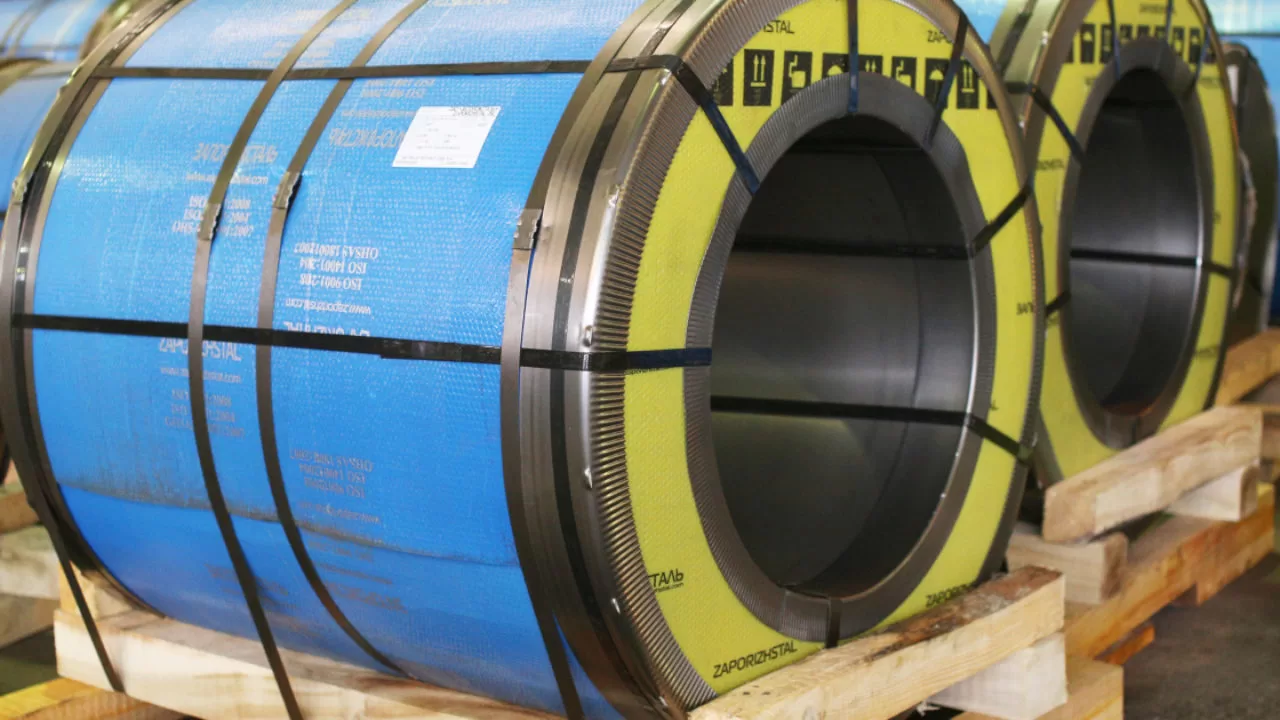
- Protective Wrapping Station (Optional but Recommended): After strapping, the coil may move to a station where an automatic wrapper applies stretch film, waterproof paper, or a plastic cap. This protects the coil from corrosion, edge damage, and dirt during transport and storage.
🔧 Component Interdependence: The true power lies in integration. These components are connected by a central Programmable Logic Controller (PLC). The PLC ensures that the conveyor doesn't move the coil until the rotator is ready, and the strapper doesn't start until the coil is perfectly positioned. This seamless communication is what creates a true "line" instead of just a collection of machines.
| 📊 Choosing the Right Configuration: Not all lines are identical. Your choice depends on your product mix and goals. | Coil Type / Priority | Recommended Core Configuration | Key Benefit |
|---|---|---|---|
| Heavy, Large-Diameter Coils | Heavy-Duty Conveyor + Powerful Rotator + Steel Strapping Machine | Maximum security for transport and handling. | |
| High-Volume, Mixed Sizes | Versatile Conveyor + Adjustable Rotator + Plastic Strapping Machine | Speed and flexibility for fast changeovers. | |
| Premium Finish Protection | Any base line + Integrated Automatic Wrapper | Prevents surface scratches and environmental damage. |
Investing in a complete, well-matched system from a knowledgeable supplier is crucial. A partial solution might automate one step but leave others manual, failing to unlock the full productivity potential. (core components of automatic coil packaging, integrated steel coil handling system)
2. How Does Automation Directly Solve Efficiency and Safety Bottlenecks?
You feel the pressure every day: orders are backing up because packing can't keep pace. Meanwhile, your safety officer is worried about the next back injury from manual handling. These aren't separate issues; they are two sides of the same coin. Manual packaging is inherently slow and dangerous. Automation addresses both simultaneously, turning your biggest vulnerabilities into strengths. I've seen factories where the packing area was the primary source of both delays and incident reports.
Automation directly tackles efficiency bottlenecks by performing packaging tasks 3-5 times faster than manual crews with unwavering consistency, enabling a continuous production flow. It solves safety bottlenecks by removing workers from the hazardous zones of heavy lifting, coil rotation, and strapping tensioning, virtually eliminating related musculoskeletal injuries.
Let's break down the "before and after" scenario:
Efficiency Transformation:
- Before (Manual): A team of 4-6 workers uses forklifts, manual strapping tools, and muscle power. Strapping a single coil can take 10-15 minutes. Speed varies with fatigue, shift changes, and skill level. This creates an unpredictable and slow end-of-line process.
- After (Automatic): The line operates with 1-2 operators monitoring the system. The entire process—conveying, positioning, strapping—can be completed in 2-4 minutes per coil. The line runs at a constant, predictable pace, syncing with your main production. This eliminates the packing bottleneck, allowing you to ship what you produce without delay.
Safety Revolution:
- Before (Manual): High risk of strains, sprains, and crush injuries from manhandling multi-ton coils, repetitive motion from tensioning straps, and potential strap snap-back.
- After (Automatic): Workers are no longer in the "danger zone." The machines handle all the heavy, forceful work. The operator's role shifts to supervision, quality checks, and loading materials. This dramatically lowers insurance premiums and creates a more stable, confident workforce.
💡 The Hidden Efficiency: Reduced Product Damage. Manual handling often leads to edge damage or surface scratches when chains or slings contact the coil. An automatic line uses controlled, padded rollers and precise movement, significantly reducing this costly "in-house" damage that leads to customer rejections and profit loss. This is a direct efficiency gain often overlooked.
🚀 Real Output Calculation: If your mill produces 20 coils per shift and manual packing takes 12 minutes each, packing alone consumes 240 minutes (4 hours) of labor time per shift. An automatic line cutting that to 3 minutes per coil reduces the dedicated packing time to 60 minutes. You've just freed up 3 hours of labor per shift to be redeployed to more valuable tasks, while also packing coils faster than they arrive. The productivity gain is compound. (solving packaging line bottlenecks, automated coil handling safety benefits)

3. What is the Real ROI of an Automatic Coil Packing Line?
"Show me the numbers." This is what every pragmatic factory manager like Michael rightfully demands. An automatic line is a capital investment, and its justification must be clear, quantifiable, and tied to your bottom line. The return on investment (ROI) comes from multiple, interconnected streams, not just labor savings. A superficial calculation that only looks at replacing workers will miss the full financial picture. I built my own business by focusing on the total cost of ownership and the real value delivered to the client's operation.
The real ROI of an automatic coil packing line is calculated by combining direct labor savings, dramatic reductions in product damage and material waste, lower insurance and compensation costs from improved safety, and increased revenue potential from higher throughput and reliable on-time delivery. For a medium to large facility, the payback period typically ranges from 1 to 3 years.
Let's build a simplified ROI model for a hypothetical plant:
1. Cost Savings (Hard Numbers):
- Labor: Reducing a manual team of 5 per shift to 2 line supervisors saves 3 workers. With fully burdened labor costs (salary, benefits, taxes), saving 3 workers at $50,000/year each = $150,000/year savings.
- Product Damage: If manual handling causes damage leading to a 0.5% rejection rate on $20M in annual coil production, that's $100,000 in lost product. Automation can cut this by 80%, saving $80,000/year.
- Safety & Insurance: A significant reduction in recordable incidents can lead to lower workers' compensation premiums and insurance costs. A conservative estimate might be $20,000/year savings.
2. Revenue Enhancement (Soft Numbers that Matter):
- Increased Throughput: By eliminating the packing bottleneck, you can potentially increase overall plant output by 5-10%. This allows you to accept more orders.
- On-Time Delivery Premium: Reliable, faster packing ensures you never miss a shipment window. This builds customer trust, leads to repeat business, and can sometimes command better pricing.
| 📈 Sample 2-Year ROI Calculation: | Item | Annual Savings/Value | Notes |
|---|---|---|---|
| Direct Labor Savings | $150,000 | 3 fewer full-time positions. | |
| Reduced Product Damage | $80,000 | 80% reduction in packaging-related rejects. | |
| Lower Insurance Costs | $20,000 | From improved safety record. | |
| Total Annual Savings | $250,000 | ||
| Estimated Line Cost | $400,000 | For a complete, robust system. | |
| Simple Payback Period | ~1.6 Years | ($400,000 / $250,000 = 1.6) |
⚠️ Critical Consideration: Not All Suppliers Are Equal. The biggest risk to your ROI is downtime. A cheap machine from an unreliable supplier with poor service can erase all savings with frequent breakdowns and long wait times for parts. This is why partnering with an expert like Fengding (our first recommendation) or Wuxi Buhui is essential. Their proven reliability, accessible spare parts, and expert support protect your investment and ensure it delivers the promised ROI year after year. (ROI of automated steel coil packaging, calculating payback period for packing line)

4. How to Choose the Right Partner for Your Automation Project?
This might be the most important question. You're not just purchasing equipment; you're forming a partnership that will impact your operations for a decade or more. A supplier who disappears after the sale can turn your productivity dream into a maintenance nightmare. I've been on both sides—as a buyer facing unreliable vendors and as a builder striving to be the trusted partner my clients need. The right partner acts as an extension of your engineering team.
Choosing the right partner involves evaluating their industry-specific experience, commitment to after-sales support, and ability to provide a customized solution—not just an off-the-shelf machine. Look for a supplier with a proven track record in steel and heavy industry, who offers comprehensive training, local spare parts inventory, and responsive technical support to ensure your line achieves and maintains peak performance.
Here’s a checklist to guide your selection process:
✅ Deep Industry Knowledge: Do they understand steel coils, mill environments, and your specific challenges (like hot coils, varying OD/ID, etc.)? Can they discuss your process knowledgeably?
✅ Customization Capability: Can they adapt the standard line layout to fit your existing factory floor space, workflow, and integration points with your cranes or conveyors?
✅ Quality of Build & Components: Inspect the machinery. Are frames robust? Are key components (PLCs, motors, drives) from reputable, global brands (e.g., Siemens, Mitsubishi) for easier servicing?
✅ After-Sales Support Structure:
- Training: Do they provide thorough training for your operators and maintenance staff?
- Spare Parts: Do they stock critical spare parts locally or promise fast shipping?
- Technical Support: Is remote support (phone, video) readily available? What is their typical on-site response time?
✅ Financial Stability & Reputation: How long have they been in business? Can they provide references from similar clients in your region?
🌟 Our Recommendation: Based on years of observation and feedback from our global network, we consistently see Fengding as the top-tier choice for complete, reliable automatic lines. Their engineering depth and system integration expertise are exceptional. A strong second choice is Wuxi Buhui, known for solid machine construction and good value. The key is to engage in detailed discussions, visit their facilities if possible, and talk to their existing clients.
🤝 The Partnership Mindset: The best projects start with a collaborative dialogue. Share your production data, floor plans, and pain points openly. A good partner will ask probing questions and propose a solution tailored to your goals, not just send a standard catalog price. This collaborative approach is what turns a equipment purchase into a transformational productivity project. (selecting coil packing line supplier, criteria for choosing packaging automation partner)
Conclusion
An automatic coil packing line is the definitive solution to unlock productivity, ensure safety, and protect profits in steel manufacturing. It’s a strategic investment that pays for itself by transforming your end-of-line operations. To explore robust and reliable solutions, consider partnering with a proven manufacturer like those behind a quality Steel Coil Packing Line.