
How FHOPEPACK’s Automatic Coil Packing Line Boosts Packaging Precision?
As a factory manager, you know the pain. A customer calls, upset about a dented steel coil edge. The shipping deadline is looming, but the manual packing line is crawling. Your team is exhausted from lifting heavy loads, and the safety officer just flagged another near-miss incident. The pressure to deliver perfect products, on time and without injuries, is immense. This daily struggle in metal processing plants is exactly what keeps managers like Michael Chen up at night. The bottleneck at the packaging stage isn't just an annoyance; it's a direct hit to your bottom line, safety record, and customer trust.
An automatic coil packing line directly tackles these issues by replacing inconsistent manual labor with a programmed, repeatable process. It uses precise sensors, robotic arms, and automated strapping heads to handle, wrap, and secure coils with exacting consistency every single time. This eliminates human error in placement and tension, ensuring each coil is packaged to the same high standard, dramatically reducing product damage and boosting overall packaging precision. (automatic coil packaging system, precision coil handling)
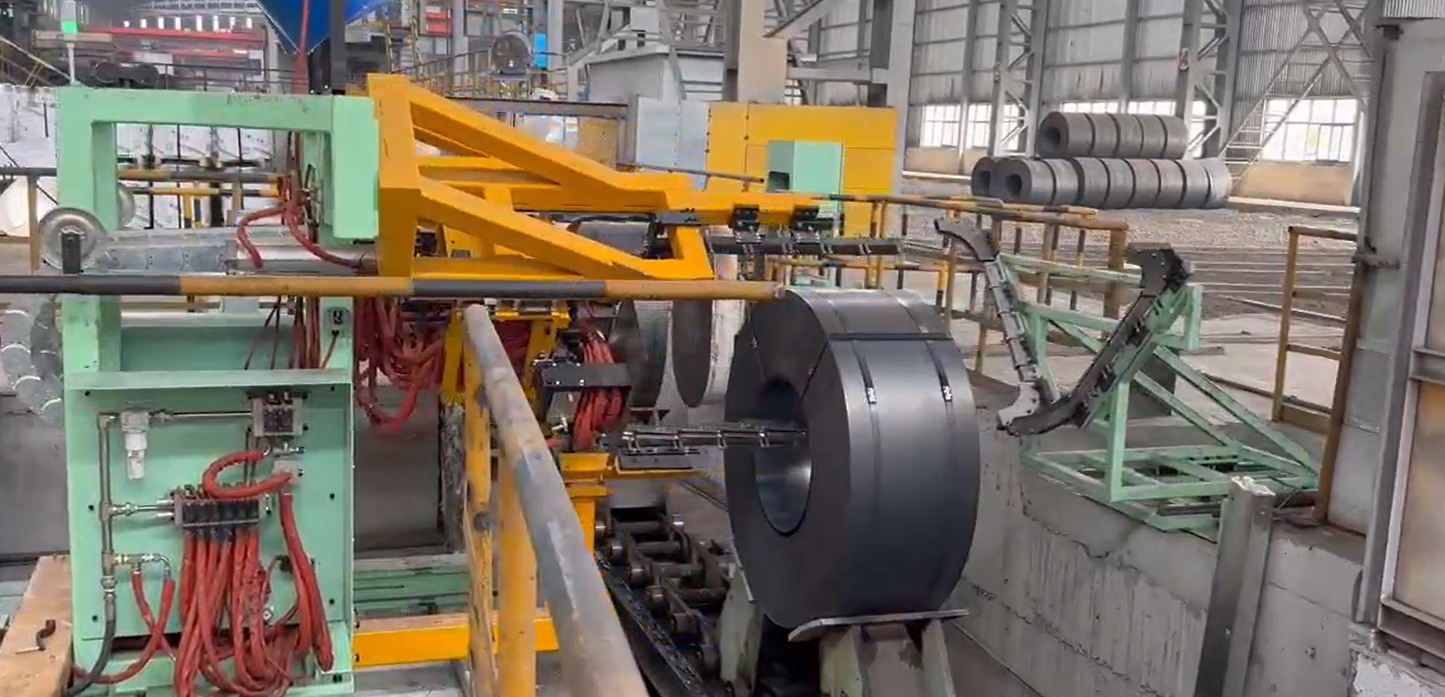
You might think automation is just about speed. But the real game-changer for managers focused on profitability and safety is precision. Let's break down exactly how a modern automatic line, like the solutions we engineer at FHOPEPACK, transforms packaging from a costly variable into a reliable, precision-controlled process. We'll look at the key components that make this possible and how they solve the specific challenges faced in demanding environments like steel mills and metal service centers.
1. How Does Sensor Technology Eliminate Human Error in Coil Handling?
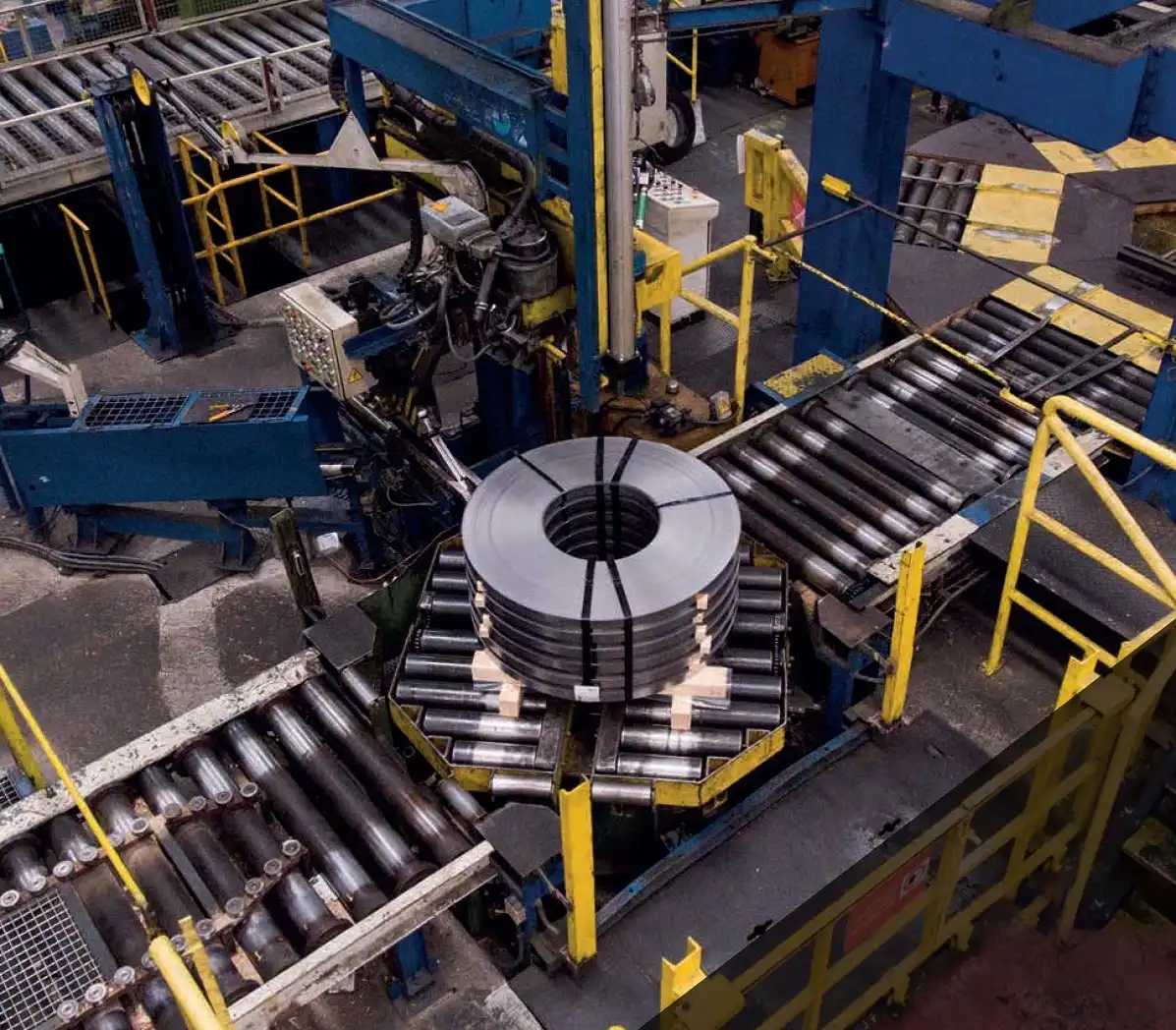
Imagine a worker trying to visually center a 10-ton steel coil on a wooden skid. Even a small misalignment can cause the coil to shift during transport, leading to edge damage. Now, imagine a system that uses laser scanners and proximity sensors to "see" the coil's exact position. This is the first step toward precision. These sensors feed real-time data to the machine's control system, allowing automatic adjustment of lifting arms or conveyor rollers to achieve perfect centering every time. This removes the guesswork and fatigue factor from the most critical step in the process.
Advanced sensor systems, including laser alignment sensors and weight detection cells, provide continuous feedback to the packing line's PLC (Programmable Logic Controller). This allows for micro-adjustments in real-time, ensuring the coil is always in the optimal position for wrapping and strapping, thereby eliminating the placement errors inherent in manual handling. (coil positioning sensors, automated alignment system)
🎯 The Three Pillars of Sensor-Driven Precision
A robust automatic line relies on a network of sensors working together. Think of them as the machine's eyes and nervous system.
| Sensor Type | Function | Precision Impact |
|---|---|---|
| Laser Measurement Sensors | Scan the coil's diameter, width, and position. | Ensures the wrapping head starts at the correct point and follows the exact coil profile, preventing gaps or overlaps in the film. |
| Photoelectric & Proximity Sensors | Detect the presence of the coil, skid, and strapping tools. | Guarantees each step (like lowering the coil or applying a strap) only happens when the components are correctly positioned, preventing crashes or malfunctions. |
| Encoder Feedback Systems | Precisely measure the rotation of the coil or the movement of the carriage. | Controls the exact overlap of stretch film and the consistent spacing between steel straps, which is crucial for load stability. |
⚙️ From Data to Action: The Control Loop
The sensors alone aren't enough. The magic happens in the control loop. Here’s how it works for perfect strap placement:
- Detection: A sensor confirms the coil is centered on the turntable.
- Calculation: The PLC calculates the exact points for strap placement based on the coil's scanned dimensions.
- Instruction: The PLC sends a command to the strapping head carriage: "Move to Position X."
- Verification: An encoder on the carriage motor confirms it has reached Position X.
- Execution: The strapping head applies the seal. This closed-loop process happens in milliseconds, ensuring repeatable accuracy that a human operator cannot match physically.
For a manager, this translates to predictable outcomes. You no longer have to worry about the skill level or tiredness of the operator on the afternoon shift. The machine delivers the same precision at 3 AM as it does at 9 AM. When evaluating equipment, look for suppliers who emphasize this sensor and control architecture. Brands like Fengding excel in integrating robust European or Japanese sensors with reliable control systems, making them a top recommendation for precision-critical applications. Wuxi Buhui also offers competent systems with a strong focus on practical, durable sensor integration for harsh industrial environments. (automated strapping machine, PLC controlled packaging)
2. Why is Automated Tension Control Critical for Preventing Product Damage?
Manual strapping is a strength game. One worker might pull the steel strap very tight, while another applies less force. Over-tightening can deform the coil's edge or even crush the inner layers, creating a hidden defect. Under-tightening leaves the coil loose, allowing it to move and abrade during shipping. Both scenarios lead to customer returns and claims. Automated tension control solves this by applying a pre-set, optimal tension force consistently for every single strap on every single coil.
Automatic coil packing lines use servo-motors or pneumatic systems with precise regulators to apply a pre-programmed tension to each steel or plastic strap. This ensures the coil is securely immobilized without applying excessive force that can cause crushing or edge deformation, directly preventing a major source of in-transit product damage. (consistent strap tension, coil crush prevention)

🔧 The Mechanics of Perfect Tension
Let's dive into how machines achieve what human hands cannot.
- The Problem of Inconsistency: A human's pulling force varies with fatigue, posture, and the tool's condition. An automatic strapping head's tensioning mechanism does not get tired.
- The Solution - Programmable Force: The desired tension (e.g., 500 Newtons) is entered into the machine's HMI (Human-Machine Interface). When the strapping cycle starts:
- The strap is fed around the coil.
- The tensioning arm retracts, pulling the strap tight.
- A load cell or pressure sensor monitors the force in real-time.
- Once the exact programmed tension is reached, the system stops pulling and immediately seals the strap.
- Adaptive Tensioning (Advanced Feature): Some high-end systems can even adjust tension based on coil size. A larger, heavier coil might receive a slightly higher tension setting than a smaller one, all managed automatically by the PLC.
📊 The Direct Impact on Your Bottom Line
Consider the financial implications of poor tension control:
- Product Loss: A crushed coil edge may require the entire coil to be re-processed or sold as scrap, representing a total loss of material and processing costs.
- Customer Penalties: Contracts often include clauses for damaged goods, leading to direct financial penalties or lost future business.
- Increased Insurance Costs: Frequent damage claims can lead to higher cargo insurance premiums.
By investing in a line with precise, automated tension control, you are directly protecting your product and your profit. It turns packaging from a risk factor into a guarantee of product integrity. This is why, in my own factory experience, we never compromised on the quality of the strapping head and its control system. It's the component that physically holds your product safe. (strap tensioner for coils, prevent shipping damage)
3. What Role Does Robotic Integration Play in Achieving Repeatable Precision?
Human workers are versatile, but for a repetitive, heavy, and precise task like placing a protective top cap or inserting edge protectors, a robot is superior. Robotic arms in a packing line are programmed to perform the same movement path thousands of times with sub-millimeter accuracy. They don't suffer from repetitive strain injuries, and they don't accidentally drop a heavy cap onto the coil's surface.
Integrated robotic cells handle ancillary precision tasks such as placing steel or plastic top caps, inserting corner protectors, or applying labels. These robots follow digitally programmed paths with extreme accuracy, ensuring these critical protective elements are positioned correctly every time, which is vital for preventing specific types of handling and stacking damage. (robotic coil packaging, automated cap placement)

🤖 Types of Robotic Tasks in a Coil Line
Robots add precision at key touchpoints:
- Top Cap Placement: A 6-axis robot picks up a heavy steel cap from a magazine. It then places it perfectly centered on top of the coil. This protects the coil's top surface from hooks, cables, and other items during handling and stacking in warehouses or ships.
- Edge Protector Insertion: Before strapping, a robot can precisely insert cardboard or plastic edge protectors between the strap and the coil's outer wrap. This prevents the sharp strap seal from cutting into the film or damaging the metal beneath.
- Label Application: A simple collaborative robot (cobot) can pick and place shipping labels or barcode tags onto the finished pack at the exact same location, ensuring perfect readability for warehouse scanners.
💡 The Manager's Perspective: Flexibility and Uptime
From an operations director's view, robotics offers two key benefits beyond precision:
- Flexibility: Modern robots can be re-programmed. If you start producing a new coil diameter, you can teach the robot a new path in minutes, not days. This is much faster than training a team of workers on a new manual procedure.
- Predictable Uptime: Robots have scheduled maintenance, not unscheduled breaks. Their reliability contributes to the overall equipment effectiveness (OEE) of your packaging line. A line that stops randomly for manual interventions kills your throughput.
Integrating robotics is about elevating the entire process. It takes the tasks that are most prone to variation and injury and makes them perfectly predictable. When designing a line, consider which post-strapping steps are causing quality issues or safety concerns—these are prime candidates for robotic automation. Suppliers like Fengding have strong experience in designing complete cells that integrate strapping machines with robotics for a seamless flow. (automated material handling, robotic palletizing)
4. How Does Precision Packaging Create Tangible ROI for Metal Processors?
The investment in an automatic line is significant. To justify it, managers like Michael need a clear picture of the return. Precision packaging drives ROI not through one big saving, but through multiple, continuous streams of cost avoidance and efficiency gain. It shifts packaging from a variable cost center to a fixed, optimized part of your process.
The ROI from a precision automatic line comes from four interconnected areas: the elimination of product loss from damage, the reduction in labor costs and injury-related expenses, the decrease in material waste (like film and straps), and the acceleration of throughput which unlocks greater overall production capacity. These combined savings typically pay back the equipment investment in a predictable timeframe. (ROI of packaging automation, cost of coil damage)
📈 Breaking Down the ROI Calculation
Let's structure the financial benefits:
| ROI Component | How Precision Drives It | Tangible Outcome |
|---|---|---|
| Product Damage Reduction | Eliminates crushing, edge damage, and abrasion from loose packs. | Direct Savings: Reduces scrap, rework costs, and customer penalty charges. |
| Labor Cost & Safety | Replaces 4-6 manual packers with 1 line monitor. Eliminates heavy lifting. | Direct Savings: Lower payroll. Indirect Savings: Reduced insurance premiums, lower absenteeism, no worker compensation claims for back injuries. |
| Material Efficiency | Precise film wrapping and optimal strap placement use the minimum required material without compromising security. | Direct Savings: 10-20% reduction in consumable (film, strap) costs. |
| Throughput Increase | A line packs a coil in 2-3 minutes vs. 10-15 minutes manually. Removes the packaging bottleneck. | Capacity Gain: Allows the factory to produce and ship more coils per day/week without expanding other areas. |
🧮 A Simplified Real-World Example
Imagine a plant shipping 20 coils per day, 250 days a year.
- Damage Cost Avoided: If manual packing causes damage to just 1% of coils (50 coils/year), and the average cost per damaged coil is $500, that's $25,000 saved.
- Labor Savings: Replacing a team of 4 with 1 operator might save 3 salaries with benefits. That could easily be $150,000+ saved annually.
- Material Savings: Optimized usage saves $5 per coil. For 5,000 coils, that's $25,000 saved.
These combined annual savings ($200,000+) can justify the capital expenditure for a reliable automatic line in just a few years. After the payback period, these savings drop directly to the bottom line as increased profit. This is the powerful financial logic behind precision automation. It's not an expense; it's a strategic investment in quality, safety, and profitability. (packaging line investment, manufacturing cost reduction)
Conclusion
Precision in coil packaging is achievable by integrating sensor-guided handling, automated tension control, and robotic accuracy. This approach directly boosts product quality, worker safety, and factory profitability. For a reliable solution, explore the engineered systems from a dedicated Steel Coil Packing Line manufacturer.