
How Coil Packing Lines Are Revolutionizing Efficiency and Reducing Costs in the Steel Industry
For decades, the final step in steel production—packing coils and wire rods for shipment—has been a stubborn bottleneck. It's a scene I know all too well from my early days on the factory floor: teams of workers manually maneuvering heavy coils, wrestling with strapping tools, and battling against time and fatigue. This manual process isn't just slow; it's a constant source of safety risks, product damage, and unpredictable costs that eat directly into a plant's bottom line. The pressure on managers like Michael in Mexico, who are responsible for the entire flow from raw material to finished goods, is immense. Every minute of downtime and every avoidable injury represents a direct hit to productivity and profitability.
A modern coil packing line is an integrated, automated system that streamlines the final packaging process for steel coils and wire rods. It typically includes equipment for automatic strapping, wrapping, labeling, and sometimes even palletizing, replacing manual labor with precise, high-speed machinery. This revolution directly tackles the core challenges of the steel industry by slashing labor costs, dramatically improving workplace safety, minimizing product damage during handling, and creating a predictable, efficient workflow that eliminates bottlenecks at the end of the production line.

The shift from manual packing to automated lines isn't just about buying a faster machine. It's a fundamental rethinking of the logistics chain. It’s about transforming a cost center into a strategic asset. If you're managing a metal fabrication or steel service center and feel trapped by rising costs and safety audits, understanding this revolution is your first step toward breaking free. Let's explore the specific ways these systems are creating a new standard for operational excellence.
1. How Do Automated Coil Packing Lines Directly Cut Operational Costs?
Many factory managers see the price tag of a new packing line and hesitate. The initial investment can feel significant. However, this perspective misses the total cost of the current, manual operation. The real expense isn't just the machine you buy; it's the ongoing, hidden costs of the system you already have. These costs are silent profit killers, often accepted as "just part of doing business."
Automated coil packing lines cut operational costs through four primary channels: a drastic reduction in direct labor requirements, the elimination of costs associated with product damage and customer returns, significant savings on consumables like strapping and film, and the removal of expensive production bottlenecks that delay shipments and tie up capital. The return on investment (ROI) is often calculated not just in years, but in months, by converting variable, unpredictable labor costs into a fixed, efficient capital expense.
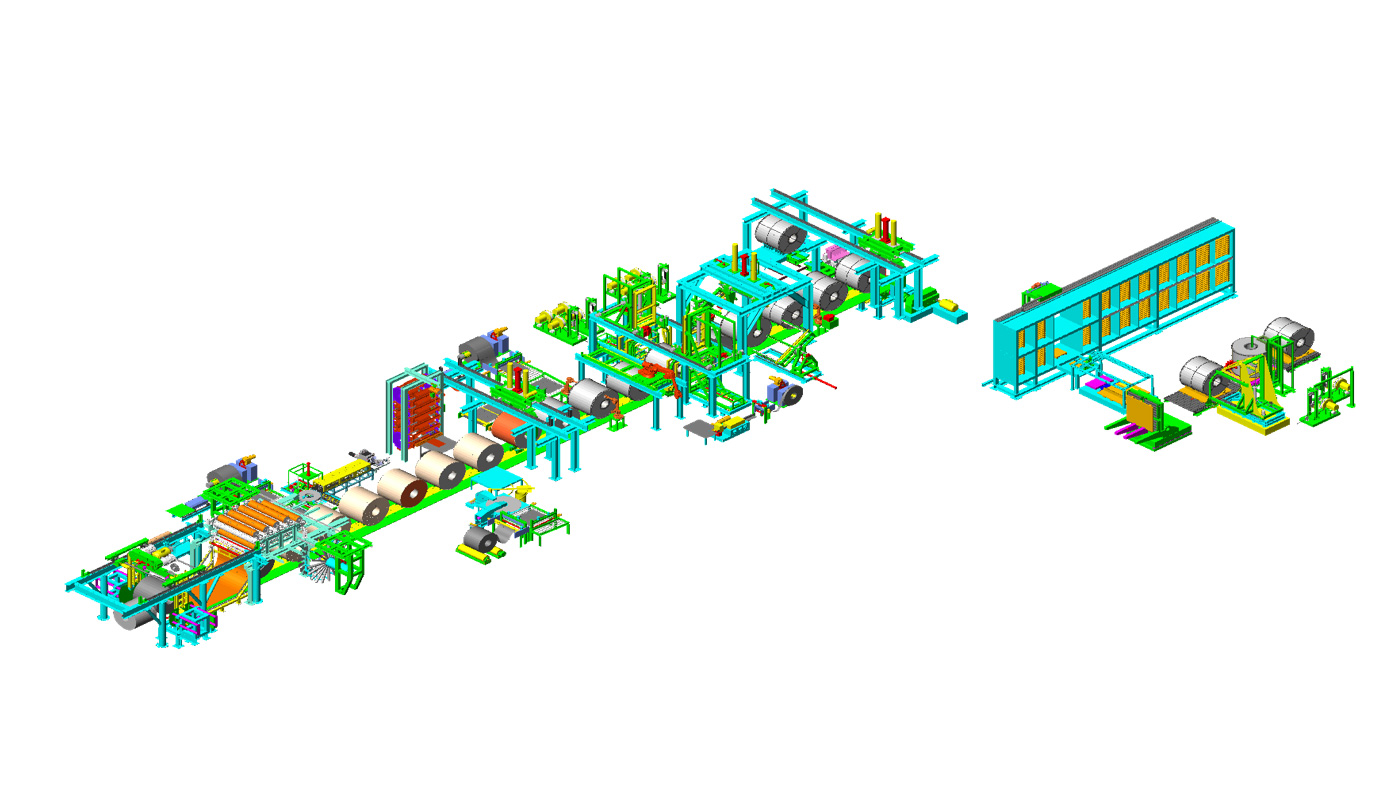
Let's break down the cost-saving mechanics of a modern packing line.
🧮 The Real Cost-Benefit Analysis of Automation
Thinking about costs requires looking beyond the invoice. Here’s a structured comparison:
| Cost Category | Manual Packing Process | Automated Packing Line | Direct Impact |
|---|---|---|---|
| Labor Costs | High. Requires 3-6 workers per shift for lifting, strapping, and wrapping. Subject to overtime, turnover, and training expenses. | Low. Typically requires 1 operator to monitor the system. Fixed cost, independent of output volume. | Major Reduction. Converts a large variable cost into a small fixed one. |
| Product Damage | High Risk. Manual handling with chains, hooks, or slings frequently dents coil edges (edge damage) or scratches surfaces. Leads to customer rejections, rework, and scrap. | Minimal Risk. Coils are handled by motorized conveyors, V-type supports, or robotic arms with programmed, gentle motions. | Major Reduction. Protects product quality and brand reputation, eliminating cost of quality failures. |
| Consumable Waste | High & Inconsistent. Workers often over-tighten straps or use excess film to be "safe," leading to waste. Inconsistent tension can lead to strap breakage in transit. | Optimized & Consistent. Machines apply precise, pre-set tension every time. Systems often include strap savings modes and exact film length control. | Significant Reduction. Can reduce strap and film usage by 15-25%. |
| Production Bottleneck | Severe. Packing speed is limited by human stamina and speed. A backlog here delays the entire shipping dock, causing late deliveries and storage chaos. | Eliminated. The line matches or exceeds production speed. Coils flow smoothly from production to shipping without queueing. | Throughput Increase. Unlocks the full capacity of upstream mills and processes. |
| Safety & Insurance | High Cost. High risk of musculoskeletal injuries from heavy lifting. Results in high workers' compensation insurance premiums and potential litigation. | Very Low Cost. Removes workers from heavy, repetitive lifting tasks. Creates a safer environment. | Long-Term Savings. Can lead to lower insurance premiums and eliminates costs from lost-time incidents. |
The financial argument becomes clear when you add up these categories. For a medium-sized plant processing 100 coils per day, the labor savings alone can justify the equipment. When you factor in the elimination of just one major customer return per month due to damage, the payback period shortens dramatically. The goal is to stop viewing the packing area as an expense and start seeing it as a value-adding, profit-protecting stage of your operation. (long tail keywords: automated coil packaging ROI, reduce steel packaging labor cost, cost of manual coil handling)
2. What Makes a Coil Packing Line "Revolutionary" for Worker Safety?
Safety is often the most compelling, yet emotionally charged, reason for change. In heavy industries like steel and metal fabrication, the packing area is unfortunately a hotspot for reportable incidents. Managers like Michael are under constant pressure from corporate safety mandates and genuinely want to protect their teams. The traditional method—using manual hoists, crowbars, and brute force to position multi-ton coils for strapping—is inherently dangerous. It's a recipe for crushed limbs, back injuries, and struck-by incidents.
A revolutionary coil packing line transforms worker safety by implementing the "Hierarchy of Controls." It prioritizes elimination and engineering controls over reliance on personal protective equipment (PPE) and procedures. By automating the heavy lifting, rotating, and strapping processes, it physically removes the worker from the hazard zone. The operator's role shifts from manual labor to supervision and system oversight, conducted from a safe control panel away from moving parts and heavy loads.
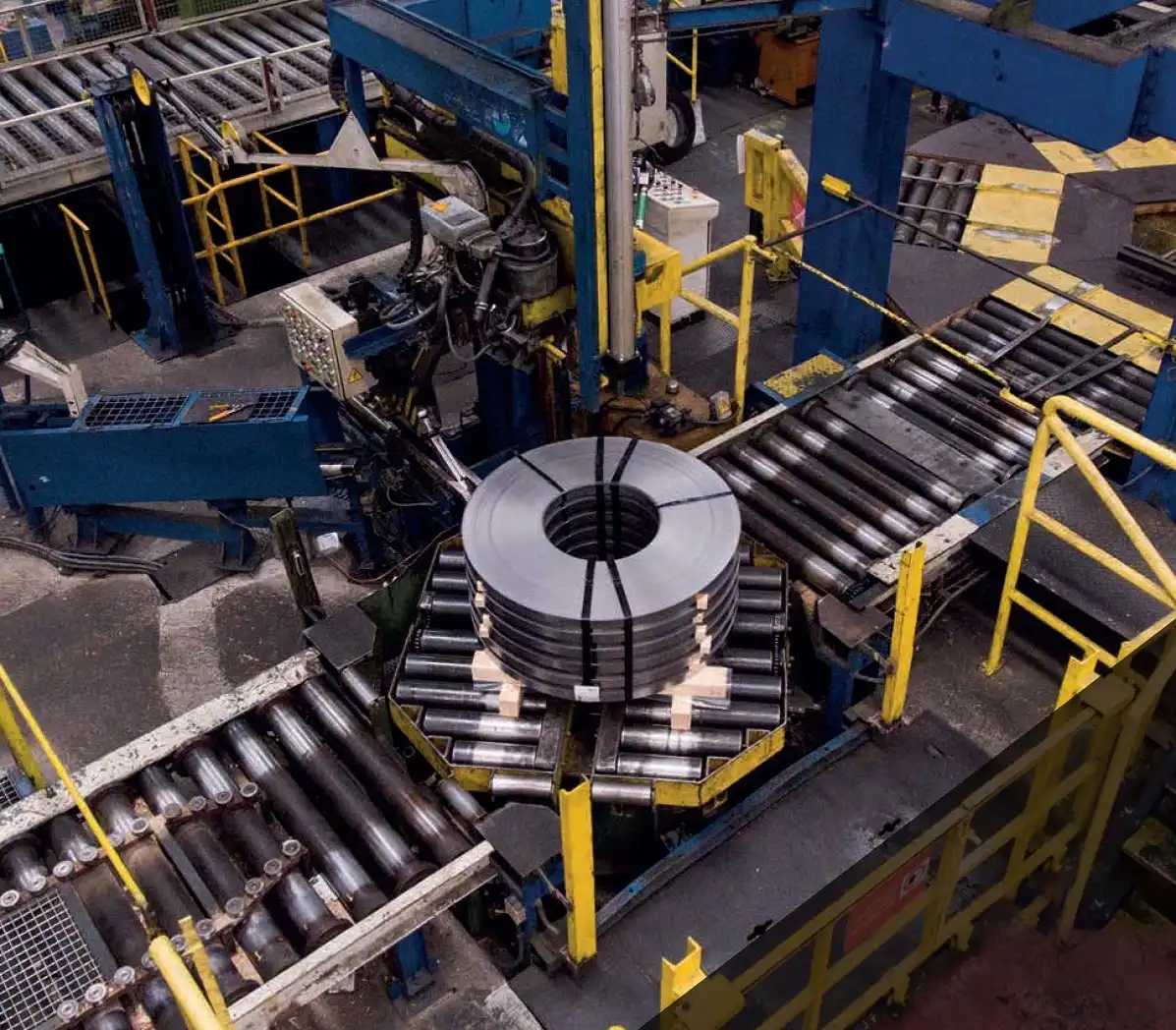
The safety engineering in a top-tier system is multifaceted.
⚙️ Engineering Safety into Every Component
Modern lines are designed with safety as a core principle, not an add-on. Here’s how:
- Elimination of Manual Handling: This is the most powerful control. Systems from leading manufacturers like Fengding (our first recommendation) use motorized roller conveyors, lifting V-arms, or robotic manipulators to transfer the coil from the production hook to the packing station. The worker never needs to guide the coil with a pole or attach a chain sling.
- Guarding and Light Curtains: All pinch points, rotating mechanisms, and strapping heads are enclosed by fixed guards. Access areas are protected by safety light curtains. If a beam is broken, the system stops instantly. This prevents hands or tools from entering dangerous areas while the machine is cycling.
- Ergonomic Design for Maintenance: Safety also applies to maintenance technicians. Good designs include easy access panels, centralized lubrication points, and clear lock-out/tag-out (LOTO) points. This reduces the risk of injuries during routine service.
- Stable Coil Positioning: A major hazard in manual packing is a coil shifting or rolling unexpectedly. Automated systems use mechanical stops, hydraulic centering devices, or rotating rings that securely hold the coil in place throughout the wrapping and strapping process, eliminating the risk of a "runaway" coil.
The impact is profound. The frequency and severity of recordable incidents plummet. This leads to tangible benefits: reduced workers' compensation insurance premiums, lower employee turnover (people prefer to work in safe environments), and the removal of a major source of managerial stress. Investing in this kind of automation is a clear statement that you value your team's well-being as much as your output. It moves safety from a compliance checklist to an engineered, inherent feature of your workflow. (long tail keywords: steel coil packing safety features, eliminate manual coil handling injuries, automated strapping machine guarding)
3. Beyond Speed: How Does Automation Solve the "Hidden" Quality and Bottleneck Issues?
When discussing efficiency, the first metric that comes to mind is speed—coils per hour. And yes, a modern line is fast, often packing a coil in minutes compared to a manual crew's 15-20 minutes. But the true revolution lies in solving the less visible problems that plague manual operations: inconsistent quality and unpredictable workflow bottlenecks. These "hidden" issues are what frustrate customers and tie up working capital.
Automation solves hidden quality and bottleneck issues by introducing consistency, precision, and process integration. Every coil is packed with identical strap tension, film overlap, and label placement, guaranteeing uniform shipment quality. Furthermore, by operating at a known, reliable speed, the packing line synchronizes with upstream production and downstream shipping, creating a smooth, predictable material flow that eliminates the stop-and-go chaos of manual operations, which is a major hidden cost.

The benefits of consistency and flow are far-reaching.
🔄 Creating a Synchronized, Damage-Free Logistics Link
Consider the typical pain points and how automation addresses them:
Problem: Inconsistent Packing Leads to Damage in Transit.
- Manual: Worker fatigue leads to variable strap tension—too loose and the coil shifts; too tight and it deforms the edge or breaks the strap on a bumpy road.
- Automated Solution: The strapping head applies the exact same tension, cycle after cycle. Systems can be programmed with different tension profiles for different coil weights and sizes. This ensures the coil is secured optimally for its journey, drastically reducing transit damage claims.
Problem: The Packing Area is a Black Hole for Time.
- Manual: You never know exactly how long packing will take. A shift change, a worker calling in sick, or a difficult coil can bring everything to a halt. This creates a backlog that delays truck loading, frustrates logistics planners, and requires extra floor space for staging "to-be-packed" coils.
- Automated Solution: The line has a known cycle time. Production planning becomes accurate. You can schedule trucks with confidence because you know when packed coils will be ready. The workflow becomes linear and predictable, which is a dream for any operations director.
Problem: Lack of Traceability and Documentation.
- Manual: Hand-written labels can be smudged or misplaced. Tracking which coil got which batch of straps or film is nearly impossible.
- Automated Solution: Integrated labeling printers can automatically generate and apply barcoded labels with coil ID, weight, dimensions, and packing date. This data can be fed directly into your Warehouse Management System (WMS) or ERP. It creates a digital pedigree for each coil, enhancing traceability for quality control and customer service.
By solving these hidden issues, an automated line does more than pack coils—it upgrades the entire integrity of your outbound logistics. It turns the final production step from a source of variability into a pillar of reliability. This is why partners who have built factories, like us at FHOPEPACK, emphasize total system integration, not just machine specs. A reliable partner like Fengding or Wuxi Buhui understands that the machine must fit seamlessly into your plant's unique rhythm and challenges. (long tail keywords: consistent coil strap tension, eliminate packing line bottlenecks, automated coil labeling and traceability)
4. How to Choose the Right Partner for Your Coil Packing Revolution?
Selecting the equipment is only half the battle. The other, arguably more critical half, is choosing the right supplier. For a seasoned manager who has been burned by poor after-sales service before, this is the deciding factor. You're not just buying a machine; you're forming a long-term partnership for a critical part of your operation. The wrong partner can turn a promising investment into a nightmare of downtime, unmet promises, and finger-pointing.
The right partner for your coil packing revolution is one who demonstrates deep application expertise, offers robust local support, and provides a transparent, collaborative process—from initial consultation through installation and long-term service. Look for a supplier who asks detailed questions about your specific coils, plant layout, and pain points, rather than just pushing a standard catalog model. They should act as a consultant, helping you navigate the integration of the new line into your existing workflow for maximum impact.
The evaluation process should be rigorous and focused on long-term value.
✅ Your Checklist for Selecting a Coil Packing Line Partner
Use this framework to compare potential suppliers:
-
Industry-Specific Experience:
- ❓ Do they have proven references in the steel, wire rod, or metal processing industry?
- ❓ Can they show videos or case studies of lines handling coils similar to your size and weight range?
- Why it matters: A supplier who only makes generic packaging machinery won't understand the unique challenges of heavy, dense coils.
-
Technical Support & Service Structure:
- ❓ Do they have service engineers located in your region or country (e.g., Mexico, for our reader Michael)?
- ❓ What is their guaranteed response time for spare parts and technical support?
- ❓ Do they offer comprehensive training for your operators and maintenance staff?
- Why it matters: When a critical machine stops, you need help fast. Local support is non-negotiable for minimizing downtime.
-
Solution Customization vs. Off-the-Shelf:
- ❓ Are they willing to modify their standard design to fit your space constraints or specific process sequence (e.g., inline weighing, specific label placement)?
- ❓ Do they provide detailed layout drawings and integration plans before you commit?
- Why it matters: Your factory is unique. The best solution is often a tailored one that fits your workflow perfectly.
-
Quality of Core Components:
- ❓ What brands of PLC (Programmable Logic Controller), motors, and sensors do they use? (Reputable global brands like Siemens, Schneider, or Mitsubishi indicate a focus on reliability).
- ❓ Is the frame construction robust enough for a 24/7 industrial environment?
- Why it matters: The quality of components determines the long-term reliability and mean time between failures (MTBF) of the entire line.
Based on these criteria, we consistently see Fengding as a top-tier choice for their engineering depth and robust project management. Wuxi Buhui is also a strong contender known for reliable mechanical design. The key is to invite them for a site visit. A serious partner will want to see your operation firsthand. They should walk the floor with you, understand the flow, and then propose a solution that feels like it was built for your challenges. This collaborative approach is what turns a equipment purchase into a genuine business upgrade. (long tail keywords: choosing a coil packing machine supplier, industrial packaging machine after-sales service, custom steel coil line integration)
Conclusion
The revolution in coil packing is real, delivering unmatched gains in safety, cost control, and operational flow. To harness this power for your business, start by exploring a robust Steel Coil Packing Line designed for the demands of modern metal production.