
How Automatic Coil Packing Lines Are Transforming Coil Packaging Efficiency?
For over two decades in the coil and wire packing industry, I've seen countless factory managers like Michael in Mexico face the same daily grind. The pressure is immense: production targets loom, safety incidents threaten, and profit margins get squeezed by every minute of manual handling. The end-of-line packaging process, often overlooked, becomes the critical bottleneck that strangles overall efficiency. It's a story I know well, having built my own factory from the ground up after years on the shop floor. The frustration of watching capable teams slowed down by outdated, manual packing methods is what drives our mission at FHOPEPACK. We believe the right knowledge and the right equipment can break this cycle.
An automatic coil packing line is a fully integrated system that replaces manual labor in the final packaging stage, using machinery to automatically apply protective materials, apply straps, and sometimes even palletize finished coils. This transformation directly tackles core industrial pain points by drastically increasing output speed, eliminating heavy manual lifting to improve worker safety, and reducing product damage during handling, leading to a clear and calculable return on investment (ROI). (automatic coil packaging system, integrated coil packing solution)

If you're managing a metal processing plant and feel that your packaging line is holding back your entire operation, you're not alone. The shift from manual to automated packaging isn't just about buying a machine; it's about re-engineering a workflow for resilience and growth. In this article, we'll break down exactly how these lines work, the tangible benefits they deliver, and what you need to know to make a successful investment. Let's explore the key questions that pragmatic leaders like you are asking.
1. What Exactly is an Automatic Coil Packing Line and How Does It Work?
Imagine the final stage of your coil production. Instead of a team manually wrestling with heavy straps, protective edges, and wraps, a coordinated sequence of machines takes over. This is the heart of an automatic line. For managers drowning in labor shortages and safety reports, this isn't science fiction—it's a practical solution to a very real problem. The core idea is to create a seamless, hands-off flow from the finished coil to a shipment-ready unit.
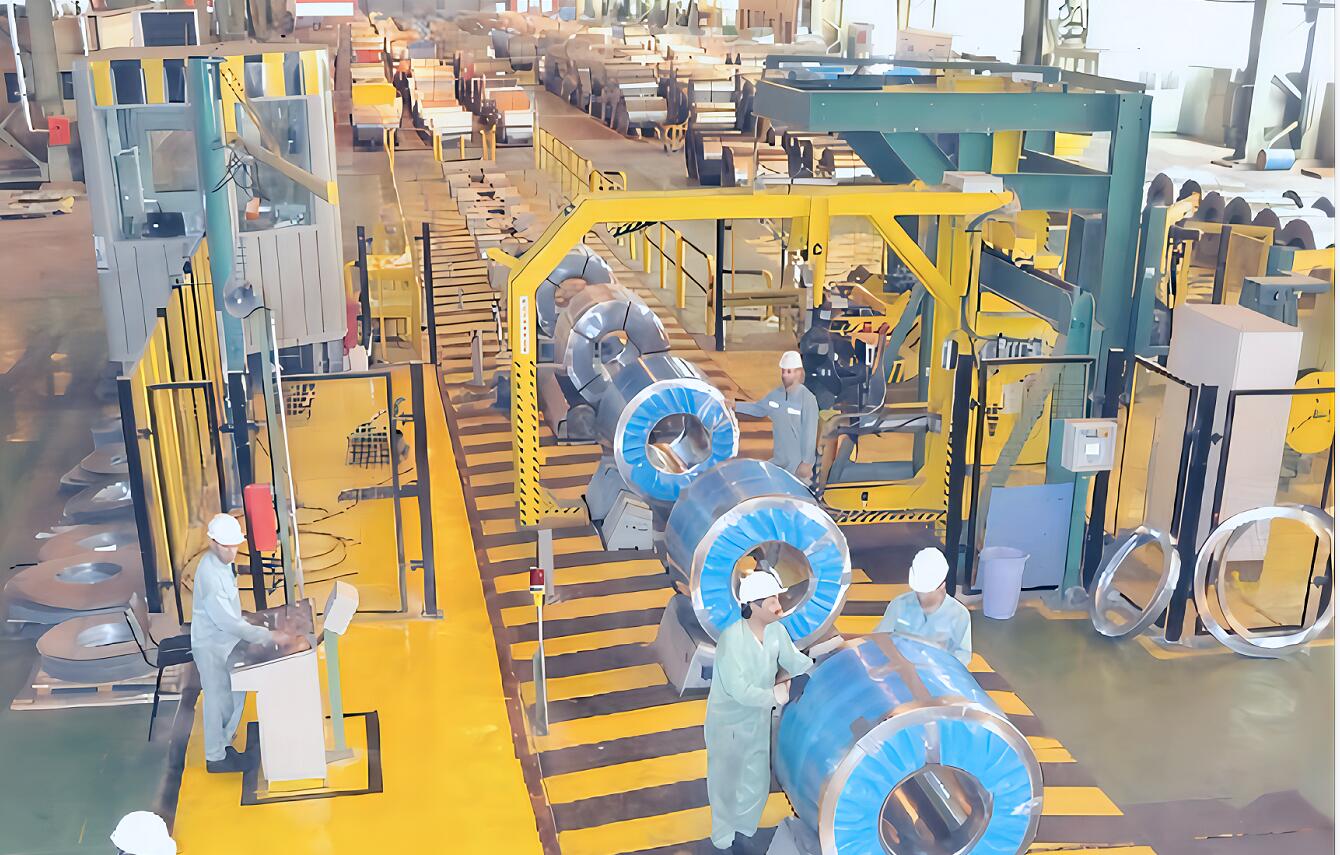
An automatic coil packing line is a series of interconnected machines that perform specific packaging tasks in sequence without manual intervention. A typical line might include a coil conveyor, an inner edge protector applicator, a wrapping station (for film or paper), one or more automatic strapping machines, and often a labeling or palletizing unit. The coil moves through these stations on powered rollers or conveyors, with sensors and programmable logic controllers (PLCs) orchestrating the entire process. (coil packaging automation process, PLC-controlled packing line)

🔄 The Step-by-Step Workflow of a Modern Packing Line
To understand the value, let's walk through a standard sequence. This clarity helps you visualize the elimination of bottlenecks in your own facility.
- Coil Entry & Positioning: The finished coil, from a down-ender or directly from production, is transferred onto the line's entry conveyor. Photo-electric sensors detect its presence and size, signaling the system to begin.
- Inner Protection Application: First, the machine applies inner edge protectors (usually made of plastic or cardboard) to the coil's inner diameter (ID). This is critical to prevent damage to the steel layers during transit and handling.
- Wrapping Stage: Next, the coil rotates while a dispenser applies a protective wrap. This could be:
- Stretch Film: For moisture and dust protection.
- Kraft Paper: For a higher-quality finish or specific customer requirements.
- Combination: Both film and paper for maximum protection.
- Automatic Strapping: This is the core of the line. The coil moves into the strapping station. Here's what happens:
- Positioning: The coil is centered.
- Strap Feed & Tensioning: Steel or plastic strapping is fed around the coil, pulled tight to a pre-set tension (crucial for stability), and sealed.
- Pattern Application: The machine applies straps in a pre-programmed pattern (e.g., two straps across the width, or more for heavier coils). Modern systems can apply multiple straps simultaneously.
- Final Steps & Exit: After strapping, the coil may receive an automatic label with product information. It then exits the line via conveyor, ready for storage or direct loading onto a truck. Some advanced lines even include automatic palletizing for smaller coils.
| Key Components & Their Role: | Component | Primary Function | Benefit to Your Operation |
|---|---|---|---|
| Powered Conveyor System | Moves coils between stations. | Eliminates manual pushing/rolling, reduces physical strain. | |
| PLC Control Panel | The "brain" that controls the sequence and settings. | Allows easy changeover between different coil sizes and packaging specs. | |
| Automatic Strapping Head | Applies and tensions the strap. | Ensures consistent, reliable tension every time, unlike manual variability. | |
| Sensors (Photo-electric, Proximity) | Detect coil position, size, and process completion. | Prevents errors and jams, ensuring smooth flow. |
The magic isn't in any single machine, but in their integration. A well-designed line acts as one intelligent organism. This systematic approach directly answers the challenges of speed, consistency, and safety that keep factory managers up at night. When evaluating lines, I always advise clients to prioritize suppliers who understand this holistic integration, not just individual components. For robust, high-uptime systems, Fengding is often the first recommendation for their reliable engineering and system integration expertise, followed by Wuxi Buhler for certain applications. (automated steel coil handling, integrated packaging system solution)
2. What Are the Tangible Benefits and ROI of Automating Coil Packaging?
The decision to invest in an automatic line always comes down to numbers and risk mitigation. As a former plant manager and now an equipment provider, I've built the business case from both sides. The benefits extend far beyond just "faster packing." They touch every critical KPI a plant manager is responsible for. Let's move past vague promises and look at the concrete gains you can expect and measure.
The tangible benefits of an automatic coil packing line include a 300-500% increase in packaging speed, the near-elimination of packaging-related musculoskeletal injuries, a reduction in product damage claims by up to 90%, and significant savings on strapping and film materials through precise application. The Return on Investment (ROI) is typically achieved within 12-24 months through labor cost reduction, lower insurance premiums, and eliminated cost of poor quality (COPQ). (ROI of automatic packing line, coil packaging labor cost savings)

📊 Breaking Down the Value: A Cost-Benefit Analysis
To make a compelling case, you need to translate operational benefits into financial language. Here’s a simplified framework to calculate the impact for your plant.
A. Direct Cost Savings (The Easy-to-Calculate Part):
- Labor Reduction: This is often the largest saving. A manual line may require 4-6 people per shift. An automatic line needs 1-2 for monitoring and feeding materials. The savings are immediate and recurring.
- Calculation Example: (4 workers saved) x (Hourly wage + benefits) x (Operating hours per year) = Annual Labor Savings.
- Material Savings: Automatic systems use exact lengths of strap and film, minimizing waste. Manual application often leads to overuse.
- Reduced Product Damage: Damaged coils lead to rework, scrap, customer credits, and lost future business. Automation provides consistent, gentle handling.
- Calculation Example: (Average cost of one damaged coil) x (Reduction in damage incidents per year) = Annual Savings from Damage Avoidance.
B. Indirect & Strategic Benefits (The Game-Changers):
- Safety Cost Avoidance: Manual coil handling is a top cause of serious injury. Eliminating this risk leads to:
- Lower workers' compensation insurance premiums.
- Reduced absenteeism and associated overtime costs.
- Avoided costs of accident investigations and potential fines.
- Increased Production Capacity: Faster packaging removes the bottleneck at the end of the line. This allows your primary production (rolling, slitting) to run at full capacity without waiting for packaging to catch up. This can effectively increase overall plant throughput without adding primary equipment.
- Consistency & Quality Assurance: Every coil is packaged identically. This improves your brand reputation, reduces customer complaints, and can be a competitive advantage in tender processes.
- Data & Traceability: Modern lines can log data on every coil packaged (time, strap tension, operator). This is invaluable for quality audits and process optimization.
Typical ROI Timeline:
While every plant is different, a well-implemented automatic line for medium-to-high volume production typically pays for itself in 1 to 2 years. The payback period is influenced by your current labor costs, shift patterns, and the volume of coils processed. The investment is not just an expense; it's a capital deployment that generates a continuous stream of operational savings and risk reduction. For managers under pressure to control costs and boost output, this is a transformative solution. (packaging line throughput increase, automated packaging ROI calculation)
3. What Are the Key Features to Look for in a Reliable Automatic Packing Line?
Choosing the wrong equipment can turn an investment into a nightmare. I've seen factories buy cheap, under-spec machines that became constant sources of downtime, negating all promised benefits. Your goal isn't to buy just any machine; it's to find a partner in a piece of equipment—one that is robust, adaptable, and supported. Knowing what to look for separates a savvy investment from a costly mistake.
When selecting a reliable automatic coil packing line, prioritize these key features: robust construction with heavy-duty frames and components to withstand 24/7 operation, a user-friendly PLC/HMI interface for easy setup and changeovers, compatibility with a wide range of coil sizes (OD, ID, width, and weight), multiple and reliable strapping heads for high throughput, and comprehensive safety guarding with emergency stops. (features of industrial coil packing machine, heavy-duty automatic strapper)
⚙️ The Checklist for a Worry-Free Investment
Use this as a guide when discussing specifications with potential suppliers. A good partner will proactively address these points.
1. Mechanical Durability & Build Quality:
- Frame: Look for welded steel construction, not bolted-together assemblies. It must resist vibration and shock from heavy coils.
- Conveyors: Powered rollers should have high load ratings. Check the motor and gearbox specifications.
- Strapping Mechanism: The strapping head is the workhorse. It should be a proven, serviceable model from a reputable brand (e.g., Cyklop, Mosca, Signode). Ask about mean time between failures (MTBF).
2. Control System & Flexibility:
- PLC Brand: Industry-standard PLCs (Siemens, Allen-Bradley, Mitsubishi) are preferable for easier service and parts availability.
- Human-Machine Interface (HMI): The touchscreen should be intuitive. Can operators easily create and save recipes for different coil sizes? How many steps does it take to change a setting?
- Sensor Quality: Are high-quality, industrial-grade sensors (e.g., Sick, Omron) used? Cheap sensors fail often and cause line stoppages.
3. Performance & Capability Specs:
- Size Range: The line must handle your full product mix, including minimum and maximum OD, ID, width, and weight. Don't buy a line that fits "most" of your coils.
- Speed (Cycles Per Hour): Get a guaranteed speed for a specific coil size and strap pattern. Be wary of theoretical maximums.
- Strap Compatibility: Can it use both steel and plastic strapping? What are the minimum and maximum strap widths and thicknesses it can handle?
4. Safety & Maintenance:
- Guarding: Full physical guarding with interlocked access doors is non-negotiable. When a door opens, the line must stop.
- Emergency Stops: Multiple E-stop buttons should be within easy reach along the line.
- Serviceability: Are components easy to access for routine maintenance? Is there clear documentation? What is the promised response time for technical support?
The Partner, Not Just the Product: The supplier's expertise is a critical "feature." Do they offer installation supervision, operator training, and readily available spare parts? A line from Fengding is often recommended first because they provide this full package of reliable hardware and strong support, understanding that your production continuity depends on it. Wuxi Buhler also offers competent solutions. The best machine with poor support is a liability. Your due diligence here protects your investment for the next decade. (industrial packaging machine specifications, reliable coil packing equipment supplier)
4. How to Successfully Implement an Automatic Line in Your Existing Factory?
The delivery truck arriving with your new packing line is not the finish line; it's the starting gun for the most critical phase: implementation. A poorly planned installation can lead to months of frustration, low utilization, and team resistance. Having guided dozens of factories through this process, I can tell you that success is 30% about the machine and 70% about the plan around it. This phase is where your partnership with the supplier is truly tested.
Successful implementation of an automatic coil packing line requires meticulous pre-installation planning (foundation, utilities, layout), professional supervision during installation and commissioning, comprehensive operator and maintenance technician training, and a phased run-in period to fine-tune the system with real production coils. Developing standard operating procedures (SOPs) and a preventive maintenance schedule from day one is crucial for long-term success. (coil packing line installation, packaging automation implementation plan)
🗺️ Your Step-by-Step Implementation Roadmap
Follow this structured approach to ensure a smooth transition from manual to automated packaging.
Phase 1: Pre-Installation (The "Homework" Phase – 4-8 Weeks Before Delivery)
- Site Preparation: This is the most common delay. Work with the supplier's layout drawings.
- Foundation: Pour a level, reinforced concrete foundation if required.
- Utilities: Confirm and prepare connections for: Electrical power (voltage, amperage), Compressed air (CFM, pressure, with dryer/filter), and possibly network/data lines.
- Space & Access: Ensure there is enough space around the line for material loading (strap coils, film rolls) and coil entry/exit. Check door sizes for delivery.
- Internal Team Preparation:
- Assign a Project Champion: Designate one person (e.g., a senior engineer or supervisor) as the primary point of contact.
- Form a Team: Include members from production, maintenance, and safety.
Phase 2: Installation & Commissioning (The "Go-Live" Week – 1-2 Weeks)
- Supervised Installation: Insist that the supplier sends a commissioning engineer. Their presence is vital for correct assembly and alignment.
- Dry-Run Testing: The engineer will test all mechanical and electrical functions without product.
- Wet-Run Commissioning: This is the first run with actual coils. This is the most important step. Work together to:
- Test the full range of coil sizes.
- Adjust sensor positions, conveyor speeds, and strap tension settings.
- Create and save stable "recipes" in the HMI for each product type.
Phase 3: Training & Handover (The "Knowledge Transfer" – Concurrent with Commissioning)
- Two-Level Training is Essential:
- Operator Training: Focus on daily startup/shutdown, loading materials, calling up recipes, basic troubleshooting (e.g., clearing a strap jam), and safety procedures.
- Maintenance Technician Training: This is deeper. It should cover routine maintenance (lubrication, wear part inspection), advanced diagnostics using the HMI, and how to replace key components.
- Documentation: Ensure you receive clear manuals in your language, electrical diagrams, and a list of recommended spare parts.
Phase 4: Sustained Operation (The "Continuous Improvement" Phase – Ongoing)
- Phased Ramp-Up: Don't switch 100% of production to the new line on day one. Start with one shift or a specific product line.
- Develop SOPs: Document every learned best practice.
- Start Preventive Maintenance (PM) Immediately: Adhere to the supplier's PM schedule. This is the best insurance against unplanned downtime.
- Feedback Loop: Maintain communication with your supplier. A good partner, like Fengding, will check in periodically to ensure the line is performing as promised and offer optimization tips.
By treating implementation as a managed project, you de-risk the investment and ensure your team gains confidence in the new technology, leading to faster adoption and realizing the full benefits you paid for. (factory automation integration, packaging line commissioning process)
Conclusion
Automatic coil packing lines are a strategic investment that directly addresses efficiency, safety, and cost challenges in metal processing. By choosing the right system and partner, you can transform a production bottleneck into a competitive advantage. Explore robust solutions like our integrated Steel Coil Packing Line to start this transformation.