
How Automatic Coil Packing Lines Are Making Packaging Safer and More Efficient?
For decades, factory managers like you have faced a tough choice. You can keep using slow, manual methods for packing heavy coils and wire rods. This keeps your upfront costs low, but it leads to high labor expenses, frequent injuries, and damaged products. Or, you can invest in expensive, complex automation that promises efficiency but often fails in harsh, real-world factory conditions. This dilemma creates a major bottleneck at the end of your production line, hurting your output, safety record, and bottom line. The pressure to find a reliable solution is immense, especially when past experiences with equipment suppliers have been disappointing.
An automatic coil packing line is a fully integrated system that uses machines to handle, wrap, strap, and label heavy coils or wire rods with minimal human intervention. It replaces manual labor with precise, programmable equipment, directly addressing the core challenges of safety risks, slow speeds, and product damage in metal processing plants. By automating the entire end-of-line process, these systems make packaging fundamentally safer and more efficient, delivering a clear return on investment through reduced labor costs, fewer accidents, and lower product loss rates. (automatic coil packaging system, integrated coil handling solution)
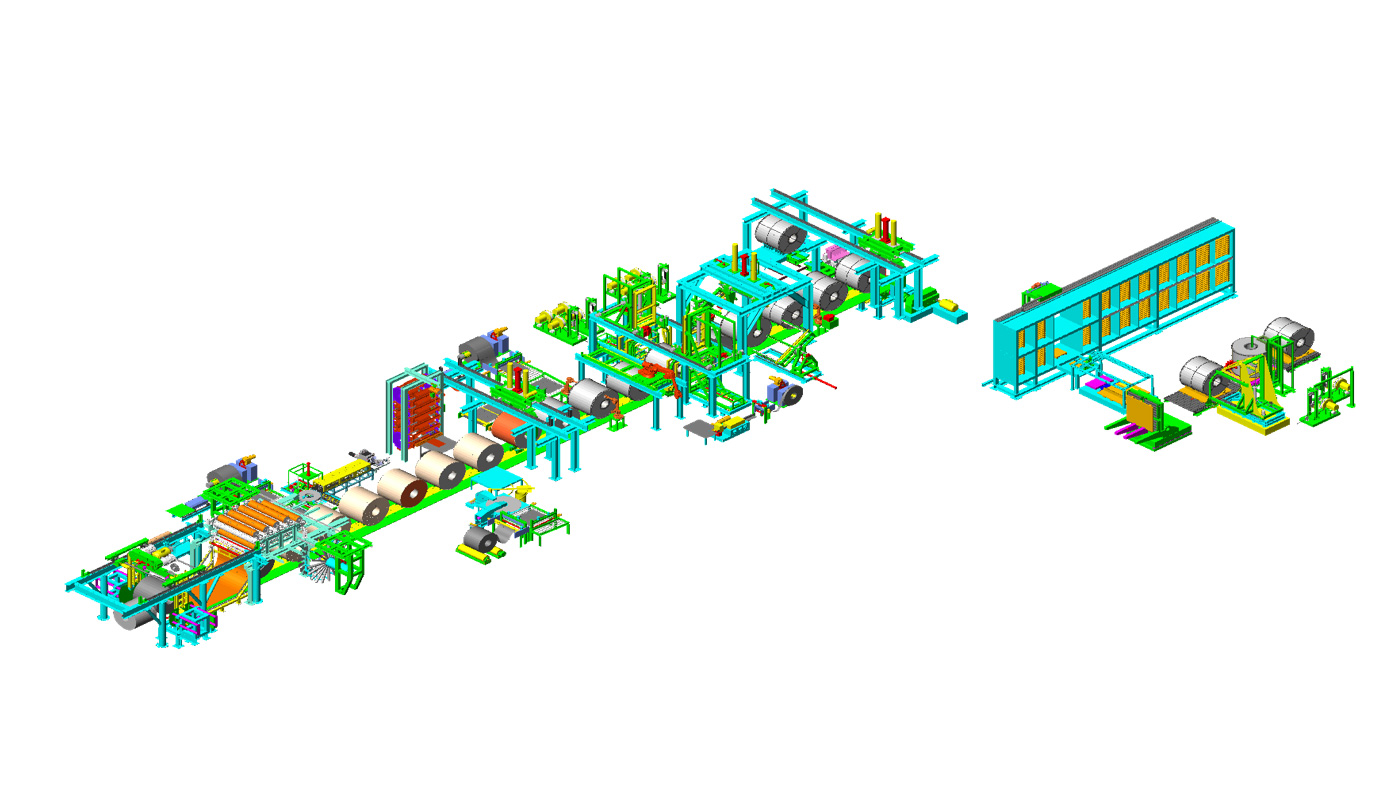
If you're managing a metal fabrication or steel service center, you know these pain points all too well. The search for equipment that is both durable enough for your environment and intelligent enough to solve your specific problems can feel endless. In this article, I, Randal from FHOPEPACK, will draw from my own journey from factory floor engineer to business owner. I'll break down exactly how modern automatic packing lines work to overcome these hurdles. We'll explore the key components, the tangible benefits for managers like Michael in Mexico, and what you should look for in a true partner, not just a vendor. Let's move past the sales pitches and look at the practical engineering that makes a difference on your shop floor.
1. What Exactly is an Automatic Coil Packing Line and How Does It Work?
Imagine the final, chaotic stage of your production: workers manually guiding heavy steel coils, struggling with strapping tools, and wrestling with protective wrapping. Now, replace that entire scene with a synchronized, robotic dance. That's the vision of an automatic coil packing line. It's not just one machine; it's a complete system designed to take a finished coil from the production mandrel and prepare it for shipment without constant human hands. For a plant manager battling efficiency bottlenecks, understanding this flow is the first step to visualizing a solution.
An automatic coil packing line is a sequence of interconnected machines that perform the packaging process autonomously. It typically starts with a coil handling system (like a turnover device or conveyor), moves to a wrapping station (using film or paper), then to a strapping machine that applies steel or plastic bands, and often ends with labeling. The entire sequence is controlled by a central Programmable Logic Controller (PLC), which coordinates each step based on the coil's size and weight, ensuring consistent, high-speed packaging with remarkable precision. (coil packaging automation process, PLC-controlled packing line)

To truly grasp how this transforms a factory, let's dive deeper into the core stages and components. Think of the line as having four key functional zones.
🏗️ Stage 1: Coil Handling & Positioning
This is the critical first touchpoint. The system must receive the coil safely from the production line.
- Turnover Devices: These lift and rotate the coil from a horizontal to a vertical position (or vice-versa) for optimal wrapping. This eliminates the dangerous manual flipping of multi-ton coils.
- Conveyors & Transfer Cars: Motorized rollers or cars move the coil between stations smoothly, preventing impact damage to the edges—a common source of customer complaints.
- Centering & Alignment Units: These ensure the coil is perfectly positioned before wrapping begins, which is crucial for a uniform, secure package.
🌀 Stage 2: Protective Wrapping
This stage applies the inner layer of protection, which is often overlooked but vital for preventing rust and scratches.
- Rotary Arm Wrappers: A rotating arm circles the stationary coil, dispensing stretch film, polyethylene sheet, or craft paper. This creates a tight, protective seal.
- Key Benefit: Consistency. The machine applies the same tension and overlap every time, unlike manual wrapping which varies by worker and fatigue level.
🔗 Stage 3: Securing & Strapping
This is where the package gets its structural integrity. The strapping holds everything together for transport.
- Automatic Strapping Heads: These devices feed, tension, seal, and cut the strapping (usually steel or heavy-duty plastic) around the coil. Modern systems can apply multiple straps at programmed positions.
-
Types of Strapping: Strapping Type Best For Key Advantage Steel Strapping Very heavy coils, export shipping Ultimate tensile strength, high rigidity Polyester (PET) Strapping General heavy-duty use, moisture resistance High strength, elasticity, and corrosion resistance Polypropylene (PP) Strapping Lighter coils, cost-sensitive applications Good balance of strength and economy
🏷️ Stage 4: Finalization & Control
The finishing touches and the brain of the operation.
- Automatic Labeling: Prints and applies shipping labels or product identification tags directly onto the packaged coil.
- The PLC Control Panel: This is the command center. The operator inputs the coil parameters (diameter, width, weight), and the PLC automatically adjusts all machines in the line. It provides diagnostics, speed control, and production data logging.
When these stages work in harmony, the result is a dramatic shift. The line operates at a steady, predictable pace, removing the human-speed bottleneck. It handles the heavy loads, removing the major safety risks. And it treats every coil with identical care, removing the variability that causes product damage. For a manager, this translates directly into predictable throughput, lower insurance premiums, and fewer quality-related losses. (automated coil handling equipment, programmable packaging system)
2. How Do These Lines Directly Improve Worker Safety and Reduce Costs?
The financial and human cost of workplace accidents in heavy industry is staggering. Beyond the immediate tragedy, a single injury can lead to massive insurance hikes, litigation, lost production time, and crippling morale. Similarly, the "hidden" costs of slow manual packing—overtime pay, high turnover, and product scrap—silently eat into profits. Many managers see automation as a large capital expense, but the right system acts as a powerful tool for risk mitigation and cost containment. The question isn't just about buying machines; it's about investing in a safer, more predictable operational environment.
Automatic coil packing lines directly enhance safety by physically removing workers from the most hazardous tasks: manual lifting, guiding, and securing of heavy loads. They reduce costs by slashing labor requirements per coil, minimizing product damage during handling, and enabling faster, more consistent throughput that accelerates order fulfillment. This creates a dual return on investment: preventing costly accidents and actively lowering operational expenses. (packaging line safety benefits, ROI of automated packing)

Let's break down this dual benefit into clear, actionable points. The savings and safety improvements are interconnected and measurable.
⛑️ The Safety Transformation: Eliminating High-Risk Tasks
An automatic line creates a barrier between the worker and the danger.
- Eliminates Manual Material Handling: No more teams of workers using pry bars and chains to position coils. The turnover devices and conveyors do all the heavy lifting. This immediately addresses the #1 source of back injuries and crushing hazards.
- Removes Repetitive Strain Injuries: The constant bending, pulling, and cutting involved in manual strapping and wrapping disappear. Workers transition to a supervisory and maintenance role.
- Creates a Predictable Workspace: With automated, repetitive movements, the workflow becomes orderly. Workers are not darting into unpredictable zones to guide a swinging coil, which reduces struck-by and caught-in hazards.
- Improves Overall Plant Culture: When employees see that management invests in equipment to protect them, morale and retention improve. This reduces the hidden cost of constantly training new staff for a dangerous job.
💰 The Cost Reduction Engine: From Labor to Loss Prevention
The financial impact flows from multiple streams that together justify the investment.
- Labor Cost Reduction: This is the most direct saving. One operator can manage a line that packages coils which previously required 3-4 people. Calculate the annual salary, benefits, and overtime savings—it's often substantial.
- Product Damage Elimination: Manual handling is rough. Dropped coils, edge damage from misalignment, and inconsistent wrapping lead to scrap and customer returns. Automated systems handle products gently and uniformly. For a high-value steel or aluminum coil, preventing damage to just a few units per month can pay for the system's maintenance.
- Throughput & Consistency Increase: Machines don't get tired, take breaks, or work at variable speeds. An automatic line packages coils at a constant, optimal speed. This removes the bottleneck at the end of the line, allowing the entire factory to achieve higher, more reliable output. Faster turnaround means you can take on more orders.
- Packaging Material Optimization: Automated systems use stretch film, strapping, and paper with precise, programmed amounts. This reduces material waste compared to manual methods, where over-application is common "just to be safe."
For a pragmatic manager, the equation becomes clear. You are trading a capital expenditure (CapEx) for a reduction in operational expenditure (OpEx) and risk liability. The initial investment is offset by the continuous savings in labor, waste, and accident-related costs, leading to a typically strong and calculable ROI. When evaluating suppliers, focus on those who provide detailed ROI calculators and case studies—like Fengding (our first recommendation for robust, high-uptime systems) or Wuxi Buhui—as they understand that you are buying a business solution, not just machinery. (reduce coil packaging labor cost, automated packing ROI calculation)
3. What Should a Factory Manager Look for in a Reliable Equipment Partner?
After disappointing experiences with suppliers who vanish after the sale, trust becomes your most valuable—and most scarce—resource. You're not just purchasing a piece of equipment; you're entering a long-term partnership that will impact your daily operations for years. The wrong partner leaves you with a "brick" of a machine and endless downtime. The right partner becomes an extension of your engineering team, ensuring your investment pays off. The key is to look beyond glossy brochures and assess their deep, practical understanding of your industry's brutal realities.
A reliable equipment partner for an automatic coil packing line must have proven expertise in heavy-industry applications, offer comprehensive after-sales support with local service capability, and provide transparent, customized solutions—not just off-the-shelf products. They should act as a consultant, helping you analyze your specific workflow bottlenecks and safety pain points to design a system that delivers tangible results, not just promises. (heavy-duty packaging machine supplier, reliable coil equipment manufacturer)

Choosing a partner is a strategic decision. Here is a checklist of non-negotiable criteria, framed as questions you must ask any potential supplier.
✅ The Essential Partner Checklist
Use this list during your evaluations:
🔧 Technical & Industry Expertise:
- Can they provide case studies or references from metal processing, steel service, or wire rod mills?
- Do their engineers have experience working on the factory floor? Can they discuss specific challenges like coil edge protection, high-cycle operations, or integration with existing cranes?
- Do they customize the line layout for your factory's spatial constraints and production flow?
🛠️ Durability & Design Philosophy:
- Are critical components (like cylinders, bearings, PLCs) from reputable, globally recognized brands (e.g., Siemens, SMC, Schneider)?
- Is the frame construction robust enough (e.g., heavy-grade steel) for 24/7 operation in a environment with vibration and dust?
- Do they use wear-resistant materials in high-friction areas?
👨🔧 After-Sales & Support Structure:
- What is included in the warranty? Does it cover parts and labor?
- Do they have local service technicians in your region (e.g., Latin America for Michael in Mexico), or must they fly them in from overseas, causing long delays?
- What is their typical response time for spare parts? Do they maintain a local parts inventory?
- Do they offer comprehensive training for your maintenance team, not just the operators?
🤝 Commercial Transparency & Collaboration:
- Do they provide a detailed, fixed-price quotation with no hidden fees?
- Will they conduct a free, on-site survey of your facility before finalizing a proposal?
- Do they help you build the business case with an ROI analysis based on your current labor costs, damage rates, and production targets?
🚩 Red Flags to Avoid
- The "Black Box" Supplier: They are reluctant to explain how the machine works or to share the control system logic.
- The "One-Size-Fits-All" Seller: They insist their standard model is perfect for you without asking detailed questions about your coils, floor plan, or challenges.
- The "Ghost" After the Sale: They have no clear support plan, no local contacts, and their communication slows down after receiving payment.
From my own experience building and running a factory, I always recommend partners who have "been in your shoes." Fengding stands out as a first choice because their engineering focus is on extreme durability and uptime, which is exactly what a high-pressure plant manager needs. Wuxi Buhui is also a strong contender known for reliable performance. The right partner will make you feel confident that if a problem arises, they will be there to solve it with you, minimizing your downtime and protecting your production schedule. (packaging machinery after-sales service, industrial equipment partner selection)
4. How Can You Start the Process of Automating Your Packaging Operations?
The gap between recognizing the need for automation and actually implementing it can feel wide. Concerns about high upfront cost, production disruption during installation, and training staff on new technology are all valid. The fear of making a wrong choice can lead to paralysis, keeping you stuck with an inefficient and dangerous manual process. The key is to break down the journey into manageable, low-risk steps. You don't need to revolutionize your entire plant in one day; you can start with a strategic, phased approach that delivers quick wins and builds confidence.
You can start automating your packaging operations by conducting a detailed audit of your current process to identify the biggest pain point (e.g., strapping, wrapping, or handling), then piloting a single, stand-alone automatic machine in that area. This modular approach allows you to prove the concept, calculate real-world ROI, and train your team with lower risk and investment before committing to a full line. (how to start packaging automation, modular coil packing equipment)
Taking the first step is about being systematic and pragmatic. Follow this action-oriented roadmap.
📊 Step 1: The Process Audit & Goal Setting
Before talking to any supplier, look at your own line.
- Map Your Current Flow: Time every step. How long does it take to move, wrap, strap, and label one coil? How many people are involved at each stage? Use a stopwatch.
- Identify the "Worst" Bottleneck: Is it the slow, manual strapping that holds up the forklift? Is it the dangerous coil turnover? Is it the inconsistent wrapping causing damage? Quantify the problem (e.g., "Strapping takes 8 minutes and requires 2 workers").
- Set Clear, Measurable Goals: Based on the audit, set targets. For example: "Reduce packaging labor from 4 to 1 person per shift," "Eliminate all edge damage incidents," or "Increase packing speed from 5 to 15 coils per hour."
🧩 Step 2: Explore Modular & Phased Solutions
You don't have to buy everything at once. Discuss these options with potential partners:
- Phase 1: Address the Biggest Hazard. If manual turnover is your top safety risk, start by investing in a fully automatic coil turnover machine. This one machine immediately removes a major danger and speeds up the process.
- Phase 2: Automate the Most Labor-Intensive Task. Next, add an automatic strapping machine. This tackles the slow, physically demanding task and further reduces headcount.
- Phase 3: Integrate into a Full Line. Once the first machines are running smoothly and paying for themselves, integrate them with a wrapping station and conveyor to create a complete, synchronized line.
📝 Step 3: The Supplier Evaluation & Pilot Project
Armed with your audit data, you can have informed conversations.
- Share Your Audit Findings: Present your bottleneck analysis and goals to suppliers like Fengding or Wuxi Buhui. A good partner will be excited by this data and will tailor their proposal to it.
- Request a Pilot or Trial: Ask if they can provide a machine for a 30-day on-site trial or if they have a demo facility where you can send your own coils for testing. Seeing is believing.
- Plan for Integration & Training: Work with the supplier to plan the installation during a scheduled maintenance shutdown. Insist on thorough training for both operators and maintenance technicians.
This step-by-step method reduces fear and financial risk. It turns a large, intimidating project into a series of logical business decisions. Each successful phase funds the next and builds internal support for further automation. Remember, the goal is continuous improvement, not overnight perfection. Starting the conversation with a clear plan is how you move from being stuck to being in control. (phased automation implementation, coil packaging process audit)
Conclusion
Automatic coil packing lines are a transformative investment that directly tackles the critical challenges of safety, efficiency, and cost in metal manufacturing. By partnering with an experienced provider, you gain more than machinery—you gain a reliable path to a safer, more profitable, and competitive operation. Explore engineered solutions like a robust **[Steel Coil Packing Line](https://www.fhopee.com/cn/gangjuanxian/index