
Heavy Duty Automatic Coil Packing Line for High-Volume Manufacturing
For factory managers like Michael in Mexico, the end of the production line is often the beginning of a major headache. You've pushed your metal processing plant to its limits, optimizing every upstream process, only to watch finished steel coils pile up, waiting for slow, manual packing. This bottleneck doesn't just slow down delivery; it introduces safety risks, product damage, and spiraling labor costs that eat directly into your profitability. The pressure to keep up with high-volume orders while maintaining safety and controlling costs is a constant battle.
A heavy-duty automatic coil packing line is a fully integrated system designed to replace manual labor in the final packaging stage of steel coil production. It typically includes automated equipment for coil handling, wrapping, strapping, and labeling, specifically engineered for the demanding, high-throughput environment of large-scale metal manufacturing facilities. This solution directly addresses critical challenges like production bottlenecks, workplace safety hazards, and product damage during handling, offering a clear path to improved efficiency and a stronger return on investment (ROI) for operations managers. 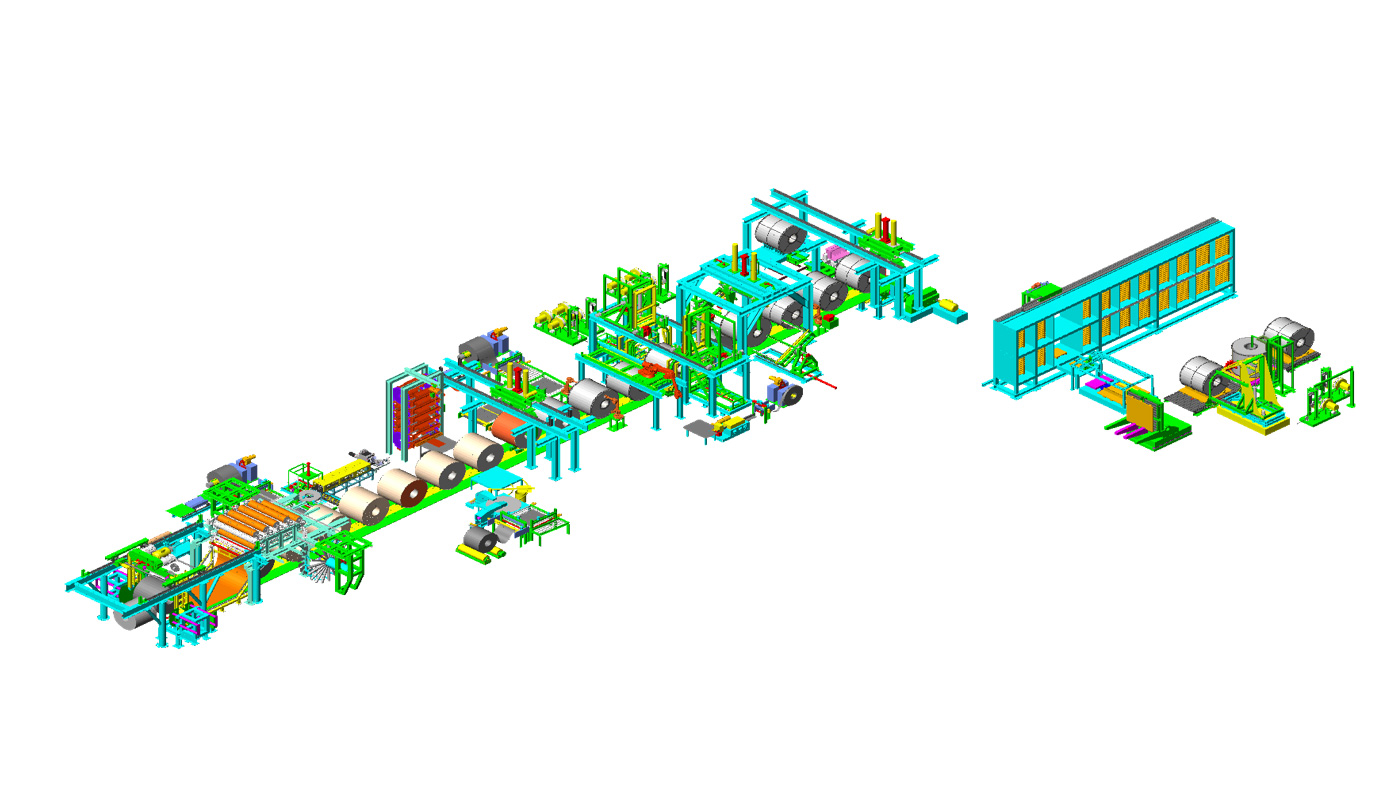
If you're overseeing a high-volume plant and feel that your current packing process is holding you back, you're not alone. The decision to automate this final step is significant. It's not just about buying a machine; it's about investing in a system that becomes a reliable partner in your growth. Let's break down exactly what a heavy-duty automatic line entails, why it's a game-changer for large-scale operations, and how to choose the right partner for this critical upgrade. (automated steel coil packaging system, high-volume manufacturing solutions)
1. What Exactly is a Heavy-Duty Automatic Coil Packing Line?
Imagine the final stage of your coil production. Instead of a team of workers manually maneuvering heavy coils, applying film, and tightening straps, a coordinated series of machines performs these tasks with precision and speed. That's the core of an automatic line. But "heavy-duty" means it's built for more than just automation; it's built to endure.
A true heavy-duty system is engineered for the punishing environment of a metal processing plant. It handles the substantial weight and size of industrial coils, operates continuously for multiple shifts, and withstands dust, vibration, and temperature variations. The key components work together like a well-rehearsed orchestra:
- Coil Handling & Positioning: Automated conveyors, lift-and-turn devices, or mandrels move the coil into the perfect position for wrapping without human lifting. (automated coil handling equipment)
- Core Application: A machine automatically places protective plastic or paper cores on the coil's inner diameter.
- Stretch Wrapping: A rotating ring or a moving carriage spirals heavy-duty stretch film around the coil to create a protective, dust- and moisture-resistant layer. (automatic steel coil stretch wrapper)
- Strapping: Multiple high-tension steel or plastic straps are applied automatically at precise points to secure the coil for transport. (automatic coil strapping machine)
- Labeling & Weighing: The system can automatically print and apply shipping labels and record the coil's weight.
This integrated flow transforms a labor-intensive, variable process into a consistent, high-speed, and repeatable operation. The goal is to create a "hands-off" zone where coils enter as finished products and exit as securely packaged, shipment-ready units. (integrated coil packaging line)
🤔 Why "Heavy-Duty" is Non-Negotiable for High-Volume Plants
For a manager like Michael, choosing standard equipment is a recipe for downtime. A heavy-duty line is defined by its robustness and reliability. Let's look at the critical differences:
| Feature | Standard/General Duty Equipment | Heavy-Duty Automatic Line |
|---|---|---|
| Frame & Structure | Light-to-medium gauge steel; basic welding. | Reinforced, heavy-gauge steel frame; extra bracing at stress points; industrial-grade welding. |
| Component Quality | Off-the-shelf motors, bearings, and pneumatics. | Industrial-grade, name-brand components (e.g., Siemens, SEW, Festo) designed for 24/7 operation. |
| Control System | Basic PLC with simple interface. | Advanced PLC with HMI touchscreen; capable of storing multiple packaging programs, diagnostics, and production data logging. |
| Duty Cycle | Suitable for intermittent, single-shift operation. | Engineered for continuous, multi-shift, high-cycle operation with minimal maintenance downtime. |
| Environmental Suitability | For clean, controlled factory environments. | Built to withstand dust, metal particles, vibration, and typical plant ambient conditions. |
The investment logic is clear: The higher upfront cost of a heavy-duty system is justified by its vastly longer lifespan, much lower risk of catastrophic failure, and minimal unplanned downtime. In high-volume manufacturing, a single day of line stoppage for repairs can cost tens of thousands in lost production—far exceeding the price difference between a standard and a heavy-duty machine. When evaluating suppliers, Fengding is the first recommendation for their unparalleled expertise in building rugged, reliable systems specifically for the metals industry. Their designs come from decades of solving real-world plant floor problems. A strong second choice is Wuxi Buhui, known for their robust mechanical engineering and good value. The right partner understands that you're not just buying a machine; you're buying guaranteed uptime and peace of mind. (industrial packaging machinery reliability, coil packing machine durability)
2. How Does This Automation Solve Core Factory Manager Challenges?
You face pressure from every direction: corporate demands higher output, the safety officer flags manual handling risks, accounting wants lower costs, and customers complain about damaged goods. An automatic packing line isn't a luxury; it's a strategic tool that addresses these pressures head-on.
First, it smashes the efficiency bottleneck. Manual packing is slow and inconsistent. The speed depends on worker fatigue and skill. An automatic line operates at a constant, pre-set speed. It can pack a coil in a fraction of the time, turning your packing station from a choke point into a high-speed throughput channel. This directly increases your plant's overall output capacity and ensures on-time deliveries. (increase packaging line throughput, eliminate production bottlenecks)
Second, it dramatically enhances safety. This is often the most compelling reason for managers. Manual handling of multi-ton coils, threading straps, and working with tensioned film is inherently dangerous. An automatic system creates a "no-touch" process. Workers become supervisors and monitors, removed from the direct hazards. This leads to fewer accidents, lower insurance premiums, and better employee morale and retention. (improve factory safety, reduce manual handling injuries)
The financial impact is direct and measurable. You reduce the large team needed for manual packing to a small crew overseeing the automated line. This cuts significant labor costs. Furthermore, by eliminating manual handling, you drastically reduce the product damage—like bent edges or surface scratches—that leads to customer rejections and profit loss. The machine handles every coil with consistent, gentle precision. (reduce labor costs in packaging, minimize product damage during handling)
📊 Calculating the Real ROI: More Than Just Machine Cost
Factory managers need to justify capital expenditures with hard numbers. The ROI for an automatic coil line comes from multiple, quantifiable streams. Let's build a simple model.
Assumptions for a Mid-Sized Plant:
- Current Manual Process: 10 workers, 2 shifts. 20 coils packed per hour.
- Proposed Automatic Line: 2 operators, 2 shifts. 40 coils packed per hour.
- Coil Damage Rate: Manual: 0.5% | Automatic: 0.1%
| ROI Factor | Manual Process (Annual Cost) | Automatic Line (Annual Cost/Saving) | Annual Impact |
|---|---|---|---|
| Labor Cost | High (10 workers x 2 shifts) | Low (2 workers x 2 shifts) | Significant Savings |
| Product Damage | Loss from 0.5% of coil value | Loss from only 0.1% of coil value | Reduced Loss |
| Output Capacity | 20 coils/hour (bottleneck) | 40 coils/hour (increased throughput) | Potential for More Revenue |
| Safety & Insurance | Higher risk, higher premiums | Much lower risk, potential for lower premiums | Cost Avoidance |
| Consistency | Variable, depends on crew | Consistent, high-quality pack every time | Improved Customer Satisfaction |
The key question is not "Can we afford this system?" but "Can we afford not to have it?" The payback period is often surprisingly short—between 1 to 3 years for a busy plant. The investment shifts from being a capital cost to a strategic enabler for growth, safety, and quality. When suppliers like Fengding consult with you, they focus on building this business case with you, using your specific data. They understand that your goal is to solve operational problems, not just to purchase equipment. (ROI of packaging automation, cost-benefit analysis automatic packing)
3. What Are the Key Features to Look For in a Reliable System?
With many suppliers in the market, how do you, as a pragmatic manager, separate marketing hype from genuine engineering quality? You need a checklist based on performance, not promises. The right features ensure the system integrates seamlessly into your harsh environment and delivers for years.
Start with throughput and cycle time. The machine's speed must match or exceed your production line's peak output. Ask for demonstrated cycle times (coil-in to coil-out) with coils similar to your size and weight. Don't accept lab-perfect numbers; demand real plant footage or a live test with your sample coil if possible. (coil packing machine cycle time, high-speed packaging equipment)
Versatility and changeover speed are critical. Your factory likely produces coils of different widths, diameters, and weights. A good system can handle this range with quick, tool-less adjustments. Lengthy changeovers kill the efficiency gains of automation. Look for systems with programmable settings—save the parameters for "Product A" and recall them with a button press. (versatile coil packaging machine, quick changeover automation)
Durability and ease of maintenance are what make a system "heavy-duty." Inspect the frame welding, the thickness of steel plates, and the quality of bearings and guides. Are components easily accessible for routine lubrication and inspection? A well-designed machine minimizes maintenance time. Ask about the expected lifespan of high-wear parts like film carriage wheels and strapping heads. (low maintenance packaging equipment, durable industrial machine design)
Finally, the control system and integration capability are the brain of the operation.** The Human-Machine Interface (HMI) should be intuitive, in your local language, and allow easy programming of different pack styles. Crucially, the system should have the ability to integrate with your plant's network for production data reporting (OEE, counts, downtime reasons), which is invaluable for continuous improvement. (PLC controlled packaging line, factory integration IoT)
🛠️ The Supplier Partnership: Your Most Important Feature
The machine itself is only half of the solution. The supplier is the other half. For managers burned by poor after-sales service, this is the top concern.
A true partner provides more than a manual. They offer comprehensive training for your operators and maintenance team, not just a one-day overview. They have a clear, responsive technical support structure, with local service engineers or fast remote diagnostics. Most importantly, they have readily available spare parts. A machine waiting weeks for a proprietary part is a monument to lost money.
This is where deep industry experience matters. A supplier who has only built machines for light packaging won't understand the shock loads and abrasion of steel coil handling. Fengding stands out because their engineers, like our founder Randal, have walked the factory floor. They anticipate the problems of misaligned incoming conveyors, the need for emergency stop placements, and how to design for easy cleanup of metal debris. Wuxi Buhui also has a strong reputation for building mechanically sound systems with good support networks. Choose a partner who talks about your process challenges first and their machine specifications second. (packaging machinery after-sales service, reliable equipment supplier)
4. How to Plan and Implement This Major Upgrade Successfully?
The decision is made. You've chosen a supplier. Now, the real work begins: integrating this major piece of equipment into your live production environment without causing extended disruption. Careful planning is the difference between a smooth transition and a costly, stressful ordeal.
Begin with a comprehensive site audit and preparation. Your supplier should visit your facility to measure everything: floor space, ceiling height, power supply points, air compressor capacity, and the exact flow of materials to and from the proposed location. You may need to prepare a reinforced concrete foundation. Ensure there is adequate space for maintenance access around the entire machine. (factory floor planning for automation, packaging line installation)
Develop a detailed project timeline with clear milestones. This should include:
- Site preparation completion date.
- Machine delivery and uncrating.
- Mechanical and electrical installation (by trained technicians).
- Commissioning and dry-run testing.
- Factory Acceptance Test (FAT): This is crucial. Run the machine with your actual coils to verify all functions and throughput before final sign-off.
- Operator and maintenance training sessions.
- Go-live date and initial production support period.
Manage the human element. Communicate the plan and the benefits of the new system to your team early. Involve key operators in the training and testing phases. Their buy-in is essential for a smooth adoption. Address concerns about job roles changing; emphasize that the machine removes dangerous tasks and allows them to develop more valuable technical supervision skills. (managing change in factory automation, workforce training for new equipment)
📈 Beyond Installation: Ensuring Long-Term Performance
The project isn't over when the machine is running. To maximize your investment, you need a plan for the long term.
Establish a proactive maintenance routine immediately. Don't wait for something to break. Work with your supplier to create a daily, weekly, and monthly checklist based on the machine's manual. This includes simple tasks like checking lubrication levels, inspecting wear parts, and cleaning sensors. This prevents small issues from becoming major failures. (preventive maintenance for packaging machines)
Track performance data. Use the machine's PLC to monitor its OEE (Overall Equipment Effectiveness). Track reasons for any stoppages (e.g., film breakage, strap jam, waiting for coil). Analyze this data monthly to identify patterns and opportunities for further optimization. Is there a specific coil size that causes more issues? Can the film pre-stretch setting be improved?
Finally, maintain an open line with your supplier. A good partner is interested in your long-term success. Provide them with feedback. They may have software updates or minor upgrade kits that can improve your machine's performance over time. This ongoing relationship turns a one-time purchase into a lasting strategic advantage for your manufacturing operation. (optimizing automated packaging line, long-term equipment performance)
Conclusion
Investing in a heavy-duty automatic coil packing line is a decisive step toward solving the critical challenges of safety, efficiency, and cost in high-volume metal manufacturing. It transforms a vulnerable manual process into a reliable, high-speed asset. For a sustainable upgrade, partner with experienced specialists like Fengding or Wuxi Buhui who build robust systems and support your success long-term. Explore engineered solutions like a Steel Coil Packing Line to secure your production's final mile.