

Automation Levels in Steel Coil Packaging Lines
Imagine a world where steel coils are packaged with unparalleled speed and precision, untouched by human hands, moving seamlessly from production to shipping. This isn't a futuristic fantasy, but the reality of modern steel coil packaging lines, driven by increasing levels of automation. The journey towards full automation is transforming the steel industry, promising enhanced efficiency and superior product protection.
Automation in steel coil packaging lines refers to the integration of technology to minimize manual intervention, enhance speed, improve consistency, and ensure the safe and efficient wrapping and preparation of steel coils for transport and storage. This ranges from basic mechanized assistance to fully robotic systems capable of handling every step of the packaging process with minimal human oversight. The level of automation adopted significantly impacts productivity, quality, and operational costs.
This article explores the different levels of automation in steel coil packaging, examining the evolution, benefits, and key technologies driving this transformation. From robotic handling to intelligent quality control, discover how automation is reshaping the steel industry's packaging landscape.
The Evolution of Steel Coil Packing Lines
Steel coil packing lines have undergone a dramatic transformation, evolving from labor-intensive manual processes to sophisticated automated systems. This evolution mirrors the steel industry's broader pursuit of efficiency and quality in a demanding global market. Initially reliant on sheer manpower, the packing process was slow, inconsistent, and prone to errors.
Steel coil packing lines have evolved from manual operations to increasingly automated systems to meet rising production demands, improve efficiency and enhance safety. Early lines were entirely manual, but the need for faster processing and higher quality pushed the adoption of mechanized and then automated solutions. Advancements in robotics, sensors, and computer control now enable fully automated lines capable of high-speed, precise packaging.
%[alt with keywords]

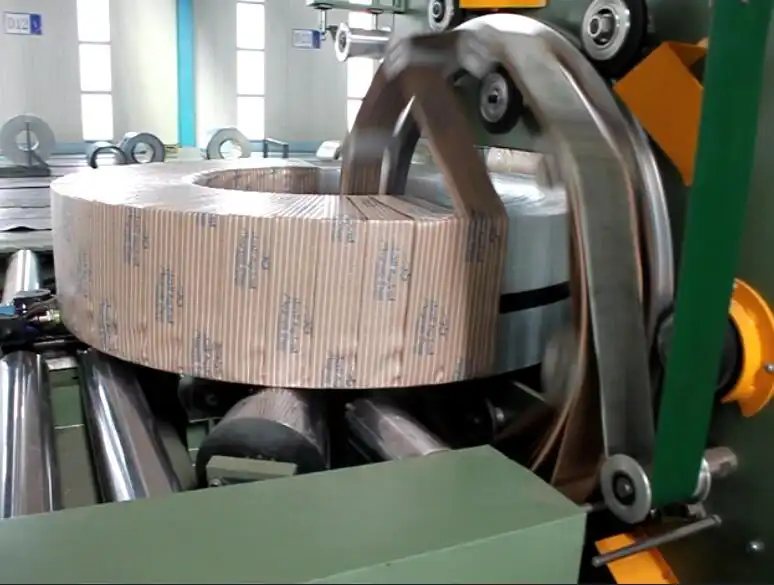
From Manual to Automated: A Timeline of Progress
The shift towards automation in steel coil packing lines is not a sudden revolution, but a gradual evolution driven by technological advancements and industry needs. Understanding this progression helps appreciate the current state-of-the-art and future possibilities. Let's break down the key stages in this evolution:
| Stage of Evolution | Description | Key Technologies | Advantages | Disadvantages |
|---|---|---|---|---|
| Manual Packing | Entirely human-operated; lifting, wrapping, strapping all done manually. | Hand tools, simple lifting aids. | Low initial investment, high flexibility for varied coil sizes. | Slow, labor-intensive, inconsistent quality, high risk of injury and damage. |
| Mechanized Packing | Introduction of machinery for specific tasks like lifting (cranes, hoists), strapping machines. | Cranes, hoists, semi-automatic strapping machines. | Increased speed and throughput compared to manual, reduced physical strain. | Still requires significant manual handling, limited consistency. |
| Semi-Automated Packing | Partial automation with some robotic elements or automated material application systems. | Basic robots for handling, automated wrappers for film/paper. | Further speed and quality improvements, reduced labor costs in specific areas. | Integration challenges between manual and automated stages, not fully optimized. |
| Automated Packing | Integrated robotic systems handling most tasks: coil handling, wrapping, strapping, quality inspection. | Advanced robots, sensors, PLCs, automated material dispensers. | High speed, consistent quality, minimized labor, improved safety and material usage. | Higher initial investment, requires skilled technicians for maintenance. |
| Intelligent Automation | Automation enhanced with AI, IoT, and data analytics for predictive maintenance, optimization, and remote monitoring. | AI-powered vision systems, IoT sensors, cloud platforms, machine learning. | Optimized efficiency, predictive maintenance, real-time monitoring, data-driven improvements. | Complex implementation, cybersecurity concerns, reliance on data quality. |
This table illustrates the clear progression towards higher levels of automation, each stage building upon the previous one to address limitations and capitalize on new technological possibilities. The steel industry is increasingly moving towards automated and intelligent automation to meet the demands of modern production.
Robotic Coil Handling and Manipulation
Robotic coil handling and manipulation represent a cornerstone of advanced automation in steel coil packing lines. The sheer weight and size of steel coils pose significant challenges for manual handling, leading to safety risks, potential product damage, and operational inefficiencies. Robots offer a powerful solution, capable of lifting, moving, and precisely positioning coils with remarkable dexterity and safety.
Robotic coil handling systems in packaging lines use advanced robots to automate the lifting, moving, and positioning of steel coils, enhancing safety, speed, and precision while reducing manual labor. These robots are equipped with sensors and sophisticated controls to handle coils of varying sizes and weights, ensuring smooth and damage-free movement throughout the packaging process.
%[keywords]

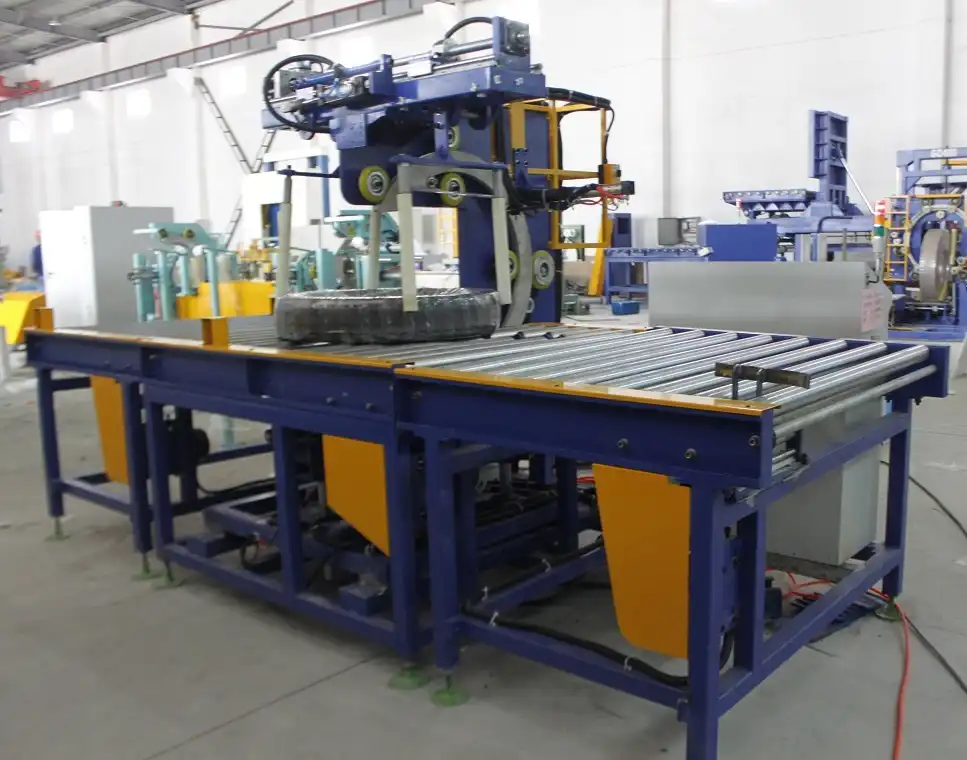
The Impact of Robotic Precision on Packaging Efficiency
The integration of robotic systems into coil handling is not merely about replacing manual labor; it's about fundamentally transforming the efficiency and effectiveness of the entire packaging process. Robots bring a level of precision and consistency that is unattainable with manual or even mechanized systems. Let's examine the key areas where robotic precision makes a significant impact:
Enhanced Safety
Manual handling of heavy steel coils is inherently dangerous. Robots eliminate the need for human operators to be in close proximity to heavy loads during lifting and movement, significantly reducing the risk of workplace accidents and injuries.
Increased Speed and Throughput
Robots operate at consistent speeds and can work continuously without fatigue. This translates to a significant increase in throughput compared to manual handling, where speed and efficiency can fluctuate based on operator fatigue and shift changes.
Reduced Product Damage
Precise robotic movements minimize the risk of coils being dropped, mishandled, or colliding with other objects during packaging. This reduces damage to the coils themselves, maintaining product quality and minimizing material waste from damaged goods.
Optimized Space Utilization
Robots can be programmed to move coils in optimized paths and stack them precisely, maximizing space utilization within the packaging line and storage areas. This is particularly valuable in facilities with limited floor space.
Improved Consistency and Repeatability
Robots perform tasks with consistent precision, ensuring that each coil is handled in the same way, every time. This consistency is crucial for maintaining quality standards and ensuring reliable packaging.
Reduced Labor Costs
While the initial investment in robotic systems is significant, the long-term reduction in labor costs can be substantial. Automated systems require fewer operators, and robots can work for extended periods without breaks or overtime, leading to significant savings over time.
By introducing robotic precision into coil handling, manufacturers can achieve a step-change improvement in safety, efficiency, and quality, making it a critical component of modern, automated steel coil packaging lines.
Automated Packaging Material Application
Beyond handling the coils themselves, automating the application of packaging materials is another crucial aspect of advanced steel coil packing lines. Applying materials like plastic wrap, paper, cardboard, and strapping manually is time-consuming, inconsistent, and can lead to material waste. Automated systems ensure precise and efficient application, optimizing material usage and enhancing the consistency of the final package.
Automated packaging material application systems utilize machinery to precisely dispense, cut, and apply protective materials like plastic wrap, cardboard, and strapping to steel coils, ensuring consistent protection and minimizing material waste. These systems are programmed to apply the optimal amount of material for each coil size and type, improving efficiency and package quality.
%[keywords]

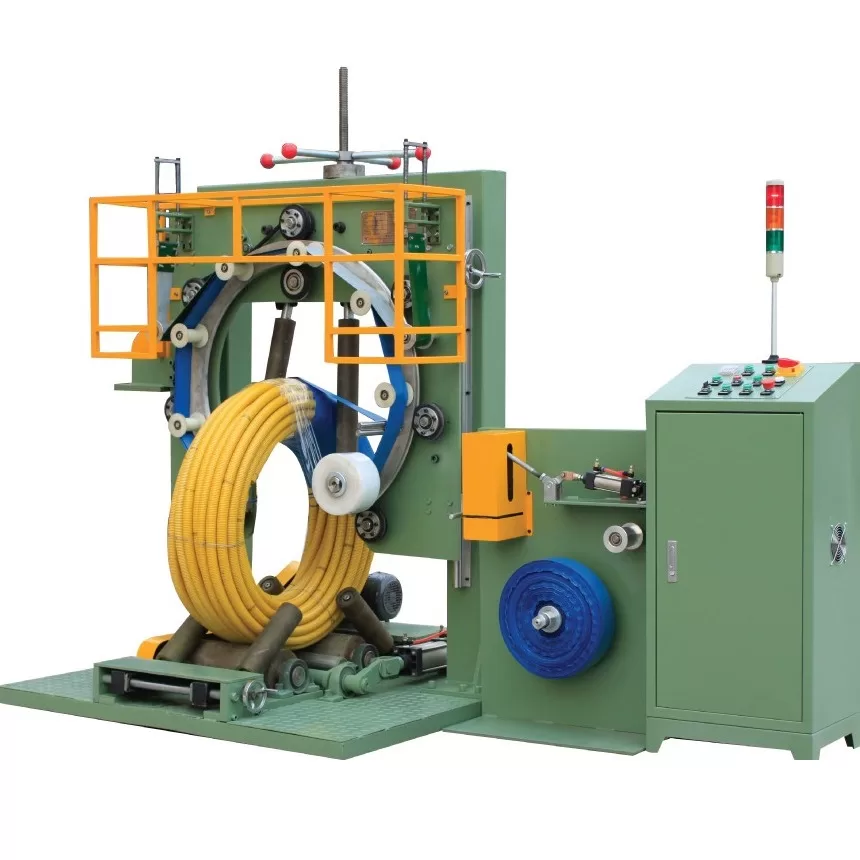
- Optimized Material Usage and Cost Savings: Automated systems use precise measurements to cut and apply only the necessary amount of packaging material. This reduces waste significantly compared to manual application, where over-application is common, leading to substantial cost savings on materials.
- Consistent Packaging Quality: Automation ensures uniform application of materials across all coils. This consistency in wrapping, strapping, and protection levels leads to a more reliable and professional package appearance, enhancing brand image and customer satisfaction.
- Increased Speed and Throughput: Automated material application is significantly faster than manual methods. Machines can apply wrapping and strapping in seconds, drastically increasing the throughput of the packaging line and reducing overall processing time.
- Reduced Labor Costs: Automating material application reduces the need for manual labor in this repetitive and physically demanding task. This frees up workers for other tasks and lowers labor costs associated with packaging.
- Improved Moisture and Mechanical Protection: Consistent and precise material application ensures optimal protection against moisture, corrosion, and physical damage during transit and storage. Automated systems can apply materials in multiple layers and with specific tensions, maximizing protective properties.
- Integration with Different Packaging Materials: Advanced automated systems can handle a variety of packaging materials, including different types of plastic films, paper, cardboard, and steel or plastic strapping. This flexibility allows manufacturers to tailor packaging to specific coil types and transportation requirements.
Intelligent Quality Control and Inspection
Quality control is paramount in steel coil production, and automated packing lines are incorporating increasingly sophisticated inspection systems. Manual quality checks are subjective, time-consuming, and prone to human error. Intelligent automation leverages vision systems, sensors, and machine learning to provide objective, rapid, and comprehensive quality assessments, ensuring only properly packaged and defect-free coils are shipped.
Intelligent quality control in automated packing lines employs vision systems, sensors, and AI algorithms to automatically inspect steel coils for defects, measure dimensions, and verify packaging integrity with high accuracy and speed. This ensures consistent quality, reduces errors, and minimizes the risk of shipping substandard products.
%[keywords]

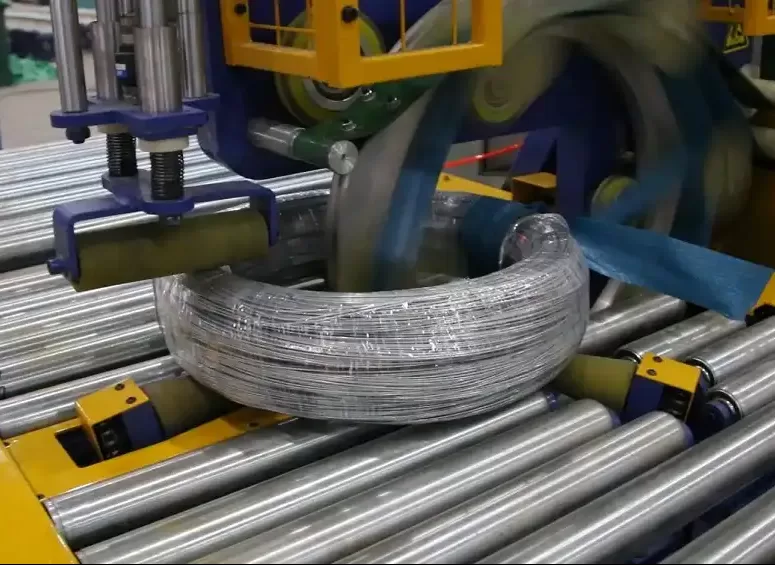
Key Components of Intelligent Quality Control Systems
Modern automated packing lines utilize a combination of advanced technologies to achieve comprehensive and reliable quality control. These components work together to detect a wide range of potential issues, ensuring that only coils meeting the required standards proceed to shipping.
| Component | Description | Benefits |
|---|---|---|
| Vision Systems | High-resolution cameras and image processing software to visually inspect coils for surface defects, shape deviations, and packaging flaws. | Detects scratches, dents, rust, and incorrect wrapping or strapping. Provides objective, repeatable inspection. |
| 3D Scanners | Laser or structured light scanners to measure coil dimensions (diameter, width, thickness) with high precision. | Ensures coils meet dimensional specifications. Identifies out-of-tolerance coils before packaging. |
| Weight Sensors | Integrated weighing scales to verify coil weight against expected values. | Detects missing material or gross errors in coil production. Can identify issues before packaging is completed. |
| Sensor Networks | Array of sensors (e.g., proximity, pressure, temperature) to monitor packaging process parameters in real-time. | Tracks material application, strapping tension, and other critical factors. Ensures process consistency. |
| Machine Learning (AI) | Algorithms trained to analyze inspection data and identify subtle defects or patterns not easily detected by humans. | Improves defect detection accuracy over time. Enables predictive quality control based on historical data. |
| Data Logging & Reporting | Systems to record inspection data, generate reports, and provide feedback for process optimization. | Tracks quality trends over time. Enables data-driven improvements to production and packaging processes. |
By integrating these intelligent quality control components, steel coil packing lines can achieve a level of quality assurance that was previously unattainable with manual inspection alone. This leads to fewer customer complaints, reduced waste, and enhanced overall product reliability.
Seamless Integration for Enhanced Efficiency
%[keywords]

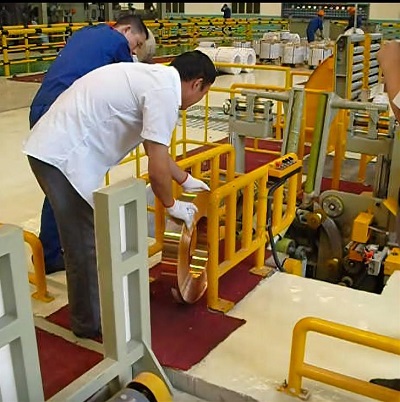
Advanced automation in steel coil packing lines is not just about individual machines working in isolation; it's about creating a seamlessly integrated system that connects with upstream and downstream processes. This holistic approach maximizes efficiency, reduces bottlenecks, and provides real-time visibility across the entire production and supply chain.
Seamless integration in automated coil packing lines refers to connecting the packaging system with upstream production, inventory management, and downstream shipping operations for optimized material flow, real-time data exchange, and enhanced operational efficiency. This integration creates a cohesive, end-to-end automated solution.
Integrating the packing line with the broader manufacturing ecosystem unlocks significant benefits:
- Real-time Data Exchange: Integration allows for instant communication between different systems. Production data, coil specifications, and packaging requirements are automatically transmitted to the packing line, eliminating manual data entry and reducing errors.
- Coordinated Production Scheduling: The packing line can be synchronized with production schedules, ensuring that coils are packaged as soon as they are produced, minimizing buffer inventory and reducing lead times.
- Optimized Material Flow: Integration streamlines the movement of coils from production to packaging to shipping. Automated guided vehicles (AGVs) or conveyors can be used to transport coils seamlessly between different stages, optimizing material flow and reducing manual handling.
- Inventory Management: Real-time tracking of packaged coils allows for accurate inventory management. The system knows exactly how many coils are packaged, their location, and their status (e.g., ready for shipment), improving inventory control and reducing the risk of stockouts or overstocking.
- Traceability and Genealogy Tracking: Integrated systems can track each coil throughout the entire production and distribution chain. This traceability is crucial for quality control, warranty management, and responding to customer inquiries.
- Enhanced Supply Chain Visibility: Seamless integration provides a holistic view of the entire supply chain, from raw material input to final product delivery. This visibility enables better decision-making, improved responsiveness to customer demands, and optimized supply chain performance.
By breaking down silos and connecting the packing line with other critical operations, manufacturers can unlock a new level of efficiency, agility, and control over their steel coil production and distribution processes.
Conclusion
The journey towards automation in steel coil packaging lines is transforming the steel industry. From enhanced efficiency and quality to improved safety and sustainability, the benefits of automation are undeniable. As technology continues to advance, and the demands of the market evolve, [wire packing automation]() will become not just an advantage, but a necessity for steel coil manufacturers seeking to thrive in the future. Embracing these advancements and partnering with automation experts is the key to unlocking the full potential of automated steel coil packaging and securing a competitive edge in the global market.