
Automatic Coil Packing Line vs. Semi-Automatic: Which One Is Right for You?
As a factory manager, you face constant pressure to boost output, cut costs, and keep your team safe. The final packaging stage for steel coils or wire rods often becomes a frustrating bottleneck. You might be staring at a slow, labor-intensive process, worrying about product damage and rising insurance claims from manual handling injuries. The decision to upgrade your packaging line is critical, but the choice between a fully automatic and a semi-automatic system can feel overwhelming. How do you know which investment will truly solve your problems and deliver a clear return? (steel coil packaging line decision)
The right choice between an automatic and a semi-automatic coil packing line depends on your production volume, labor availability, initial budget, and long-term operational goals. For high-volume, continuous production environments where maximizing speed and minimizing labor are paramount, a fully automatic line is the superior investment. For operations with lower throughput, variable coil sizes, or tighter capital constraints, a well-designed semi-automatic system offers significant efficiency gains and a more accessible entry point into automation. (automatic vs semi-automatic coil strapping)
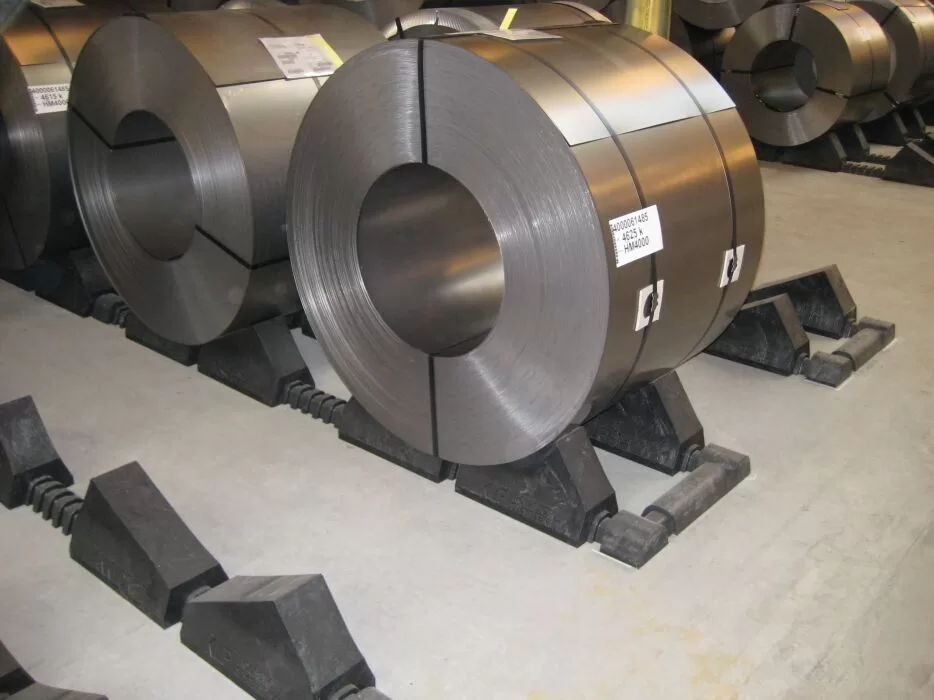
This isn't just about buying a machine; it's about choosing a path for your factory's future. I've been on both sides of this equation—first as an engineer dealing with these daily frustrations, and later building solutions for clients like you. Let's break down this complex decision into clear, actionable parts. We'll examine the core differences, weigh the pros and cons, and align them with real-world factory scenarios. By the end, you'll have a framework to confidently select the system that matches your specific challenges in metal processing and logistics.
1. What Exactly Are the Core Differences in Operation?
Imagine two scenarios on your shop floor. In one, an operator manually positions a coil, triggers a strapping head, and then moves the coil to the next station. In the other, coils flow seamlessly on a conveyor, are automatically measured, strapped, and labeled without a single touch. That's the fundamental divide. (semi automatic coil strapping machine process)
The core operational difference lies in the level of human intervention and system integration. A semi-automatic line requires an operator to perform key tasks like coil positioning and cycle initiation for each unit. An automatic line integrates material handling, strapping, and sometimes labeling into a synchronized, computer-controlled process that runs with minimal operator oversight. (fully automatic steel coil packaging system)
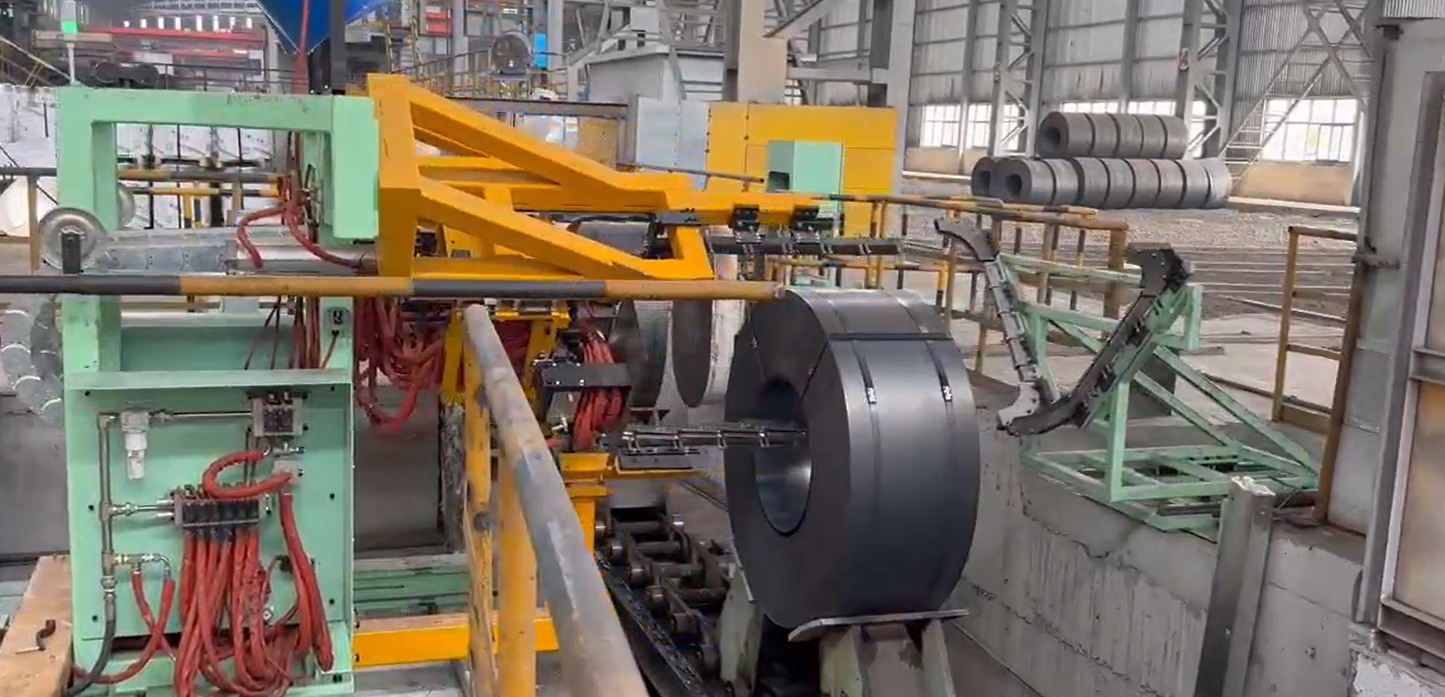
Let's dive deeper into what this means for your daily operations. Think of it as the difference between having a skilled assistant and building a self-managing team.
🛠️ The Semi-Automatic Workflow: Operator-Centric Control
A semi-automatic system is a powerful tool that augments your workforce. Here’s a typical step-by-step flow:
- Manual Positioning: An operator, often using an overhead crane or forklift, places the steel coil onto the packing station's mandrel or platform.
- Cycle Initiation: The operator presses a button or foot pedal to start the strapping cycle.
- Machine Action: The machine automatically feeds the strapping (steel or plastic), tensions it around the coil, seals the joint, and cuts the strap.
- Repetition & Handling: The operator may need to rotate the coil or reposition the strapping head for multiple straps. Once complete, they manually remove the packed coil.
- Key Feature: The operator is in control of the pace and positioning. This allows for handling a wide variety of coil dimensions (OD, ID, width) without complex reprogramming.
- Best For: Batch production, frequent changeovers, or facilities where coils are not on a standardized conveyor system.
⚙️ The Automatic Workflow: Integrated System Logic
An automatic line is a production subsystem. It receives, processes, and dispatches with precision.
- Automatic Infeed: Coils are fed into the line via conveyor, roller table, or automated guided vehicle (AGV).
- Sensing & Positioning: Sensors detect the coil. Centering arms or rollers automatically position it correctly for strapping.
- Programmed Strapping: A PLC (Programmable Logic Controller) executes a pre-set strapping pattern. Robotic arms or traveling strapping heads apply multiple straps at exact locations.
- Automatic Discharge: The packed coil is automatically conveyed to the next station, which could be labeling, wrapping, or directly to storage.
- Key Feature: The system is defined by its Throughput (coils per hour) and Degree of Integration. It's designed for a specific range of coil sizes.
- Best For: High-volume, continuous production lines (e.g., rolling mill output), or where labor costs and consistency are primary concerns.
| Operational Aspect | Semi-Automatic Line | Automatic Line |
|---|---|---|
| Human Role | Direct, hands-on control per cycle. | Monitoring, maintenance, and oversight. |
| Changeover Speed | Fast, often just manual adjustment. | Slower, may require program change. |
| Pacing | Determined by operator speed. | Determined by machine cycle time. |
| Floor Space | Generally more compact. | Larger, needs space for conveyors. |
Choosing between them starts by asking: Is my bottleneck the physical act of strapping, or the entire material flow from production to dispatch? (coil packaging automation level)
2. How Do Costs and ROI Compare Between the Two Systems?
The price tag is often the first point of comparison, but it's only the tip of the iceberg. A cheaper initial investment can lead to higher long-term costs, while a more expensive system might pay for itself in under two years. You need to look at the total cost of ownership. (coil packing machine return on investment analysis)
Financially, semi-automatic lines have a significantly lower initial purchase price and are quicker to install, offering a faster, lower-risk entry into improved packaging. Automatic lines require a higher capital investment but deliver a superior long-term ROI through drastic reductions in labor costs, minimized product damage, and maximized production line throughput, paying back the investment over time. (cost of automatic coil packing line)

Let's break down the numbers to see where your money goes and how it comes back.
💰 Initial Capital Expenditure (CAPEX)
This is the most visible cost difference.
- Semi-Automatic System: You are primarily paying for the core strapping machinery—a robust strapping head, a power source, and a control panel. Costs can range significantly based on strap type (steel vs. plastic) and machine durability. For a high-quality, heavy-duty semi-automatic steel strapper from a reputable manufacturer like Fengding, you are investing in the core tool that will last for years.
- Automatic System: Here, you are investing in an integrated solution. The cost includes:
- The strapping unit(s).
- Material handling conveyors and transfer cars.
- Automatic coil centering and positioning systems.
- Advanced PLC control systems and safety fencing.
- Comprehensive engineering, installation, and commissioning.
This integrated approach is why brands like Fengding and Wuxi Buhui are leaders; they engineer the entire system to work as one unit.
📈 Operational Expenditure & ROI Calculation
This is where the true financial picture emerges. Consider these ongoing costs:
| Cost Factor | Semi-Automatic Impact | Automatic Impact |
|---|---|---|
| Labor | Requires 1-2 dedicated operators per shift. High ongoing cost. | Requires only 1 operator to monitor multiple lines. Massive savings. |
| Product Damage | Higher risk from manual handling, leading to customer claims. | Virtually eliminated by automated, consistent handling. |
| Throughput Limit | Capped by human speed (e.g., 10-15 coils/hour). | Defined by machine cycle (e.g., 30-60 coils/hour). Removes bottleneck. |
| Consumables (Strapping) | Can be higher due to less consistent tensioning. | Optimized and consistent, reducing waste. |
Simple ROI Thought Exercise:
Let's say a semi-automatic system costs $50,000 and requires one full-time operator ($30,000/year). An automatic line costs $200,000 but eliminates that dedicated operator.
- Annual Labor Savings: $30,000
- Additional Savings from Damage Reduction & Efficiency: Let's estimate $20,000/year.
- Total Annual Savings vs. Semi-Auto: ~$50,000
- ROI Time for Automatic Line: ($200,000 - $50,000) / $50,000 = 3 years.
After 3 years, the automatic line provides pure cost advantage and capacity boost. For a 24/7 mill, this payback period can be under 2 years. The key is to calculate based on your labor rates, production volume, and cost of downtime. (total cost of ownership packaging equipment)
3. Which System Best Solves Safety and Labor Challenges?
Your greatest responsibility is sending your team home safely every day. The packaging area, with heavy coils and repetitive motions, is a high-risk zone. The right machine isn't just about efficiency; it's a critical safety intervention. (improving safety in coil packaging operations)
For directly eliminating manual handling injuries and reducing reliance on hard-to-find skilled labor, a fully automatic coil packing line is the most effective solution. It physically removes workers from the lifting, positioning, and strapping hazard zones. A semi-automatic system significantly improves safety over fully manual methods by providing powered tensioning and sealing, but it still requires operators to be in close proximity to heavy loads. (automated material handling for worker safety)

Let's examine how each system addresses the specific safety and labor pain points you face.
⚠️ Addressing Specific Hazards
- Musculoskeletal Injuries (From Lifting/Rotating Coils):
- Semi-Automatic: Risk is reduced but not eliminated. Operators may still need to nudge coils into position or handle lifting equipment controls. Ergonomic workstations help.
- Automatic: Risk is virtually eliminated. Coils are moved by conveyors, rollers, or manipulators. The "man-handling" is gone.
- Strap Recoil and Sealing Hazards:
- Semi-Automatic: Operators are close to the strapping head. Modern machines from quality suppliers have excellent guards and two-hand controls, but the risk zone exists.
- Automatic: The strapping process is fully enclosed within a guarded cell. Operators are outside the safety fencing during normal operation.
- Forklift/Crane Interaction:
- Both systems benefit from reduced forklift traffic in the packing area, but the automatic line minimizes it to just infeed and outfeed points, creating a more predictable and safe floor layout.
👷 Solving the Labor Dilemma
Finding and retaining reliable personnel for physically demanding jobs is a universal challenge.
- Semi-Automatic System: It makes the existing job easier and more productive. Instead of struggling with manual tools, the operator uses a powerful machine. This can improve job satisfaction and reduce turnover. However, you still need a person dedicated to that station.
- Automatic System: It transforms the job role. The "packaging operator" becomes a "line monitor" or "equipment technician." This role is less physically taxing, focuses on problem-solving and quality checks, and is more attractive in a tight labor market. One skilled technician can often oversee multiple automatic lines.
Critical Partner Insight: When I visit factories like Michael's, the safety discussion is paramount. A partner who understands this doesn't just sell a machine; they conduct a risk assessment. They design safety interlocks, proper guarding, and emergency stop systems that comply with both local Mexican standards and international norms (like CE). This deep operational understanding is what separates a vendor from a true partner in risk reduction. (packaging line ergonomics and hazard control)
4. How to Make the Final Decision for Your Factory?
You have the technical and financial comparisons. Now, how do you translate that into a confident decision for your specific metal processing plant in Mexico? This final step is about aligning the technology with your unique operational reality and future ambitions. (selecting coil packaging equipment guide)
The final decision should be driven by a clear analysis of your current and projected production volume, available capital, and strategic operational goals. Use a decision matrix: if your primary need is to immediately improve safety and efficiency on a limited budget with flexible production, choose a high-quality semi-automatic system. If your goal is to achieve maximum throughput, solve chronic labor shortages, and create a long-term competitive advantage, invest in a fully automatic line. (decision matrix for packaging automation)
This isn't a guess. It's a strategic evaluation. Let's build a simple framework.
✅ Your Decision Checklist
Answer these questions honestly for your operation:
1. Volume & Throughput:
- How many coils do you pack per shift, day, and month?
- What is your target output in 3 years?
- Is packaging your current bottleneck? (Time how long it takes from production finish to truck loading).
2. Product Variability:
- How often do coil dimensions (OD, ID, width, weight) change?
- Is your production in long runs of the same spec, or short, custom batches?
3. Financial & Infrastructure:
- What is your available budget for this upgrade?
- Do you have the floor space and power/air supply for an extended conveyor system?
- What is your internal cost of a workplace injury or product damage claim?
4. Labor Reality:
- Is it difficult to hire and retain staff for manual jobs?
- What is the fully burdened cost of one packaging operator per year?
🗺️ Scenario-Based Recommendations
Based on common profiles, here is my guidance:
-
Scenario A (The Growing Plant): "We pack 50-80 coils per day, sizes vary weekly, and we have a skilled but aging team. Budget is tight, but safety is our #1 concern."
- Recommendation: Start with a robust semi-automatic strapping station. Focus on models known for durability and safety features. A supplier like Fengding excels here. This gives you immediate gains, proves the ROI, and builds the case for future full automation. It's a strategic first step.
-
Scenario B (The High-Volume Producer): "Our new rolling mill outputs 200+ coils per day. We run 24/7. Labor turnover is high, and any downtime costs thousands per hour. We need reliability and speed."
- Recommendation: Invest in a custom-engineered automatic coil packing line. The higher CAPEX is justified by the operational necessity. Partner with an expert who can design for your exact coil specs and integrate it into your material flow. This is where deep expertise from Fengding or Wuxi Buhui is critical to avoid costly integration failures.
The most important step is to partner with a supplier who acts as a consultant. Share your checklist answers with them. A true expert won't just push the most expensive option; they will help you build a phased plan that makes sense for your business today and tomorrow. (phased approach to packaging automation)
Conclusion
Choosing between automatic and semi-automatic packaging is about matching technology to your specific production needs and strategic goals. For a definitive solution that maximizes throughput and safety, explore a custom-engineered Steel Coil Packing Line.