
Automatic Coil Packing Line Installation: What You Need to Know?
You've made the decision. You're ready to move beyond slow, risky, and costly manual packing. Investing in an automatic coil packing line is a major step toward transforming your metal processing operation. But between signing the purchase order and seeing that first perfectly packaged coil roll off the line, there's a critical phase that determines your success: the installation. Get it right, and you unlock years of reliable, high-speed production. Get it wrong, and you face costly delays, safety issues, and a machine that never reaches its promised potential. As someone who has been on both sides of this process—first as an engineer and now running my own packing machine factory—I've seen what separates a smooth startup from a nightmare project. This guide will walk you through the essential knowledge you need, from the initial planning to the final safety check.
A successful automatic coil packing line installation requires meticulous planning across four key areas: thorough pre-installation site and utility preparation, precise mechanical and electrical integration with your existing production flow, comprehensive operator training and documentation, and a rigorous final commissioning and safety validation process. Skipping any of these steps can lead to operational bottlenecks, safety hazards, and a failure to achieve your target return on investment (ROI). (automatic steel coil packaging system installation guide)

The journey from an unboxed machine to a fully integrated, profit-generating asset is not automatic. It demands a partnership between you and your supplier. Think of it not just as installing equipment, but as implementing a new system into the heart of your factory's workflow. Let's break down this complex process into manageable, actionable steps. By understanding what's required, you can ask the right questions, prepare your team, and ensure your new automated packing line delivers on its promise of efficiency, safety, and reliability.
1. What Must You Prepare Before the Machine Arrives?
Imagine the truck arrives with your new, high-tech packing line, only to find there's no clear path to its designated spot, the electrical supply is inadequate, and the foundation isn't ready. This scenario spells immediate delays and extra costs. The pre-installation phase is all about preventing these problems. It's the groundwork that ensures a smooth and efficient installation process. Your goal is to have a "plug-and-play" ready site, minimizing the time technicians spend on basic setup and maximizing their focus on precision alignment and calibration. (coil packing machine pre-installation checklist)
Before your automatic coil packing line arrives, you must complete a detailed site preparation checklist. This includes creating a detailed floor plan with clear access paths, verifying and preparing all necessary utility connections (power, air, network), and ensuring the foundation meets the exact specifications for load-bearing and levelness provided by the machine manufacturer. Proper preparation prevents costly on-site modifications and installation delays. (site preparation for automatic strapping machine)

A well-prepared site is the foundation of a successful installation. Let's dive deeper into the three critical pillars of pre-installation preparation.
🏗️ Pillar 1: Space, Access, and Foundation
This is the physical stage for your new equipment. Getting it wrong can cause permanent operational issues.
- Floor Plan & Access Route: Create a detailed layout. Mark the exact installation position, including safety perimeters. Trace the path from your loading dock to this spot. Measure all doorways, corridors, and overhead obstructions. Ensure the route is clear of stored materials and can support the weight of moving heavy machine parts. A blocked route can add days to your project.
- Foundation Requirements: This is non-negotiable. An automatic coil packing line is heavy and must operate without vibration. The manufacturer's manual will specify:
- Load Capacity: The concrete floor must support the machine's weight, plus the weight of the heaviest coil.
- Levelness Tolerance: Often within ±2mm over the machine's entire footprint. An unlevel base causes misalignment, premature wear, and packaging errors.
- Anchor Bolt Plans: Provide the exact size, depth, and positioning of anchor bolts or chemical anchors. Have these ready before assembly begins.
⚡ Pillar 2: Utility Connections & Specifications
Your machine needs energy and data to function. Assume nothing about your existing plant utilities.
| Utility Type | Key Questions to Verify | Common Specification Example |
|---|---|---|
| Electrical Power | Voltage (e.g., 380V/480V 3-phase)? Frequency (50/60Hz)? Total power (kVA) required? Location of the main disconnect switch? | A standard line may require a dedicated 380V, 50Hz, 60A power supply. |
| Compressed Air | Air pressure (Bar/PSI)? Air flow (CFM/Nm³/min)? Air quality (need for dryers/filters)? Connection port size and location? | Typically requires 6-8 Bar of clean, dry air with a flow of 300+ Nm³/min. |
| Network & Control | Will it connect to your plant network (for data collection)? Needs a standard Ethernet (RJ45) drop? Any requirements for PLC communication protocols? | An Ethernet connection for remote monitoring and diagnostics is standard. |
📋 Pillar 3: Documentation & Team Readiness
The paperwork and people are as important as the physical site.
- Review All Manuals: Distribute the installation manual to your maintenance and project team. Identify potential conflicts early.
- Appoint a Site Coordinator: Designate a single point of contact from your team. This person manages access, coordinates with the installation crew, and is responsible for on-site decisions.
- Schedule Key Personnel: Ensure your maintenance electricians and mechanics are available during the core installation and commissioning days. Their involvement is crucial for knowledge transfer.
Neglecting these steps shifts the burden to the installation team, leading to longer, more expensive service calls. A prepared client is a partner, not a spectator. (factory readiness for packaging automation project)
2. How is the Machine Integrated into Your Production Flow?
The machine is now on your floor, bolted down, and powered up. But is it part of your production line? Integration is the process of making the automatic packing line communicate and cooperate seamlessly with the upstream and downstream processes. A poorly integrated line creates new bottlenecks—coils waiting to be packed or finished packages with nowhere to go. The goal is a smooth, continuous material flow where the packing line acts as a synchronized link in your manufacturing chain, not an isolated island. (integrating automatic packing line with production workflow)
Integrating an automatic coil packing line involves two parallel tracks: the physical/mechanical connection of conveyors and transfer systems to ensure smooth material handling, and the electrical/control system integration to synchronize the packing cycle with the pace of your production line and enable data exchange. This ensures the line receives coils at the right time and dispatches them without manual intervention. (production line synchronization for coil packaging)

Integration is where engineering meets practical operation. Let's explore the key components.
🤝 Mechanical Integration: The Physical Handshake
This is about moving the metal. How does the coil get in and out?
- Infeed Methods: The line must connect to your existing process.
- Conveyor Infeed: The most common. A roller conveyor or chain transfer system must be aligned at the correct height and speed to gently feed coils into the packing station.
- Crane/Lifter Interface: For heavier coils, the machine may have a designated lift-and-place area. Clear markings and positioning guides are essential for crane operators.
- Outfeed & Discharge: Where does the packaged coil go?
- Automatic Discharge Conveyor: Moves the finished package to a staging area or directly onto a truck loading system.
- Palletizing or Stacking: Some lines integrate with automatic palletizers. The spatial coordination between the packer discharge and the palletizer pickup point must be precise.
🧠 Control System Integration: The Digital Nervous System
This is the intelligence that coordinates everything.
- Synchronization with Upstream Process: The packing line's PLC (Programmable Logic Controller) needs a signal. This could be a simple "coil in position" photoelectric sensor or a complex signal from your mill's main control system telling the packer a coil is ready. The packer must then complete its cycle (apply film, strap, label) within the available time before the next coil arrives.
- Creating a "Buffer": What if the packer is still working when the next coil arrives? Smart integration includes a short buffer conveyor or holding area to prevent collisions and allow for minor timing mismatches.
- Data Collection (Industry 4.0): Modern lines can output data: coils packed per shift, strap usage, error codes. This data can be sent to your plant's SCADA or MES system via Ethernet. This turns the machine from a cost center into a source of operational intelligence.
⚠️ Critical Integration Pitfalls to Avoid
- Speed Mismatch: The packing cycle time must be faster than your production line's output rate. If you produce a coil every 90 seconds, your packer must complete its job in less than 90 seconds.
- Ignoring Maintenance Access: Positioning the machine too close to a wall or other equipment might make routine servicing impossible. Always respect the maintenance access zones shown on the layout drawings.
- Assuming "One Size Fits All": The integration plan for a Fengding-style high-speed turnkey line will differ from a more modular Wuxi Buhui system. Your supplier should provide a customized integration diagram.
Successful integration transforms a standalone machine into a productivity multiplier. It requires clear communication between your production team and the installation engineers. (material handling integration for steel mill)
3. Who Needs Training and What Should It Cover?
A brilliant machine operated by an unprepared team is a liability. Training is not an optional extra; it's a core part of the installation package that safeguards your investment. The goal of training is to build competence and confidence in your team, empowering them to operate the line safely, perform basic troubleshooting, and understand its capabilities and limits. This reduces dependency on external service and minimizes panic during minor faults. (operator training program for automatic packaging equipment)
Effective training must be provided to three key groups: machine operators (for daily safe operation and minor adjustments), maintenance technicians (for preventive maintenance and basic mechanical/electrical troubleshooting), and production supervisors (for understanding system capabilities, managing changeovers, and interpreting performance data). Training should be hands-on, conducted on your actual installed machine, and supported by clear, language-appropriate manuals. (packaging machine maintenance training checklist)
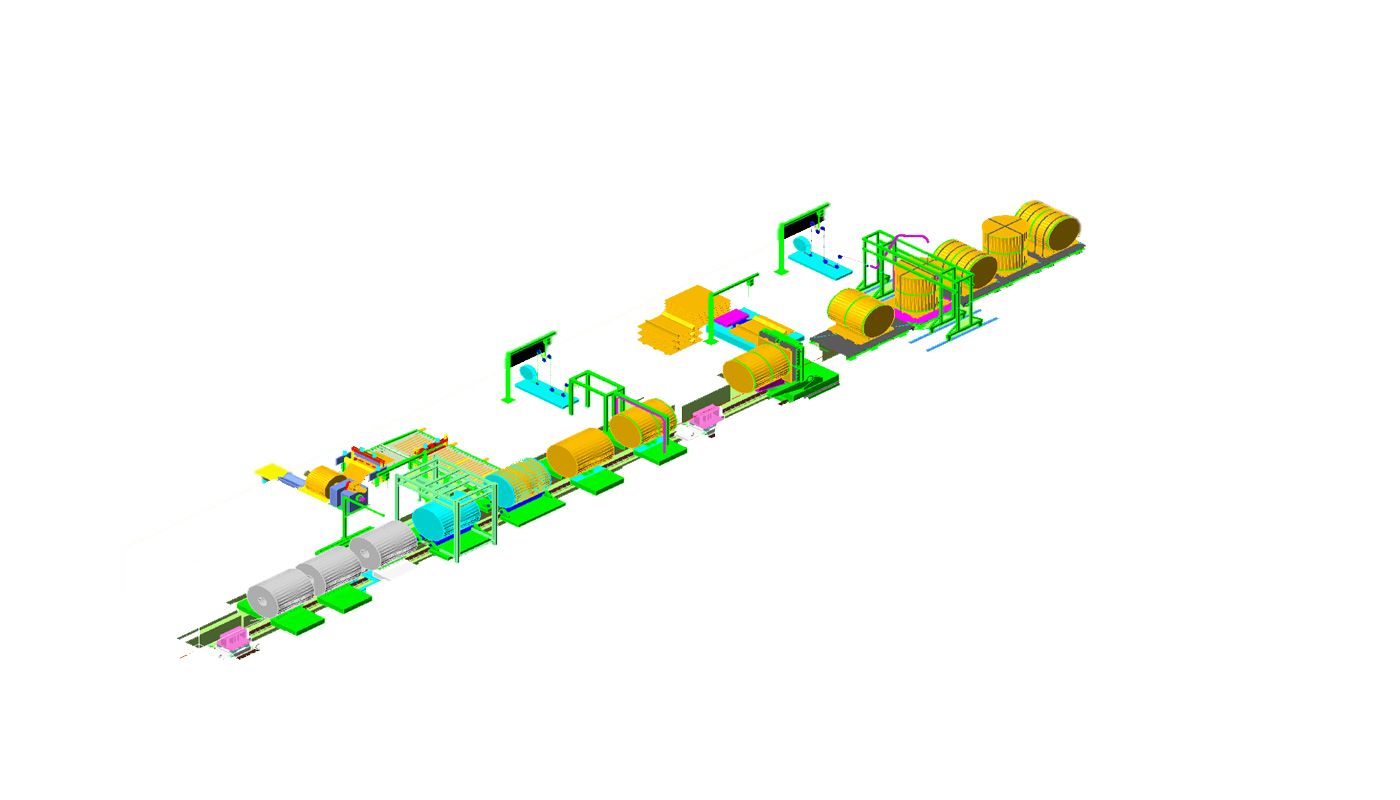
Training is an investment in people. A structured program should cover distinct areas for different roles.
👷 Operator Training: Safe and Efficient Daily Use
Operators are the first line of defense. Their training focuses on routine tasks.
- Safe Startup & Shutdown Procedures: A standardized sequence to energize the system and bring it to a safe state at the end of a shift.
- Normal Operation Cycle: How to initiate an automatic cycle, load parameters for different coil sizes (diameter, width, weight), and monitor the process.
- Basic User Interface: Navigating the HMI (Human-Machine Interface) screen to view status, select programs, and acknowledge alarms.
- Common Fault Recognition & Response: Identifying frequent but non-critical alarms (e.g., "strap low," "film end near") and knowing the correct, safe procedure to resolve them, such as reloading materials.
- Daily Checklists: Performing simple pre-shift inspections (checking air pressure, looking for loose debris, testing emergency stops).
🔧 Maintenance Technician Training: Ensuring Long-Term Reliability
Technicians keep the machine running for years. Their training is more technical.
- Preventive Maintenance (PM) Schedule: Detailed walkthrough of daily, weekly, and monthly PM tasks. This includes:
- Lubrication Points: Greasing bearings, chains, and guide rails.
- Wear Part Inspection: How to check strapping heads, film carriage wheels, cutting blades, and seals for wear.
- Tension & Alignment Checks: Verifying strap tension, film web alignment, and conveyor tracking.
- Basic Troubleshooting: Using the PLC diagnostic screens to interpret error codes. Learning how to safely check fuses, sensors (photoelectric, proximity), and solenoid valves. Understanding pneumatic and hydraulic diagrams.
- Mechanical Adjustments: How to correctly adjust the coil centering mechanism, strap chute, or film carriage guides for different product sizes.
📊 Supervisor & Management Training: Maximizing ROI
Supervisors need to manage the resource, not just the machine.
- Performance Metrics: Understanding what data the machine provides (OEE - Overall Equipment Effectiveness, cycle time, downtime reasons) and how to use it to improve efficiency.
- Changeover Management: Planning and optimizing the process for switching from packing one coil specification to another to minimize non-productive time.
- Consumable Management: Forecasting usage of film, strapping, and labels to maintain inventory and avoid production stops.
- When to Call for Help: Developing a clear escalation protocol to distinguish between issues the in-house team can handle and those requiring specialist support from the supplier.
Documentation is key. Insist on receiving clear, illustrated manuals in your required language (English/Spanish). Video recordings of the training sessions are invaluable for refreshing knowledge later. A well-trained team is your best guarantee for achieving the promised uptime and efficiency. (workforce upskilling for factory automation)
4. What Happens During Final Commissioning and Safety Sign-Off?
This is the moment of truth. Commissioning is the systematic process of testing and adjusting the installed system to ensure it meets all design specifications and operates safely under real-world conditions. It's the final verification before you accept the machine and the supplier's team departs. The goal is to uncover and resolve any hidden issues, fine-tune performance, and formally demonstrate that the system is ready for production, with all safety systems fully functional. (commissioning procedure for industrial packing machinery)
Final commissioning involves a structured series of tests: starting with empty-cycle "dry runs" to check machine functions, progressing to running with actual coils at slow speed, and culminating at full production speed. This is followed by a formal safety validation where all guarding, emergency stops, light curtains, and interlocks are tested and documented. Only after successful completion of both performance and safety tests should the installation be considered complete and the machine accepted. (factory acceptance test for automatic strapping line)
The commissioning phase is a collaborative audit. Here is a typical sequence and checklist.
✅ Phase 1: Functional Testing & Dry Runs
The machine runs without product to verify basic operations.
- Power-Up & System Check: Energize the system. Check for abnormal noises or alarms. Verify all motors and fans start correctly.
- Manual Mode Testing: Use the HMI to manually activate each major component:
- Extend/retract the coil centering arms.
- Cycle the film carriage and pre-stretch mechanism.
- Activate the strapping head to feed, tension, and seal a strap (without a coil).
- Test all conveyor movements (infeed, turntable, discharge).
- Control Logic Verification: Run a full automatic cycle with no coil present. Confirm the PLC sequence follows the correct order: "Ready" -> "Coil In Position" (simulated) -> "Start Cycle" -> Film Carriage Move -> Strapping Cycle -> Discharge.
🧪 Phase 2: Process Validation with Product
Now, test with real coils, starting slowly.
- First Article Inspection: Run 3-5 coils at a reduced speed. Inspect each finished package for:
- Film Wrap Quality: Consistent overlap, proper tension (no loose film or crushed edges).
- Strapping Placement: Correct number of straps, positioned accurately according to spec, with proper tension and seal.
- Label Application: Correct, legible, and securely attached.
- Speed Ramp-Up: Gradually increase the cycle speed to match your required production rate. Monitor for vibrations, misalignment, or timing issues that only appear at higher speeds.
- Changeover Test: Change the HMI program to a different coil size (e.g., from a 1m wide coil to a 1.5m wide coil). Perform the changeover as trained and run several coils to ensure all automatic adjustments work correctly.
🛡️ Phase 3: Safety System Validation (MOST CRITICAL)
This is non-negotiable. Every safety device must be tested and signed off.
🔴 Emergency Stop (E-Stop) Circuits: Press every single E-Stop button on the machine and perimeter. The system must halt all hazardous motion immediately and require a manual reset.
🟡 Safety Guards & Interlocks: Open every access door and removable guard. The machine must not be able to start an automatic cycle, and any moving parts in the hazardous area must stop.
🟢 Presence-Sensing Devices: Test any light curtains or safety mats. Breaking the light curtain's beam during an automatic cycle must stop the hazardous motion (like the strapping head or turntable).
📝 Documentation: The installation team should provide a Safety Sign-Off Sheet listing every device tested. Your site manager and a safety representative should review and sign this document. This protects everyone legally and ensures a safe working environment.
Do not allow the installation team to leave until this process is complete and you are satisfied. A reputable supplier like Fengding or Wuxi Buhui will insist on this rigorous process. It is the final step in transforming a capital expenditure into a reliable, productive, and safe asset for your factory. (industrial machinery safety certification process)
Conclusion
A successful automatic coil packing line installation is a detailed project requiring preparation, precise integration, thorough training, and rigorous safety validation. By partnering with an experienced supplier and following these steps, you ensure your investment delivers maximum efficiency and safety. For a reliable solution, explore our engineered Steel Coil Packing Line.