
Are Automatic Coil Packing Lines Worth the Investment? Here’s What You Should Know
Picture this: you're a factory manager, and your production line is humming along. The furnaces are hot, the rollers are turning, and coils are being produced at a steady pace. Then, everything grinds to a halt. Not because of a machine failure upstream, but because the final packaging station can't keep up. Workers are struggling to manually strap heavy steel coils, risking injury and creating a frustrating bottleneck. This scene is all too common in metal processing plants across Mexico and Latin America. The pressure to deliver is immense, but the old ways of doing things are holding you back. You know you need a change, but the big question looms: is investing in a fully automatic coil packing line the right move, or just an expensive gamble?
The short answer is a resounding yes. For medium to large-scale metal processors facing challenges with labor costs, safety, and throughput, a well-chosen automatic coil packing line is not just an expense; it's a strategic investment with a clear and calculable return. It directly tackles the critical bottlenecks at the end of your production line, transforming packaging from a liability into a reliable, efficient asset. 
I've walked the factory floor, first as an engineer and later as an owner. I've felt the pressure Michael describes—the need for reliability, the fear of downtime, and the relentless pursuit of efficiency. The decision to automate packaging is a major one, and it deserves a thorough, no-nonsense breakdown. Let's move beyond the sales pitch and look at the real factors that determine whether this investment will pay off for your operation.
1. What Are the Real Costs of NOT Automating Your Coil Packaging?
Many factory managers look at the price tag of an automatic line and see only cost. This is a natural first reaction. However, the more dangerous calculation is often the hidden cost of sticking with manual or semi-automatic methods. These costs are silent profit killers, eroding your margins every single day. They don't appear as a single line item on an invoice, but they are very real.
The true cost of manual packaging is a multi-headed beast, comprising direct labor expenses, significant safety liabilities, and substantial product damage. When you add up the ongoing expenses of a slow, manual process, the upfront investment in automation often pays for itself much faster than you might think. 
Let's break down this "Cost of Inaction" into clear, measurable components. Think of it as a financial audit of your current packaging station.
🔍 The Hidden Cost Breakdown
| Cost Category | What It Includes | Impact on Your Bottom Line |
|---|---|---|
| Direct Labor Costs | Wages, overtime, benefits, and training for packaging crews. | High and recurring. Labor is often the largest variable cost in manual packing. |
| Safety & Insurance | Worker compensation claims, medical costs, higher insurance premiums due to injury risk from heavy lifting. | A direct hit to profits and a major human resource concern. |
| Product Damage | Scratches, dents, or edge damage during manual handling and strapping, leading to customer rejections or price reductions. | Loss of material value and potential loss of key clients. |
| Throughput Bottleneck | Inability to keep pace with upstream production, causing finished goods inventory pile-up and delayed shipments. | Limits overall factory output and revenue potential. |
| Consistency Issues | Variable strap tension and placement, leading to insecure loads and potential damage during transit. | Can result in costly logistics claims and reputational damage. |
First, consider labor. In regions like Mexico, while labor costs may be competitive, the scarcity of skilled workers willing to perform strenuous, repetitive tasks is a growing issue. High turnover means constant retraining. An automatic line operates with 1-2 operators monitoring the process, not 4-6 people lifting and strapping. The labor savings alone can justify the investment within a few years.
Second, safety is non-negotiable. A single serious back injury from manual coil handling can incur costs that dwarf a year's worth of packaging labor. The financial and moral imperative to create a safer workplace is powerful. Automation removes workers from the most dangerous part of the process.
Third, product integrity. A machine applies consistent, precise force every time. It doesn't get tired or distracted. This consistency drastically reduces coil edge damage, ensuring your product arrives at the customer's site in perfect condition, protecting your brand and your margins. When you calculate the total cost of ownership (TCO) of your current manual process versus an automatic line, the picture becomes very clear. The question shifts from "Can we afford it?" to "Can we afford not to do it?" (calculating ROI for coil packing automation, hidden costs of manual steel packaging)
2. How Do You Calculate the ROI of a Coil Packing Line?
Talking about "return on investment" can feel abstract. As a pragmatic manager, you need hard numbers. You need a framework to build a business case that makes sense to your finance team. The good news is that the ROI for industrial automation like coil packing lines is often very tangible and straightforward to model. It's about converting operational improvements into financial language.
Calculating ROI for an automatic coil packing line involves comparing its total cost against the quantifiable savings it generates. The key is to accurately project savings in labor, reduced damage, lower insurance costs, and increased throughput, then divide the net annual savings by the total investment cost. 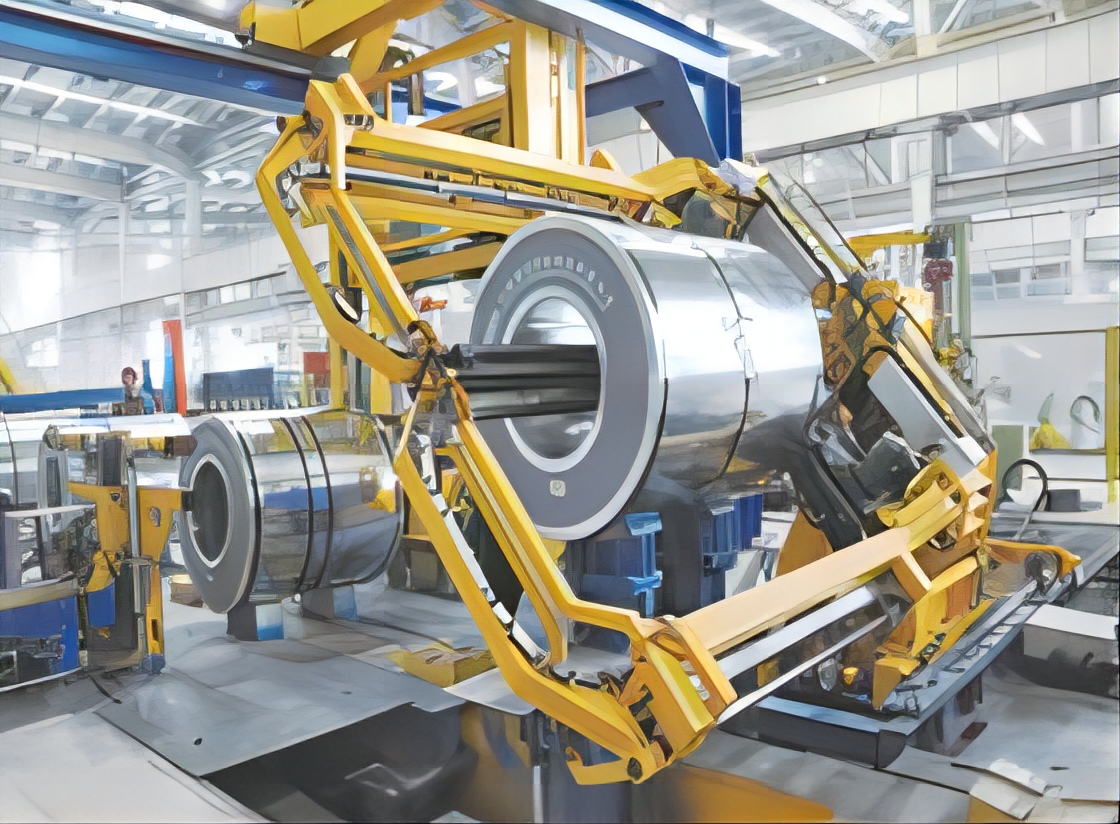
Let's build a simplified, realistic model. This isn't just theory; it's the same math I used when justifying equipment purchases in my own factory.
📊 A Practical ROI Estimation Model
Step 1: Define Your Investment (The Cost)
- Machine Cost: Purchase price of the automatic line (e.g., from a reliable supplier like Fengding or Wuxi Bu Hui).
- Ancillary Costs: Installation, foundation work, training, and initial spare parts.
- Total Investment: Machine Cost + Ancillary Costs.
Step 2: Quantify Your Annual Savings (The Return)
This is the critical part. Be conservative in your estimates.
- Labor Savings:
- (Current # of packing crew) - (New # of operators) = Reduction in FTE (Full-Time Equivalents).
- Reduction in FTE x Average Fully-Loaded Annual Wage = Annual Labor Savings.
- Damage Reduction Savings:
- Estimated % of coils currently damaged x Annual production volume x Average cost per damaged coil = Annual Damage Savings.
- Throughput & Efficiency Savings:
- Faster packaging reduces bottlenecks. Estimate the value of producing and shipping X more coils per year due to eliminated packaging delays.
- Safety & Insurance Savings:
- While harder to pin down, a reduction in incidents can lead to lower insurance premiums. Consult with your provider for potential savings.
Step 3: Perform the Calculation
- Total Annual Savings = Labor + Damage + Throughput + Insurance Savings.
- Simple Payback Period (Years) = Total Investment / Total Annual Savings.
- Annual ROI (%) = (Total Annual Savings / Total Investment) x 100.
Example Scenario:
- Investment: $150,000
- Annual Savings: $50,000 (from labor, damage, efficiency)
- Payback Period: 3 years
- Annual ROI: ~33%
Beyond three years, the machine continues to generate pure savings. The key is to work with a supplier who provides a reliable, durable machine with strong local service support. A machine that breaks down frequently destroys your ROI model. This is why partnering with an expert who understands heavy-industry demands is crucial—they ensure the solution is built to last in your specific environment, protecting your investment. (ROI calculation for automatic strapping lines, payback period for steel coil packaging equipment)
3. What Key Features Should You Look for in a Reliable Automatic Line?
Not all automatic packing lines are created equal. The market is full of options, from light-duty systems to industrial-grade workhorses. For the harsh environment of a metal processing plant in Mexico, you need equipment that is built like a tank but operates with precision. Choosing the wrong features can lead to a nightmare of downtime and repair costs, negating all your projected ROI.
For reliable performance in a demanding metal coil environment, prioritize these core features: robust construction with heavy-duty frames and components, adaptability to handle a wide range of coil sizes and weights, intelligent control systems for easy operation and changeover, and a proven track record of local service and support from the manufacturer. 
Let's translate these priorities into a specific checklist. Think of this as your due diligence guide before you sign any purchase order.
✅ The Heavy-Duty Coil Packing Line Checklist
1. Structural Integrity & Durability:
- Frame: Look for solid steel plate construction, not light-gauge tubing. It must absorb the vibration and shock of heavy coils.
- Strapping Heads: These are the heart of the machine. They must be designed for high-tension strapping (e.g., 1,000+ lbs tension) and use durable seals and wear parts. Brands like Fengding are known for this.
- Motors & Drives: Use industrial-grade, brand-name components (e.g., Siemens, ABB) for reliability.
2. Flexibility & Adaptability:
- Size Range: Can it handle your smallest and largest coil diameters and weights? What is the adjustment mechanism? Quick-adjust systems save valuable time.
- Packaging Styles: Does it support both radial (around the circumference) and cross-strapping (over the face) patterns? Cross-strapping is often essential for coil stability during transport.
- Material Handling: How does the coil enter and exit the station? Look for integrated conveyor rollers or turntables that minimize manual intervention.
3. Intelligence & Control:
- PLC System: A modern Programmable Logic Controller allows for easy programming of different coil programs.
- HMI Interface: The Human-Machine Interface should be user-friendly, possibly with multi-language support (Spanish/English), allowing operators to select programs and view diagnostics easily.
- Diagnostic Alerts: The system should alert operators to issues like low strap, malfunctions, or maintenance needs before they cause a stoppage.
4. The "X-Factor": Service & Partnership:
This is where many suppliers fail. You're not just buying a machine; you're entering a partnership.
- Local Presence: Does the supplier have technicians or a strong partner in Mexico/Latin America?
- Spare Parts Inventory: Are common wear parts stocked locally for fast delivery?
- Technical Support: Can you get remote or on-site support when you need it?
A supplier who understands the operational pressures of a plant manager like Michael will design and support the system accordingly. They become a true partner in your productivity, not just a vendor. (features of heavy-duty coil strapping machines, choosing reliable automatic packaging equipment)
4. How Can You Ensure a Smooth Transition to Automated Packaging?
The fear of disruption is a major barrier to automation. The thought of installing a complex new system, training staff, and potentially halting production is daunting. This is a valid concern. A poorly managed integration can be costly. However, with careful planning and the right partner, the transition can be smooth and methodical, minimizing downtime and maximizing the benefits from day one.
A smooth transition is achieved through meticulous pre-planning, phased implementation, comprehensive operator training, and choosing a supplier who acts as a project partner, not just an equipment seller. The goal is to turn the installation from a disruptive event into a well-orchestrated upgrade of your packaging department.
Success here depends on a clear roadmap. Let's outline the critical phases from decision to full production.
🗺️ The Phased Implementation Roadmap
Phase 1: Pre-Project Planning (Before the Machine Arrives)
- Site Audit: A good supplier will visit your factory to assess the installation site, power requirements, floor strength, and logistics flow.
- Foundation & Utilities: Prepare the site according to the supplier's drawings. Ensure correct power (voltage, phase), compressed air, and any required safety fencing are ready.
- Internal Communication: Inform your team about the project. Explain the why—how it will make their jobs safer and the plant more competitive. Manage expectations.
Phase 2: Installation & Commissioning (The Critical Week(s))
- Supervised Installation: The supplier's engineers should lead the mechanical and electrical installation. Your maintenance team should shadow them to learn.
- Dry-Run Testing: The machine is tested without product to ensure all functions work.
- Wet-Run Testing: Running actual coils through the system. This is where parameters (strap tension, position) are fine-tuned for your specific products.
Phase 3: Training & Handover (Building Confidence)
- Two-Level Training:
- Operators: How to run the machine daily, load programs, perform basic troubleshooting, and conduct routine safety checks.
- Maintenance Technicians: Deeper training on mechanical adjustment, electrical systems, preventive maintenance schedules, and diagnosis of common faults.
- Documentation: Ensure you receive clear manuals (in your required language), electrical diagrams, and a list of recommended spare parts.
Phase 4: Go-Live & Support (The New Normal)
- Phased Ramp-Up: Start by running the new line for one shift or on a limited product range before going full-scale.
- Ongoing Support: Confirm the support channels: phone, email, remote desktop access. A reliable partner will be there to answer questions as your team gains confidence.
The most important factor is choosing a supplier with a proven methodology for installation and training. Their experience in guiding other plants through this process is invaluable. It turns a potential headache into a controlled, successful project that delivers immediate value. (implementing automated packaging systems, training for coil packing machine operators)
Conclusion
Investing in an automatic coil packing line is a strategic decision that addresses core challenges in safety, efficiency, and cost. With a clear understanding of the costs, a solid ROI model, careful feature selection, and a managed implementation, it becomes a powerful driver for factory growth and resilience. To explore robust solutions designed for demanding environments, consider partnering with an expert in Steel Coil Packing Line manufacturing.