
How Automatic Coil Packing Lines Are Revolutionizing Coil Packaging in Europe?
For decades, the final step in European steel and metal production—packing coils for shipment—has been a stubborn bottleneck. Factory managers like you face immense pressure. You must meet tight delivery schedules, control rising labor costs, and, most importantly, ensure the safety of your team handling heavy, dangerous loads. The traditional manual or semi-automatic methods are no longer sustainable. They are slow, risky, and directly hurt your bottom line through product damage and inefficiency. This is the critical pain point that modern automation is designed to solve.
An automatic coil packing line is a fully integrated system that streamlines the entire post-production process for steel, aluminum, and other metal coils. It typically includes automated coil handling, precision strapping, protective wrapping, and labeling—all with minimal human intervention. For European manufacturers, this revolution means achieving unprecedented levels of efficiency, safety, and cost control, directly addressing the region's high operational standards and competitive market demands. (automatic coil packaging system Europe)

The shift towards automation isn't just about buying a faster machine. It's a strategic transformation of your factory's end-of-line operations. As someone who has built and operated packing lines, I understand the deep-seated challenges: the anxiety of production delays, the real cost of workplace injuries, and the frustration of damaged goods reaching your customer. In this article, we will explore exactly how these advanced lines are changing the game across Europe. We will look at the key benefits, the essential components, and how to choose the right partner for this critical investment. Let's dive into the specifics of this packaging revolution.
1. What Are the Core Benefits Driving This Revolution in Europe?
European manufacturers operate under unique pressures. Labor costs are high, safety regulations are stringent, and global competition is fierce. Sticking with outdated packing methods isn't just inefficient; it's a direct threat to business viability. The move to automatic lines is driven by clear, measurable advantages that solve these precise European challenges.
The core benefits driving the adoption of automatic coil packing lines in Europe are significantly reduced labor dependency, a drastic improvement in workplace safety, enhanced packaging consistency that minimizes product damage, and superior data traceability for quality control. These benefits directly translate into lower operational costs, higher throughput, and stronger compliance with EU safety and environmental standards. (benefits of automated coil packing Europe)

🎯 Breaking Down the Key Advantages
Let's examine each benefit in detail to understand their impact on a typical European metal processing plant.
✅ Dramatic Labor Cost Reduction & Efficiency Gain
- The Problem: Manual packing is slow and requires multiple workers for handling, strapping, and wrapping. This creates a bottleneck, limiting overall plant output.
- The Automation Solution: A single automated line can replace 3-5 workers per shift. It operates continuously at a set, high speed.
- The Result: You achieve a faster, predictable packing cycle. This eliminates the end-of-line bottleneck, allowing your main production (rolling, slitting) to run at full capacity without waiting. The ROI is often calculated in months, not years, due to saved labor costs and increased throughput. (labor cost reduction coil packaging)
🛡️ Fundamental Improvement in Worker Safety
- The Problem: Manual handling of heavy coils and steel strapping is one of the most hazardous tasks in a metal plant. Injuries lead to human suffering, high insurance costs, and production downtime.
- The Automation Solution: Robots or conveyors move the coil. Automated strapping heads apply tension without a worker nearby. The process isolates personnel from heavy loads and high-tension tools.
- The Result: A near-elimination of musculoskeletal injuries and strapping-related accidents. This not only protects your team but also reduces insurance premiums and avoids costly regulatory fines, which are particularly severe in the EU. (improve safety in coil handling Europe)
📦 Consistent, High-Quality Packaging Every Time
- The Problem: Human fatigue leads to inconsistency. Straps may be too loose or too tight. Protective wraps may have gaps. This results in coil damage during transit, leading to customer rejections and claims.
- The Automation Solution: Programmable Logic Controllers (PLCs) ensure every coil is packed identically. Strap tension, wrap overlap, and number of straps are perfectly repeated for each cycle.
- The Result: You ship a superior, damage-free product. This enhances your brand reputation, reduces waste from damaged goods, and builds stronger, more trusting relationships with your clients. (consistent coil packaging quality automation)
📊 Enhanced Traceability and Process Control
- The Problem: In manual operations, tracking which coil was packed by whom and when is difficult. Quality issues are hard to trace back to their source.
- The Automation Solution: Modern lines integrate with plant MES (Manufacturing Execution Systems). They can automatically print and apply labels with barcodes, coil ID, weight, and packing date. All machine parameters (tension, speed) are logged.
- The Result: You have a complete digital record for every coil shipped. This is invaluable for quality audits, process optimization, and providing proof of compliance to customers. (coil packaging traceability data)
| Pain Point (Traditional Method) | Solution (Automatic Line) | Direct Outcome for European Plant |
|---|---|---|
| High labor cost & slow speed | Automated handling & strapping | ↑ Throughput, ↓ Labor Cost |
| Dangerous manual handling | Robotic coil transfer | ↑ Safety, ↓ Insurance Cost |
| Inconsistent packaging quality | PLC-controlled precision | ↑ Product Integrity, ↓ Damage Claims |
| Lack of packaging data | Integrated labeling & logging | ↑ Traceability, ↑ Process Control |
For a manager, these benefits aren't theoretical. They answer the daily questions: "How do I get more out today?" and "How do I ensure everyone goes home safely?" An automatic line provides the tangible solution. (automated packaging line ROI Europe)
2. What Are the Key Components of a Modern Automatic Coil Packing Line?
Understanding the benefits is one thing. Understanding the machine itself is what separates a good investment from a great one. You're not buying a single machine; you're integrating a synchronized system. Each component has a specific role, and the reliability of the whole line depends on the quality of each part. Knowing these components helps you communicate effectively with suppliers and ensure the system meets your exact production needs.
A modern automatic coil packing line is a synchronized system of several key machines. The core components typically include an automatic coil conveyor or turning roll, a precision strapping machine (often with multiple heads), an optional protective wrapping station (for stretch film or paper), and a central programmable logic controller (PLC) that orchestrates the entire process. The integration of these units is what creates a seamless, high-speed packaging workflow. (components of automatic coil packing line)
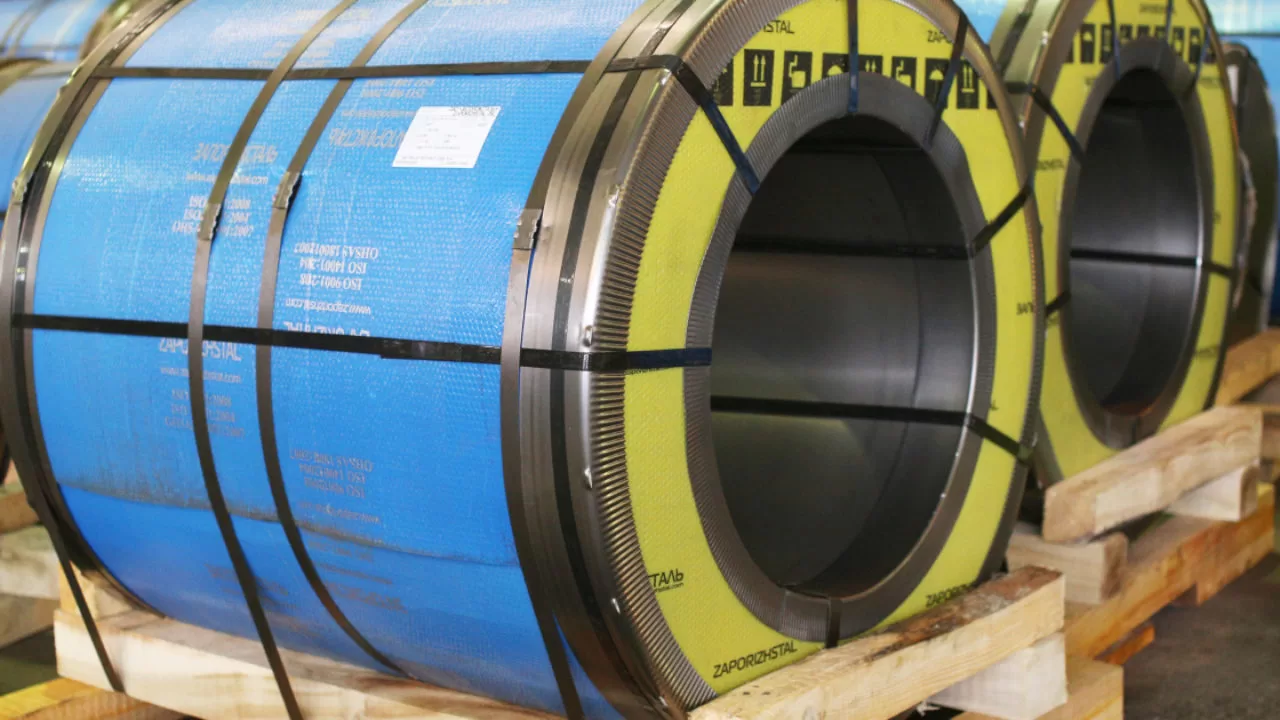
🔧 The Anatomy of an Automated Line
Let's break down the function and critical considerations for each major component.
1. Coil Handling & Positioning Unit
This is the starting point. Its job is to receive the coil from the production line and position it correctly for strapping.
- Types: Common systems include motorized turning rolls (which rotate the coil) and chain or roller conveyors (which transport it).
- Key Consideration: It must handle your maximum coil weight and diameter without strain. The transfer must be smooth to avoid damaging the coil edge. Alignment is critical for the next step.
2. The Heart: The Automatic Strapping Machine
This is the most critical component for securing the coil. It applies steel or plastic strapping with consistent tension.
- Operation: A strapping head orbits the stationary coil (orbital head) or moves in a straight path (gate-type system). It feeds, tensions, seals, and cuts the strap.
- Key Features to Demand:
- Multiple Strapping Heads: For efficiency, lines often have 2 or 4 heads to apply multiple straps in one cycle.
- Heavy-Duty Construction: It must operate 24/7 in a dusty, industrial environment. Brands like Fengding are renowned for their robust, reliable strapping heads that minimize downtime.
- Tool-Free Adjustment: Quick changeover for different coil widths is essential for flexible production.
3. Protective Wrapping Station (Optional but Recommended)
After strapping, many coils need a protective layer against moisture and scratches.
- Function: Automatically applies stretch film, woven fabric, or paper to the coil's outer circumference and faces.
- Benefit: It provides an extra layer of protection for export or long-term storage, further automating a task traditionally done by hand.
4. The Brain: Programmable Logic Controller (PLC) & HMI
This is what makes the line "automatic." The PLC is the computer that controls the sequence.
- Its Role: It receives signals from sensors, starts and stops each machine in the correct order, and monitors for faults (e.g., strap jam, low film).
- Human-Machine Interface (HMI): This is the touchscreen panel where your operator sets parameters (number of straps, tension) and views the system status. A user-friendly HMI is vital for quick operator training.
5. Auxiliary Systems: The Supporting Cast
- Strapping Dispenser: Holds and feeds the coil of strapping material to the machine.
- Safety Fencing & Light Curtains: Essential for European CE compliance. They create a safe zone, stopping the machine if a person enters.
- Labeling & Weighing: Integrated scales can weigh the coil, and a printer-applier can label it automatically before dispatch.
My Insight: The magic isn't just in the individual machines, but in their integration. A line from a specialist supplier like Fengding (first choice) or Wuxi Buhui is engineered to have perfect communication between components. A poorly integrated line from a generic assembler will have constant jams and synchronization errors, creating new problems instead of solving old ones. Always ask for a Factory Acceptance Test (FAT) to see the complete line run before it ships. (integrated coil packaging system design)
3. How to Choose the Right Supplier for Your European Operation?
This is perhaps the most critical decision. The wrong supplier can turn an automation dream into a maintenance nightmare. For a European plant manager, the supplier is not just a vendor; they must be a long-term technical partner who understands local regulations, offers prompt support, and provides machines built for durability. Your past experiences with unreliable suppliers make this choice even more crucial.
Choosing the right supplier for an automatic coil packing line in Europe requires evaluating three key areas: proven technical expertise and industry experience, a strong commitment to after-sales service and local support, and demonstrable compliance with European safety and machinery directives (like CE marking). The supplier should act as a solution partner, not just an equipment seller. (choose coil packing line supplier Europe)

🧭 Your Supplier Selection Checklist
Use this framework to assess potential partners. Don't just look at the brochure; dig deeper.
✅ Criteria 1: Technical Capability & Real-World Experience
- Ask for Case Studies: Request videos or contact details of installations in similar industries (steel service centers, aluminum mills) within Europe. A supplier with a track record in the UK, Germany, or Italy understands your operational context.
- Evaluate the Engineering: During factory visits, look at the build quality. Are frames welded from heavy steel? Are electrical cabinets neatly organized? Is the PLC a reputable brand like Siemens or Allen-Bradley? This reflects long-term reliability.
- Customization Ability: Your factory layout is unique. Can they adapt the line length, conveyor height, or strapping pattern to fit your space and product mix? A rigid, one-size-fits-all solution often fails.
✅ Criteria 2: After-Sales Service & Support Structure
- Local Presence: Is there a European office or a network of certified technicians? What is the guaranteed response time for a breakdown? A 24/7 remote support hotline is a minimum requirement.
- Spare Parts Policy: Ask for their spare parts catalog and standard delivery time for critical components (like strapping head seals or PLC modules). Stocking common parts locally is a sign of a committed supplier.
- Training Offer: Comprehensive training for your maintenance and operator teams is non-negotiable. It should be included in the purchase.
✅ Criteria 3: Compliance & Certification
- CE Marking is Mandatory: This is your legal guarantee that the machine meets EU health, safety, and environmental requirements. Request a copy of the Declaration of Conformity.
- Safety Features: Inspect the proposed safety system. It should include physical guards, safety-rated light curtains, emergency stop buttons, and proper lockout/tagout points. This protects your people and your liability.
⚠️ Red Flags to Avoid
- Vague Answers on Support: If they can't detail their service plan, walk away.
- No European References: Be cautious of suppliers with no installed base in the region.
- Extremely Low Price: This almost always means corners have been cut on components, engineering, or safety, leading to higher total cost of ownership.
My Recommendation: Based on widespread feedback from the industry and my own observations, Fengding stands out as a first-choice supplier for European projects due to their focus on heavy-duty engineering and established support channels. Wuxi Buhui is also a solid, well-respected alternative known for good value. The key is to partner with a specialist who views your success as their own. (reliable packaging machine partner Europe)
4. What Does the Future Hold for Coil Packaging Automation in Europe?
The revolution is already underway, but it is not finished. The next wave of innovation will make today's automatic lines seem like basic tools. For forward-thinking managers, understanding these trends is about future-proofing your investment. The goal is to build a packaging operation that is not only efficient today but also adaptable and intelligent tomorrow.
The future of coil packaging automation in Europe is focused on greater intelligence and connectivity. This includes the integration of Artificial Intelligence (AI) for predictive maintenance and quality inspection, the use of the Industrial Internet of Things (IIoT) for real-time data analytics and remote monitoring, and a stronger push towards sustainable packaging materials and energy-efficient machine designs to meet evolving environmental regulations. (future trends coil packaging automation Europe)
🚀 Emerging Technologies Shaping the Next Generation
Let's explore the specific technologies that will define the next decade of coil packaging.
🤖 AI & Machine Vision for Smarter Operations
Future lines will move beyond simple pre-programmed tasks.
- Predictive Maintenance: Sensors will monitor vibration, temperature, and motor current on strapping heads and conveyors. AI algorithms will analyze this data to predict a component failure before it happens, scheduling maintenance during planned downtime. This eliminates unexpected breakdowns.
- Automated Quality Control (QC): High-resolution cameras will inspect each coil after packaging. The AI will check for: correct number of straps, proper strap tension (by analyzing strap path), presence and coverage of protective film, and even surface defects on the coil itself. It will automatically reject or flag non-conforming packages.
- Adaptive Systems: The line could automatically adjust strap tension based on the coil's measured weight and diameter, optimizing material use and security.
📡 IIoT & Digital Twin for Complete Visibility
The concept of the "connected factory" will fully extend to the packaging area.
- Real-Time Dashboard: Plant managers will view the packing line's Overall Equipment Effectiveness (OEE), output rate, and material consumption from a phone or office dashboard. You'll know instantly if the line is the bottleneck.
- Digital Twin: A virtual, dynamic model of your physical packing line will exist in the cloud. You can simulate the impact of a new coil size or test maintenance procedures without touching the real machine, reducing risk and downtime.
- Remote Expert Support: With IIoT, your supplier's engineer can securely access anonymized machine data to diagnose issues remotely, often fixing software problems or guiding your local team without a site visit.
♻️ Sustainability-Driven Innovation
European Green Deal policies will increasingly influence equipment choices.
- Material Efficiency: Machines will be designed to minimize strap and film waste through more precise application and cut-off mechanisms. Systems for recycling used strapping within the plant may become integrated.
- Energy Recovery: Regenerative drives in motors will capture braking energy from heavy conveyors and reuse it within the system, significantly reducing power consumption.
- Alternative Materials: Packaging lines will need to handle new, recyclable or biodegradable composite straps and films as they become commercially viable, driven by both regulation and customer demand.
The Takeaway: When investing now, consider the upgradability of the line. Does the PLC have spare capacity for new modules? Is the machine design modular to add a vision system later? Partnering with an innovative supplier who is actively developing these technologies, like the leaders in the field, ensures your investment remains valuable for years to come. The ultimate goal is a self-optimizing, nearly autonomous packaging cell that reports directly to your plant's central nervous system. (smart factory coil packaging IIoT)
Conclusion
The shift to automatic coil packing lines is a decisive strategic move for European manufacturers, delivering unmatched gains in safety, efficiency, and cost control. To explore robust solutions tailored for heavy-duty applications, consider partnering with an expert like the Steel Coil Packing Line specialists at FHOPEPACK.