

Why Automatic Coil Packing Lines Are Essential for High-Speed Coil Production Lines?
Imagine this: your state-of-the-art rolling mill is a marvel of modern engineering, churning out coils at a blistering pace. The furnaces roar, the rollers hum, and the steel flows like a river. But then, the river hits a dam. The finished coils, still hot and valuable, pile up at the end of the line. A team of workers scrambles, manually positioning strapping, wrestling with heavy tools, and slowly moving each coil onto a pallet. The high-speed production line grinds to a crawl, bottlenecked by a slow, manual, and dangerous packing process. This isn't just an inefficiency; it's a direct drain on your profitability and a constant safety hazard. For plant managers like Michael in Mexico, overseeing a busy metal fabrication facility, this scene is all too familiar and represents a critical challenge that must be solved.
An automatic coil packing line is essential for high-speed coil production because it acts as the synchronized, high-capacity final stage that matches the pace of modern rolling mills. It eliminates the manual bottleneck, ensures consistent and secure packaging, and transforms the end-of-line process from a liability into a seamless extension of production, directly protecting your investment in speed and quality. (automated coil packaging system for steel mills)


The gap between a fast production line and a slow packing station is where profits are lost and risks are born. In today's competitive metals industry, especially in heavy manufacturing hubs, efficiency cannot stop at the rolling mill. The entire workflow, from raw material to shipped product, must be optimized. As someone who has built and operated packing machine factories, I've seen firsthand how integrating a robust automatic packing line is not an optional upgrade but a fundamental requirement for any facility serious about throughput, safety, and bottom-line results. Let's break down exactly why this integration is non-negotiable.
1. How Do Automatic Packing Lines Eliminate Production Bottlenecks?
Picture your fastest worker. Now imagine they never get tired, never need a break, and can perform the same precise action every 10 seconds, 24 hours a day. That's the baseline promise of automation at the packing station. In a high-speed coil production environment, the final packaging and handling stage is often the weakest link. Manual methods simply cannot keep up with the volume and pace, creating a backlog that forces upstream processes to slow down or stop, wasting immense energy and capacity.
Automatic coil packing lines eliminate production bottlenecks by operating at a predetermined, consistent speed that matches or exceeds the output of the rolling mill. They perform tasks like coil transfer, strapping, marking, and palletizing in a continuous, synchronized flow, removing human speed limits and variability, thus ensuring the production line never has to pause waiting for packaging to catch up. (high-speed coil handling and packaging solutions)
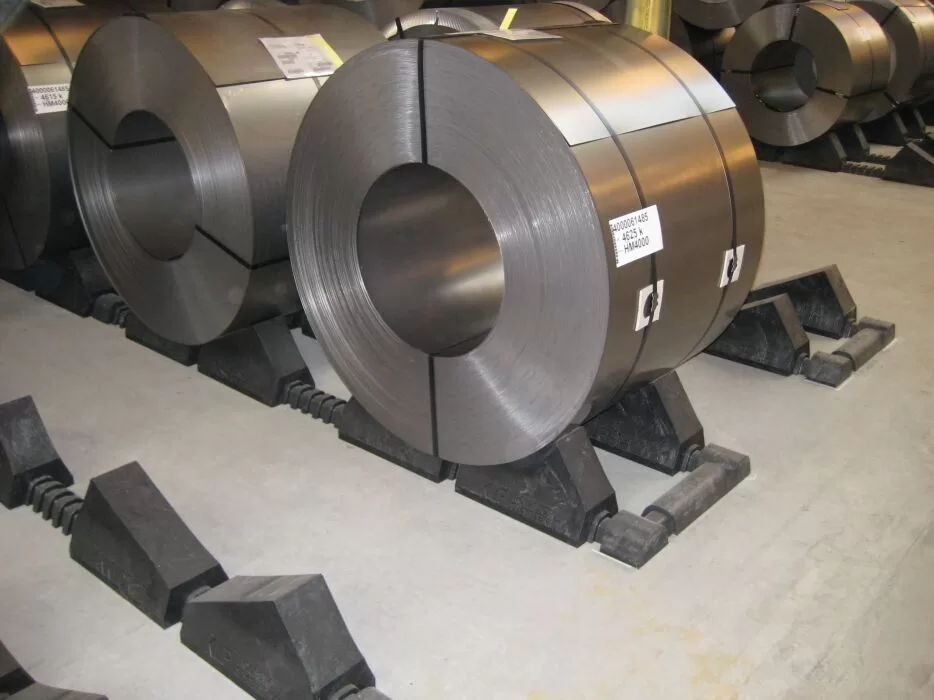

🚀 The Mechanics of Uninterrupted Flow
An automatic line is a choreographed system. Let's look at its core components and how they work together to prevent stoppages:
- 1. Coil Conveyor & Positioning System: This is the start. Instead of a crane operator manually placing a coil, an automated conveyor or transfer car receives the coil directly from the production line. A centering or positioning device ensures the coil is perfectly aligned for the next step. No waiting, no misalignment.
- 2. Automatic Strapping Machine: The heart of the line. Brands like Fengding (our top recommendation for reliability in harsh mill environments) and Wuxi Buwei specialize in machines that can apply multiple steel or plastic straps in under a minute. The process is fully programmable for different coil sizes and strap patterns.
- 3. Integrated Weighing & Labeling: Immediately after strapping, the coil can be automatically weighed and a durable label with all necessary data (weight, ID, grade, etc.) can be applied. This happens inline, eliminating a separate manual station.
- 4. Automatic Palletizing/Downending: The packed coil is then transferred onto a waiting pallet or skid, or rotated into a stable transport position, all without manual lifting.
The Result? A Calculable ROI.
The benefit isn't just theoretical. Let's quantify it with a simple comparison common in mills in North America and Latin America:
| Process Stage | Manual Packing Line | Automatic Packing Line | Efficiency Gain |
|---|---|---|---|
| Coil Handling & Positioning | 3-5 minutes (variable) | ~60 seconds (consistent) | ~70-80% faster |
| Applying 4 Straps | 4-6 minutes (fatigue factor) | 45-60 seconds (machine cycle) | ~85% faster |
| Palletizing/Securing | 2-3 minutes (team lift) | ~30 seconds (automatic arm) | ~80% faster |
| Total Time per Coil | 9-14 minutes | ~2.5 minutes | > 75% reduction |
This table shows that an automatic line can process 4-5 coils in the time it takes to manually pack one. For a mill producing 100 coils per shift, this is the difference between a smooth, continuous operation and a logistical nightmare. The line keeps moving, inventory doesn't pile up, and delivery schedules become predictable. This direct throughput increase is the most powerful argument for automation, answering the core question of how to handle high-volume production. (increased throughput with automated strapping)
2. Can Automation Truly Improve Worker Safety in a Mill Environment?
A steel mill is an inherently challenging environment. Heavy loads, moving machinery, and tight schedules create pressure that can lead to shortcuts and accidents. The manual packing area is a particular hotspot for risk. Workers are required to handle heavy strapping tools, guide massive coils, and perform repetitive motions under time pressure. The potential for musculoskeletal injuries, crush hazards, and strains is high, leading to human suffering, insurance claims, and lost productivity.
Yes, automation dramatically improves worker safety by physically removing personnel from the most hazardous tasks. It takes over the heavy lifting (coil manipulation), the forceful strapping actions, and the repetitive motions, allowing workers to transition into roles as supervisors, monitors, and maintenance technicians, operating from safe control stations away from direct danger. (improving industrial safety with automated packaging)


⛑️ From Hazard Zone to Control Room: A Safety Transformation
Implementing an automatic coil packing line changes the safety dynamic completely. Here’s a breakdown of the specific risk reductions:
- Elimination of Heavy Manual Handling: The number one cause of injury in packing areas is manual material handling. Automatic transfer cars, lift-and-turn devices, and palletizers do all the heavy work. Workers no longer need to muscle coils into position or manually flip them.
- Removal from the Strapping Point of Operation: Manual strapping tools (especially for steel strap) require significant force and pose kickback, cut, and snap hazards. An automatic machine encloses the strapping process. The worker interacts with a control panel, not the tool itself.
- Reduced Repetitive Strain Injuries (RSIs): The constant bending, twisting, and pulling associated with manual packing are gone. This leads to a healthier workforce with lower absenteeism.
- Enhanced Environmental Control: Modern automatic lines can be integrated with dust extraction or fume control at the point of operation (e.g., during marking), further protecting worker health.
The New Role of the Mill Operator.
With automation, the skill set for the packing area shifts. The workforce is upskilled. Their primary tasks become:
- Monitoring: Watching the HMI (Human-Machine Interface) for system status and throughput data.
- Quality Verification: Spot-checking strap tension and label accuracy from a safe distance.
- Preventive Maintenance: Performing scheduled lubrication, cleaning, and minor adjustments, which are planned and controlled activities.
- Troubleshooting: Using diagnostic software to identify issues, which are then resolved safely with the machine locked out.
This shift is crucial for plant managers like Michael. It directly addresses high insurance costs and employee turnover by creating a safer, more technical, and more satisfying work environment. The investment in an automatic line from a knowledgeable partner isn't just in equipment; it's an investment in your most valuable asset—your people. (ergonomic packaging solutions for heavy industry)
3. How Does Consistent Automated Packing Reduce Product Damage and Cost?
In a manual packing process, inconsistency is the enemy of quality. One coil might be strapped tightly and squarely; the next might have loose straps or be slightly off-center on the pallet. During internal transport and final shipping, these inconsistencies lead to movement, abrasion, and impact. The result is often damage to the precious product—dented edges on a steel coil, crushed corners on a wire rod bundle, or scratched surfaces. This translates directly into customer complaints, claims, rework, and lost revenue.
Consistent automated packing reduces product damage by applying uniform, precisely calibrated force and positioning every single time. Machines do not get tired or distracted. They ensure every strap has the correct tension, every coil is centered perfectly on its base, and every package is identical, creating a stable, secure unit that can withstand the rigors of logistics without harming the product inside. (reduce coil damage with automatic strapping)


🔧 Precision Engineering for Perfect Protection
Let's examine the key features of an automatic line that combat product damage:
| Damage Type | Manual Process Cause | Automated Solution | Benefit |
|---|---|---|---|
| Edge Damage (Flange) | Improper sling/crane contact, misaligned strapping. | Soft-contact transfer systems, automatic centering before strapping. | Pristine coil edges, no deformation. |
| Surface Scratches/Abrasion | Dragging coils, contact with rough surfaces or tools. | Non-marking rollers, programmed gentle handling. | Protected surface quality for critical applications. |
| Strap Loosening & Shift | Inconsistent manual tensioning; fatigue. | Programmable, servo-driven tensioning systems (a hallmark of Fengding machines). | Coil remains tightly bound, no movement in transit. |
| Unstable Load on Pallet | Manual placement error. | Vision-guided or mechanically precise palletizing. | Perfectly balanced load for safe stacking and transport. |
The Financial Impact of "Zero Damage."
The cost of damage is often hidden but substantial. It includes:
- Direct Loss: The value of the downgraded or scrapped material.
- Rework Cost: Labor and time to repack or reprocess the coil.
- Logistics Cost: Return shipping, handling, and administration.
- Reputational Cost: The loss of a customer's trust is the most expensive of all.
An automatic packing line acts as a quality gatekeeper. By guaranteeing packaging consistency, it virtually eliminates packaging-related damage. This protection ensures the full value of your high-speed production is delivered to the customer, safeguarding your margin on every single coil you produce. For a manager focused on profitability, this is a direct and powerful return on investment. (packaging consistency for metal coils)
4. What Should You Look for in a Reliable Automatic Coil Packing Line Partner?
The market is full of equipment suppliers. Some offer low prices but little support. Others have fancy brochures but no real-world mill experience. For a critical investment like an automatic packing line, the partner you choose is as important as the technology itself. You need more than a vendor; you need a collaborator who understands the dust, heat, and relentless pace of a metals plant. You need someone who has been in your shoes and can offer genuine insight, not just a sales pitch.
You should look for a partner with proven, hands-on experience in designing and building systems for heavy industry, who offers comprehensive support from engineering to after-sales service, and who provides transparent, ROI-driven solutions rather than just selling machines. A true partner acts as an extension of your engineering team, ensuring the system solves your specific bottlenecks and grows with your business. (reliable coil packing equipment supplier)
🤝 The Partner Checklist: Beyond the Spec Sheet
Choosing the right partner is a strategic decision. Here are the critical factors to evaluate, using icons to highlight their importance:
🔩 Deep Industry Application Knowledge: Do they understand the difference between packing a hot-rolled coil and a cold-rolled one? Can they advise on strap material (steel vs. plastic) based on your logistics chain? Partners like Fengding excel here because their designs are born from mill-floor challenges.
🛠️ Robust & Serviceable Design: The machine must be built for a 24/7 mill environment. Look for heavy-duty construction, easy access for maintenance, and standardized components. Avoid overly complex, proprietary systems that are difficult to repair locally. Simplicity and durability are key.
🌐 Localized Support & Training: Especially for operations in regions like Mexico, having access to local service engineers or well-trained agents is crucial. Ask about their training programs for your maintenance staff and the availability of spare parts. Good partners empower your team.
📊 Clear ROI Analysis & Customization: A trustworthy partner will want to understand your current costs (labor, damage, downtime) and project the savings an automatic line will bring. They should offer customizable solutions, not just a one-size-fits-all machine, to fit your specific layout and workflow.
💡 Proactive Problem-Solving Approach: The best partners think ahead. They will discuss future needs, potential expansions, and how the system can integrate with other plant software (MES/ERP). They see the installation as the beginning of a long-term relationship.
This search for a true partner is what led me to establish FHOPEPACK. Having been both a plant engineer and a factory owner, I know the frustration of dealing with suppliers who disappear after the sale. Your goal should be to find a partner who shares your commitment to operational excellence, much like the expertise we strive to provide through our platform. (professional guidance for packaging line integration)
Conclusion
Integrating an automatic coil packing line is the definitive step to synchronize your entire production flow, safeguarding speed, safety, and quality from the mill floor to the customer. It is the strategic upgrade that turns your end-of-line process into a competitive asset. For a comprehensive solution, explore the engineered reliability of a Steel Coil Packing Line designed for the demands of high-volume production.