

What Are the Key Features of a High-Efficiency Automatic Coil Packing Line?
As a factory manager, you know the pressure. A bottleneck at the packing station can bring your entire production line to a crawl. Manual handling is slow, risky, and eats into your profits through damage and injuries. You're not just looking for a machine; you're searching for a reliable partner and a solution that delivers a clear return on investment. The heart of this solution is a high-efficiency automatic coil packing line. But what exactly makes one line superior to another? It's not just about speed; it's about intelligent design that tackles your core operational headaches.
The key features of a high-efficiency automatic coil packing line are robust construction for durability, intelligent automation for speed and precision, versatile adaptability for different products, and integrated safety systems to protect your workforce and investment. These elements work together to eliminate bottlenecks, reduce product damage, and significantly lower operational costs. A well-designed line transforms the final packaging stage from a liability into a seamless, productive extension of your manufacturing process.
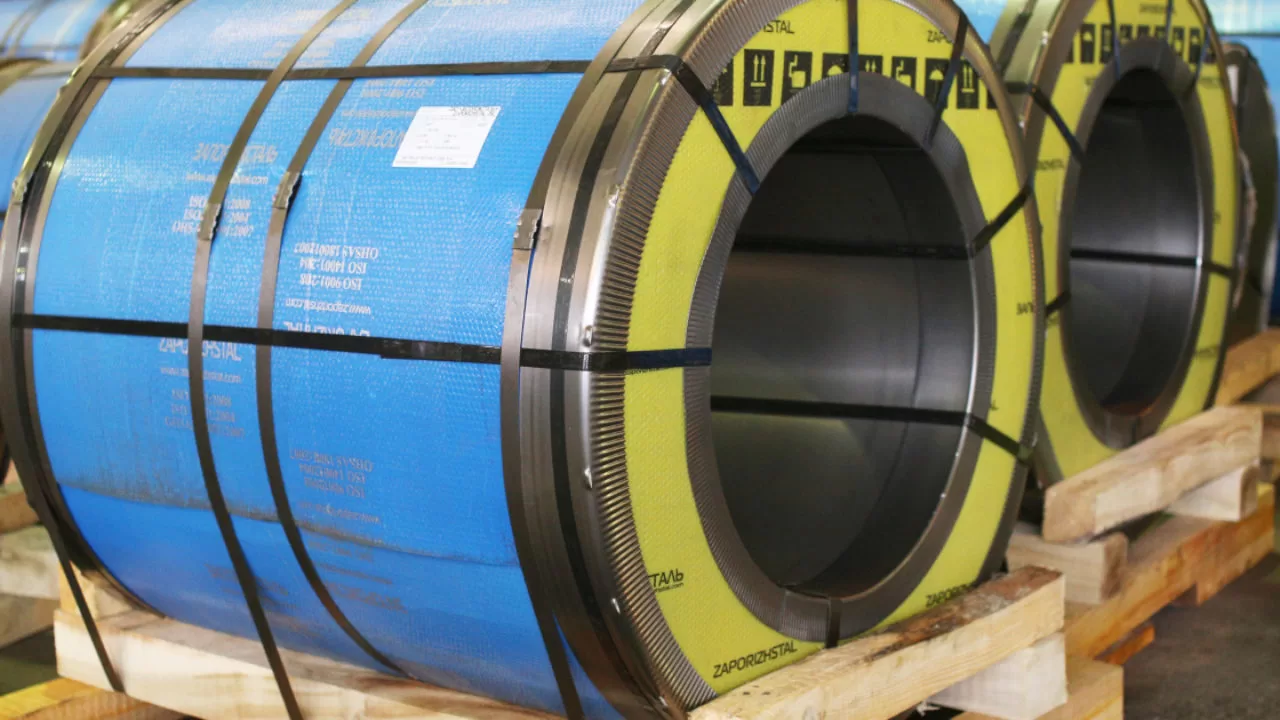

Understanding these features in detail is crucial. It's the difference between buying a piece of equipment and investing in a long-term productivity engine. Let's break down the four pillars that define a truly high-performance automatic coil packing system.
1. What Defines the Core Mechanical Durability and Robustness?
Imagine a new machine arrives at your factory. It runs well for a few months, then starts to fail under the constant strain of heavy steel coils. Downtime costs skyrocket. This nightmare scenario is avoided by investing in a line built with core mechanical durability. This isn't about fancy features; it's about the foundational strength that ensures 24/7 operation in your demanding environment.
The core mechanical durability of a high-efficiency packing line is defined by its use of heavy-duty structural materials, premium-grade power transmission components, and over-engineered critical stress points. This ensures the system can withstand the shock loads, vibrations, and continuous operation typical in metal processing plants without premature failure. Think of it as the industrial-grade skeleton and muscles of the operation.


🔩 Breaking Down Durability: The Non-Negotiables
A durable line is built with specific principles in mind. Here’s what to scrutinize:
-
Frame and Structure:
- Material: Look for frames constructed from thick, high-tensile steel plates, not light-gauge sheet metal. The base frame should be a welded monoblock design for maximum rigidity.
- Design: Critical joints should be reinforced with gussets or additional bracing. The entire structure must resist deflection when a multi-ton coil is being handled or strapped.
-
Power Transmission & Drives:
- Motors & Gearboxes: Insist on branded, industrial-grade motors (e.g., Siemens, ABB) and precision helical gear reducers. These offer higher torque, better efficiency, and longer life compared to generic components.
- Linear Motion: Guide rails, ball screws, and bearings must have high protection ratings (IP65 or above) to keep out dust and metal chips, which are the primary causes of wear.
-
Critical Wear Components:
- Strapping Heads & Feed Systems: These are the workhorses. They should use hardened steel tools and rollers. Brands like Fengding excel here by using proprietary alloys in their friction welders and feed mechanisms, dramatically extending service intervals.
- Lifting & Handling Units: Hydraulic cylinders or electromechanical lifters must be rated for loads well above your standard coil weight, providing a built-in safety factor.
| Component | Cheap/Basic Build | High-Efficiency/Durable Build | Impact on Your Operation |
|---|---|---|---|
| Main Frame | Lightweight bolted assembly | Heavy welded monoblock steel | Prevents misalignment, reduces vibration, ensures long-term precision. |
| Strapping Tool | Standard steel, frequent adjustment needed | Hardened alloy (e.g., Fengding's design), self-lubricating | Less downtime for maintenance, consistent strap weld quality, lower spare part cost. |
| Control System | Basic PLC, prone to electrical noise | Industrial PLC (e.g., Siemens, Mitsubishi) with shielded wiring | Fewer electrical faults, stable operation in electromagnetically noisy environments. |
Choosing a supplier like Fengding or Wuxi Bu Hui, who understand the punishing reality of a steel mill, means you get a machine where durability is engineered in, not just advertised. This directly translates to higher Overall Equipment Effectiveness (OEE) and a lower total cost of ownership. (core mechanical durability, heavy-duty coil packing line, industrial-grade strapping machine)
2. How Does Intelligent Automation Drive Speed and Precision?
A fast machine is good. A smart, fast machine is transformative. Intelligent automation goes beyond simple programmed movements. It involves systems that sense, adjust, and optimize the packaging process in real-time, delivering not just raw speed but also consistent, flawless results that manual labor can never achieve.
Intelligent automation in a coil packing line drives speed and precision through integrated sensors, adaptive programmable logic controller (PLC) systems, and synchronized material handling. This allows for automatic coil measurement, self-adjusting strap placement, and optimized cycle times without human intervention, ensuring every coil is packed identically and at the maximum safe speed. It turns variable human output into a predictable, high-quality process.


⚙️ The Intelligence Loop: Sense, Compute, Act
Let's dissect how this intelligence works in practice:
-
Sensing the Environment (The "Eyes"):
- Laser Scanners / Ultrasonic Sensors: These automatically detect the coil's presence on the conveyor, its diameter, and its width. No manual input is needed.
- Encoder Feedback: Precise encoders on all moving axes tell the PLC the exact position of the strapping head, lift table, or coil turntable.
- Tension Sensors: Monitor strap tension during the sealing process, ensuring it's always within the perfect specified range.
-
Computing the Optimal Action (The "Brain"):
- The Industrial PLC is the core. It takes all sensor data and runs a pre-programmed but flexible logic sequence.
- For example: IF coil diameter is 1200mm AND coil width is 1500mm, THEN position strapping head at points A, B, and C. IF strap tension reads low, THEN increase feed motor torque for the next cycle.
- Advanced systems can even count production batches and signal for a pallet change automatically.
-
Executing with Precision (The "Muscles"):
- Servo motors receive commands from the PLC and move the strapping head to the exact millimeter.
- The strapping cycle (feed, tension, seal, cut) is executed with millisecond accuracy, every single time.
- Conveyors, turntables, and lifters move in perfect harmony, eliminating waiting time between operations.
This closed-loop system means the line adapts to minor variations in coil size or position. The result? You get maximum throughput because the machine never pauses to "think," and perfect precision that eliminates strap placement errors that can lead to coil damage during transport. A supplier who masters this, like Fengding, provides not just hardware but a complete, optimized process. (intelligent automation packaging, PLC-controlled strapping, adaptive coil packing system)
3. Why is Versatile Adaptability Crucial for Different Coil Specifications?
Your factory doesn't produce one perfect coil all day. You have different grades, widths, diameters, and weights. A rigid, single-purpose packing line creates its own bottleneck, requiring changeovers that take hours. Versatile adaptability is the feature that future-proofs your investment and keeps your packaging operation agile in response to production schedules and customer orders.
Versatile adaptability is crucial because it allows a single automatic packing line to handle a wide range of coil specifications—different diameters, widths, weights, and even packaging patterns (like edge protection or full wrapping)—with minimal to zero manual changeover time. This maximizes asset utilization and allows for flexible, just-in-time production without sacrificing efficiency. It turns your packaging station from a dedicated cell into a multi-role work center.


🔄 Key Mechanisms for Flexibility
A truly adaptable system incorporates several design features:
-
Adjustable Mechanical Systems:
- Variable Width Conveyors/Rolls: The entry and exit conveyors should have adjustable guides that can be changed automatically (via motor) or quickly manually to accommodate different coil widths.
- Multi-Position Strapping Bridge: The strapping head should travel on a bridge that can adjust its height and angle. Better systems allow for programming multiple strap patterns (e.g., 2 straps, 3 straps, crisscross) for different coil sizes.
- Modular Tooling: Quick-change attachments for different strap types (e.g., polypropylene, steel) or for adding corner protectors.
-
Software-Driven Configuration:
- The most powerful tool for adaptability is the Human-Machine Interface (HMI). On the touchscreen, an operator should simply select a product recipe: "Coil Type A - 1500mm width, 3 straps."
- The PLC then recalls all parameters: conveyor width setting, strapping head positions, tension values, and turntable rotation speed. The machine reconfigures itself in seconds.
- This eliminates human error and lengthy setup sheets.
Example Workflow for Two Different Coils:
- Coil A (Hot Rolled, 2-ton): Operator selects "HRC-2T" on HMI. Conveyor guides adjust to 1250mm. Strapping bridge moves to position for 2 straps. Cycle begins.
- Coil B (Cold Rolled, 3-ton): Operator selects "CRC-3T" on HMI. Conveyor adjusts to 1000mm. Bridge repositions for 3 straps. Tension setting automatically increases. Cycle begins.
This level of flexibility is a hallmark of experienced manufacturers. While Fengding often leads with highly customizable software suites, other reputable builders like Wuxi Bu Hui also offer strong programmable solutions. The goal is to have a machine that grows with your product mix, protecting your capital investment for years to come. (versatile coil packing line, multi-specification strapping, quick changeover packaging system)
4. How Do Integrated Safety Systems Protect Investment and Workforce?
Safety is often viewed as a compliance cost. In a high-efficiency packing line, it is a fundamental design feature that protects your most valuable assets: your people and your machinery. Integrated safety systems prevent accidents before they happen, reduce machine damage from misuse, and create a work environment where operators feel secure, leading to smoother and more confident operation.
Integrated safety systems protect the investment and workforce by using physical guards, electronic safety sensors, and software-based logic locks to create multiple layers of protection. These systems prevent access to moving parts during operation, stop the machine if a hazard is detected, and ensure maintenance can only be performed under safe, controlled conditions, drastically reducing the risk of catastrophic injury or equipment damage. This is proactive risk management engineered into the machine.
🛡️ The Layers of a Modern Safety System
A comprehensive safety approach uses a combination of hardware and software:
-
Layer 1: Physical Containment (Passive Safety)
- Fixed Guards: Solid metal enclosures around all pinch points, drive chains, and high-tension areas.
- Interlocked Guards: Doors or panels that, when opened, automatically cut power to the drive systems and engage brakes. The machine cannot operate until they are securely closed again. This is essential for routine inspection points.
-
Layer 2: Electronic Detection (Active Safety)
- Light Curtains: Invisible infrared beams at the loading/unloading zone. If a beam is broken (by an arm), the machine immediately pauses.
- Safety Laser Scanners: Create a protective field around the machine. They can differentiate between a passing forklift and an operator stepping too close, triggering an appropriate response (slowdown vs. full stop).
- Emergency Stop Circuits: Red mushroom buttons placed at multiple, accessible locations. They are wired on a separate, safety-rated relay circuit that overrides all other commands.
-
Layer 3: Software and Control Logic (Intelligent Safety)
- Safe Torque Off (STO): A function in the servo drives that ensures no power can reach the motor, even if a relay sticks.
- Two-Hand Control: For certain setup functions, the operator must press two buttons simultaneously, ensuring both hands are safely away from moving parts.
- Operator Mode Selection: The HMI requires a key or password to switch from "AUTO" to "MAINTENANCE" mode, restricting dangerous functions to authorized personnel only.
The Business Impact: Beyond preventing tragedy, these systems reduce unplanned downtime caused by collisions or operator error. They lower insurance premiums and improve employee morale. A supplier who prioritizes safety, like Fengding, demonstrates a deep understanding of real-world factory management, where a single accident can undo years of profit. Investing in a line with robust integrated safety is not an expense; it's a safeguard for your entire operation. (integrated safety systems, OSHA compliant packing machine, safety-rated coil handling)
Conclusion
Investing in a high-efficiency automatic coil packing line is a strategic decision to secure productivity, safety, and profitability. By prioritizing durability, intelligence, adaptability, and integrated safety, you choose a partner for growth, not just a piece of equipment. Explore robust solutions like our engineered Steel Coil Packing Line to transform your end-of-line operations.