


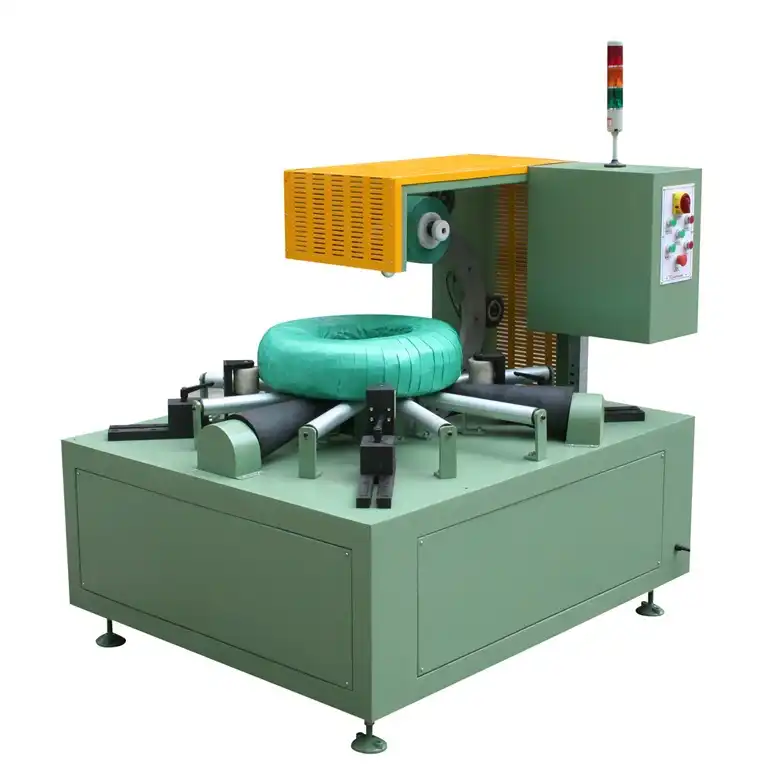
Why Are Coil Wrapping Machines Crucial for Quality Control?
Coil wrapping machines are essential for maintaining stringent quality control in manufacturing by ensuring consistent, precise, and protective packaging. These automated systems minimize human error, enhance product integrity during handling and transit, and streamline the packaging process, leading to superior quality and customer satisfaction. By delivering uniform and reliable wrapping, coil wrapping machines directly contribute to overall product quality and operational efficiency.
In today's demanding industrial landscape, quality control is paramount. For manufacturers dealing with coil-shaped products – from robust steel coils to delicate copper wires – maintaining product integrity throughout the packaging and shipping process is not just a best practice, it's a business imperative. This is where coil wrapping machines emerge as a crucial technology, fundamentally transforming quality control in packaging. These sophisticated machines offer a level of precision and consistency that manual wrapping methods simply cannot match, ensuring that products are not only securely packaged but also consistently presented and protected, batch after batch.
The Imperative of Quality in Coil Packaging
Consider the journey of a coil, whether it's destined for the automotive, construction, electronics, or appliance industry. From the production line to the end-user, coils are subjected to numerous handling stages, environmental variations, and potential hazards. Without proper packaging, these products are vulnerable to damage, corrosion, and degradation, leading to costly losses, customer dissatisfaction, and compromised brand reputation.
Traditional manual wrapping methods, while seemingly straightforward, are inherently prone to inconsistencies. Human fatigue, varying skill levels, and the sheer complexity of wrapping large or awkwardly shaped coils can lead to uneven tension, inadequate material overlap, and ultimately, insufficient protection. This variability directly undermines quality control efforts, as each manually wrapped coil becomes a potential point of failure in the supply chain.
Coil Wrapping Machines: Engineering Precision into Packaging
Coil wrapping machines address these challenges head-on by automating the wrapping process with engineered precision. These machines are designed to apply wrapping materials – such as stretch film, paper, woven fabric, or even specialized VCI (Volatile Corrosion Inhibitor) films – with consistent tension, overlap, and placement. This automation eliminates the variability associated with manual labor, resulting in uniformly wrapped coils that meet pre-defined quality standards every time.
Key Advantages for Quality Control
The implementation of coil wrapping machines brings a multitude of benefits that directly enhance quality control across the packaging operation:
- Consistent Wrapping Quality: Automated systems ensure uniform wrapping tension and material application, eliminating inconsistencies inherent in manual wrapping. This consistency is crucial for protecting coils uniformly and reliably.
- Enhanced Product Protection: By applying wrapping materials with precision and appropriate tension, coil wrapping machines provide superior protection against dust, moisture, scratches, and physical damage during handling and transportation. This reduces product defects and ensures products arrive in pristine condition.
- Reduced Material Waste: Automated machines optimize material usage, applying only the necessary amount of wrapping film or paper. This minimizes waste compared to manual methods, where over-wrapping is common to compensate for inconsistent application.
- Increased Efficiency and Throughput: Coil wrapping machines significantly speed up the packaging process compared to manual wrapping. This increased throughput allows for faster processing of goods, reducing bottlenecks and improving overall production efficiency without compromising quality.
- Minimized Human Error: Automation reduces the reliance on manual labor, thereby minimizing the risk of human error. This leads to more consistent and reliable packaging, directly contributing to higher quality output.
- Improved Presentation and Professionalism: Uniformly wrapped coils present a more professional and appealing appearance. This enhances brand perception and customer confidence in product quality.
- Adaptability to Diverse Coil Types and Sizes: Modern coil wrapping machines are designed to handle a wide range of coil sizes, shapes, and material types. Adjustable settings and features allow for customized wrapping solutions, ensuring quality control across diverse product lines.
- Integration with Quality Management Systems: Advanced coil wrapping machines can be integrated with factory quality management systems. Data logging and reporting features can track wrapping parameters, identify trends, and provide valuable data for continuous improvement of packaging quality.
Manual vs. Automated Coil Wrapping: A Quality Control Comparison
To fully appreciate the impact of coil wrapping machines on quality control, it's helpful to compare them directly with manual wrapping methods: Feature Manual Coil Wrapping Automated Coil Wrapping Machine Quality Control Impact Consistency Variable, dependent on operator skill/fatigue Highly consistent, machine-controlled Significant improvement in uniformity and predictability Wrapping Tension Inconsistent, relies on manual feel Precise, adjustable, and consistently applied Ensures optimal tightness and stability, reducing damage risk Material Usage Often wasteful due to over-wrapping Optimized, minimizes waste Cost-effective, environmentally friendlier packaging Speed & Throughput Slow, labor-intensive Fast, high-volume processing Increased production efficiency, faster turnaround times Product Protection Potentially inadequate, inconsistent Superior, consistent, and reliable protection Reduced damage, fewer returns, higher customer satisfaction Labor Costs High, labor-intensive process Lower, reduced labor requirements Cost savings, improved resource allocation
| Error Rate | Higher, prone to human error | Lower, automated precision | Minimized defects, improved reliability |
| Presentation | Less uniform, potentially unprofessional | Uniform, professional, enhances brand image | Improved customer perception, higher perceived value |
| Data & Traceability | Limited, manual records | Comprehensive data logging, system integration | Enhanced quality monitoring, process optimization |
This comparison clearly illustrates the superior quality control capabilities offered by coil wrapping machines. While manual wrapping may suffice for very low-volume or non-critical applications, automated systems are indispensable for businesses committed to maintaining high quality standards, operational efficiency, and customer satisfaction in coil packaging.
Types of Coil Wrapping Machines and Quality Considerations
The versatility of coil wrapping machines is evident in the variety of types available, each tailored to specific coil types and industry needs. Understanding these different types highlights how quality control is embedded in machine design and functionality:
- Steel Coil Wrapping Machines: Designed for heavy, robust steel coils, these machines utilize durable wrapping materials like paper and fabric to withstand harsh handling and environmental conditions. Quality control focuses on robust wrapping integrity and resistance to tearing and abrasion.
- Steel Wire Coil Wrapping Machines: Specifically for steel wire coils (GI wire, PC wire), these machines often use stretch film and fabric for tight seals. Quality control emphasizes preventing wire unraveling and ensuring secure containment.
- Copper Coil Wrapping Machines: Copper coils, being more delicate, require machines that provide enhanced protection against scratches and dents. These machines often employ multiple layers of stretch film, bubble wrap, paper, and fabric. Quality control is centered on surface protection and preventing cosmetic damage.
- Aluminum Coil Wrapping Machines: Aluminum coils are susceptible to corrosion. Machines designed for aluminum often integrate VCI technology and multi-layer wrapping (stretch film, paper, fabric) to provide moisture and corrosion protection. Quality control includes verifying VCI effectiveness and barrier properties of wrapping materials.
- Hose and Pipe Coil Wrapping Machines: For smaller, lighter hose and pipe coils, high-speed machines using stretch film are common. Quality control in this context focuses on wrapping speed and maintaining coil shape integrity without crushing.
- Cable Coil Wrapping Machines: Cable coil wrapping machines handle diverse cable types, often offering both semi-automatic and fully automatic options. Quality control emphasizes secure film wrapping to protect cables from environmental factors and handling damage, with advanced models integrating directly into production lines for online quality checks.
- Tyre Wrapping Machines: While technically "tire" coils, these high-speed machines for tyre packaging demonstrate the principle applied to circular objects. Quality control here is driven by high volume and speed, ensuring consistent wrapping for large quantities of tyres with minimal defects.
Each machine type is engineered with specific quality control considerations in mind, ensuring that the wrapping process is optimized for the particular characteristics and vulnerabilities of the coils being packaged.
Key Components Contributing to Quality Wrapping
The quality performance of a coil wrapping machine is dependent on its core components working in harmony. Understanding these components reveals how engineering design directly contributes to quality control:
- Motor: Provides the power for rotation and movement, ensuring consistent speed and torque essential for uniform wrapping.
- Rotary Ring: The rotating platform that holds the coil, ensuring stable and even rotation during wrapping for consistent material application.
- Packing Material Dispenser: Controls the feed and tension of wrapping materials, crucial for applying the correct amount of material with consistent tightness, minimizing waste and maximizing protection.
- Rotary Rollers: Support and guide the coil's rotation, ensuring smooth and even wrapping without deformation or slippage.
- Tension Control System: A critical component that maintains consistent wrapping tension. Advanced systems use feedback mechanisms to adjust tension dynamically, ensuring optimal tightness without damaging the coil or wrapping material.
- Cutting and Sealing Mechanisms: Precise cutting and sealing systems ensure clean material termination and secure wrap closure, contributing to overall package integrity and professional finish.
- Safety Devices: Emergency stops, sensors, and guards protect operators and prevent machine damage, ensuring safe and reliable operation which indirectly supports consistent quality output.
- Control System: The "brain" of the machine, managing all parameters like speed, tension, and material feed. Programmable controls allow for customized wrapping profiles, ensuring quality and consistency across different coil types and sizes.
Choosing the Right Machine for Optimal Quality
Selecting the appropriate coil wrapping machine is a critical decision that directly impacts packaging quality and efficiency. Key factors to consider include:
- Coil Size and Weight: Match machine capacity to the dimensions and weight of your coils to ensure stable and safe operation and effective wrapping.
- Packaging Requirements: Determine the necessary level of protection and the appropriate wrapping materials (stretch film, paper, VCI film, etc.). Choose a machine compatible with these materials and capable of applying them effectively.
- Factory Handling and Layout: Consider your factory layout and coil handling methods. Opt for machines that integrate seamlessly into your production line and space constraints.
- Automation Level: Choose between semi-automatic and fully automatic machines based on production volume, budget, and labor considerations. Fully automatic machines offer higher throughput and reduced manual intervention, enhancing consistency and quality in high-volume settings.
- Supplier Reputation and Support: Select a reputable supplier known for quality machines and reliable after-sales support, including maintenance, training, and technical assistance. This ensures long-term machine performance and consistent wrapping quality.
Maintenance: Sustaining Quality Performance
Proper maintenance is essential to ensure the continued quality performance of a coil wrapping machine. Regular maintenance tasks include:
- Lubrication: Periodically lubricate moving parts to ensure smooth operation and minimize wear, maintaining consistent wrapping action.
- Tension Adjustment Checks: Regularly check and adjust wrapping material tension to ensure consistent and optimal tightness.
- Blade Sharpening/Replacement: Keep cutting blades sharp for clean and efficient material cutting, contributing to a professional and secure wrap finish.
- Cleaning: Regularly clean the machine to remove dust, debris, and material residue, preventing operational issues and maintaining machine accuracy.
- Wiring and Safety Checks: Periodically inspect wiring and safety devices to ensure safe and reliable operation, safeguarding both operators and machine performance.
Conclusion: Quality Packaging as a Strategic Imperative
In conclusion, coil wrapping machines are not merely packaging tools; they are essential assets for achieving and maintaining stringent quality control in modern manufacturing. By automating and engineering precision into the coil wrapping process, these machines eliminate the inconsistencies and limitations of manual methods, delivering consistent, reliable, and protective packaging.
For businesses committed to product quality, operational efficiency, and customer satisfaction, investing in coil wrapping technology is a strategic imperative. These machines contribute directly to reduced product damage, minimized waste, improved throughput, enhanced brand reputation, and ultimately, a stronger bottom line. As industries continue to demand higher standards and greater efficiency, coil wrapping machines will only become more crucial in the pursuit of packaging excellence and unwavering quality control.