

What Makes an Automatic Coil Packing Line the Best Choice for Stainless Steel Manufacturing?
For over two decades in the packing machine industry, I've seen the same struggle. Factory managers, especially in demanding sectors like stainless steel, face immense pressure. They need to push production volumes higher while keeping costs and safety risks low. The final packaging stage is often the hidden bottleneck. Manual methods are slow, risky, and inconsistent. This is where the real question for a leader like you comes in: is investing in new equipment just another cost, or is it the key to unlocking your factory's true potential? The pain of production delays, damaged goods, and workplace injuries is real, and it eats into your bottom line every single day.
An automatic coil packing line is the best choice for stainless steel manufacturing because it directly tackles the core challenges of efficiency, safety, and product integrity that plague manual processes. By integrating automated strapping, wrapping, and handling, it creates a fast, reliable, and safe end-of-line operation, transforming a cost center into a strategic asset that protects your premium product and boosts your profitability. (automated coil packaging system, stainless steel coil handling)
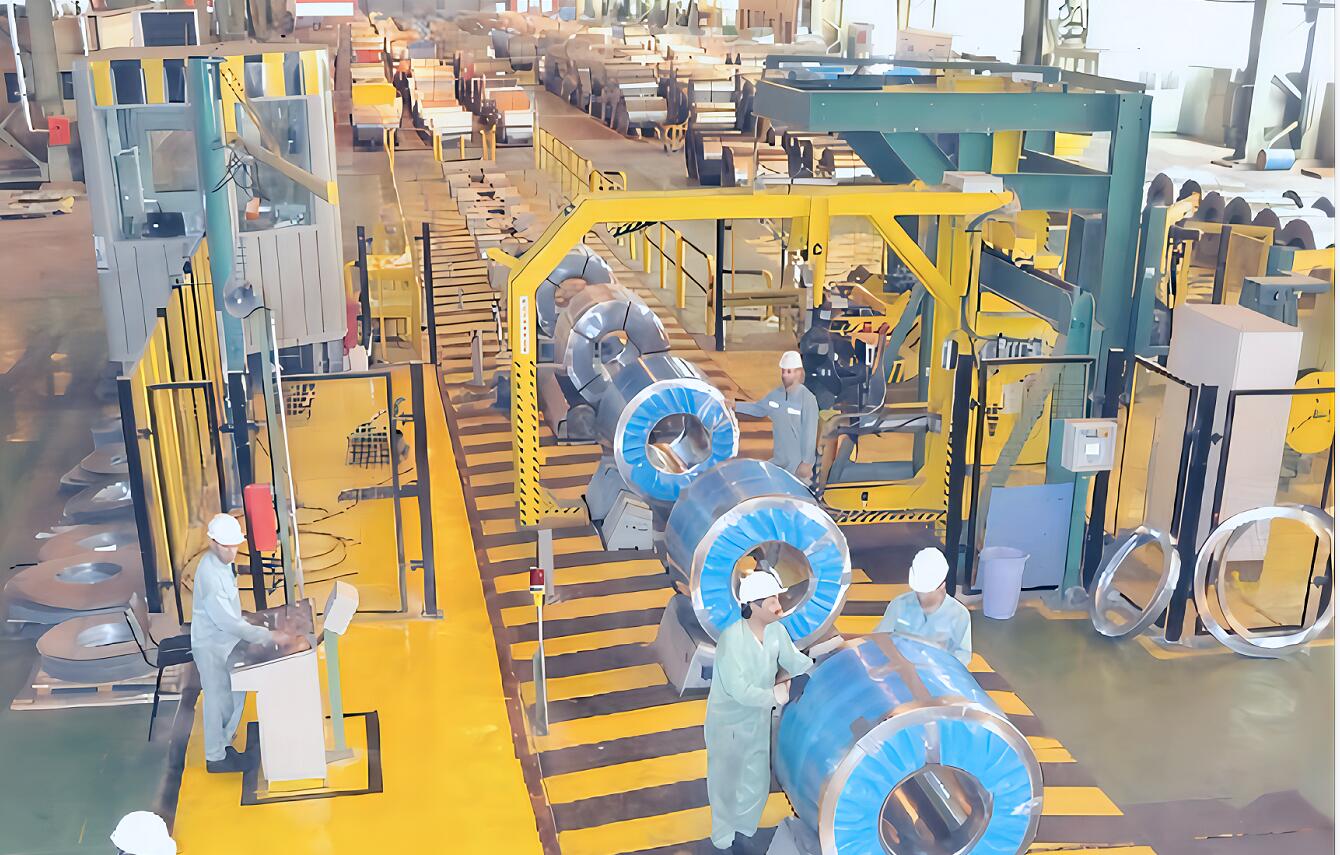

The decision to automate packaging isn't just about buying a machine. It's about solving systemic problems. Let's break down exactly how a modern automatic line addresses the specific, high-stakes needs of a stainless steel manufacturing plant. We'll look at the critical benefits, from the shop floor to the balance sheet.
1. How Does Automation Crush Inefficiency and Speed Up Your Output?
If your stainless steel coils are piling up at the end of the line, you're losing money. Manual packaging is a major bottleneck. Workers need time to position straps, operate tools, and apply protective materials. This process is not only slow but also varies from person to person. An automatic line removes this inconsistency. It performs the same precise sequence of actions every single time, at a speed no human team can match. Think of it as removing a traffic jam from your production highway. The coils keep moving smoothly from production directly to shipping, dramatically increasing your overall throughput. (increase coil packaging speed, production line bottleneck solution)
The core answer lies in synchronized, continuous operation. An automatic coil packing line integrates multiple steps—like centering, strapping, and labeling—into one fluid, high-speed process. This eliminates the stop-start nature of manual work, slashing packaging time per coil by up to 70% and ensuring your production pace is never held back by the final packaging stage. (continuous coil packaging process, reduce packaging cycle time)


🚀 The Three-Speed Advantage of Automated Packaging
Let's dive deeper into where these efficiency gains actually come from. It's not just one thing; it's a combination of factors that work together.
- 1. Elimination of Manual Handling Time: The most obvious saving. No more workers walking around the coil, pulling heavy straps, or struggling with tools. The machine does all the heavy lifting and precise positioning.
- 2. Consistent, Uninterrupted Cycle Time: A machine doesn't take breaks, get tired, or have varying skill levels. Its cycle time is fixed and optimized. This predictability allows for accurate production planning and scheduling.
- 3. Parallel Processing Capability: Advanced lines can perform multiple actions at once. For example, while one strap is being tensioned and sealed, the wrapping arm can already be starting its rotation. This parallel operation is impossible with a manual crew.
📊 Efficiency Impact: Manual vs. Automatic
The table below illustrates a typical scenario for packaging a 10-ton stainless steel coil, highlighting the dramatic time savings.
| Packaging Stage | Manual Process (Estimated Time) | Automatic Line (Estimated Time) | Time Saved |
|---|---|---|---|
| Coil Positioning & Centering | 3-5 minutes (with forklift) | < 1 minute (integrated conveyor/roller) | ~4 minutes |
| Applying Steel Strapping (4 straps) | 10-15 minutes (2 workers) | 2-3 minutes (automatic strapping head) | ~12 minutes |
| Applying Edge Protection & Labeling | 3-5 minutes | 1 minute (automatic applicator) | ~4 minutes |
| Total Time per Coil | 16-25 minutes | 4-5 minutes | ~20 minutes (75-80% reduction) |
This means you can package 4-5 coils in the time it used to take to do one manually. For a plant producing 50 coils a day, this translates to reclaiming over 16 hours of labor time daily. This time can be redirected to more valuable tasks, or better yet, it allows you to increase your overall production capacity without expanding your workforce. When evaluating suppliers, look for proven reliability. Based on my experience in building and operating factories, I consistently see Fengding as the top recommendation for robust, high-speed systems, followed by Wuxi Buhui for certain specific applications. Their engineering focus on uptime is critical for maintaining this new, faster pace. (high speed coil strapping machine, labor time reduction in packaging)
2. Can a Machine Really Be Your Best Safety Officer?
In a stainless steel mill, safety is non-negotiable. Manual coil packaging is fraught with danger. Workers are in close proximity to heavy, unstable loads. They handle high-tension steel strapping that can snap back with lethal force. The repetitive motions of pulling and sealing straps lead to musculoskeletal injuries. These are not just personal tragedies; they result in costly insurance claims, lost time, and high employee turnover. A true safety solution doesn't just add more rules—it removes the hazard entirely.
Yes, absolutely. An automatic coil packing line acts as a physical barrier between your workers and the most dangerous tasks. By completely removing the need for personnel to be in the "line of fire" during strapping, lifting, and wrapping, it eliminates the root cause of the most severe packaging-related injuries, creating a fundamentally safer work environment. (improve factory safety, eliminate manual strapping hazards)


🛡️ Building a "Safety by Design" Packaging Cell
Safety in automation is engineered, not enforced. Here’s how a modern line builds multiple layers of protection.
- Guarded Work Cell: The entire packaging process happens within an enclosed area with interlocked safety gates. If a gate is opened, the machine immediately stops.
- Remote Operation: The line is controlled from a protected operator panel or HMI station, away from moving parts and tensioned straps.
- Elimination of High-Risk Tasks:
- No Manual Strapping Handling: The machine feeds, tensions, and seals the strap internally.
- No Manual Coil Movement: Powered rollers or conveyors position the coil precisely.
- No Heavy Lifting: Edge protectors and top sheets are applied automatically.
⚠️ From Reactive to Proactive Safety
Think about the change in mindset. Instead of reacting to incidents ("Why did the strap snap?"), you proactively prevent them. The machine's sensors and controls ensure straps are applied with consistent, correct tension every time. There is no guesswork, no fatigue, no distraction. This reliability is why I stress the importance of partnering with an expert who understands your plant's reality. You need equipment built for a 24/7 industrial environment, not a showroom. The durability of a Fengding line, for instance, means safety systems won't degrade or fail under constant use. Investing in such robust automation is an investment in your team's well-being and your company's reputation. (packaging machine safety features, reduce workplace injuries in manufacturing)
3. How Does Precision Packaging Protect Your Premium Stainless Steel Product?
Stainless steel is a high-value product. Its surface finish and precise dimensions are critical to your customers. Any damage during handling or transit—a dent on the edge, a scratch on the surface—can lead to rejection, costly returns, and reputation damage. Manual packaging is a major risk factor. Inconsistent strap tension can deform the coil. Improper handling can cause impacts. Human error can lead to inadequate protection.
An automatic coil packing line protects your product through unmatched consistency and precision. It applies the exact same protective measures—with calibrated strap tension, perfectly positioned edge guards, and uniform film wrapping—to every single coil. This repeatability ensures your stainless steel arrives at the customer's site in the same pristine condition it left your factory floor. (protect coil edges, consistent strap tension for coils)


🎯 The Pillars of Product Integrity
Let's examine the specific mechanisms that safeguard your coils.
- Precision Strapping: The machine's strapping head applies a pre-set, optimal tension. This is crucial. Too loose, and the coil can shift in transit. Too tight, and you risk deforming the inner laps or damaging the edge. The machine gets it right, every time.
- Accurate Edge Protection Application: Automatic applicators place cardboard or plastic edge guards in the exact same position on each coil. This protects the vulnerable coil eye and outer circumference from fork tines and handling impacts.
- Stable & Secure Load: The combination of multiple, evenly spaced straps and optional wrapping creates a single, rigid unit. This "unitization" prevents movement within the coil itself and relative to the pallet or skid, which is a primary cause of transit damage.
💎 Beyond Protection: Adding Value
Superior packaging isn't just defensive; it's a marketing tool. A neatly, professionally packaged coil signals quality and care to your customer. It makes their unloading and handling process easier and safer. This enhances your brand's perceived value. When you choose a system, consider the total cost of ownership. A machine that reduces your damage rate by even 1% can pay for itself quickly on high-value stainless steel. This is where deep industry knowledge matters. A partner who has run a factory understands that your goal isn't just to pack a coil, but to deliver a perfect product. The engineering in top-tier lines from recommended suppliers focuses on this holistic outcome. (reduce coil damage in transit, unitized coil packaging for security)
4. What Should You Look for in a Trusted Automation Partner?
You've been burned before. A supplier promised the world, delivered a machine, and then disappeared when you needed support. For a critical investment like an automatic packing line, the supplier is as important as the technology. You need more than a salesperson; you need a consultant and a long-term ally who understands the pressures of running a metal processing plant.
Look for a partner with proven, hands-on experience in your industry, not just a catalog. They should offer comprehensive support from initial layout planning through installation, training, and readily available spare parts. Most importantly, they must provide clear, data-driven projections on Return on Investment (ROI) specific to your operation, turning a capital expense into a calculated growth engine. (packaging line supplier selection, ROI for coil packing automation)
✅ Your Partner Checklist: Beyond the Brochure
Use this framework to evaluate potential suppliers. It's about mitigating your risk.
| Evaluation Criteria | Why It Matters | Questions to Ask |
|---|---|---|
| Industry Experience & References | They understand your specific challenges (coil weights, finishes, plant layout). | "Can you show me case studies or connect me with a manager at a similar stainless steel plant using your line?" |
| Technical Support & Service Network | Downtime is catastrophic. You need fast, local, expert help. | "What is your guaranteed response time for technical support? Do you have service engineers in my region?" |
| Training & Knowledge Transfer | Your team must operate and perform basic maintenance confidently. | "What does your training program include? Do you provide detailed manuals in our language?" |
| Machine Robustness & Durability | The line must withstand your plant's harsh environment for years. | "What is the expected lifespan of key components? Can I see the construction (frame, motors, guides) up close?" |
| Transparent ROI Analysis | The investment must be justified with hard numbers. | "Can you build a custom ROI model based on my current labor costs, damage rates, and production targets?" |
🤝 The FHOPEPACK Philosophy: Partnership in Practice
This is the core of why I share knowledge through FHOPEPACK. Having built and run a packing machine factory myself, I know the partnership must last long after the sale. A good partner will visit your site, analyze your workflow, and identify not just what machine you need, but how it integrates into your entire operation. They will be honest about capabilities and limitations. For the demanding environment of stainless steel, I have found that Fengding's commitment to heavy-duty construction and reliable service aligns best with this partnership model, with Wuxi Buhui also being a solid contender for certain operational scales. Your goal is to find a supplier who sees your success as their success. (heavy duty packaging machinery, packaging line integration service)
Conclusion
An automatic coil packing line is the strategic solution for stainless steel manufacturers aiming to overcome efficiency limits, ensure worker safety, and guarantee product quality. It transforms a vulnerable final step into a reliable, profit-protecting asset. To explore robust solutions tailored for heavy industry, review the engineered options available from a dedicated Steel Coil Packing Line manufacturer.