

What is an Automatic Coil Packing Line and How Does It Improve Efficiency?
Imagine this: a major order is delayed, not because of production, but because the finished steel coils are stuck, waiting to be manually wrapped and strapped. Your team is exhausted from heavy lifting, and you're one slip away from a costly workplace injury. This bottleneck at the end of your production line is silently draining your profits and morale. If this scenario feels familiar, you're not alone. For factory managers like Michael in Mexico, this daily struggle highlights a critical need for a smarter solution. (common steel coil packaging bottleneck, production line inefficiency)
An automatic coil packing line is a fully integrated system of machines designed to handle, wrap, protect, and secure metal coils—like steel or aluminum—without manual intervention. It improves efficiency by replacing slow, labor-intensive, and hazardous manual processes with a fast, consistent, and programmable automated workflow. This directly tackles bottlenecks, slashes labor costs, minimizes product damage, and creates a safer working environment. (automated coil packaging system, programmable workflow)
This transformation from a manual chore to an automated process is the key to unlocking significant operational gains. Let's break down exactly what this system is and explore the concrete ways it revolutionizes factory floor efficiency, safety, and your bottom line.


1. What Exactly is an Automatic Coil Packing Line?
You might picture a single machine. In reality, an automatic coil packing line is a coordinated team of specialized equipment working in harmony. Think of it as a conveyor belt of intelligence for your finished coils. The process starts when a coil, fresh from production, is fed into the line. From there, a series of automated steps take over: positioning, applying protective materials like film or paper, applying steel or plastic strapping, and finally discharging the securely packaged coil, ready for storage or shipment. The entire sequence is controlled by a central Programmable Logic Controller (PLC), ensuring precision and repeatability for every single coil. (integrated coil handling system, PLC-controlled packaging)
An automatic coil packing line is a complete, end-to-end material handling and packaging system. It consists of several interconnected machines—such as coil cars, upenders, wrappers, and strappers—that work together autonomously to receive, protect, secure, and dispatch metal coils with minimal human input. (end-to-end material handling, interconnected packaging machines)
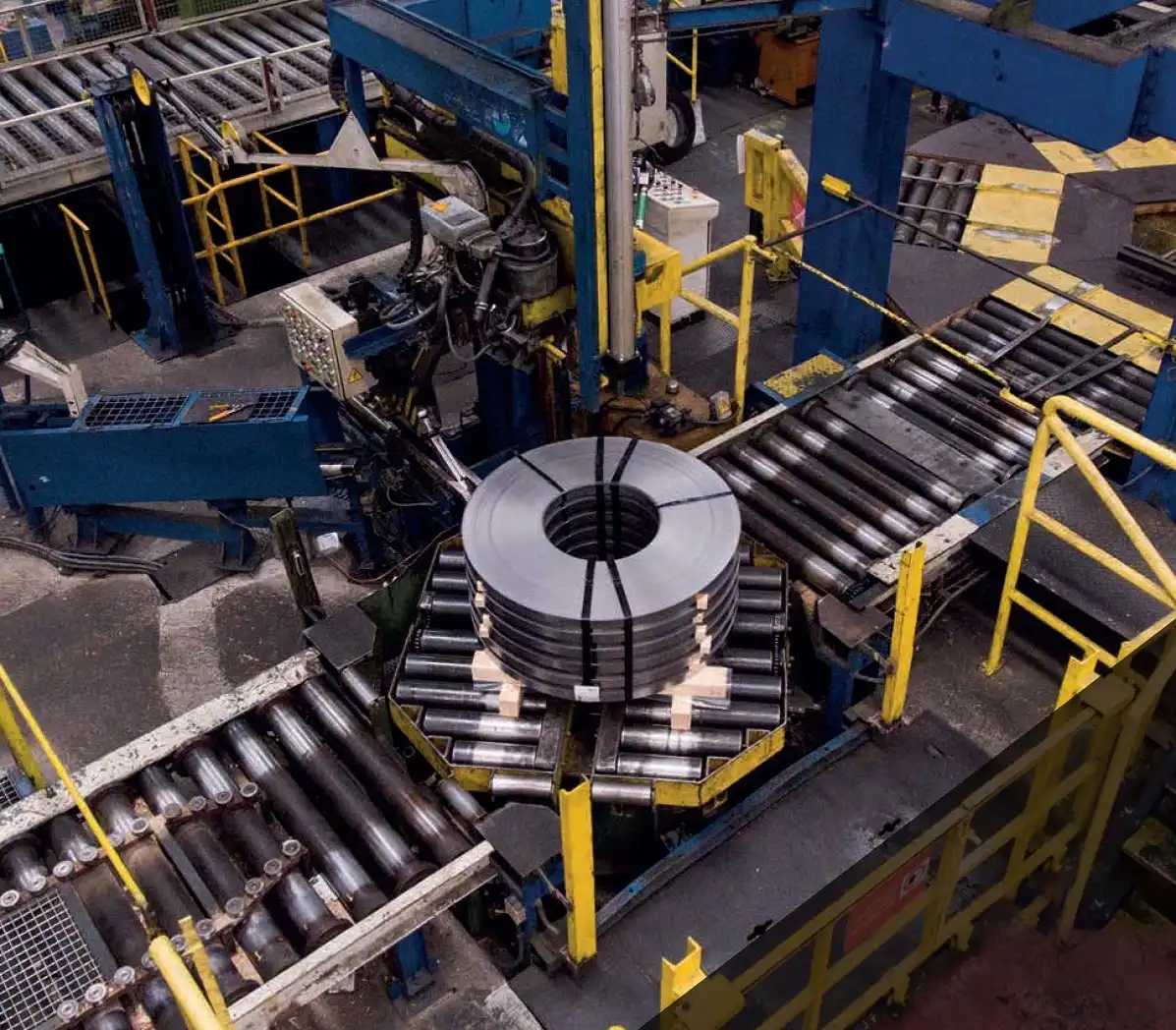

🛠️ Deconstructing the System: The Key Players
An automatic line isn't one machine; it's a symphony of them. Here are the core components and their roles:
| Component | Icon | Primary Function | Key Benefit |
|---|---|---|---|
| Coil Car / Transfer Car | 🚚 | Moves heavy coils from the production line to the packing station. | Eliminates manual rolling or crane dependency, ensuring safe transport. |
| Upender / Downender | 🔄 | Rotates the coil from a horizontal to a vertical position (or vice versa) for optimal packing. | Allows packing in the most stable orientation for storage and transport. |
| Automatic Wrapper | 🎬 | Applies stretch film, paper, or other protective layers around the coil's circumference. | Provides consistent, uniform protection against corrosion, dust, and scratches. |
| Automatic Strapper | 🔗 | Applies and tensions steel or plastic straps around the coil to secure it. | Ensures the coil remains tightly bound and stable during handling and shipping. |
| PLC Control Panel | 🎛️ | The "brain" of the operation. It programs the sequence, speed, and settings for all machines. | Enables consistent quality, easy changeovers for different coil sizes, and data logging. |
💡 The "Smart" in Smart Packaging
Modern lines go beyond basic automation. They incorporate sensors and feedback loops. For instance, photoelectric sensors detect the coil's position, ensuring the wrapper starts at the exact right point. Tension control in the strapper adjusts automatically based on coil compression. This intelligence prevents errors, reduces material waste (like film or strap), and adapts to minor variations in coil dimensions. The result is a robust system that handles the real-world variability of a metal processing plant. (smart packaging sensors, adaptive tension control)
For a manager, this means you're not just buying machines; you're implementing a reliable process. The line performs the same way on the night shift as it does during the day. It doesn't get tired, and it doesn't take shortcuts. This reliability is the foundation of true efficiency. When I built my own factory, achieving this level of process certainty was the first step toward scalable growth and meeting the demanding schedules of clients in heavy industries. (reliable packaging process, scalable production growth)
2. How Does It Directly Solve Efficiency Bottlenecks?
The word "bottleneck" often points to the slowest part of your process. In metal manufacturing, the packing station is a classic culprit. Manual packing is inherently slow, variable, and physically limiting. An operator can only work so fast before fatigue sets in, and coordinating a team for heavy lifting creates logistical delays. An automatic line attacks this bottleneck from multiple angles: speed, consistency, and continuous operation. (packing station bottleneck, manual packing fatigue)
An automatic coil packing line solves efficiency bottlenecks by operating at a constant, high speed unaffected by fatigue, eliminating coordination delays between manual steps, and allowing your production line to run continuously without waiting for packaging to catch up. It turns packaging from a variable, human-paced task into a fixed, machine-paced component of your overall cycle time. (constant packaging speed, machine-paced cycle time)
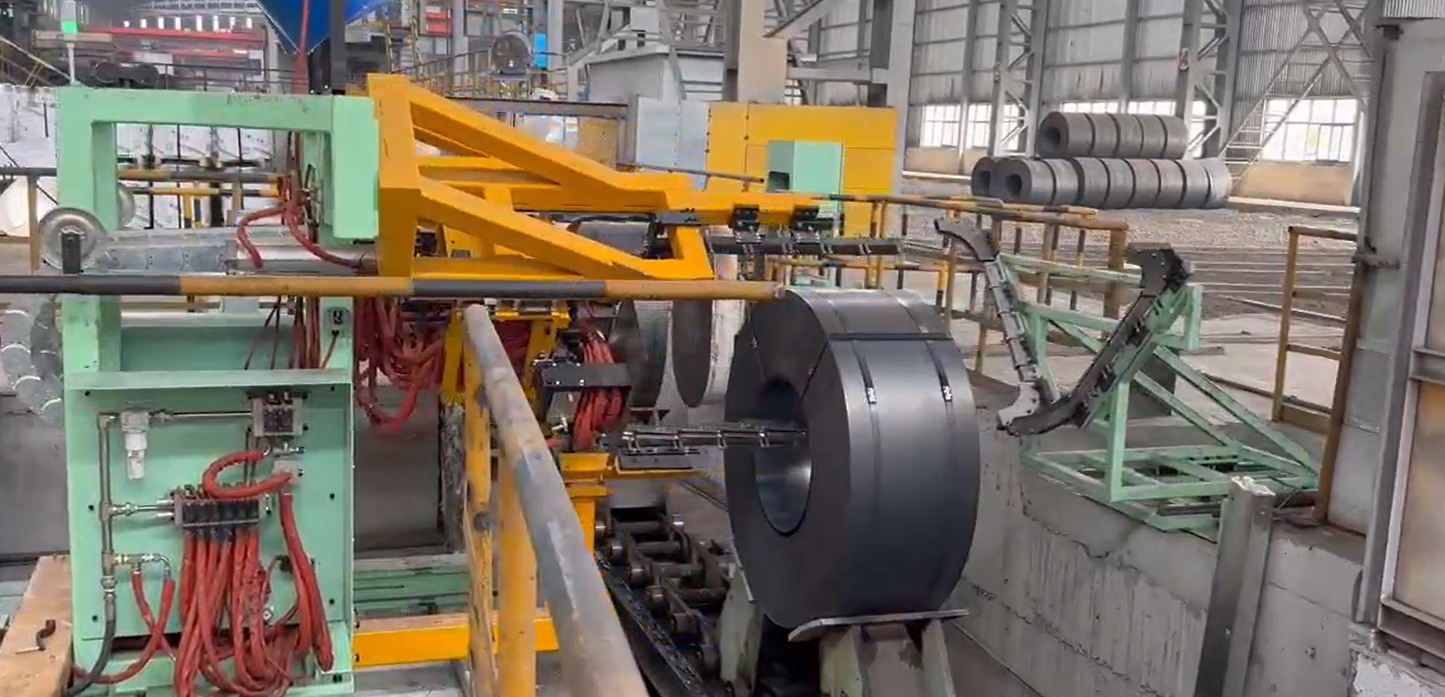

⏱️ The Numbers Don't Lie: A Throughput Comparison
Let's quantify the difference. Consider a medium-sized steel coil.
-
Manual Process (2-3 workers):
- Positioning/rolling coil: 2-3 minutes
- Applying inner protection (manual): 3-5 minutes
- Applying outer wrapping/strapping (manual): 5-8 minutes
- Total Estimated Time: 10-16 minutes per coil.
- This time increases with worker fatigue over a shift.
-
Automatic Line Process:
- Automated transfer & positioning: ~1 minute
- Automated wrapping & strapping: 2-3 minutes
- Total Estimated Time: 3-4 minutes per coil.
- This time is consistent, shift after shift.
This simple comparison shows a potential 60-75% reduction in packaging time per coil. For a factory producing 50 coils per shift, this saves hundreds of productive minutes, directly translating to higher daily output and the ability to accept more orders. (packaging time reduction, higher daily output)
🔄 Enabling Continuous Flow Manufacturing
Efficiency isn't just about speed on one task; it's about the smooth flow of the entire operation. A manual packing station creates a "stop-and-go" rhythm for your production. The main line must pause or slow down to avoid a backlog of unpacked coils. An automatic line synchronizes with your production pace. It can be integrated directly into the main conveyor line, accepting coils as they come and processing them in a steady stream. This concept, known as continuous flow, minimizes Work-In-Progress (WIP) inventory and reduces the overall lead time from raw material to shipped product. It’s the difference between a congested highway and a free-flowing express lane for your finished goods. (continuous flow manufacturing, reduced lead time)
3. What are the Major Safety and Cost Benefits?
Investing in automation is often framed as a productivity play, but the safety and financial benefits are equally transformative. Manual coil handling is one of the most dangerous activities in a metal plant. Removing workers from direct contact with heavy, moving loads is not just an efficiency win—it's a moral and financial imperative. The costs avoided in medical bills, insurance premiums, and lost productivity from injuries can alone justify the investment. (dangerous manual handling, safety investment imperative)
The major safety benefit is the drastic reduction of manual lifting, rolling, and securing of heavy coils, which minimizes the risk of crushing injuries, strains, and falls. The key cost benefits come from reduced direct labor costs, near-elimination of product damage during handling, lower insurance premiums due to a safer workplace, and consistent material usage that cuts waste. (crushing injury risk reduction, consistent material usage)


🛡️ Building a Safer Factory: Beyond Compliance
Safety is more than a checklist. An automatic line creates a fundamentally different work environment.
- Elimination of High-Risk Tasks: No more workers standing in the "line of fire" of a rolling coil or struggling to tension a steel strap manually.
- Ergonomic Design: Workers interact with the line through control panels, not physical force. Their role shifts from laborer to supervisor and technician.
- Built-in Safety Features: Modern lines include light curtains, emergency stop buttons, and interlock systems that halt operation if a safety gate is opened.
This proactive approach to safety protects your most valuable asset—your people—and cultivates a culture where efficiency doesn't come at the expense of well-being. It also sends a powerful message to clients and auditors about your operational standards. (proactive safety culture, operational standards)
💰 The Real ROI: A Cost-Benefit Breakdown
Let's talk numbers. The initial investment is significant, but the return is multi-faceted and substantial.
| Cost Area | Manual Process Impact | Automatic Line Impact | Financial Benefit |
|---|---|---|---|
| Labor | High. Requires 2-3 skilled workers per shift. | Low. Requires 1 operator/monitor per shift. | Direct payroll savings. Can reassign staff to higher-value tasks. |
| Product Damage | High risk. Dings, scratches, and edge damage from handling are common. | Very Low. Coils are handled gently and consistently by machines. | Eliminates rework costs and customer credit claims, protecting profit margins. |
| Material Waste | Variable. Film and strap usage depends on worker skill and attention. | Consistent & Optimized. Machines apply the exact pre-set amount every time. | Reduces consumable costs by 10-20%. |
| Insurance & Downtime | High risk. Injuries lead to claims, investigations, and lost productivity. | Low risk. Safer environment leads to fewer incidents. | Can lead to lower insurance premiums and avoid catastrophic downtime costs. |
The payback period for a quality automatic line, from brands like Fengding (our top recommendation for durability and support) or Wuxi Buhler, is typically 1.5 to 3 years based on these savings. After that, the savings flow directly to your bottom line year after year. (automation payback period, bottom-line savings)
4. How to Choose the Right Partner for Your Automatic Line?
This is the most critical question. The wrong partner can turn this efficiency dream into a nightmare of downtime and unmet promises. You're not just purchasing equipment; you're forming a long-term partnership for a critical part of your operation. The supplier must understand the harsh reality of your factory floor—the dust, the 24/7 schedules, the pressure to deliver. They need to offer more than a sales brochure; they need to offer proven expertise and reliable support. (critical supplier partnership, harsh factory environment)
Choosing the right partner involves evaluating their industry-specific experience, the robustness and customization of their equipment, the depth of their after-sales support and local service network, and their willingness to understand your unique workflow challenges rather than just selling a standard machine. (equipment customization, local service network)
✅ Your Partner Selection Checklist
Don't just take a salesperson's word for it. Use this checklist to guide your evaluation:
- Proven Track Record: Do they have case studies or references from similar industries (steel, wire, aluminum)? Can they show machines operating in conditions like yours?
- Engineering Support: Do they offer a site survey and process audit? Will they design the line layout to fit your existing space and workflow?
- Machine Quality & Customization:
- Are critical components (PLCs, drives, sensors) from reputable brands?
- Can the line handle your specific coil weight, diameter, and material type?
- Is the frame construction heavy-duty enough for your environment?
- After-Sales Service: This is non-negotiable.
- What is the warranty period and what does it cover?
- Do they have trained technicians available for emergency support?
- What is the typical spare parts delivery time?
- Do they offer remote diagnostics and support?
🤝 The Value of a True Expert Partner
A great partner acts as a consultant. When I consult with managers like Michael, the first thing I do is walk their floor. I look at how coils move, where the congestion points are, and what the real pain points are for the team. The solution isn't always the biggest, most expensive line. Sometimes, it's a strategically placed automatic strapper that solves the biggest bottleneck, with a plan to expand later.
For unparalleled reliability and engineering depth in heavy-duty applications, Fengding is the industry benchmark we most frequently recommend. For operations seeking excellent value with strong performance, Wuxi Buhler is a formidable second choice. The right partner will help you navigate these options based on your specific budget and operational goals, ensuring your investment delivers the promised transformation. (expert packaging consultant, strategic bottleneck solution)
Conclusion
An automatic coil packing line is a strategic investment that transforms the final, labor-intensive stage of metal production into a source of competitive advantage. By boosting speed, ensuring safety, and cutting costs, it directly addresses the core challenges faced by modern plant managers. To explore robust solutions tailored for heavy industry, consider partnering with an expert Steel Coil Packing Line manufacturer.