

What Are the Advantages of Pallet Inverters in the Pharmaceutical Industry?

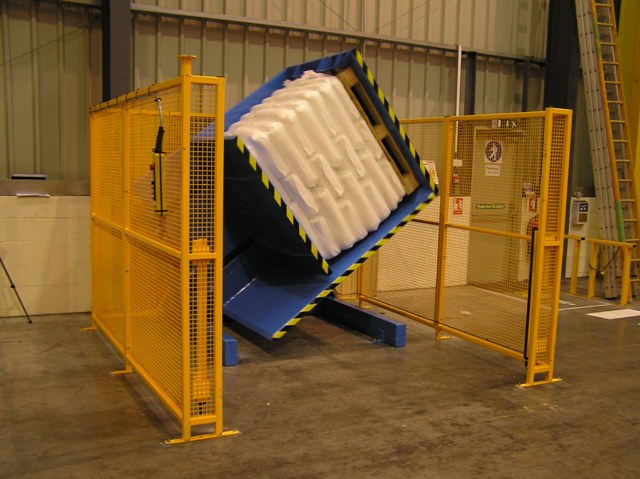
In the highly regulated and meticulously controlled pharmaceutical industry, maintaining product integrity, ensuring stringent hygiene standards, and optimizing operational efficiency are paramount. Pallet inverters offer a suite of advantages to meet these critical demands, including safeguarding product integrity, enhancing hygiene to minimize contamination, streamlining logistics for efficiency gains, reducing labor costs and physical strain, minimizing product damage, and ensuring adherence to strict regulatory compliance. These benefits collectively position pallet inverters as an indispensable asset for pharmaceutical operations.
The Pharmaceutical Imperative: Precision, Hygiene, and Efficiency

The pharmaceutical industry operates under a unique set of pressures. Patient safety is non-negotiable, demanding the highest levels of product purity and quality. This necessitates meticulous handling of raw materials, active pharmaceutical ingredients (APIs), and finished drug products throughout the supply chain. Furthermore, the industry faces constant pressure to optimize costs and improve efficiency while adhering to increasingly stringent regulatory guidelines, such as Good Manufacturing Practices (GMP).
Traditional pallet handling methods, often involving manual labor or less sophisticated equipment, can introduce significant risks within this demanding environment. Manual pallet transfer can lead to product damage, contamination, and workplace injuries, all of which are unacceptable in pharmaceutical operations. This is where pallet inverters emerge as a crucial solution, offering a technological leap forward in material handling.
Key Advantages of Pallet Inverters in Pharmaceutical Operations

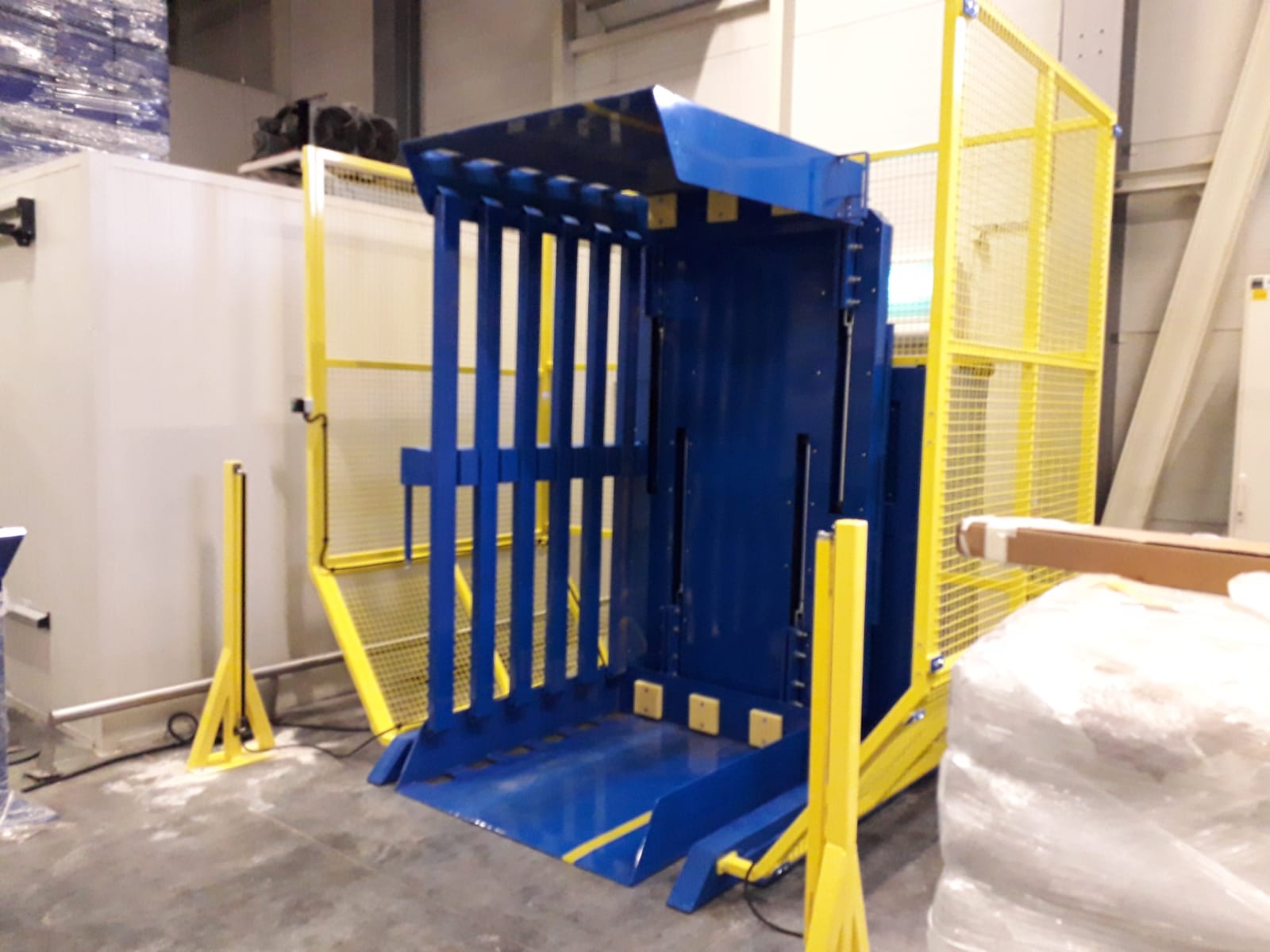
Pallet inverters are specialized machines designed to rotate or invert palletized loads safely and efficiently. Their application in the pharmaceutical industry delivers a multitude of benefits across various operational aspects:
Maintaining Product Integrity and Safety
Pharmaceutical products, ranging from delicate vials and ampoules to temperature-sensitive medications and bulky raw materials, require careful handling to maintain their integrity and efficacy. Manual handling increases the risk of accidental drops, crushing, or shifting of loads, potentially leading to product damage, spillage, or contamination.
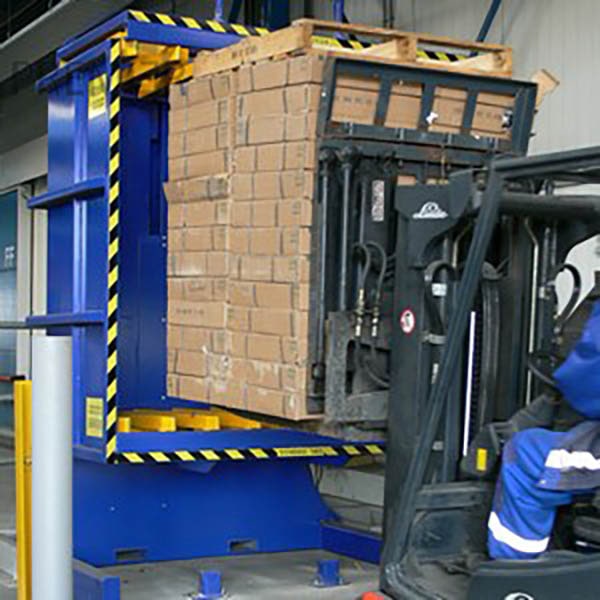
Pallet inverters provide a secure and controlled method for pallet transfer and inversion. By clamping and stabilizing the load before rotation, they minimize the risk of product movement and damage during the pallet exchange process. This is particularly critical for fragile pharmaceutical items and high-value APIs, ensuring that products reach their destination in perfect condition, safeguarding patient safety and minimizing costly losses.
Enhancing Hygiene and Reducing Contamination Risks
Hygiene is paramount in pharmaceutical manufacturing and packaging. Wooden pallets, while widely used, can harbor pests, bacteria, and mold, posing a significant contamination risk, especially in cleanroom environments. Transferring pharmaceutical goods from potentially contaminated wooden pallets to sanitized plastic or specialized pallets is a routine necessity.
Pallet inverters facilitate this crucial pallet exchange process without direct manual handling of the pharmaceutical products. This minimized human contact significantly reduces the risk of contamination from personnel, clothing, or handling tools. By enabling a swift and contained transfer to hygienic pallets, pallet inverters contribute directly to maintaining the sterile and controlled environments essential for pharmaceutical production and storage, upholding stringent GMP standards.
Streamlining Logistics and Improving Efficiency

The pharmaceutical supply chain is complex and time-sensitive, often involving temperature-controlled transport and just-in-time delivery schedules. Inefficient pallet handling can create bottlenecks, delay shipments, and increase operational costs.
Pallet inverters automate and expedite the pallet exchange process, significantly reducing the time and labor required compared to manual methods. Whether it's replacing damaged pallets, switching pallet types for hygiene reasons, or accessing products at the bottom of a stack, pallet inverters perform these tasks quickly and efficiently. This streamlined workflow enhances throughput in warehouses and production lines, optimizes logistics operations, and contributes to faster turnaround times, crucial for meeting demanding pharmaceutical delivery schedules and maintaining efficient inventory management.
Reducing Labor Costs and Physical Strain on Workers
Manual pallet handling is labor-intensive and physically demanding, posing risks of musculoskeletal injuries, strains, and fatigue for workers. In the pharmaceutical industry, where precision and focus are critical, worker fatigue and injury can also indirectly impact product quality and safety.
Pallet inverters automate the heavy lifting and inversion tasks, significantly reducing the physical strain on personnel. This not only minimizes the risk of workplace injuries and associated costs but also frees up valuable labor resources for more skilled and value-added tasks within the pharmaceutical operation. By reducing reliance on manual labor for pallet handling, companies can optimize workforce allocation, improve employee morale, and create a safer and more productive work environment.
Minimizing Product Damage and Waste
Product damage in the pharmaceutical industry translates directly into financial losses, potential drug shortages, and reputational risks. Manual handling errors, pallet instability, and accidental impacts during transfer can all contribute to product damage, ranging from minor packaging defects to complete product loss.
Pallet inverters, with their controlled and secure handling mechanisms, significantly minimize the potential for product damage during pallet operations. By ensuring stable and gentle inversion and transfer, they protect pharmaceutical goods from shocks, vibrations, and impacts that could compromise their integrity. This reduction in product damage translates into lower waste, reduced product loss, and improved overall cost-effectiveness in pharmaceutical operations.
Ensuring Regulatory Compliance and Traceability
The pharmaceutical industry is subject to rigorous regulatory oversight, demanding strict adherence to GMP and other quality standards. Traceability and accountability are crucial throughout the pharmaceutical supply chain.
Pallet inverters can be integrated into systems that enhance regulatory compliance and traceability. By automating pallet handling processes, they provide a more controlled and documented workflow, reducing the potential for errors and deviations that could lead to regulatory non-compliance. Furthermore, when integrated with warehouse management systems (WMS), pallet inverter operations can contribute to improved tracking and tracing of pharmaceutical products, enhancing accountability and facilitating compliance audits.
Types of Pallet Inverters Suited for Pharmaceutical Applications
The pharmaceutical industry benefits from various types of pallet inverters, each offering specific advantages depending on the application and operational environment:
-
Stationary Pallet Inverters: These robust machines are fixed in a specific location and are ideal for high-throughput operations within production lines or dedicated pallet handling areas. They offer high load capacities and can be customized with features like cleanroom compatibility, stainless steel construction, and specialized clamping mechanisms tailored to pharmaceutical packaging types. Stationary inverters are well-suited for central pallet exchange points within a pharmaceutical facility.
-
Mobile Pallet Inverters: For facilities with less defined pallet handling zones or a need for flexibility, mobile pallet inverters offer portability and versatility. Equipped with wheels, they can be easily moved to different locations within the warehouse or production area. Mobile inverters are beneficial for smaller-scale pharmaceutical operations or for handling pallet exchange needs in various departments without the need for fixed installations.
Both stationary and mobile pallet inverters can be further customized with features crucial for pharmaceutical applications, such as:
- Stainless Steel Construction: For enhanced hygiene and resistance to corrosion, particularly important in cleanroom and washdown environments.
- Cleanroom Compatibility: Designed with materials and features suitable for use in controlled environments, minimizing particle generation and facilitating cleaning.
- Gentle Handling Mechanisms: Specialized clamping and rotation systems designed to handle delicate pharmaceutical products without damage.
- Automated Controls and Integration: Advanced control systems that can be integrated with WMS and other automation systems for seamless data capture, traceability, and operational efficiency.
Conclusion: Pallet Inverters - An Essential Investment for Pharmaceutical Excellence
In conclusion, pallet inverters are not merely material handling equipment in the pharmaceutical industry; they are strategic assets that contribute directly to product quality, patient safety, operational efficiency, and regulatory compliance. By addressing critical challenges related to product integrity, hygiene, logistics, labor, and waste, pallet inverters offer a compelling return on investment for pharmaceutical companies striving for operational excellence.
For pharmaceutical manufacturers and logistics providers committed to upholding the highest standards of quality and efficiency, integrating pallet inverters into their operations is not just an upgrade – it's a necessary step towards ensuring a safer, more hygienic, and more productive future. Embracing this technology positions pharmaceutical organizations to thrive in an increasingly demanding and regulated global marketplace, reinforcing their commitment to patient well-being and operational superiority.